You’re standing on a ridgeline at dawn, scanning a treeline for movement. A distant shape could be a deer, a stray dog, or just a stump. The right pair of 10x binoculars turns that guessing game into a confident call. That’s the whole point of this guide: matching the optic to the way you actually use it, whether that’s glassing open country, watching raptors, or steadying a view from a swaying cruise deck.
10x magnification hits a real sweet spot. You get enough reach to pull detail out of distant subjects without the handshake-shaky image that comes with higher powers. Objective lens sizes matter too, and so do coatings, prism design, and weather sealing. Below, ten models cover most of the common use cases, from full-size 42mm roof-prism workhorses to pocketable 25mm companions that ride in a jacket.
The Lineup, Simplified

Leupold BX-2 Timberline HD 10x42mm Binoculars

Vortex Diamondback HD 10×42 Binoculars

Bushnell 10x42mm Trophy XLT Waterproof Binoculars
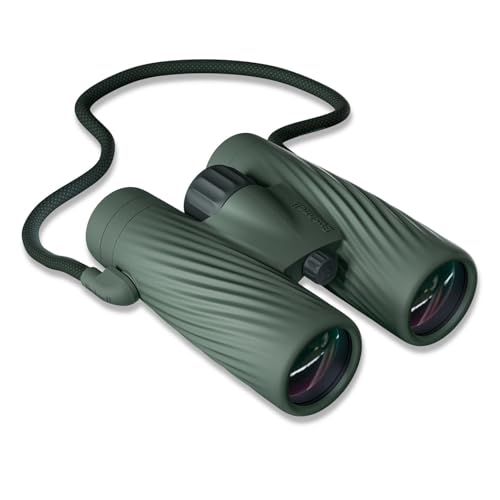
Bushnell A5 10×42 Binoculars Cilantro Green

Bushnell A3 8×32 Binoculars Folkstone Gray
Bushnell A3 10×32 Binoculars Folkstone Gray

Vortex Crossfire HD 10×42 Binoculars

Bushnell A1 10×25 Binoculars Cilantro Green
Bushnell A1 8×25 Binoculars Cilantro Green
Bushnell A5 8×42 Binoculars Cilantro Green
Meet The Standout Selections
Long days on your feet call for a binocular you forget you’re carrying. The BX-2 Timberline HD answers that with an open-bridge roof prism body, where the cut-out between the barrels lets your fingers wrap around the chassis for a relaxed hold. Compared to the bulkier Vortex Diamondback you’ll meet next, this Leupold feels lighter in the hand, and that matters on mile-eight of a hike.
Optically, the 10x42mm pairing (10x magnification with a 42mm front lens that gathers light) leans on Leupold’s Advanced Optical System for color fidelity, glare control, and edge sharpness. It’s a sealed, fogproof package in shadow gray armor, so damp mornings and river crossings don’t end the day’s observations.
Everyday Advantages
- Open-bridge chassis reduces weight and gives a secure, ergonomic grip during long glassing sessions
- Fully waterproof and fogproof sealing handles rain, snow, and sudden temperature shifts
- 10x42mm configuration balances reach with a steady image for handheld use
- Advanced Optical System coatings work to preserve contrast in low-angle light, such as dawn and dusk
- Backed by Leupold’s well-regarded customer care for long-term ownership peace of mind
Things To Consider
- Sits at a higher tier than entry-level 10×42 models, so the upfront cost may stretch some budgets
- Open-bridge designs can collect dust in the central cutout and benefit from occasional cleaning
Quick Facts
Who It Suits Best
Backcountry hikers and hunters who want a premium, lightweight optic for long sessions in unpredictable weather.
Consider Something Else When
You’d rather spend less and get a more rugged, budget-friendly build like the Bushnell Trophy XLT.
Ask a dozen birders what they grab for a quick morning loop, and a few will name this Diamondback. The 10x42mm roof prism format is a familiar workhorse, and Vortex tunes the optics to punch above what most shoppers expect at this level. Compared to the Leupold BX-2 above, the Diamondback leans toward a classic closed-bridge body that feels tank-like in the palm.
Fully multi-coated lenses (meaning every air-to-glass surface has an antireflective layer) push more light through the prisms, which helps when you’re picking warblers out of backlit foliage. Phase correction on the prisms keeps contrast tight, so feather details don’t smear into the background.
A Few Strong Suits
- Select glass elements reduce chromatic aberration, the colored fringing that can appear around high-contrast edges
- Phase-corrected prisms sharpen resolution across the field of view
- Fully multi-coated lenses improve light transmission for early-morning and late-afternoon sessions
- Rubber-armored chassis holds up to drops and trail bumps
Worth Noting
- Heavier than open-bridge designs like the Leupold BX-2, so neck fatigue can set in on long hikes
- The armored body can feel slippery without the harness, and owners commonly add a strap for steadier carry
Feature Snapshot
Made For
Birders and casual wildlife observers who want sharp optics and a familiar full-size feel without stepping into flagship pricing.
Look Elsewhere When
You want something lighter on the trail and prefer an open-bridge body like the Leupold BX-2 Timberline HD.
There’s a reason this Trophy XLT keeps showing up in starter kits and tackle boxes. The 10x42mm pairing covers most outdoor scenarios, from a cruise-deck horizon to a backyard bird feeder, without forcing you to learn optical jargon. It’s the kind of binocular that gets tossed in the trunk and forgotten until you need it.
The 6.2-degree angle of view (the width of the scene you see at 1000 yards) feels generous for tracking moving subjects, and the waterproof, fogproof construction shrugs off rain. Compared to the Bushnell A5 you’ll see later, this Trophy XLT skips the dielectric coatings (high-reflectivity prism coatings that boost brightness and color accuracy), which is part of why it lands at a friendlier price.
The Upside
- Wide 6.2-degree field of view helps with tracking birds in flight or following shoreline action
- Waterproof and fogproof build handles outdoor conditions across seasons
- 10x42mm configuration covers birding, travel, and casual wildlife observation
- Often priced below HD-class 10×42 models, making it a sensible starter or backup
Honest Caveats
- Without dielectric prism coatings, low-light color and brightness trail behind the Bushnell A5
- Bulkier than compact 32mm models like the Bushnell A3 for travel-focused shoppers
Right Fit For
First-time buyers, gift shoppers, and casual outdoorsmen who want a reliable all-purpose binocular without overthinking the spec sheet.
A Better Fit Elsewhere
You want flagship-grade color and brightness and can stretch toward the Bushnell A5 10×42 instead.
The A5 is the flagship of Bushnell’s A-series, and the spec sheet leans hard into color accuracy. Dielectric and phase-coated prisms (multi-layer mirror coatings on the prisms that boost reflectivity and correct light alignment) push more true color and contrast to your eye than you usually see at this size. Cilantro Green is a fresh look, too, breaking up the sea of black and gray optics on the market.
Compared to the Trophy XLT above, the A5 is the optic to choose when crisp color matters, like identifying a tricky warbler or reading distant signage. The wave-pattern rubber armor helps the grip when your hands are wet or cold, which is a quiet but real win for early-morning users.
What Helps Most
- Dielectric prism coatings boost light transmission for brighter images in dim conditions
- Phase-correction sharpens resolution and contrast across the field of view
- Wave-pattern rubber armor provides a secure hold when conditions get wet
- Color-matched case and Snap-Lock strap included for a complete carry setup
Points To Keep In Mind
- Carries more weight than compact 32mm options like the Bushnell A3 for travelers
- The Cilantro Green finish shows dust and field dirt more visibly than traditional black armor
Feature Card
Best Suited To
Birders and nature observers who prioritize rich color rendition and a confident grip in damp conditions.
Skip It When
You need a lighter travel companion and should consider the more compact Bushnell A3 10×32 instead.
Travel light, see plenty. The A3 8×32 shrinks the binocular into a size that disappears into a daypack, and the 8x magnification keeps the image steady without a tripod. The trade-off, of course, is a smaller 32mm objective that gathers less light than the 42mm models above, so dawn-twilight performance steps down a notch.
Where this binocular earns its keep is on cruise decks, hiking trails, and casual birding where weight matters more than maximum brightness. The Folkstone Gray finish has a soft, modern look, and the wave-texture rubber armor delivers a sure grip even with gloves on.
The Value In It
- Compact 32mm objective cuts weight and bulk for travel-friendly carry
- 8x magnification keeps the image steady for handheld use
- Fully multi-coated lenses maintain brightness despite the smaller objective
- Snap-Lock strap system makes for fast, secure carry adjustments
Some Limits To Know
- Smaller 32mm objective gathers less light than 42mm models in low-light conditions
- 8x magnification delivers less reach than the 10x alternatives on this list
Perfect Match For
Travelers, casual hikers, and concert-goers who value a lightweight carry and a steady image over maximum reach.
Another Choice May Suit
You need 10x reach in a compact body and should look at the sibling Bushnell A3 10×32 instead.
Reaching for 10x power without the bulk of a full-size 42mm binocular is the A3 10×32’s whole reason for existing. It keeps the magnification hunters and birders prefer while trimming the body down to something that rides comfortably on a pack strap or in a large jacket pocket. It’s a smart middle-ground choice between the 8×32 sibling above and the 42mm flagships.
Expect a slightly narrower field of view than the Trophy XLT’s 6.2-degree spread, and a touch less low-light punch than the 42mm A5. What you gain is portability, and for many travelers, that’s the trade that matters.
Features That Help
- 10x magnification in a compact 32mm chassis balances reach and portability
- IPX7 waterproof rating handles immersion and heavy rain
- EXO Barrier lens coating repels water, oil, and dust on outer surfaces
- Snap-Lock strap system provides quick, secure carry adjustments
Points To Note
- 32mm objective gathers less light than 42mm alternatives in dim conditions
- Higher magnification can amplify hand shake compared to 8x compacts
Who Should Grab It
Hikers and casual birders who want 10x reach without committing to the weight of a full-size 42mm binocular.
Reach For A Different Pick When
Low-light performance is the priority and a 42mm flagship like the Bushnell A5 10×42 would serve you better.
The Crossfire HD has been a quiet workhorse in the 10×42 category for years, and that staying power says plenty. The HD optical system (high-density glass elements that improve light transmission and color) pairs with a familiar roof prism design, and the included GlassPak harness sets it apart from competitors by giving you a ready-to-carry rig right out of the box.
Compared to the Vortex Diamondback above, the Crossfire HD leans toward a value-driven spec sheet rather than top-tier coatings, and the harness is the kind of bonus that travelers appreciate. For newcomers stepping up from a basic binocular, it’s a comfortable landing spot.
What Earns Its Place
- HD glass elements improve resolution and color fidelity for the price tier
- Included GlassPak binocular harness offers hands-free carry in the field
- 10x42mm roof prism design fits familiar full-size use cases
- Rubber-armored body holds up to routine outdoor wear
Room For Improvement
- Optics sit below the Vortex Diamondback HD in low-light performance
- Harness adds bulk that some users prefer to swap for a traditional neck strap
Built With In Mind
Entry-level enthusiasts and casual wildlife watchers who want HD optics and a ready-to-carry harness package.
Where A Sibling Pick Shines
Image quality is your priority and you’d prefer the sharper Diamondback HD over the Crossfire HD’s value build.
Most pocketable binoculars sacrifice magnification for compactness, but the A1 10×25 manages to keep 10x power in a jacket-pocket body. The 25mm objective is the smallest in this roundup, so light gathering is modest, but the convenience factor is hard to beat when you’re chasing spontaneous moments.
Think of it as the binocular equivalent of carrying a pocketknife: not the tool for serious jobs, but always there when you need it. Birders and concert-goers will appreciate the SnapLok strap system that keeps the A1 close at hand.
A Few Highlights
- 10x magnification in a pocketable 25mm chassis for grab-and-go use
- IPX7 waterproof rating handles unexpected weather
- EXO Barrier coating keeps outer lenses clear of water and debris
- SnapLok strap system enables fast deployment from a pack or jacket
Practical Considerations
- 25mm objective gathers significantly less light than 42mm models
- Exit pupil is small, which can make centering tricky for eyeglass wearers (exit pupil is the diameter of the light beam leaving the eyepiece; a larger one is easier to align with your eye)
Whose Shelf It Belongs On
Travelers and casual nature watchers who want 10x reach in a format that lives in a jacket pocket or daypack.
Swap It Out When
You need more light-gathering for dawn or dusk sessions and should pick the full-size Bushnell A5 10×42 instead.
The A1 8×25 trades the 10x reach of its sibling above for an even steadier handheld image and a slightly wider view. At concerts, sporting events, or theater performances, the trade usually pays off, since shake at 8x is noticeably less distracting than at 10x.
This is the binocular you forget you’re carrying until you need it. The compact 25mm body slips into a small bag or a large coat pocket, and the fully multi-coated optics keep the image brighter than the modest objective size would suggest.
Well-Handled Touches
- 8x magnification produces a steady, easy-to-hold image for casual use
- Compact 25mm chassis fits comfortably in a jacket pocket
- IPX7 waterproof rating holds up to sudden rain
- SnapLok strap system offers quick, secure carry
Small Caveats
- 25mm objective limits low-light performance compared to larger models
- Less reach than 10x alternatives for distant wildlife observation
Who Will Love This
Concert-goers, sports fans, and casual travelers who prioritize a steady handheld view over maximum magnification.
Not Your Match When
You’re glassing distant wildlife and should reach for the 10x magnification of the Bushnell A1 10×25.
The A5 8×42 is the long-haul pick of the roundup. The 8x magnification gives you a brighter image (since 8x gathers more light per exit pupil than 10x at the same objective size) and a steadier handheld experience, while the 42mm objective keeps light gathering strong for low-light sessions. Dielectric and phase-coated prisms deliver the color and contrast Bushnell’s A-series is known for.
For users who wear glasses or who simply want a forgiving view without the handshake fatigue of higher magnifications, this is a comfortable workhorse. The included color-matched case, strap, and accessories make it a complete carry solution right out of the box.
What It Does Well
- Dielectric prism coatings boost light transmission for brighter, color-true views
- Phase correction sharpens resolution across the field of view
- 8x magnification produces a steady handheld image for extended use
- 42mm objective gathers strong light for dawn and dusk observation
- Backed by Bushnell’s lifetime warranty coverage for long-term ownership
Details To Watch
- 8x magnification delivers less reach than 10x alternatives for distant subjects
- Larger 42mm body adds bulk compared to compact 32mm models
The Right Fit
Birders and low-light observers who prioritize steady, color-true views and long-term warranty support.
A Better Fit Elsewhere
You need maximum reach for distant wildlife and should consider the Bushnell A5 10×42 instead.
Choosing 10x Binoculars That Match Your Habits
Picking the right 10x binocular starts with honest questions about how you’ll use it. A 42mm roof prism model like the Leupold BX-2 Timberline HD or Vortex Diamondback HD handles long glassing sessions across open country, but it adds weight on long hikes. For trail-walking and casual birding, lighter 32mm options like the Bushnell A3 trim the load without sacrificing the magnification you want. A pocketable 10×25 model like the Bushnell A1 is the play for spontaneous outdoor moments, where carrying a full-size optic feels like overkill.
Match Objective Size to Light Conditions
The objective lens diameter, measured in millimeters, controls how much light reaches your eye. A 42mm objective gathers more light than a 25mm or 32mm, which matters most during dawn, dusk, or heavily overcast days. If your outings happen mostly in midday sun, the smaller objectives deliver a brighter view than you’d think while keeping the body light.
Prioritize Coatings and Prism Quality
Multi-coated and fully multi-coated lenses reduce glare and boost light transmission. Dielectric prism coatings (thin-film mirror layers on the prisms) reflect up to 99% of light back through the optic, which directly improves color and brightness. Phase correction aligns light waves after they bounce through the prisms, sharpening contrast. The Bushnell A5 10×42 and A5 8×42 both lean on these technologies, which is part of why their color and clarity stand out.
Consider Weight and Ergonomics
A binocular you don’t want to carry stays in the closet. Open-bridge designs like the Leupold BX-2 shed weight and improve grip, while closed-bridge bodies often feel tank-like and rugged. Travelers and casual hikers usually prefer compact 32mm or 25mm models, while hunters and dedicated birders often accept the weight trade for full-size optics.
Weather Sealing and Field Use
Waterproof and fogproof ratings matter more than most shoppers realize. IPX7 ratings, like those on the Bushnell A-series, handle immersion in shallow water, and nitrogen-purged interiors prevent internal fogging during temperature swings. If you glass from a boat, hike in wet climates, or chase early-morning birds, sealed optics earn their keep quickly.
Smart Shopping Notes
Common Shopping Slip Ups
One trap is buying on magnification alone. Higher numbers like 12x or 15x pull in detail, but they amplify hand shake and shrink the field of view, which can frustrate casual users. Another mistake is overlooking the objective size. A 10×25 and a 10×42 share the same magnification, but the 42mm gathers far more light, which matters in dim conditions.
Where The Extra Money Goes
Premium optics invest in better glass elements, multi-layer coatings, and tighter manufacturing tolerances. That translates to sharper edges, less chromatic aberration, and truer color. For dedicated birders and hunters who glass for hours, these upgrades reduce eye fatigue and improve identification. Casual users may not notice the difference, which is why a solid mid-tier model often makes more sense for occasional outings.
Frequently Asked Questions
What does 10x mean on binoculars?
The first number, 10x, refers to magnification: a subject appears ten times closer than it does with the naked eye. Higher magnification narrows the field of view and amplifies hand shake, which is why 10x is a balanced starting point.
Is 10×42 better than 10×25?
Both share 10x magnification, but 42mm objectives gather more light than 25mm. For low-light conditions like dawn or dusk, 42mm models like the Bushnell A5 10×42 perform noticeably better. For travel and casual daytime use, 25mm compacts like the Bushnell A1 are lighter and easier to carry.
Are roof prism binoculars better than Porro prism?
Roof prism designs (where the prisms sit aligned in a straight tube) are more compact and rugged, which is why most modern 10x binoculars use them. Porro prisms (offset prisms that create a zigzag light path) can offer a slightly wider depth perception, but they tend to be bulkier.
How important are lens coatings?
Coatings reduce glare, boost light transmission, and improve contrast. Fully multi-coated lenses, like those on the Vortex Diamondback HD, brighten low-light views and reduce reflections. Dielectric prism coatings on the Bushnell A5 push color fidelity further still.
Can 10x binoculars be used without a tripod?
Yes. 10x is steady enough for handheld use, especially with shorter objectives or lower weights. Compact models like the Bushnell A1 10×25 are particularly easy to hold steady, while full-size 42mm models may feel heavier on long sessions.
Closing Remarks
A 10x binocular earns its place by fitting your habits, your terrain, and your patience for weight. If you glass for hours across open country, a full-size 42mm model like the Leupold BX-2 or Vortex Diamondback HD rewards you with brightness and reach. If your outings lean toward travel, casual birding, or spontaneous moments, the compact 32mm and 25mm Bushnell A-series options pack serious capability into a smaller footprint. Match the optic to the way you actually use it, and the views will follow.