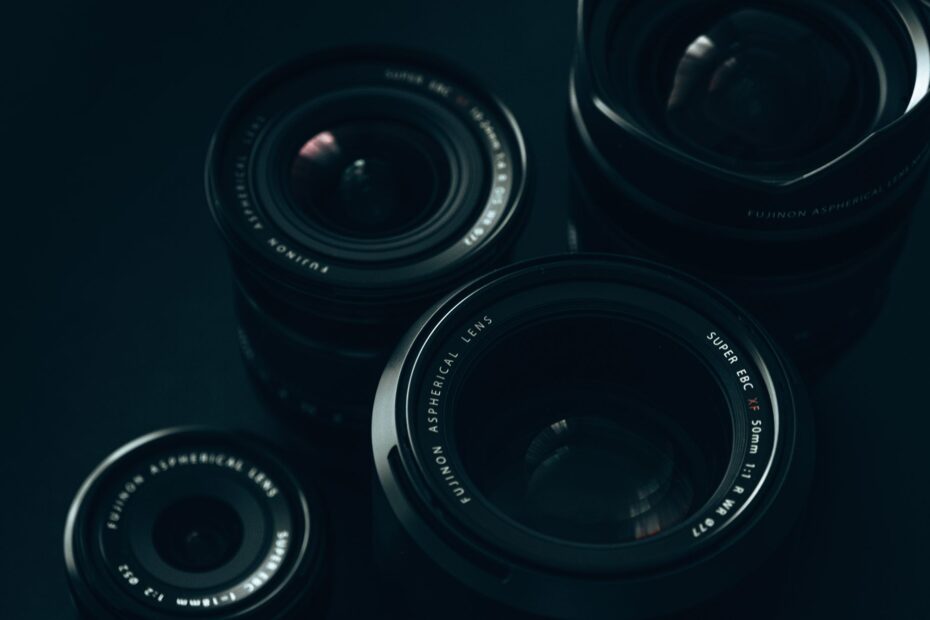
At 50 mm, a fixed focal length offers one field of view, while an adjustable lens covers a range. A 50mm prime holds one view, while a 24-70mm zoom shifts from wide scenes to tighter portraits. Your choice affects framing speed, travel weight, and dim-light shooting.
Here, you can weigh focal length, aperture, sharpness, camera movement, and real shooting situations before choosing a lens for your camera.
Two Lens Designs Have Different Focal-Length Control
Focal length controls two visible traits in your photo: angle of view and magnification. A shorter focal length, such as 24mm, includes more of the scene. A longer focal length, such as 200mm, narrows your view and makes distant subjects appear larger in the frame.
A prime lens has one fixed focal length. Your 35mm prime stays at 35mm, so its field of view changes only when you move the camera or switch lenses. That fixed view gives the lens a consistent visual character.
A zoom lens has a variable focal length. A 24-70mm model covers every setting from 24mm through 70mm, so you can alter framing without removing the lens from an interchangeable-lens camera.
Using a 24-70mm zoom at 50mm does not turn it into a 50mm prime. The zoom still has an adjustable optical design, which is the core difference between prime and zoom lenses.
Camera Position Shapes Perspective More Than the Zoom Ring
Standing in one spot with a 50mm lens holds the frame borders in place. Swap it for a 24-70mm zoom, and you can include a room at 24mm or tighten onto a face at 70mm without taking a step.
Your feet become part of composition with a fixed lens. Moving closer fills the frame, while stepping back adds surroundings. Switching from a 35mm prime to an 85mm prime changes your view, though the lens swap takes time and exposes the camera mount.
Distance changes subject relationships
Distance changes more than framing. Move close with a 24mm lens and nearby features look larger relative to the background. Step back, then use 70mm for similar framing, and the background fills more of the area behind your subject.
Zooming from the same camera position mainly changes the angle of view. The apparent relationship between near and distant objects remains tied to your position, not the number on the zoom ring. You need that distinction for portraits, architecture, and product photography.
For a head-and-shoulders portrait, choose your camera position for flattering perspective before selecting focal length. Then select the lens setting that gives you the framing you want.
The Main Trade-Offs Are Framing Range, Aperture, and Carry Weight
Fast reframing is a zoom lens’s central strength, while a single compact fixed lens can feel lighter during a long walk. The comparison below shows how each design fits different shooting conditions.
| Factor | Prime lens | Zoom lens |
|---|---|---|
| Focal-length range | Your view stays fixed. | You can shift from wide to telephoto. |
| Maximum aperture | Your lens can open to f/1.8 or f/1.4. | Your lens can open to f/2.8 or f/4. |
| Framing speed | You move or change lenses. | You turn the zoom ring. |
| Size and weight | Your single lens can be compact. | Your single lens covers several views. |
| Typical use | Your portraits and dim-light work can benefit. | Your events, travel, and sports work can benefit. |
Lens size and weight need more context than one specification sheet gives you. One 50mm f/1.8 is small, yet three primes in a bag can outweigh one 24-70mm f/2.8. Your full kit matters more than one lens alone.
Neither design suits every assignment. Access to the subject, the pace of the scene, available light, and your intended look shape the practical choice. Maximum aperture brings those trade-offs into sharper focus.
That single specification affects both exposure flexibility and how distinctly subjects separate from their surroundings.
Wider Apertures Help in Dim Light and Create Shallower Blur
An f/1.8 opening admits more light than f/2.8, and f/1.4 admits more still. Prime lenses can reach wider maximum apertures because their optical construction has fewer moving groups than a comparable zoom.
Your shutter speed can stay faster in a dim restaurant, theater, or evening street scene with a brighter lens. Faster shutter speeds reduce blur from a moving child, musician, or pet. Lower ISO also limits visible noise in your final file.
Depth of field has four main controls
Wide apertures create shallower depth of field, but aperture does not act alone. A close subject, a longer focal length, and a larger full-frame camera sensor also reduce the zone that appears sharp. Bokeh describes the character of blur outside that zone.
- Open aperture: An f/1.4 or f/1.8 setting narrows the sharp area more than f/4 at the same distance.
- Close distance: Moving your camera nearer to the subject reduces depth of field.
- Long focal length: An 85mm view can isolate a subject more strongly than a wider view from farther away.
- Distant background: More space behind your subject creates a softer-looking background.
A Canon 85mm f/1.8 used close to a portrait subject can blur a distant background strongly. A Sony 24-70mm f/2.8 at 70mm can also produce background blur, though your subject distance and background distance still control the result.
Optical image stabilization steadies camera shake at slow shutter speeds, but it cannot freeze a dancer, athlete, or moving animal. Use shutter speed to control subject movement.
Sharpness Depends on the Specific Lens and Shooting Setup
A sharp photo depends on more than a zoom ring. Modern zooms such as a 70-200mm f/2.8 can produce detailed files, while an inexpensive fixed lens can show soft corners or lower contrast at its widest aperture.
Your prime lens vs zoom lens sharpness result depends on optical design, aperture setting, autofocus accuracy, focal-length position, and sample variation. A zoom can perform differently at 24mm than at 70mm, while a prime can sharpen after stopping down from f/1.4 to f/2.8.
Focus errors can look like poor lens sharpness. At f/1.4, the in-focus area around an eye can be only a few millimeters deep at close portrait distance. Your camera’s eye-detect autofocus helps, but subject movement still affects the image.
High-grade Sigma, Nikon, Canon, and Sony zooms show that fixed focal length does not automatically produce sharper photos. A lighter prime still gives you a strong reason to choose it where a wide aperture matters more than focal-length range.
Shooting Conditions Point Toward the Better Lens Type
Changing position is simple on a quiet sidewalk and impossible from the back of a crowded ceremony room. That access limit gives you a practical way to match lens type to the work in front of you.
| Shooting situation | Useful lens type |
|---|---|
| Portraits and street scenes | Your fast prime gives a consistent field of view and strong background separation. |
| Travel and landscapes | Your zoom covers city streets, interiors, and distant details without frequent lens swaps. |
| Sports and wildlife | Your telephoto zoom reframes distant action from a fixed position. |
| Events and weddings | Your zoom responds quickly as subjects move through changing distances. |
| Video work | Your zoom reframes during a take, while a prime gives brighter exposure and a consistent look. |
For zoom lens vs prime lens for travel, a 24-105mm or 24-70mm style range reduces lens changes in dusty streets, museums, and airports. A 35mm f/1.8 gives you a brighter option after dark, where a slower travel zoom reaches its limit.
Video brings a separate concern. Zooms permit rapid reframing during a take, but the zoom ring can add visible or audible movement. Your prime setup stays smaller and brighter, though it demands more deliberate camera placement.
A Starting Lens Should Match Your Current Habits
A kit zoom gives you evidence before you commit to one fixed view. Review the focal lengths repeated in your files, then decide whether a 35mm, 50mm, or 85mm prime fits your shooting habits.
- Start versatile: Use your kit lens for family events, travel days, and subjects that change distance quickly.
- Choose brighter: Add an f/1.8 prime for indoor portraits, evening walks, and stronger background separation.
- Check equivalents: Match crop-sensor focal lengths to your intended full-frame field of view before selecting a 35mm or 50mm lens.
- Review metadata: Sort recent photos by focal length and identify settings repeated in your successful images.
Your crop sensor changes the field of view from a focal length. On many APS-C cameras, a 35mm lens gives a view close to 50mm on full frame, while a 50mm lens behaves closer to 75mm. Nikon DX, Canon APS-C, and Sony APS-C bodies use slightly different crop factors.
A prime or zoom lens for beginners comes down to uncertainty. A standard zoom handles changing scenes well, while a fast prime serves a clear need for low-light photography, portraits, or a small daily carry.
Once one lens covers your routine, a complementary second lens can address the situations it misses.
A Two-Lens Kit Covers More Situations Without Excess Overlap
Many photographers settle on one flexible zoom and one bright fixed lens. A 24-70mm f/2.8 plus a 50mm f/1.8 covers fast-paced daylight work and gives you a brighter choice for dim scenes or shallow depth of field.
Your prime lens has real drawbacks. Tight interiors can leave you unable to step back. Lens swaps can cost a candid moment, and full coverage across wide, standard, and telephoto views can mean carrying several fixed focal lengths.
- Keep the zoom: Use it where your position is restricted, such as sidelines, ceremonies, boats, or crowded rooms.
- Add one prime: Pick the focal length that matches images already repeated in your files.
- Limit duplicates: Skip overlapping lenses that solve the same framing problem in your bag.
- Review missed shots: Check focal lengths, light levels, and framing limits before changing your kit.
Review your recent photos and identify recurring focal lengths and lighting conditions. Then choose the lens type that removes your largest constraint, whether that is slow reframing, weak low-light exposure, excess weight, or restrictive framing.
Final Lens Choice Comes Down to Distance, Pace, and Light
Your strongest choice fits the distance, pace, and light of your real photographs. A zoom protects coverage when scenes move quickly, while a bright prime rewards deliberate framing and dim-light work.
Prime vs zoom lenses is not a contest between better and worse optics. You are choosing between focal-length flexibility and the lighter, brighter character of a fixed lens. Your files, shooting locations, and missed frames reveal which trade-off matters most.
FAQ
What is the difference between a prime lens and a zoom lens?
A prime lens has one fixed focal length, such as 35mm or 50mm. A zoom lens covers a focal-length range, such as 24-70mm, so you can change framing by turning the zoom ring instead of switching lenses or moving the camera.
Can you zoom with a prime lens?
Framing changes only when you move your feet, since its optical design locks the focal length. Your framing changes through camera movement or a lens swap, and that movement also changes perspective in ways a zoom ring does not.
Why do prime lenses often have wider apertures than zoom lenses?
Prime lenses can use fewer moving optical groups because they cover one focal length. That simpler design can make wider maximum apertures, such as f/1.8 or f/1.4, practical compared with a zoom covering a broad range.
Are prime lenses sharper than zoom lenses?
At matched apertures, sharpness depends on the specific optical design, not automatically on lens type. Lens sharpness depends on the specific design, aperture, autofocus accuracy, focal-length setting, and focus distance. A high-quality modern zoom can be extremely sharp, while a prime can offer an advantage at f/1.8 or f/1.4.
What are the drawbacks of using a prime lens?
A prime lens limits your framing to one focal length, so you must move closer, move farther away, or change lenses. Your position can be blocked by walls, crowds, water, or distance, and carrying several primes can add weight and slow your work.
Should I get a zoom lens or a prime lens first?
Choose a zoom lens first when you are still learning which focal lengths suit your photos. Your kit zoom records that evidence in image metadata, while a prime is a strong next choice once you repeatedly work near one focal length or need more light.