A good podcast camera does more than just look sharp on a monitor. It needs to keep your face in focus while you talk, hold up in mixed home lighting, and slot into a desk setup without hogging space. This roundup focuses on cameras that work hard for spoken-word creators, whether you’re recording solo episodes, hosting remote guests, or streaming a video version of your show.
Your Options, Compared
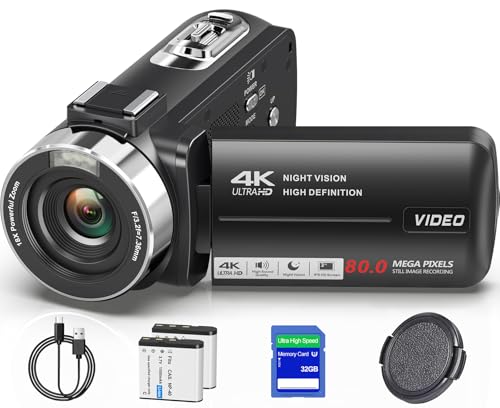
THPACIP 4K 80MP Camcorder Video Camera 18X Zoom
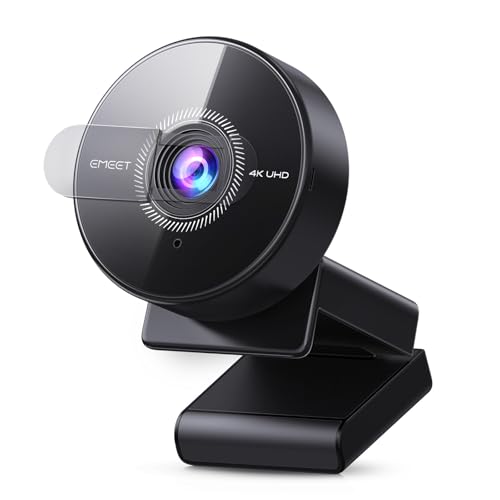
EMEET C950 4K Webcam with PDAF Autofocus

EMEET NOVA 4K Webcam with Dual Omni Mics

EMEET C960 4K Webcam with 73° FOV

EMEET S600L 4K Webcam with Ring Light

Peryoua 4K Ultra 80MP Camcorder Video Camera

EMEET C100 2K Webcam with Privacy Cover
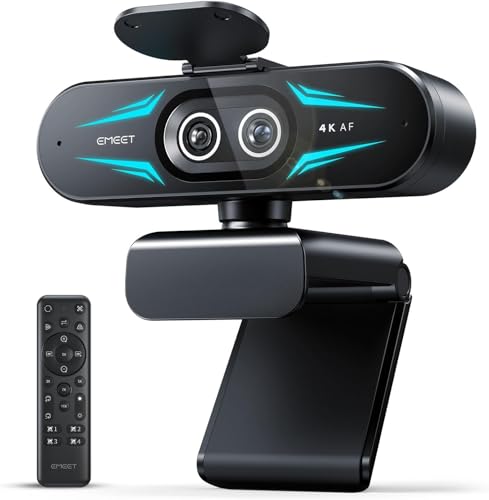
EMEET C60E Dual-Camera 4K Webcam with Hybrid Zoom

EMEET S600 4K Webcam Streaming Camera

EMEET Piko Dual-Camera 4K Webcam
A Closer Look At Each Pick
Handheld camcorders still earn their spot in podcasting, especially when you want to step away from the desk, roam a small set, or shoot B-roll of guests arriving. The THPACIP records at 4K resolution with an 80MP still capture mode, giving a noticeable step up in sharpness from a built-in laptop camera. For a creator recording at home without a rig, it doubles as a flexible run-and-gun option that can pivot between fixed and handheld framing.
The 270-degree rotating screen is genuinely useful for solo hosts who frame themselves without an external monitor. Unlike the EMEET webcams reviewed later, this one isn’t tethered to a USB port, so you can place it on a tripod across the room. Owners commonly find the 18X digital zoom handy for tightening the shot when the camera sits further back than a webcam clamp allows.
Features That Help
- 4K video capture delivers a clean, sharp image for video-first podcasters.
- 18X digital zoom lets you reframe from across the room without moving the camera.
- 270-degree flip screen removes guesswork when framing yourself solo.
- Lightweight body is easy to mount on a small tabletop tripod for travel episodes.
Honest Caveats
- Digital zoom softens image detail at full extension, so it works best within moderate ranges.
- Battery life varies depending on whether you record at full 4K, which drains cells faster than 1080p.
- Handheld use can pick up handling noise if you skip a tripod for long interviews.
Whose Shelf It Belongs On
First-time podcasters who want a camera that doubles as a travel vlogging tool and don’t want to mount it on a monitor.
Look Elsewhere When
The EMEET C950 4K Webcam suits creators who record exclusively at a desk and prefer a simple clip-on USB setup.
The C950 is the kind of webcam that quietly gets the job done for most talking-head podcasters. PDAF stands for phase-detection autofocus, which means the camera adjusts focus quickly when you lean in or hold up a product. It records at 4K at 30 frames per second and drops to 1080p at 60 frames per second for smoother motion, which gives you a useful pair of speed settings to choose from.
Unlike the THPACIP camcorder, the C950 clips onto a monitor and runs over USB, so there’s no battery to babysit. A CMOS sensor (a light-capturing chip common in modern webcams) helps it perform better in dim home offices than older models did. For hosts who record in a fixed spot and want clean framing without a learning curve, this hits a sweet spot.
What It Does Well
- 4K resolution at 30 FPS gives a sharp, professional look on episode thumbnails.
- PDAF autofocus keeps your face crisp when you gesture or lean forward mid-sentence.
- USB connectivity means plug-and-play recording with most podcast software.
- CMOS sensor handles lower-light home studios better than older webcam generations.
Worth Bearing In Mind
- Built-in microphone quality is decent for chat but won’t replace a dedicated XLR setup.
- Field of view leans tight, so two-person shots can feel cramped.
Feature Snapshot
Who It Suits Best
Solo creators recording at a fixed desk who want clean 4K without a complicated setup.
Skip It When
Hosts filming two-person interviews should reach for the EMEET C960 4K Webcam instead, since its wider field of view fits both faces comfortably.
The NOVA sits in that comfortable middle ground where the spec sheet looks serious without crossing into stream-gear territory. It records 4K at 30 FPS using a CMOS sensor, the same imaging chip class as the C950, but adds dual omnidirectional microphones. Omni mics pick up sound equally from all directions, which is helpful when you and a guest both sit in front of one webcam.
Compared to the C960 below, the NOVA leans toward a tighter, more cinematic look that flatters a single host. For a podcast that wants video presence without hiring a camera operator, it’s a sensible upgrade over older 1080p webcams.
Positive Takeaways
- 4K resolution lifts the production feel without overwhelming a casual setup.
- Dual omni microphones capture two voices in front of the lens with reasonable clarity.
- PDAF autofocus tracks movement so you stay sharp during animated conversations.
Trade-Offs To Consider
- Tighter framing means it doesn’t suit wide two-shot interviews out of the box.
- Omni mics still pick up room noise, so a quiet space helps the audio shine.
The Right Fit For
Hosts recording solo video episodes who want a noticeable step up in clarity without dedicated mic gear yet.
Where Another Pick Suits Better
The EMEET C960 4K Webcam is a better fit when you film co-hosted interviews, since its 73-degree field of view keeps both guests in frame.
The C960 trades a little background drama for genuinely useful composition. The 73-degree field of view (the angular width of the scene the lens captures) is wide enough to keep two people comfortably in frame, which matters once you start interviewing guests across a table. PDAF autofocus and dual omnidirectional mics round out a thoughtful podcast setup.
Unlike the NOVA above, this camera leans interview-friendly rather than portrait-friendly. If your podcast format involves face-to-face conversations, the framing alone can save you from needing a second camera angle.
Key Advantages
- 73-degree field of view fits two hosts or a host and guest without cropping.
- Dual omni microphones pick up both sides of a conversation cleanly.
- PDAF autofocus keeps both faces sharp during natural movement.
- 4K resolution gives editors room to crop or reframe in post without losing detail.
Some Limits To Know
- The wider lens can introduce mild edge distortion at close distances.
- Color accuracy leans neutral out of the box, so some creators tweak settings in software.
Spec Overview
Made For
Co-hosted interview shows and panel-style podcasts filmed across one table.
Not Your Match When
Solo creators who want tighter portrait shots will prefer the EMEET NOVA 4K Webcam’s narrower framing.
The S600L is built around a problem podcasters know well: dim home offices that turn faces into shadows. A built-in ring light surrounds the lens and works with the camera’s exposure algorithms to balance brightness automatically. The 1/2-inch sensor (a larger-than-average imaging chip for a webcam) gathers more light than smaller sensors, which helps in rooms where you can’t add a softbox.
Compared to the C960, this model focuses more on lighting flexibility than microphone count. For late-night recording schedules or basement studios, that trade makes sense.
Bright Spots
- Integrated ring light removes the need to buy a separate key light.
- 1/2-inch sensor captures more light in darker rooms than smaller-sensor webcams.
- 0.2-second PDAF autofocus responds quickly when you shift position.
- 4K output keeps your visual brand consistent with higher-end gear.
Things To Consider
- Built-in lighting is fixed in position, so it favors face-on framing rather than dramatic side lighting.
- The ring light draws additional power over USB, which can warm the body during long sessions.
Best Suited To
Creators recording in dim home offices or after-hours schedules who don’t want to set up studio lighting.
Consider Something Else When
Hosts who already own strong key lights should consider the EMEET S600 4K Webcam instead, since it skips the ring light in favor of pure sensor performance.
The Peryoua camcorder mirrors the THPACIP’s core specs but swaps a few extras into the package. You still get 4K video at 30 frames per second and an 80MP stills mode, plus 18X digital zoom for reframing. The body style suits creators who treat podcasting like a small video shoot, with physical buttons and a flip-out display instead of a clip-on design.
For on-location interviews, this kind of camcorder travels better than a USB webcam tethered to a laptop. If you record at events, retreats, or co-working spaces, the standalone form factor feels familiar.
Points In Its Favor
- 4K recording produces footage that holds up when cropped for social clips.
- 18X digital zoom tightens framing when you can’t move the camera closer.
- Standalone design means you can shoot without keeping a laptop awake.
- 80MP stills mode doubles as a backup camera for promotional photos.
Potential Compromises
- Digital zoom loses detail at long distances, so it works best within moderate reach.
- File sizes from 4K footage fill memory cards faster than 1080p sessions.
Feature Card
Perfect Match For
Creators who record on location or want a camera that handles both podcast video and social stills.
A Better Fit Elsewhere
The EMEET C950 4K Webcam is the smarter pick for desk-bound creators who want a smaller footprint and simpler cable setup.
The C100 trades resolution for compactness, recording at 2K rather than 4K. In a podcast setting where your video is often compressed for streaming anyway, 2K looks clean and gives the laptop less data to crunch during recording. The rotating privacy cover is a small but welcome detail for anyone sharing an office or working from a co-working space.
Unlike the 4K webcams above, this model leans toward simplicity over outright sharpness. Fixed focus means no autofocus hunting, which can actually feel steadier during a quiet monologue.
Positive Points
- Rotating privacy cover gives quick visual peace of mind when you’re off-air.
- Metal clip keeps the webcam secured to thinner monitor bezels.
- Fixed focus avoids the small breathing adjustments some autofocus webcams make mid-sentence.
- Compact body suits travel kits and small desks.
Small Caveats
- 2K resolution is softer than the 4K models in this roundup when watched on large screens.
- Fixed focus means holding products very close to the lens can blur out.
Who Should Grab It
Creators working from shared spaces who value a privacy cover and a small footprint over maximum resolution.
Reach For A Different Pick When
You need native 4K detail for repurposing clips on YouTube, in which case the EMEET C950 4K Webcam is a better fit.
The C60E takes a step into unusual territory for a webcam: two lenses sharing one body. A wide-angle lens captures the room and the host, while a telephoto lens (a longer-focal-length lens that magnifies distant subjects) handles close-ups at a recommended 13.8-inch distance. You can switch between them mid-recording, which suits shows that cut between talking-head framing and product close-ups.
Compared to the EMEET Piko reviewed last, this model adds RGB lighting and a remote control, which makes it friendlier to live shows where you adjust settings on the fly. The 11X hybrid zoom stretches that telephoto reach when you want to highlight a prop without leaning in.
Real-World Strengths
- Dual-camera setup supports natural show formats with wide and close-up angles.
- RGB lighting lets you tint the scene for branded color palettes.
- Remote control enables switching lenses without touching the camera mid-recording.
- 11X hybrid zoom reaches tight close-ups from a comfortable desk distance.
Factors To Consider
- Dual lenses take a moment to learn, so the learning curve is steeper than single-lens webcams.
- RGB lighting adds visual flair but can clash with already-styled lighting setups.
Built With In Mind
Hosts running live shows that cut between wide shots and close-ups of products, notes, or instruments.
Another Choice May Suit
Solo creators who don’t switch angles mid-episode should consider the EMEET S600 4K Webcam for its larger Sony sensor.
The S600 leans hard into imaging quality with a Sony 1/2.55-inch sensor, a sensor size borrowed from dedicated cameras and a step up from typical webcam chips. The result is cleaner low-light performance and more accurate color than most clip-on webcams in the same bracket. For live streamers who record video podcasts in real time, that sensor matters every time the room lighting shifts.
Compared to the C950, this model skips built-in lighting in favor of pure sensor performance, which rewards creators who already own a key light or shoot near a window.
Where It Delivers
- Sony sensor captures richer color and cleaner low-light video than typical webcams.
- PDAF autofocus tracks movement cleanly during animated delivery.
- 4K at 30 FPS and 1080p at 60 FPS cover both sharpness and motion smoothness.
Points To Keep In Mind
- No built-in lighting means you rely on room lights or a separate key light.
- Larger sensor body is bulkier than entry-level clip-on webcams.
Feature Rundown
Right Fit For
Live-streaming video podcasters who already control their lighting and want stronger sensor output.
Swap It Out When
Creators with poor room lighting will get more from the EMEET S600L 4K Webcam with its built-in ring light.
The Piko rounds out the roundup with the same dual-lens idea as the C60E, but in a simpler body aimed at content creators who switch between wide and close-up framing. The wide-angle camera keeps you and your background naturally framed, while the telephoto camera handles tight close-ups of products, demos, or facial reactions.
Unlike the S600, the Piko doesn’t chase the largest possible sensor. It trades a bit of low-light purity for the flexibility of two lenses in one device, which fits shows that rely on visual storytelling.
What Helps Most
- Wide-angle lens keeps hosts framed with their background for context.
- Telephoto lens delivers sharp close-ups without a second camera.
- 4K resolution across both lenses keeps switching seamless in edits.
- Single-body design reduces cable clutter compared to dual-camera rigs.
Details To Watch
- Low-light performance doesn’t match the larger Sony sensor in the S600.
- Switching between lenses takes practice for natural on-camera timing.
Feature Breakdown
Who Will Love This
Creators producing demo-driven podcasts who frequently show products, sketches, or written notes on camera.
A Better Fit Elsewhere
Traditional talking-head shows without demos will find the single-lens EMEET C950 4K Webcam easier to live with day to day.
How To Pick The Right 4K Camera For Your Show
Settling on a podcast camera starts with honestly assessing where it will live. A USB webcam clipped to a monitor keeps your desk tidy but locks you to one angle, while a handheld camcorder lets you roam and shoot outside but adds cables, batteries, and file transfers. Most solo podcasters do best with a single fixed camera, while multi-angle shows justify dual-lens designs like the C60E or Piko.
Field of view matters more than most shoppers expect. A narrow lens flatters a single host but crops out a second guest, while a wider lens fits two faces but can stretch the background awkwardly. The C960’s 73-degree field of view sits in a comfortable middle for interviews, and the 4K sensor leaves enough detail to reframe later in editing.
Sensor size and lighting shape your final image quality. Larger sensors (like the Sony 1/2.55-inch chip in the S600) gather more light and produce cleaner low-light footage, but they need a fairly controlled room to truly shine. If your recording space runs dim, a built-in ring light (S600L) can balance exposure without buying extra gear.
Audio deserves a quick sanity check too. Webcams with dual omnidirectional microphones handle one or two voices decently, but a dedicated XLR or USB microphone still wins for serious audio. Treat any built-in webcam mic as a backup, then layer in real podcast microphones when your format demands it.
Where Shoppers Go Wrong On Podcast Camera Choices
Common Shopping Slip Ups
Chasing the highest resolution number without thinking about bandwidth can backfire. Recording at 4K looks great but fills hard drives fast and demands more from your computer during editing. Match 4K to your actual workflow, not just your wish list. Skipping a quick lighting check is another common miss, since even a sharp 4K sensor looks flat under poor room lighting.
What The Higher Tier Buys
Spending more on a streaming-grade webcam usually gets you a larger sensor, faster lenses, and better autofocus speed. The S600 and S600L demonstrate how a bigger imaging chip improves low-light clarity, while the C60E and Piko show how dual-lens designs unlock flexible framing. For most podcasters, the upgrade is worth it once you record more than a casual hobby show.