Starting a vlog in 2026 looks nothing like it did five years ago. 4K capture has filtered down to budget-friendly camcorders, wearable action cams, and even simple point-and-shoots built for new creators, so the hard part isn’t finding a sharp camera, it’s matching the form factor to your style of filming. This list breaks down seven options across handheld, wearable, rugged, and beginner-friendly categories to help you pick with confidence.
The Essentials At A Glance

Peryoua 4K Ultra 80MP Camcorder Vlogging Camera

Suttie 4K 80MP Vlogging Camcorder with Autofocus
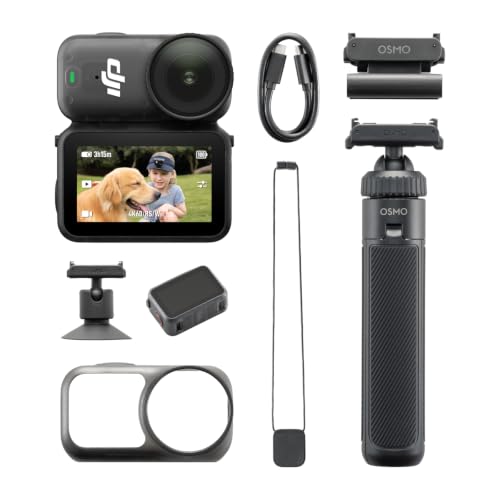
DJI Osmo Nano On-the-Go Combo 128GB
DJI Osmo Nano Standard Combo 64GB
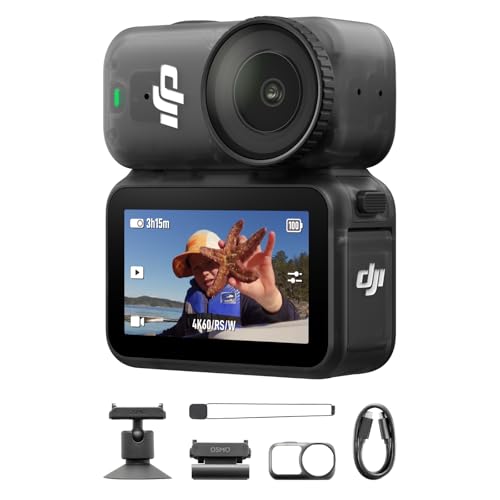
DJI Osmo Nano Standard Combo 128GB
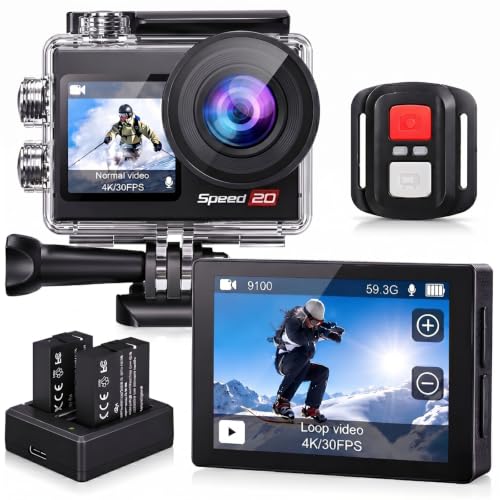
Hiicam 4K Waterproof Action Camera 20MP

Ocxu Digital Camera for Kids and Beginners
Why These Options Stand Out
The Peryoua camcorder is built for the person who just decided to start a YouTube channel and doesn’t want to wrestle with menus before recording the first clip. It records at 4K resolution and snaps stills at a very high pixel count, which sounds like overkill on paper but translates to crisp footage you can crop into later without losing detail.
The form factor is a familiar handheld camcorder shape, so it sits comfortably during longer talking-head takes in a home studio or a living-room vlog setup. It also doubles as a webcam when plugged into a computer, which saves you from buying a separate streaming camera early on.
Benefits That Matter
- 4K video plus an 80-megapixel still mode give you editing room to crop and reframe
- An 18x digital zoom pulls distant subjects closer for travel or event coverage
- Plug-and-play webcam function removes the need for a separate streaming cam
- Classic handheld body stays stable for long talking-head segments
Things To Consider
- Digital zoom (magnification done in software) softens image quality at the long end
- Low-light performance tends to fall behind larger-sensor options like the DJI Osmo Nano
- Plastic body construction may scuff with heavy travel use
Who It Suits Best
Brand-new creators filming indoor talking-head videos, family moments, or travel clips who want a familiar camcorder feel without a steep learning curve.
Consider Something Else When
Adventure vloggers chasing hands-free POV should reach for the DJI Osmo Nano Standard Combo 64GB instead.
The Suttie camcorder focuses on the feature most vloggers actually care about: framing yourself without guesswork. A screen that rotates 270 degrees flips around to face the front, so you can compose your shot while looking right into the lens. That’s the kind of small detail that quietly removes a whole category of frustration.
It carries the same 4K capture and 80-megapixel still output as the Peryoua, but adds autofocus that tracks your face as you move around the frame. For solo creators who pace during tutorials or do walk-and-talk segments, that tracking keeps you sharp without manual taps.
The Helpful Details
- 270-degree rotating screen makes self-framing easy for solo creators
- Autofocus reduces hunting when you move during a take
- 18x digital zoom reaches distant subjects at events or lectures
- Doubles as a webcam for streaming sessions
Worth Noting
- Autofocus can briefly hunt on fast lateral moves in dim rooms
- Still a small-sensor camcorder, so it trails the Osmo Nano line in low light
- Battery life is best carried with a spare for full-day shoots
Made For
Talking-head creators, beauty and tutorial vloggers, and anyone who films mostly solo and needs a flip screen plus reliable autofocus.
Where Another Pick Suits Better
Creators who mostly shoot handheld B-roll outdoors will get more mileage from the DJI Osmo Nano Standard Combo 128GB.
The On-the-Go Combo is the most travel-friendly entry in DJI’s wearable line. It ships with a mini extension rod that doubles as a tiny tripod, so you can flip between selfie-stick framing, tabletop setup, and low-angle shots without packing extra gear. That matters when you’re trying to keep a backpack light.
The 1/1.3-inch sensor is meaningfully larger than what you’ll find in budget camcorders, which translates to cleaner footage in dim hotel rooms and golden-hour street scenes. It’s the kind of body that lets you skip the ring light on cloudy days without your footage turning muddy.
What Pays Off
- 1/1.3-inch sensor captures cleaner low-light footage than small-sensor camcorders
- Mini extension rod with tripod legs adds framing options without extra bulk
- 128GB of built-in storage handles long shooting days without swapping cards
- Magnetic mount system switches between orientations fast for POV-style shots
Honest Caveats
- Wearable form factor takes practice if you’re used to handheld camcorders
- Audio quality still benefits from an external lav in windy outdoor settings
- Accessories specific to the Osmo Nano line are not interchangeable with older Osmo models
Feature Snapshot
Right Fit For
Travel vloggers, city-walk creators, and anyone who wants wearable 4K footage without hauling a full camera kit.
Look Elsewhere When
Filmmakers who need rugged underwater performance should consider the Hiicam 4K Waterproof Action Camera 20MP.
The Standard Combo trims the package down to the essentials, which makes it a sensible entry point into the Osmo Nano system. You still get the same 1/1.3-inch sensor and 4K at 60fps capture, but with 64GB of storage instead of 128, which is plenty for creators who offload footage nightly.
The magnetic mounting system is the quiet star here: you can pop the camera between a hat clip, a chest harness, and a tabletop tripod in seconds. For creators who switch between hands-free POV and stationary framing, that flexibility is the whole reason to pick a wearable over a traditional camcorder.
Well-Handled Touches
- 1/1.3-inch sensor handles mixed lighting better than typical pocket cams
- 10-bit D-Log M color profile preserves more dynamic range for color grading
- Magnetic design speeds up transitions between mounts and angles
- Compact body is easier to wear for long shoots than a handheld rig
Trade Offs
- 64GB fills up on multi-day trips without regular offloading
- No bundled extension rod like the On-the-Go Combo offers
- Battery drains faster when shooting 4K at the top frame rate in cold weather
Best Suited To
Daily vloggers and creators who film around town and want wearable 4K with the flexibility to swap mounts on the fly.
Skip It When
Filmmakers who want both a bundled selfie accessory and extra storage should pick the DJI Osmo Nano On-the-Go Combo 128GB.
This is the same Standard Combo as the 64GB version, doubled down on storage. For creators who shoot raw 4K at high bitrates, 128GB is the difference between relaxing on a hike and worrying about hitting the storage ceiling mid-shoot. That peace of mind is genuinely worth the upgrade for prolific filers.
You keep the 1/1.3-inch sensor, 4K at 60fps, and 10-bit D-Log M color that make the Osmo Nano line stand out from budget camcorders. The footage you pull from this body has enough latitude to grade aggressively without banding, which matters once you start matching shots in a multi-camera edit.
Key Advantages
- 128GB onboard storage handles a full day’s 4K shooting without swaps
- 10-bit D-Log M profile gives colorists room to push and pull the grade
- 1/1.3-inch sensor captures crisp detail even at the wide end
- Magnetic mount system pairs with the same accessories as the 64GB sibling
Points To Note
- Costs more than the 64GB version for storage you might not fully use on short shoots
- Still lacks the bundled extension rod from the On-the-Go Combo
- High-bitrate 4K files fill editing drives faster than lower-bitrate alternatives
Quick Facts
Who Should Grab It
Active creators filming multi-location days, travel series, or sports who don’t want to babysit storage mid-shoot.
A Better Fit Elsewhere
Vloggers who prioritize a bundled selfie stick over raw storage should look at the DJI Osmo Nano On-the-Go Combo 128GB.
Action cameras live in their own corner of the vlogging world, and the Hiicam leans fully into that niche. It’s rated to handle 131 feet of depth, which means snorkeling, pool shots, and rainy motorcycle rides all fall inside its comfort zone. A wide 170-degree field of view captures more of the scene than a typical lens, which makes action-heavy clips feel immediate.
Built-in electronic image stabilization (EIS) smooths out the bumps when the camera is mounted to a helmet or handlebar. That’s the kind of feature that turns shaky point-of-view footage into something watchable, especially for mountain biking, kayaking, or skatepark edits.
Standout Benefits
- Waterproof body rated to 131 feet handles snorkel and pool sessions
- Electronic image stabilization smooths helmet and handlebar footage
- 170-degree wide-angle lens fits more scene into the frame
- Touch screen on the back makes mode changes fast in the field
A Few Limitations
- Action-cam mics pick up wind noise above 15 mph on a bike
- 20MP stills are fine for social, but trail dedicated still cameras in detail
- Touchscreen can lag with wet fingers or gloves
Key Product Details
Whose Shelf It Belongs On
Outdoor vloggers, divers, mountain bikers, and anyone who films in conditions that would worry a standard camcorder.
Reach For A Different Pick When
Studio-style talking-head creators will get cleaner results from the Suttie 4K 80MP Vlogging Camcorder with Autofocus.
The Ocxu is a small point-and-shoot that treats photography like a turn-on-and-go experience. There are no manual dials to decode, no exposure menus to scroll through. Power it up, frame the shot, press the shutter, and the camera handles the rest, which makes it genuinely approachable for first-time creators.
It records in 4K and captures 64MP stills, which sounds like overkill for a kids’ camera but actually gives young photographers room to crop and explore without ending up with pixelated results. The included 64GB SD card is a thoughtful touch, so the box truly is ready to shoot on day one.
A Strong Showing
- Simple power-on-and-shoot menu lowers the learning curve for new creators
- 4K video and 64MP stills deliver more detail than typical starter cameras
- 64GB SD card included so the camera is ready to use out of the box
- Compact body fits small hands and slips into a backpack pocket
Room For Improvement
- Small sensor struggles in dim indoor lighting compared to the Osmo Nano line
- No external mic input, so audio quality tops out at built-in levels
- Plastic shell may not survive rougher drops from younger users
Built With In Mind
Kids, teens, and adults who want a no-fuss starter camera for casual home videos and family moments.
Another Choice May Suit
Creators ready to publish polished vlogs will outgrow this body quickly and benefit from the DJI Osmo Nano Standard Combo 64GB.
What Really Matters When Picking a 4K Vlogging Camera
Match the Body to Your Style of Filming
The biggest decision isn’t resolution, because nearly every modern option shoots 4K. It’s how you actually film. Handheld talking-head creators usually want a flip-out screen, autofocus, and the option to plug into a computer as a webcam. Travel and adventure vloggers benefit from wearable, lightweight bodies with strong stabilization and decent low-light performance. Action sports creators need waterproofing, a wide lens, and rugged mounting options. Pick the wrong shape and the camera ends up sitting in a drawer.
Sensor Size Affects Everything You Shoot in Dim Light
A bigger sensor gathers more light, which translates to cleaner footage in dim rooms, golden-hour streets, and night markets. The 1/1.3-inch sensor inside the Osmo Nano line pulls noticeably ahead of the small sensors in budget camcorders. If your vlog involves anything beyond a well-lit desk setup, sensor size quietly decides how often you’ll regret leaving the camera at home.
Storage and Battery Drive Real-World Shoot Days
Onboard storage and battery capacity determine how far you can roam before swapping cards or hunting for an outlet. Higher-bitrate 4K footage fills cards fast, so 128GB is worth considering for travel series and long event coverage. Spare batteries are a small add-on that quietly removes the most common cause of missed moments.
Audio Quality Is the Hidden Half of Your Vlog
Viewers forgive mediocre video but rarely forgive rough audio. Built-in mics pick up wind, handling noise, and room echo. A camera that accepts an external lav or shotgun mic opens the door to genuinely professional sound once you upgrade.
Key Considerations Across These Picks
Pitfalls Shoppers Hit
The most common mistake is buying on megapixel count alone. 80MP stills sound impressive, but if the sensor is small, those pixels don’t translate into cleaner video. The other trap is assuming every “4K” camera shoots the same; some cap out at lower frame rates, which limits slow-motion options. Confirm the frame rate, sensor size, and audio input options before committing.
Where The Extra Money Goes
Paying more in this category usually buys a larger sensor, better stabilization, weather sealing, and smarter autofocus. For creators who shoot outdoors or at night, those upgrades show up on the screen in every clip. For studio-bound creators on a budget, a simpler camcorder like the Peryoua or Suttie still delivers sharp footage without overspending on features you won’t use.
Frequently Asked Questions
Do I really need 4K for vlogging?
4K gives you room to crop and stabilize in post, which is genuinely useful for handheld or action footage. For static talking-head videos where the framing is locked, 1080p often looks identical to most viewers. Choose based on how much reframing you’ll actually do.
Can I use these cameras as a webcam?
Most modern camcorders and action cameras in this list support webcam mode over USB. Plug the camera into your computer, select the mode, and most streaming software will recognize it. That’s a clean way to upgrade your live stream without buying a separate webcam.
What’s the difference between the DJI Osmo Nano Standard Combo and the On-the-Go Combo?
The Standard Combo focuses on the camera body and core accessories, with 64GB or 128GB storage options. The On-the-Go Combo adds a mini extension rod with a built-in tripod for more flexible framing. Creators who want maximum framing options lean toward On-the-Go; creators who already own a tripod may prefer Standard.
Are action cameras good for everyday vlogging?
Action cameras excel at rugged, hands-free, wide-angle shots, but their small bodies mean smaller sensors than dedicated camcorders. For daily talking-head videos, a camcorder or wearable Osmo Nano tends to look more flattering. Use action cams where the environment demands them.
How important is stabilization?
Very important for handheld or wearable shooting. Electronic image stabilization (EIS), found in cameras like the Hiicam and Osmo Nano, smooths out walking motion and helmet shake. For tripod-only studio shoots, stabilization matters less.
Bottom Line
The right 4K vlogging camera depends almost entirely on how and where you film. Handheld talking-head creators will feel at home with the Peryoua or Suttie camcorders. Travel and everyday wearable shooters get the most versatility from the DJI Osmo Nano family. Outdoor athletes and water lovers need the rugged Hiicam. Pick the form factor that fits your style, and the rest of the decision tends to fall into place.