Streaming in 4K used to mean a bulky rig, a capture card, and a tangle of cables. Today, the gear has caught up with the workflows. Remote workers, content creators, and worship production teams all want sharp detail and clean audio without a studio budget. The catch is that “4K webcam” on a box can mean very different things, from a simple plug-and-play sensor to a full PTZ (pan-tilt-zoom) camera with optical glass. The picks below cover that full range, so you can match the camera to your actual room, audience, and software stack.
A Closer Look At The Lineup

EMEET C960 4K Webcam for PC, PDAF Auto Focus

TONGVEO 4K Conference Room Camera System with Speakerphone

OBSBOT Meet 2 4K Webcam with AI Framing

OBSBOT Meet SE 1080P 100FPS Webcam

OBSBOT Tiny 3 Lite 4K Webcam with AI Tracking

OBSBOT Tiny SE 1080P Webcam with AI Tracking
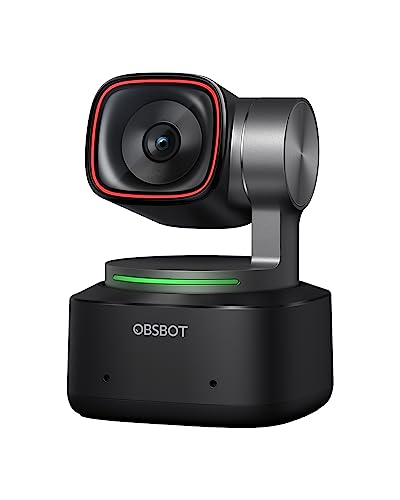
OBSBOT Tiny 2 4K PTZ Webcam with Voice Control

TONGVEO 4K NDI PTZ Camera with 20X Optical Zoom

OBSBOT Tiny 3 4K Webcam with Spatial Audio
Inside Each Recommended Option
The EMEET C960 lands in that sweet spot most remote workers actually want: genuine 4K without a complicated app stack. PDAF (phase-detection autofocus) is the same tech phones use, so the lens locks on quickly when you lean forward or hold up a product. That makes it feel less like a webcam and more like a small video camera bolted to your monitor.
Dual omnidirectional microphones help in a pinch, though for client-facing calls you may still want a dedicated mic. The 73° field of view (FOV) is narrower than a wide-angle lens, which keeps coworkers’ heads from looking tiny across a long table.
Noteworthy Benefits
- True 4K resolution for crisp text, faces, and product shots in meetings.
- PDAF autofocus keeps you sharp during whiteboard moments and desk movement.
- Dual omni-mics reduce the need for a headset on casual calls.
- Narrow 73° FOV frames a single speaker without empty background.
Worth Noting
- Lacks the AI tracking of pricier OBSBOT picks, so it stays fixed on its mount.
- Microphones pick up room echo in untreated home offices, a common reported issue.
Feature Snapshot
Right Fit For
Remote employees and small-team leads who host a few video calls daily and care more about clarity than clever tracking.
Look Elsewhere When
Solo creators who move around the frame should look at the OBSBOT Meet 2 4K Webcam with AI Framing instead.
This kit flips the script on the standalone webcams above by pairing a 4K PTZ camera with a wireless Bluetooth speakerphone. The camera handles AI auto-tracking, while the speakerphone picks up voices around a table, so your meetings stop feeling like a single person shouting across a room. Compared with the EMEET C960, this is more hardware, more cables, and a different room entirely.
The 93° wide angle and 3X optical zoom give a hybrid room real flexibility, since optical zoom (true lens magnification) preserves detail where digital zoom would smudge it.
The Value In It
- PTZ camera with 3X optical zoom frames both small groups and individual speakers cleanly.
- Wireless Bluetooth speakerphone cuts table clutter and reaches voices from across the room.
- USB 3.0 and HDMI outputs let the system slot into most modern conference setups.
- AI auto-tracking follows whoever is talking, useful for churches and panel discussions.
Trade Offs
- Two devices mean more setup and more cable management than a simple webcam.
- Wireless speakerphone needs charging and pairing before each session, a common ownership step.
Made For
Small-to-medium conference rooms, hybrid teams, and worship spaces that need a turnkey video-and-audio package.
Consider Something Else When
Solo streamers working from a desk will find the OBSBOT Tiny 2 4K PTZ Webcam with Voice Control easier to live with.
The OBSBOT Meet 2 feels purpose-built for the one-person show. AI framing keeps your face centered even if you drift off-camera for a sip of coffee, while the 1/2-inch sensor is bigger than what most webcams ship with, so low-light home studios look less grainy. Where the EMEET C960 sits still, this one quietly thinks for you.
Autofocus is responsive enough for unboxing or cooking demos where you swap between close-ups and face shots.
Where It Excels
- AI framing replaces a manual camera operator for solo creators.
- Larger 1/2-inch sensor improves image quality in dim rooms, a real win for evening streams.
- Responsive autofocus handles product close-ups without hunting.
- Compact body fits on top of a laptop or a small tripod without drama.
Honest Caveats
- AI framing can crop awkwardly if you wear similar colors to your background.
- Companion software adds a learning curve for first-time streamers.
Who It Suits Best
Solo content creators and remote presenters who move around during recordings and want hands-free framing.
A Better Fit Elsewhere
Anyone needing broadcast-grade reach should pivot to the TONGVEO 4K NDI PTZ Camera with 20X Optical Zoom instead.
Not every situation calls for 4K. The OBSBOT Meet SE delivers 1080p at a buttery 100 frames per second, which makes motion look smoother in game clips and reaction streams. High frame rates matter more than pixel count when the action is fast, so you may actually find this 1080p option looks better in motion than a cheaper 4K camera.
AI framing still tags along from the pricier Meet 2, which is unusual at this level.
The Case For It
- 100fps framerate produces noticeably smoother gameplay footage than standard 30fps cameras.
- AI framing keeps you centered without a paid editor.
- 1080p demands less bandwidth, helpful on crowded home networks.
Points To Note
- 1080p resolution falls short of the 4K detail shoppers expect from premium cameras.
- Low-light performance is modest, so plan for decent room lighting.
Best Suited To
Casual streamers and gamers who prioritize smooth motion over resolution and want AI features without paying for 4K.
Swap It Out When
Streamers producing archival YouTube content should look at the OBSBOT Tiny 3 4K Webcam with Spatial Audio for crisper source footage.
The Tiny 3 Lite is what happens when OBSBOT shrinks its flagship down to travel size. The gimbal-based PTZ body physically rotates to follow you, which feels more natural than a software crop. That mechanical tracking is a clear step up from the EMEET C960’s fixed mount, and it packs into a laptop bag without complaint.
The triple-mic array also adds spatial pickup, so off-axis sound comes through clearly.
Notable Upsides
- Mechanical PTZ tracking follows you across the room without losing framing.
- Compact form factor suits laptops and small desks.
- Triple-mic array handles group calls and voiceovers cleanly.
Soft Spots
- Smaller body means smaller cooling, so warm rooms can trigger thermal throttling during long streams.
- Plastic mount hinge is a common wear point when repositioned often.
Whose Shelf It Belongs On
Frequent travelers, remote lecturers, and anyone working from a hotel room who still wants presenter-tracking.
Reach For A Different Pick When
Studio-bound creators chasing maximum sensor size should look at the OBSBOT Tiny 2 4K PTZ Webcam with Voice Control.
The Tiny SE gives you mechanical PTZ tracking at the same 100fps sweet spot the OBSBOT Meet SE hits, but in a smaller body that swivels physically. For Twitch-style streams where you snap between face-cam and game capture, that pan-tilt motion reads as more professional than a static lens, even at 1080p.
It’s a different beast from the EMEET C960, trading fixed simplicity for active tracking.
Why It Works Well
- 100fps framerate at 1080p keeps fast gameplay smooth.
- Physical PTZ tracking adds dynamic camera moves that feel broadcast-quality.
- Compact gimbal design works on crowded desks.
Worth Bearing In Mind
- 1080p ceiling, so 4K-curious streamers will want to step up.
- Mechanical motors add a faint hum in quiet recordings, commonly reported.
Who Should Grab It
Esports streamers and reaction-video creators who want cinematic tracking without 4K demands.
Not Your Match When
Producers recording sit-down interviews should consider the OBSBOT Meet 2 4K Webcam with AI Framing for static resolution.
The Tiny 2 is OBSBOT’s flagship for a reason: a 1/1.5-inch sensor (large for a webcam) collects real light, so dark home offices don’t look like a cave. Voice control and gesture control let you start tracking or zoom without leaving your seat, which sounds gimmicky until you try recording a tutorial where your hands are busy.
At 60fps in 4K, motion stays smooth enough for product demos, and HDR (high dynamic range) light correction handles window glare better than the budget OBSBOT Meet SE.
What Earns Its Place
- Large 1/1.5-inch sensor dramatically improves low-light performance.
- Gesture and voice control keep your hands free during demos.
- HDR light correction handles mixed window and lamp lighting in home offices.
- AI tracking modes adapt to solo talks, group calls, and overhead shots.
Potential Sticking Points
- Premium pricing puts it out of reach for casual shoppers.
- Voice commands occasionally misinterpret noisy environments, a common ownership quirk.
Feature Rundown
Perfect Match For
Established content creators and remote lecturers who record often and want one camera to cover every scenario.
Skip It When
Anyone whose workflow is just Zoom calls can save money with the EMEET C960 4K Webcam.
This is not a webcam, it’s a broadcast camera that happens to play nicely with consumer software. The 20X optical zoom dwarfs every other pick on this list, and NDI (Network Device Interface) support means a single Ethernet cable can carry video, audio, and control signals to your switcher. AI auto-tracking locks onto a speaker across a sanctuary, which is exactly what worship and event teams ask for.
Compared to the TONGVEO Conference Room Camera System above, this unit handles much larger spaces and outputs true 4K over HDMI.
The Upside
- 20X optical zoom reaches across large venues without digital quality loss.
- NDI, SDI, HDMI, USB 3.0, and PoE outputs cover nearly every production workflow.
- AI auto-tracking follows speakers during sermons and live events.
Things To Weigh
- Network streaming tops out at 1080p, so true 4K requires HDMI or USB.
- Physical installation and PoE setup need more IT knowledge than a desk webcam.
- Firmware updates are reported to be occasional, so plan for technical patience.
Spec Overview
Who Will Love This
Houses of worship, schools, and event venues running OBS, vMix, or Zoom where one camera covers a whole room.
Where A Sibling Pick Shines
Smaller hybrid teams that just need a meeting-room camera will find the TONGVEO 4K Conference Room Camera System easier to set up.
The Tiny 3 is OBSBOT’s current flagship desktop camera, and it shows. A 1/1.28-inch sensor pulls in more light than the Tiny 2, while AI-powered spatial audio uses the triple-mic array to place your voice in space for listeners. If you spend hours on calls and your laptop’s built-in mic is starting to sound tired, this combo alone is worth the upgrade.
Compared to the EMEET C960’s fixed position, the Tiny 3 physically pans and tilts to follow you, which makes long recording sessions feel less like a still portrait.
What Helps Most
- Large 1/1.28-inch sensor cleans up dim home offices and evening calls.
- Spatial audio makes your voice sound more lifelike to listeners on the other end.
- Mechanical PTZ tracking keeps you in frame without a software crop.
- Compact body fits a laptop bag for hybrid workers.
Small Caveats
- Sticker price climbs well above basic 4K webcams.
- Spatial audio processing needs compatible software to really shine.
Technical Highlights
Built With In Mind
Knowledge workers and creators ready to retire an aging laptop webcam and notice the difference in calls.
Another Choice May Suit
Shoppers who only need plug-and-play 4K for occasional meetings will find the EMEET C960 4K Webcam a simpler answer.
What Matters Before Choosing Your 4K Streaming Camera
Match The Camera To The Room
A bedroom office and a 200-seat sanctuary need entirely different optics. For desks, a 60–80° field of view frames one person without fisheye distortion. For conference rooms, 90°+ wide angles combined with optical zoom (true lens magnification, not cropping) let one camera cover the whole table. The TONGVEO kits address larger spaces, while the OBSBOT Tiny line is built for personal workstations.
Sensor Size Beats Marketing Pixels
A 1/1.5-inch or 1/1.28-inch sensor captures meaningfully more light than a typical 1/3-inch webcam chip. In practical terms, you see less grain when the room is dim. If you stream evenings or record from a basement studio, prioritize sensor size over headline resolution.
Frame Rate And Resolution Trade Off
1080p at 100fps looks smoother in motion than 4K at 30fps, which matters for gameplay and reaction content. For sit-down interviews or product close-ups, 4K at 60fps wins on detail. Match the spec to the motion in your footage.
Audio Is Half The Experience
Even the best sensor gets undermined by muddy audio. PTZ cameras like the OBSBOT Tiny 3 add spatial audio pickup, while conference kits bundle separate speakerphones. Plan a mic strategy before you finalize the camera choice.
Key Considerations Across These Picks
Pitfalls Shoppers Hit
The most common mistake is chasing 4K resolution on a fast internet upload that cannot sustain it, then wondering why streams stutter. Another trap is buying a fixed-lens webcam for a creator who moves around the frame, which leads to constant cropping. Map your real use case, room size, and bandwidth before comparing spec sheets.
When Paying More Pays Off
Premium tiers buy you larger sensors, mechanical PTZ tracking, and better microphone arrays. Those features matter when you record daily, stream for paying audiences, or run long sessions where autofocus hunting becomes obvious. For occasional calls, mid-range options handle the job without the extra cost.