Pulling old family footage off aging tapes used to mean a tangle of cables, a finicky VCR, and a prayer that the heads still worked. Today, modern projectors and capture boxes let you send that vintage video straight to a wall, a TV, or a digital file in minutes. If you’re trying to revive home movies, archive old recordings, or simply watch tape content on a bigger screen, the right hardware makes the difference between frustration and a fun afternoon project. The picks below cover both sides: projectors that handle the playback beautifully, and capture boxes that digitize your tapes for good.
The Leading Options At A Glance

soundcore Nebula P1 Portable Projector with Detachable Speakers

WENTER VHS to Digital Converter Capture Recorder
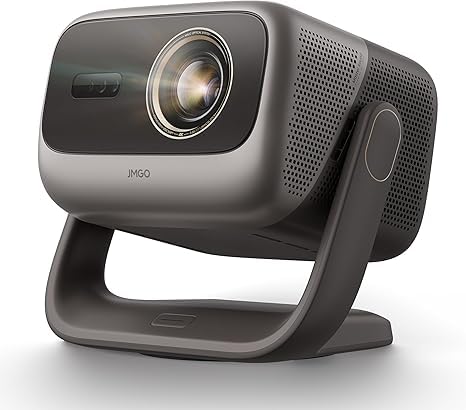
JMGO N3 Ultimate 4K Triple Laser Projector

JMGO N1S Ultra 4K Triple Laser Projector with Google TV

JMGO PicoPlay 1080P Smart Mini Projector with Google TV

soundcore Nebula X1 Pro 4K Laser Projector

JMGO N1S Ultimate Triple Laser 4K Projector with Google TV

JMGO O2S Ultra 4K Ultra Short Throw Triple Laser Projector
What Each Pick Brings To The Table
The Nebula P1 is built for people who want big-screen playback without dragging a full surround system to the backyard. Its two 20W wireless speakers detach from the main unit, so you can spread the stereo pair across a picnic table or a blanket and actually hear the dialogue without cranking the volume. Inside, Dolby Audio processing handles the heavy lifting, and 650 ANSI lumens (a brightness measurement that tells you how well the image holds up in daylight) keeps the picture watchable after sunset.
Setup is intentionally low-friction: pull the projector out, place the speakers, point it at a wall or sheet, and you’re playing. Owners commonly use it for backyard movie nights, dorm rooms, and travel weekends where space is tight. The 20-hour wireless playback for the speakers alone is generous, so a full double feature won’t drain them.
What Makes Sense
- Detachable speakers give you real stereo separation without a soundbar
- 650 ANSI lumens works well for evening outdoor viewing
- 20-hour wireless playback per speaker for marathon sessions
- Dolby Audio processing tuned for dialogue clarity
- Compact form factor fits in a backpack or car trunk
Worth Noting
- 650 ANSI lumens is on the modest side for daytime outdoor use
- Audio quality depends on speaker placement; scattered seating may feel uneven
Whose Shelf It Belongs On
Casual viewers who host frequent outdoor movie nights or want a grab-and-go living room setup that doesn’t need a separate sound system.
Skip It When
The JMGO N1S Ultimate Triple Laser 4K Projector with Google TV is the stronger choice for daylight backyard viewing where you need a brighter image and don’t care about removable speakers.
The WENTER converter isn’t a projector; it’s the missing link for anyone trying to rescue VHS, Hi8, Mini DV, or older gaming footage before the tapes degrade further. The box accepts analog signals through AV/RCA or S-Video inputs (the yellow-red-white cables from older gear and a small round connector that delivers a slightly cleaner picture) and outputs a digital file at up to 1080p at 30fps (frames per second, which controls motion smoothness). It runs without a computer, software, or drivers, so the learning curve is more “plug in cables” than “install codecs.”
It works with a VCR, camcorder, or DVD player that you supply, then records straight to a USB drive. That’s the right shape for hobbyists who want to archive family memories without learning video editing. Compared to the soundcore Nebula P1, this isn’t about viewing; it’s about preservation before the magnetic tape loses its signal.
Real Benefits
- No computer or driver install needed; runs standalone
- Supports multiple legacy formats through AV/RCA and S-Video
- 1080p at 30fps output preserves reasonable detail for older footage
- Records directly to USB storage for easy file transfer
Trade Offs
- You still need a working VCR or camcorder to play the tapes
- Cannot play tapes on its own; it’s a capture unit only
- Old heads on a worn VCR can introduce distortion that gets baked into the digital file
Who Will Love This
Family archivists and hobbyists digitizing aging VHS, Hi8, and Mini DV tapes who want a simple, computer-free workflow.
Look Elsewhere When
The JMGO PicoPlay 1080P Smart Mini Projector with Google TV suits you better if your priority is playing converted digital files on a portable screen rather than capturing tapes.
The N3 Ultimate is JMGO’s flagship-level living room projector, and the engineering reflects that. A motorized AI gimbal moves the lens 360° horizontally and 150° vertically, while a four-way lens shift offers H ±53% and V ±130% adjustment. ISO lumens (a brightness measurement that’s been independently verified, as opposed to the looser “ANSI lumens” rating) sit at 5800, which is rare territory for home projectors, and the 0.88-1.7:1 optical zoom keeps the image sharp without digital cropping.
All of that means you can place the projector almost anywhere in a tricky room and still land a clean 4K picture on your wall. Compared to the soundcore Nebula P1, this is a serious upgrade for permanent installations. Triple laser light sources (red, green, and blue lasers working together to produce a wider, more accurate color range) typically outlast lamp-based units by tens of thousands of hours, so the maintenance story is minimal.
Where It Delivers
- 5800 ISO lumens handles bright living rooms without blackout curtains
- Motorized gimbal with ±53% horizontal and ±130% vertical lens shift simplifies placement
- Optical zoom preserves 4K resolution; no digital scaling artifacts
- Triple laser engine offers a wider color gamut than single-laser designs
Points To Keep In Mind
- Premium hardware carries a price tag to match; not for casual budgets
- Larger chassis than portable picks; needs a stable shelf or ceiling mount
- Laser light engines can show laser speckle on certain screen materials
Built With In Mind
Dedicated home theater enthusiasts with bright living rooms who want installation flexibility and don’t mind investing in a permanent setup.
Not Your Match When
The JMGO PicoPlay 1080P Smart Mini Projector with Google TV is the better fit for renters or frequent travelers who prioritize portability over peak brightness.
The N1S Ultra is the everyday workhorse in JMGO’s lineup, and the smart pick for households that want a serious projector without going full theater-build. 2800 ISO lumens is enough for most living rooms during the day, and the triple laser engine produces vibrant, accurate colors that hold up against ambient light. Google TV is built in, so the streaming apps you already use are right there on the home screen.
Versus the flagship N3 Ultimate reviewed above, you trade some peak brightness and motorized gimbal flexibility for a friendlier price. The N1S Ultra still delivers 4K resolution and the same laser color advantage, which puts it ahead of older lamp-based projectors in longevity and color accuracy.
The Upside
- 2800 ISO lumens handles typical indoor lighting without dimming the room
- Triple laser color range looks noticeably richer than standard lamp projectors
- Google TV integration keeps streaming apps in one place
- 4K resolution sharpens detail on large screen sizes
Minor Gripes
- Less bright than the N3 Ultimate for rooms with strong direct sunlight
- Fixed lens placement means careful measurement before mounting
Perfect Match For
Households streaming daily TV, sports, and movies on a big screen who want strong color and a built-in smart platform.
Reach For A Different Pick When
The soundcore Nebula X1 Pro 4K Laser Projector is worth considering if you want bundled Dolby Atmos audio and a brighter image in the same mid-flagship category.
The PicoPlay is JMGO’s take on a pocket-sized entertainment hub, and it packs more in than the size suggests. Google TV with licensed Netflix comes pre-installed, so you don’t have to side-load apps. 400 ISO lumens keeps the image honest in dim rooms and hotel suites, while the 8W Dolby Digital speaker handles audio without needing external gear. Power bank support means a long flight or a camping weekend doesn’t require a wall outlet.
The optical filter included in the box adds a soft ambient glow mode for background listening or mood lighting. Compared to the soundcore Nebula P1, the PicoPlay trades raw brightness for an even smaller footprint and direct streaming access without an external device.
Positive Takeaways
- Compact size slips into carry-on luggage and backpacks
- Google TV with licensed Netflix removes the need for a separate streaming stick
- 8W Dolby Digital speaker is loud enough for hotel rooms and small gatherings
- Power bank compatibility extends use away from outlets
- Included optical filter enables an ambient light mode
Honest Caveats
- 400 ISO lumens is dim by projector standards; dark rooms are required
- 1080p resolution loses some detail on screens larger than 80 inches
- Built-in speaker won’t fill a backyard or large open space
Made For
Travelers, students, and renters who want a streaming-ready projector that fits in a drawer and travels light.
Swap It Out When
The soundcore Nebula P1 is a better choice for backyard movie nights where 650 ANSI lumens and detachable speakers make a real difference.
The Nebula X1 Pro pairs a 4K triple laser engine with a wireless 400W Dolby Atmos 7.1.4 audio system, which means 7 surround channels plus 4 height channels firing sound upward to create overhead effects. That’s a serious home theater package in one box. At 3,500 ANSI lumens, the image holds up against indoor lighting and even some outdoor evening setups. The laser engine renders 1.07 billion colors and carries Dolby Vision certification (a high-dynamic-range format that gives scenes deeper shadows and brighter highlights).
Versus the JMGO N3 Ultimate, you give up the motorized gimbal and gain a more powerful bundled audio system. For owners who don’t want to piece together a soundbar and subwoofer separately, the integrated approach saves space and setup time.
Standout Benefits
- 3,500 ANSI lumens handles indoor and shaded outdoor environments
- Wireless 400W Dolby Atmos 7.1.4 system removes the need for a separate soundbar
- Triple laser engine covers 1.07 billion colors for richer gradients
- Dolby Vision certification delivers enhanced HDR performance (high dynamic range, meaning brighter highlights and darker shadows in the same scene)
Some Limits To Know
- Larger footprint than portable projectors; better as a fixed install
- Wireless audio still needs power outlets for the surround speakers
- Higher power draw may require a dedicated circuit in some homes
Best Suited To
Home theater builders who want flagship picture quality paired with immersive audio without piecing together separate components.
Consider Something Else When
The JMGO N3 Ultimate is a smarter pick if motorized lens shift and placement flexibility matter more than bundled Atmos audio.
The N1S Ultimate sits one step above the N1S Ultra reviewed earlier, and the headline difference is brightness. 3300 ISO lumens pushes the image into usable territory for backyard viewing under string lights, while the triple laser engine maintains color accuracy at that brightness. Google TV integration keeps the same streaming experience as its sibling.
A 1600:1 contrast ratio (the difference between the brightest white and the darkest black the projector can produce) means shadow detail stays visible during dark movie scenes. Against the soundcore Nebula P1, the N1S Ultimate trades portability for the kind of punch that survives a partially lit patio.
What Helps Most
- 3300 ISO lumens handles string-light and twilight outdoor settings
- Triple laser light source keeps colors consistent at high brightness
- 1600:1 contrast ratio preserves dark scene detail
- Google TV provides the same streaming experience as the N1S Ultra
Potential Compromises
- Not as bright as the JMGO N3 Ultimate for direct sunlight
- Built-in audio benefits from an external speaker for outdoor use
Who Should Grab It
Backyard entertainers and patio hosts who want a projector that fights ambient light without going full flagship-tier.
A Better Fit Elsewhere
The soundcore Nebula P1 fits casual outdoor movie nights better if you value the detachable speaker setup more than peak brightness.
The O2S Ultra is a “laser TV” style unit, meaning it sits inches from the wall instead of across the room. The 0.16:1 throw ratio (the ratio of distance from the wall to screen width, so 0.16:1 means very close placement for a large image) lets it project a 150-inch image from a coffee table’s distance, which is a game-changer for renters and small living rooms where ceiling mounts and long cable runs aren’t realistic. 3600 ISO lumens keeps the image bright enough to fight daytime glare through windows.
Compared to the JMGO N3 Ultimate, you lose the motorized gimbal but gain the convenience of zero-distance placement. Triple laser color and 4K resolution are still on board, so image quality doesn’t take a step down for the form factor change.
Practical Advantages
- 0.16:1 throw ratio projects 150-inch images from inches away
- 3600 ISO lumens fights glare in bright apartments
- Compact footprint fits on a media console without ceiling mounting
- Triple laser engine maintains color accuracy at close range
- Ideal for renters who can’t drill into walls or install long cable runs
Details To Watch
- Ultra short throw designs can show slight image distortion on uneven wall textures
- Requires a flat, light-colored wall or a dedicated ambient light rejecting screen for best results
- Higher cost than standard-throw projectors with similar brightness
The Right Fit
Apartment dwellers, dorm residents, and renters who want a cinema-sized screen without permanent installation.
Where A Sibling Pick Shines
The JMGO N3 Ultimate is the stronger choice for dedicated media rooms where a ceiling-mounted long-throw setup is feasible and you want motorized placement flexibility.
What To Weigh Before Choosing Your Projector
Brightness is the first spec to anchor on, and it’s measured in ANSI or ISO lumens, two related but not identical standards. ISO lumens tend to run more conservative because they’re independently verified, so a 2800 ISO projector and a 2800 ANSI projector may look different in a real room. For dim indoor spaces, 400 to 800 lumens handles movie nights comfortably. Living rooms with windows need 2000 or more, and outdoor evening viewing wants 3000 or higher.
Resolution matters more as screen size grows. 1080p stays sharp up to about 80 inches; beyond that, 4K starts pulling ahead in fine detail. Triple laser engines produce a wider color range than single-laser or lamp-based designs, which matters for animated films and nature documentaries where colors are saturated.
Throw ratio decides where the projector physically sits. Standard throw (1.5:1 or higher) requires several feet of distance, while ultra short throw ratios like 0.16:1 project massive images from inches away. Renters and small-space dwellers usually lean toward ultra short throw to skip ceiling mounting. Built-in smart platforms like Google TV remove the need for a separate streaming stick, which keeps cable clutter down.
Audio is often overlooked. Portable projectors with 8W speakers handle small rooms, but for outdoor use or home theater builds, separate speakers or a soundbar make dialogue and effects land properly. Detachable speakers, like those on the Nebula P1, bridge the gap by spreading stereo sound across a viewing area without a permanent install.
Key Considerations Across These Picks
Common Shopping Slip Ups
The biggest mistake is buying on brightness alone. A super-bright projector with poor contrast looks washed out, especially in dark scenes. Equally common is ignoring the throw ratio: shoppers order a long-throw unit, mount it in a small room, and discover the image doesn’t fit the wall. Always measure your room depth before settling on a standard-throw model. For renters, ultra short throw designs sidestep the mounting problem entirely.
Another trap is forgetting about audio. Projector speakers are improving, but a quiet dialogue scene still benefits from external amplification. Decide early whether you need bundled audio or plan to add a soundbar.
What The Higher Tier Buys
Stepping up to a premium projector typically buys you a triple laser engine, motorized lens shift, and stronger smart platform integration. The N3 Ultimate’s gimbal, for instance, makes placement forgiving in awkward rooms. Premium units also tend to ship with better HDR support, meaning brighter highlights and darker shadows in the same frame, which matters most for 4K content. Whether that upgrade is worth it depends on how often you watch and how picky you are about color accuracy. Casual viewers find mid-tier models more than enough, while home theater enthusiasts will feel the difference.
Frequently Asked Questions
Can these projectors play old VHS and 8mm tapes directly?
Projectors handle the playback display, but the tape signal still comes from a VCR or camcorder. Most modern projectors accept HDMI, so a VCR with HDMI output or a converter box bridges the two. The WENTER VHS to Digital Converter captures tapes to digital files first, then any projector in this list can display the saved video.
What brightness do I need for daytime viewing?
Indoor rooms with bright windows need around 2000 to 3500 ISO lumens for a watchable daytime image. Outdoor daytime viewing requires even higher brightness plus a shaded setup. Lower-lumen portable projectors really need dim or dark rooms to look their best.
Are triple laser projectors better than lamp-based models?
Triple laser engines typically produce a wider color range, last longer (often 20,000+ hours versus 2,000 to 5,000 for lamps), and power on instantly. Lamp-based projectors cost less upfront and can be very bright, but you’ll replace the lamp eventually. For most households, the laser advantage is real, especially for frequent use.
What is the difference between ISO lumens and ANSI lumens?
Both measure brightness, but ISO lumens are independently verified and tend to run slightly more conservative. ANSI lumens are more common in marketing. Two projectors with the same number may not look equally bright if one uses ISO and the other ANSI, so always compare the same standard when possible.
Do I need an external sound system?
For indoor casual viewing, built-in speakers often suffice. Outdoor viewing, large rooms, and home theater setups benefit from a soundbar, external speakers, or a Dolby Atmos system. Some projectors, like the Nebula X1 Pro, bundle high-quality audio so an external system isn’t necessary.
Closing Remarks
The right projector depends on where and how you plan to watch. Backyard hosts and bright-room households will appreciate the higher lumen options from JMGO and soundcore, while renters and travelers often prefer the ultra short throw or pocket-sized models. For digitizing tapes before they degrade, the WENTER converter handles the job without needing a computer. Pick the option that matches your space and viewing habits, and your old footage will get a fresh second life.