A working camera body is only the starting point. The right accessories quietly shape how a shoot actually feels, from the second you mount a flash bracket to the moment you slip a polarizing filter off the front element. This list rounds up ten accessories for photographers that solve real problems on real shoots, whether you’re chasing cleaner reflections on a lake, packing a gimbal for a flight, or rigging a desk-mounted overhead angle for tutorials. Every pick below was chosen because it brings something specific to the table, not because it sounds impressive in a spec sheet.
An Overview Of The Picks

Godox S3 Bowens Mount Flash Bracket

LTGEM Hard Travel Case for DJI Osmo Mobile
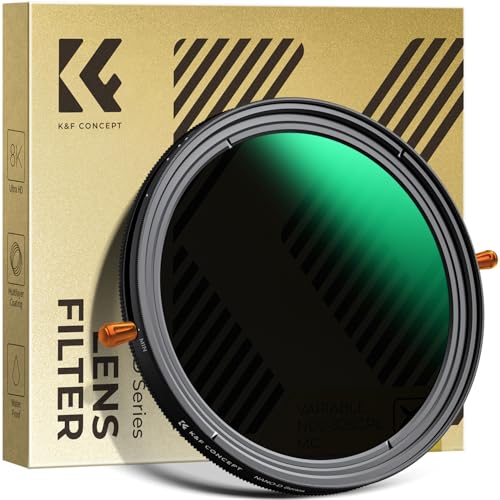
K&F CONCEPT 67mm Variable ND2-32 & CPL Filter
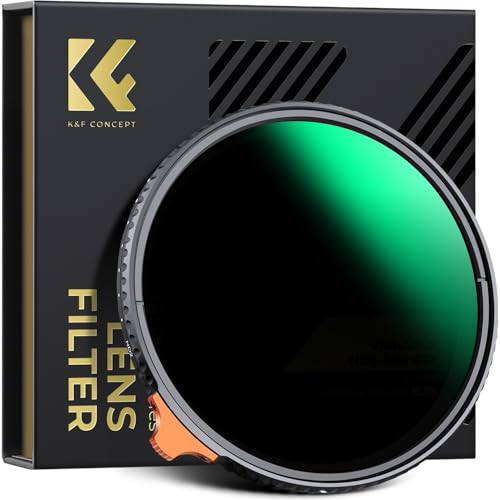
K&F CONCEPT 67mm Side Lever ND2-400 Filter
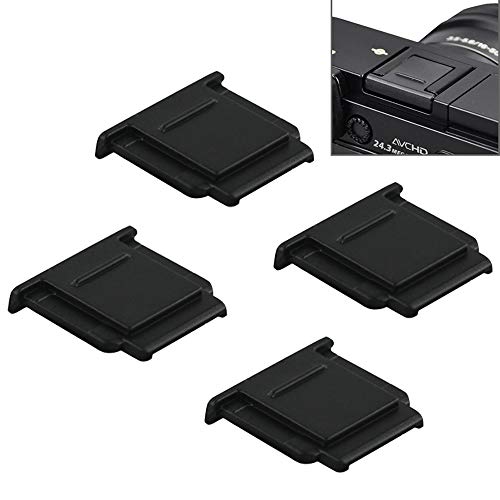
JJC 4PCS Hot Shoe Cover for Sony Cameras

JJC 36-Slot Memory Card Case

K&F CONCEPT 67mm True Color CPL Filter

K&F CONCEPT 9.8″ Magic Arm Clamp Kit
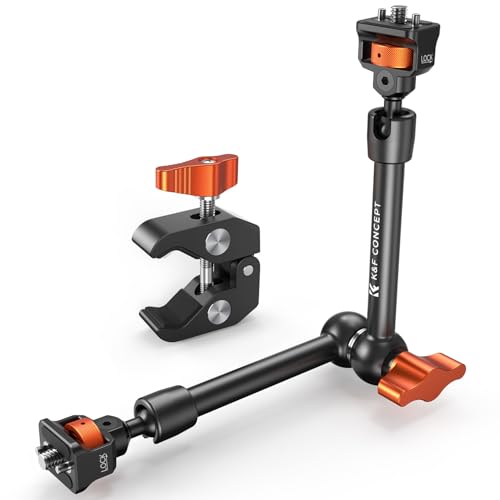
K&F CONCEPT 11″ Magic Arm Clamp Kit
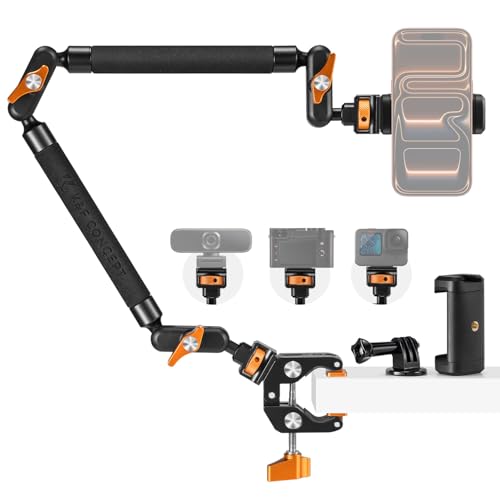
K&F CONCEPT 22″ Magic Arm Clamp Kit
The Picks, Examined More Closely
The Godox S3 bracket turns a bare round-head or square-head TTL flash into a proper off-camera light source. It accepts the Bowens mount standard, which is the same mount most softboxes, reflectors, beauty dishes, and grids use, so you can hand a photographer any modifier from a rental house and it will likely click right on. Compared to the LTGEM travel case reviewed next, this one stays firmly in the studio-side of the kit.
The frame supports modifiers up to around 120 cm (47.24 in), so even oversized strip softboxes stay seated without wobble. Photographers running Godox V100, V1Pro, V1, or AD-series strobes get a snug fit, while the universal Bowens front opens the door to third-party shaping tools.
Notable Gains
- Standard Bowens mount broadens your modifier library without buying adapters.
- Handles large softboxes up to 120 cm, useful for full-length portraits and group events.
- Built for round-head and square-head Godox flashes, so you keep TTL and HSS features intact.
- Sturdy frame reduces the droop and sag common with cheaper flash brackets.
Trade Offs To Consider
- Adds noticeable bulk to a speedlight, so it’s not the bracket for run-and-gun street work.
- Best paired with a proper light stand, which is a separate purchase for many newcomers.
Built With In Mind
Portrait and event photographers working with Godox V1 or AD-series strobes who want modifier flexibility without buying a full monolight setup.
Reach For A Different Pick When
Mobile shooters should look at the K&F CONCEPT 22″ Magic Arm Clamp Kit instead, since it prioritizes compact desk-friendly rigging.
Gimbals are fragile, expensive, and awkward to pack, which is exactly why a hard EVA (ethylene-vinyl acetate, a dense closed-cell foam) shell earns its keep. The LTGEM case fits the DJI Osmo Mobile SE, 7P, 7, and 6 along with Insta360 Flow series and hohem iSteady X3 SE stabilizers, making it a one-case solution for creators who switch brands or rotate gimbals between shoots.
Outer dimensions run roughly 8.1″ long, 5.4″ wide, and 3″ tall, so it slips into a backpack or carry-on without taking over your luggage. The internal holding strap keeps the folded gimbal locked in place, and the molded shell resists splashes and shocks during commuter travel.
The Value In It
- Cuts across multiple gimbal brands, so you can keep one case even if you upgrade your stabilizer.
- Lightweight EVA shell adds protection without airline-weight penalty.
- Internal strap stops the gimbal from shifting when the case is jostled.
- Compact footprint fits neatly in a daypack alongside a camera body.
Things To Consider
- Designed for specific gimbals only, so double-check your model before ordering.
- Case only, so the gimbal and accessories are sold separately.
Perfect Match For
Vloggers and travel filmmakers who fly or commute often with a folding smartphone gimbal in tow.
Where Another Pick Suits Better
Studio shooters building light modifier setups will get more value from the Godox S3 Bowens Mount Flash Bracket, since it directly shapes light quality.
This K&F CONCEPT filter threads onto 67mm lens fronts and pulls double duty, combining a variable neutral density (ND) filter with a circular polarizer (CPL). The ND side cuts incoming light between 1 and 5 stops, which is the sweet spot for video shooters running wide apertures in daylight. The CPL side knocks down reflections off water and glass while deepening sky contrast.
Compared to the brand’s ND2-400 reviewed below, this filter trades the deeper 9-stop range for a built-in polarizer, so you don’t need to stack two pieces of glass. The frame uses a self-locking design meant to avoid the dreaded “X” cross that some variable NDs produce at extreme stops.
A Few Strong Suits
- One filter does the job of two, slimming down your filter kit.
- Self-locking frame reduces cross-pattern artifacts in your images.
- Useful for hybrid shooters who alternate between video and stills outdoors.
- Threads onto any 67mm lens, common on mid-range zooms and primes.
Potential Drawbacks
- Wide polarizer angles can introduce a slight color cast, so you’ll want to check white balance.
- Not ideal for long exposures, where the deeper ND2-400 filter handles 9 stops more gracefully.
Right Fit For
Hybrid photo and video shooters working outdoors with 67mm lenses who want one filter that handles bright daylight and reflective surfaces.
Skip It When
Long-exposure landscape photographers should grab the K&F CONCEPT 67mm Side Lever ND2-400 Filter, which pushes to 9 stops for waterfall and motion-blur work.
Long-exposure shooters need serious light reduction, and this filter delivers between 1 and 9 stops using a side-lever adjustment. The lever design lets you dial in precise density without rotating the entire ring with a thumb, which matters when your hands are cold or wet on a sunrise shoot. The optical glass uses 28 multi-layer coatings on Japanese AGC substrate to keep flare and ghosting under control.
Where the ND2-32 reviewed earlier stays in video-friendly territory, this ND2-400 opens up the world of waterfalls, milky seascapes, and motion-blurred clouds during golden hour. The trade-off is that wider density ranges can introduce subtle cross patterns at extreme settings, so you’ll want to test before a paid gig.
Standout Benefits
- 9-stop range covers nearly every long-exposure scenario a hobbyist would attempt.
- Side lever offers finer control than ring-twist variable NDs.
- AGC optical glass with 28 coatings helps maintain contrast in backlit scenes.
- Threads onto common 67mm lens fronts without adapter rings.
A Few Limitations
- At maximum density, some users report a mild “X” pattern that requires aperture adjustment to avoid.
- Cleaning the multi-coated surface needs microfiber care to preserve the coating layer.
Whose Shelf It Belongs On
Long-exposure landscape photographers working with 67mm-threaded lenses who want deep density control in a single filter.
Swap It Out When
Videographers needing lighter density plus a polarizer should consider the K&F CONCEPT 67mm Variable ND2-32 & CPL Filter for a more versatile hybrid option.
Hot shoe covers are easy to overlook, until grit or oxidation finds the contacts and causes flaky flash triggering. JJC ships a four-pack of dedicated covers shaped for Sony’s Multi Interface hot shoe, found on bodies like the A7C, A7R V, A7 IV, and RX10 IV. The ABS plastic (a tough, lightweight rigid polymer) sits flush over the contacts without sticking out like generic universal caps.
Coming from the deep feature set of the K&F CONCEPT ND filters above, this is a refreshingly simple accessory. It’s the kind of thing you lose in a bag, so the four-pack format gives you breathing room when one disappears into a couch cushion.
Practical Advantages
- Snug fit stops the cap from rattling off during a fast body swap.
- Guards contacts against scratches, dust, and pocket lint.
- Four-pack covers multiple bodies or replaces the inevitable loss.
- Replaces Sony FA-SHC1M caps with full-coverage protection.
Worth Noting
- Only fits Sony MI-style shoes, so Nikon or Canon shooters need a different cap.
Who Should Grab It
Sony mirrorless and RX10 owners who rotate multiple bodies and want a low-cost way to keep their hot shoes clean.
Look Elsewhere When
If you shoot Canon or Nikon primarily, look for brand-specific caps from third parties instead of these Sony-shaped covers.
Card chaos is real when you’re juggling multiple bodies. JJC’s case holds 12 full-size SD cards and 24 microSD cards in molded slots, so a hybrid shooter carrying a Sony body plus a drone can keep everything in one wallet. The ABS shell is rigid, and a silicone sealing ring helps keep rain and splashes from reaching your media.
The locking mechanism closes firmly but opens with finger pressure, so you don’t need tools in the field. Compared to the JJC hot shoe covers reviewed just above, this case is far more specialized, but it solves a problem that grows with every new camera you add to the rotation.
What Pays Off
- 36 slots cover most working photographers’ card inventory in a single wallet.
- Silicone seal helps when bags get caught in unexpected weather.
- Finger-friendly lock keeps fumbling to a minimum on cold shoots.
- Compact footprint fits inside most camera backpacks.
Honest Caveats
- Doesn’t label individual cards, so you’ll still want a sticker system for organization.
- Adds bulk compared to a slim card sleeve, which may bother minimalists.
Best Suited To
Multi-camera operators running both full-frame bodies and drones or action cams who need one place for every card.
Not Your Match When
Single-camera hobbyists with two cards might find the JJC 4PCS Hot Shoe Cover for Sony Cameras a more proportionate add-on.
A standard polarizing filter adds punch to skies, but cheap versions often tint the image yellow. K&F CONCEPT’s True Color CPL uses titanium coating technology to keep color reproduction accurate, and the reflectivity rating sits around 0.1%, which noticeably reduces flare when shooting toward bright light sources.
Unlike the variable ND + CPL combo reviewed earlier, this is a pure polarizer with no light-stopping range. That means it shines when you want to deepen blue skies on a midday hike without affecting your shutter speed. For landscape shooters who care about color fidelity above all, this filter earns its slot.
What Helps Most
- Titanium coating reduces the yellow tint common on budget CPLs.
- 0.1% reflectivity rating cuts ghosting in backlit compositions.
- Standard 67mm thread matches most mid-range lens kits.
- Polarization effect remains strong at wide angles compared to thinner alternatives.
Soft Spots
- Pure polarizer with no ND function, so it doesn’t replace the variable ND2-32 reviewed above.
- Titanium-coated glass requires careful cleaning to avoid micro-scratches.
Who Will Love This
Landscape and travel photographers who shoot in bright outdoor light and want accurate colors without heavy post-processing.
Consider Something Else When
Filmmakers needing exposure control plus polarization should look at the K&F CONCEPT 67mm Variable ND2-32 & CPL Filter, which combines both functions in one ring.
Magic arms solve a small but persistent problem: mounting a monitor, light, or microphone exactly where you want it. K&F CONCEPT’s 9.8″ version uses a dual ball-head design at both ends, so each pivot rotates 360 degrees independently. The included clamp grips light stands, desks, and tables securely.
The thread support covers both 1/4″ and 3/8″ screws (the standard mount sizes used by most cameras and pro accessories), making it broadly compatible across the kit. Compared to the 22″ overhead version reviewed later, this shorter reach keeps the rig light and predictable for handheld or run-and-gun video work.
What Works In Its Favor
- Dual ball heads let you fine-tune angle without loosening a single joint.
- Compact 9.8″ reach avoids the wobble that plagues longer arms under heavy payloads.
- 1/4″ and 3/8″ thread support covers most photography and video accessories.
- Clamp base mounts to a variety of surfaces without permanent installation.
Practical Considerations
- Reach is limited, so it won’t span a wide desk or extend far overhead.
- Tightening both ball heads takes two hands during setup.
Made For
Small-rig video builders and on-the-go creators who need to mount a monitor, light, or mic without a full c-stand setup.
Where A Sibling Pick Shines
Streamers building a permanent overhead shot should reach for the K&F CONCEPT 22″ Magic Arm Clamp Kit, which delivers the reach needed for top-down framing.
This 11″ magic arm steps up with ARRI-standard locating pins on the mount, which is the same anti-twist pattern found on pro cinema accessories. If you’ve ever watched a monitor slowly rotate mid-shoot because the mount slipped, those pins solve it. The dual ball-head articulation stays buttery smooth, and the included adapter broadens compatibility with both 1/4″ and 3/8″ threads.
Sitting between the 9.8″ compact version and the 22″ overhead version reviewed above and below, the 11″ reach strikes a balance for medium rig setups. You get extra extension without the long-arm flex that heavier payloads cause.
The Case For It
- ARRI locating pins prevent accessory twist under heavy loads.
- Mid-length reach suits monitor and EVF (electronic viewfinder) mounting on cage rigs.
- Dual ball heads deliver fine angle adjustment at both ends.
- Thread adapter supports 1/4″ and 3/8″ mounting patterns.
Where It May Fall Short
- ARRI pin pattern is great for cinema gear but unnecessary for photographers using simple ball heads.
- Still not long enough for true overhead desk angles.
Right Fit For
Pro video shooters running cage rigs with monitors or EVFs who want a secure, anti-twist mounting solution.
A Better Fit Elsewhere
Content creators shooting top-down tutorials will get more reach from the K&F CONCEPT 22″ Magic Arm Clamp Kit, which is purpose-built for overhead framing.
The 22″ magic arm is built for a very specific job: getting your camera directly above a desk for tutorials, unboxings, or product photography. The kit ships with a phone holder and an action camera adapter, so creators can mount a phone, GoPro, or compact camera without buying extra plates. Threads support phones, action cameras, LED lights, and microphones alike.
Compared to the 11″ version reviewed just above, this longer reach trades some rigidity for true overhead positioning. The clamp base anchors to desks up to a few inches thick, and the dual ball heads keep framing adjustments manageable.
Real Benefits
- 22″ reach delivers true top-down framing over standard desks.
- Includes phone holder and action camera adapter out of the box.
- Works across phones, action cams, lights, and mics.
- Clamp mount installs without drilling or permanent hardware.
Less-Strong Areas
- Longer arm flexes under heavier full-frame cameras, so lighter payloads work best.
- Clamp grip depends on desk thickness, so verify clearance before mounting.
Who It Suits Best
Streamers, YouTube educators, and remote workers running top-down content setups at a desk or workbench.
Where Another Pick Suits Better
Travel photographers wanting a compact mount should choose the K&F CONCEPT 9.8″ Magic Arm Clamp Kit, which fits more easily into a camera bag.
Choosing Accessories That Fit The Way You Shoot
Picking accessories for photographers starts with your actual workflow, not the spec sheet. A travel photographer building a minimal mirrorless kit has completely different needs than a hybrid shooter juggling video, stills, and live streaming. Before buying anything, map out where your work happens: studio, outdoors, on the road, or behind a desk. That answer alone narrows the field dramatically.
Match the accessory to your lens thread size before anything else, since filters and step-up rings are useless if the diameter is wrong. Most mid-range zooms land at 67mm or 77mm, so a 67mm filter set covers a wide swath of popular lenses. The K&F CONCEPT filters in this roundup all use 67mm threads for that reason.
Weight and reach matter more than people expect. A 22″ magic arm sounds appealing until you’re hauling it through an airport. Smaller arms flex less and travel better, which is why the 9.8″ and 11″ versions have their own use cases. Likewise, a hard gimbal case adds real value only if you actually commute with the stabilizer.
Build material and coatings affect longevity more than initial cost. ABS plastic caps, EVA shells, and titanium-coated glass each address different failure modes. Match the build to the environment: water-resistant shells for outdoor shooters, anti-twist pins for cinema rigs, and accurate coatings for color-sensitive work.
Key Considerations Across These Picks
Pitfalls Shoppers Hit
The most common mistake is buying accessories before defining the shooting style. Filters and clamps become drawer clutter when they don’t match a real workflow. Another trap is assuming universal-fit gear works as well as dedicated-fit alternatives: a generic hot shoe cap is rarely as snug as a brand-specific JJC cover.
Filter stacking is a third issue worth flagging. Mounting both a UV filter and a polarizer on the same lens can introduce vignetting (darkening around the frame edges) on wide-angle lenses, and stacking multiple ND filters compounds any optical softness. Choosing a two-in-one filter like the K&F CONCEPT ND2-32 + CPL simplifies the front element while reducing glass-on-glass issues.
Where The Extra Money Goes
Premium accessories usually pay for tighter tolerances, better coatings, and longer warranties in practice. A titanium-coated CPL holds color accuracy longer than a budget polarizer, and an ARRI-pin magic arm stays locked under heavier loads than a plain ball head. For working photographers, that consistency saves hours of reshoots.
Casual hobbyists often don’t need premium pricing, and a budget-friendly ND or hot shoe cap does the job just fine. The upgrade makes sense when your time has real value, your gear is heavy enough to demand secure mounting, or your color-critical work depends on accurate filters. Otherwise, the mid-tier picks in this list hit a sensible middle ground.
Frequently Asked Questions
Do I need a polarizing filter if I already shoot RAW?
RAW files give you latitude to adjust contrast and saturation, but a CPL filter physically blocks reflected light from non-metallic surfaces, something no software edit can fully replicate. Skies, water, and glass all benefit from real polarization rather than post-processing tricks.
What thread size should I buy first?
Check your most-used lens, not your camera body. The front filter thread size is printed on the lens barrel, often near the front element. Buying a 67mm filter set covers many popular zooms, and a step-up ring lets you mount larger filters on smaller lenses.
Are magic arms strong enough to hold a full-frame camera?
Light cameras and monitors work well on most magic arms. Heavier full-frame bodies with large lenses cause longer arms to flex and drift, so for heavier payloads, pair a magic arm with a proper articulating mount or a c-stand for stable support.
Can I use one filter across multiple lenses?
Only if every lens shares the same filter thread size, or if you buy step-up or step-down rings. Rings introduce extra glass and potential vignetting on wide-angle lenses, so dedicated filter sizes remain the cleaner choice when budgets allow.
Is a hard case really necessary for a gimbal?
Soft pouches protect against scratches but not impact. A hard EVA case like the LTGEM reviewed above resists drops and splashes, which matters when gimbals travel in luggage or commuter bags where bumps are unavoidable.
Bottom Line
The right accessories for photographers aren’t defined by feature lists, but by how naturally they fold into the way you already shoot. A filter that lives on your lens every weekend earns its keep. One that sits in a drawer does not. Match the accessory to your real environment, and the rest of the decision tends to make itself.