Shaky, unusable footage is the fastest way to bury an otherwise great adventure clip. Modern action cameras with image stabilization solve that problem with a mix of hardware gimbals, electronic correction, and software smoothing that keeps your shots steady while you ski, surf, bike, or vlog on the move. Choosing the right one comes down to how rough your activities get, how deep you go, and how much you care about color and dynamic range in tricky light. This list covers ten solid options across price tiers, from pocket-friendly picks for casual weekends to flagship rigs built for serious content creation.
The Leading Options At A Glance
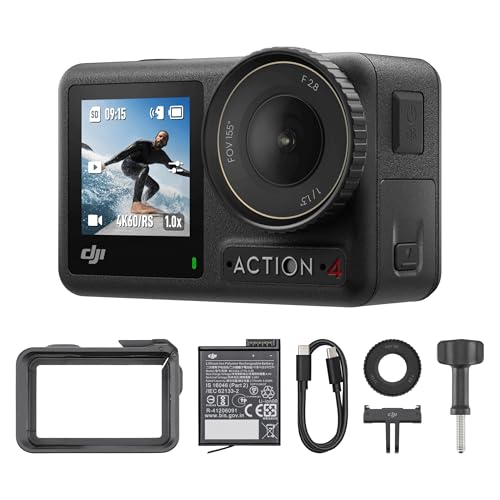
DJI Osmo Action 4 Essential Combo

Insta360 Ace Pro 2 Dual Battery Bundle

Insta360 X5 Essentials Bundle 8K 360

Insta360 X5 Bundle with Accessories

DJI Osmo Action 5 Pro Adventure Combo

AKASO Brave 4 4K30 Waterproof Camera

AKASO EK7000 4K with EIS

AKASO EK7000 Pro 4K with Touch Screen
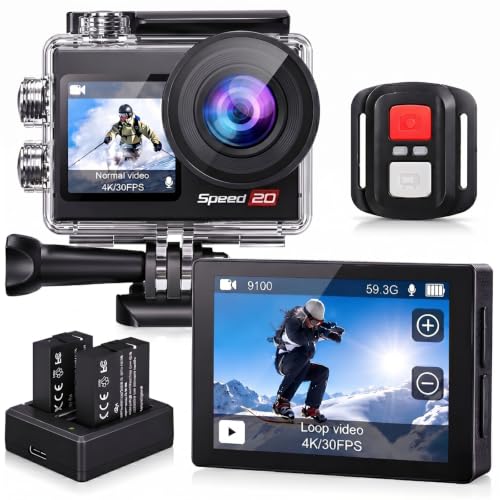
Hiicam 4K Action Camera 131FT

CAMWORLD 4K Mini Body Camera
More Details On Our Top Picks
The Osmo Action 4 was built for the kind of shooting that exposes lesser cameras: dusk trail rides, dim indoor arenas, and reef dives where light fades fast. Its 1/1.3-inch sensor (the imaging chip that gathers light) and large 2.4µm pixels (microscopic light-collecting elements on that sensor) pull clean detail from scenes that turn competitors to mush. Waterproofing, magnetic quick-release mounts, and front-and-back touchscreens round out a package that just works in the moment.
Compared to older DJI models, the Action 4 leans hard on its 10-bit color depth (a color range that captures a billion shades instead of the usual 16 million), letting you grade footage in editing without banding. Auto white balance also keeps skin tones and reef colors honest underwater, which matters more than megapixel counts once you start reviewing clips.
Noteworthy Benefits
- Large 1/1.3-inch sensor excels in dim trail and indoor conditions
- 10-bit D-Log M color profile preserves highlight and shadow detail for editing
- Front and rear touchscreens make framing selfie-style vlogs painless
- Native waterproofing handles rain, splashes, and shallow dives without a case
- Magnetic mount system speeds up helmet-to-handlebar swaps mid-ride
Worth Noting
- Low-light correction can clip very bright highlights if exposure runs hot
- Audio from the built-in mics is acceptable but rarely broadcast-ready
- Battery life drops noticeably when recording in cold weather
Who It Suits Best
All-around adventurers who shoot from dawn to dusk and want reliable color science without a steep learning curve.
Where Another Pick Suits Better
Creators who need 360 reframing and an invisible selfie stick effect will get more value from the Insta360 X5 Essentials Bundle.
The Ace Pro 2 carries a co-engineered Leica lens and a flagship 1/1.3-inch sensor capable of 8K30 and 4K60 capture, which puts it in the same conversation as much larger cinema rigs. For creators who crop, slow down, and repurpose footage for multiple platforms, that resolution headroom is the whole story. The 2.5-inch flip screen also makes framing solo shots far less guesswork.
The dual-battery Xplorer configuration ships with an extra battery and a charging case, so long shoot days stop being a math problem. AI noise reduction cleans up wind and traffic rumble, which is one less plugin to wrestle with in post.
Real Benefits
- 8K30 capture offers heavy reframing latitude for vertical and horizontal edits
- Flip screen simplifies vlog framing at arm's length
- Bundle includes a second battery and travel charger for extended sessions
- AI-driven wind noise reduction improves usable audio outdoors
Trade Offs
- Heat can throttle long 8K recording sessions in direct sun
- Higher-resolution files demand larger memory cards and faster storage
- Best results lean on Insta360's app, which adds a learning step for newcomers
Feature Snapshot
Made For
Serious creators and pros who need resolution headroom, AI-assisted audio, and the flexibility to shoot in mixed conditions.
Consider Something Else When
Travelers who prefer immersive reframing with one camera should consider the Insta360 X5 instead.
The X5 flips the script on traditional action cameras by capturing everything around it simultaneously, then letting you reframe in post. With dual 1/1.28-inch sensors and 8K30 360-degree output, you can pull a tight follow-cam shot from the same footage that also yields a sweeping wide for a different cut. The invisible selfie stick effect means the stick vanishes from your final frame, creating drone-style thirds.
A triple AI chip handles noise reduction in dim scenes, and the rugged, replaceable lens design means a stray rock doesn't end the trip. The 3-hour battery window is generous for a 360 rig in this class.
Advantages To Know
- 360 capture lets you reframe shots long after you've left the location
- Replaceable lenses cut down on repair anxiety after a hard impact
- Invisible selfie stick effect produces drone-like thirds without flying
- Triple AI chip improves usable detail in low-light environments
Some Limits To Know
- 360 files require editing time and a compatible app to fully exploit
- Battery drains faster when shooting in cold weather
- Larger file sizes demand higher-capacity memory cards
Best Suited To
Travelers and immersive filmmakers who want one camera to cover wide, tight, and selfie framings from a single take.
Skip It When
Skiers who need a traditional forward-facing POV with minimal editing will be happier with the DJI Osmo Action 5 Pro Adventure Combo.
This version of the X5 bundles the camera with the accessories most travel shooters buy anyway: a selfie stick, an extra battery, a utility fast-charge case, standard lens guards, a lens cap, and a carry case. That means your first trip out doesn't require a separate shopping run to fill the gaps. For one-bag travelers, fewer loose parts to track is a real win.
Core imaging matches the standard X5 Essentials, so the same 8K30 360 capture, replaceable lenses, and built-in wind guard carry over. The fast-charge case is the sleeper feature, trimming downtime between setups when you're moving through long shooting days.
What Pays Off
- Bundled selfie stick and carry case remove a separate accessory purchase
- Utility fast-charge case speeds battery turnarounds between locations
- Lens guards included from day one reduce the risk of scratches on the road
- Same 8K30 360 capture and replaceable lens as the standard X5
Possible Compromises
- Bundles tend to cost more upfront than the bare Essentials kit
- Carry case sizing limits adding third-party mounts without a larger bag
Feature Snapshot
Right Fit For
Travel vloggers who want a complete kit in one box and minimal accessory shopping before their first trip.
A Better Fit Elsewhere
Racers and downhill mountain bikers who prefer a slim forward-facing camera will find the DJI Osmo Action 5 Pro Adventure Combo easier to mount.
DJI built the Action 5 Pro around two realities of outdoor shooting: batteries die fast, and exposure changes constantly. The advertised 4-hour battery life is a notable jump over the Action 4, and the subject-centering feature keeps a person or object framed even when they wander to the edge of the shot. Real-time depth and altitude displays are surprisingly useful for divers and hikers who want to log conditions without a separate computer.
The Adventure Combo bundles extra batteries, mounts, and a protective frame, so multi-day trips stay self-contained. Compared to the Action 4 above, you trade a touch of low-light leadership for substantially longer run time and smarter tracking.
A Few Highlights
- Up to 4 hours of battery life reduces mid-trip charging pressure
- Subject centering keeps moving subjects framed in standard shots
- Built-in dive and altitude readouts for outdoor logging
- Adventure Combo adds batteries and mounts for extended trips
Points To Note
- Low-light performance is solid but slightly trails the Action 4 in side-by-side tests
- Bundled accessories take up more pack space than a bare Essentials kit
Who Will Love This
Multi-day expedition shooters who need long battery life and tracking smarts in a waterproof, mountable body.
Another Choice May Suit
Vloggers focused on low-light clarity and color grading will get more benefit from the Insta360 Ace Pro 2.
The Brave 4 is the camera you hand to a teenager heading to the lake, or stash in the trunk for a road trip you forgot to plan for. It shoots 4K30 and 20MP stills through a lens with adjustable viewing angles of 170°, 140°, 110°, and 70°, so the same camera can do a wide ski shot and a tighter snorkeling crop. Electronic image stabilization keeps handheld clips watchable.
For a budget model, the waterproof housing is reassuringly solid, and the wrist remote is genuinely useful for triggering shots when the camera is mounted out of reach. Compared to the AKASO EK7000 below, you get adjustable field of view in exchange for very similar resolution.
A Few Strong Suits
- Adjustable FOV (170°, 140°, 110°, 70°) suits varied framing situations
- Waterproof housing handles snorkeling and pool use out of the box
- Wrist remote simplifies starts and stops when the camera is mounted
- Lightweight body is comfortable for long helmet or chest mounts
Honest Caveats
- Low-light footage shows visible noise in indoor and dusk scenes
- Audio capture is functional but not suitable for voice-over-quality vlogs
Feature Snapshot
Perfect Match For
Casual weekend shooters who want adjustable framing and waterproofing without a premium price tag.
Not Your Match When
Low-light filmmakers shooting indoor or dusk content will be happier with the DJI Osmo Action 4.
The EK7000 has been a gateway action camera for years, and the formula still works: 4K30 capture, built-in electronic image stabilization (EIS, a digital method that crops and shifts frames to smooth out shakes), 131 feet of waterproof depth with the included housing, and a wrist remote that makes solo recording less awkward. It also supports an external microphone, which is rare at this tier.
Compared to its Pro sibling below, the EK7000 uses a smaller non-touch screen, so menu navigation happens via buttons. That trade-off keeps cost down while still delivering the EIS that smooths out bike and hike footage.
Where It Helps
- External microphone support is uncommon at this tier
- 131-foot waterproof rating handles recreational diving depths
- Built-in EIS smooths moderate motion for casual clips
- Wrist remote simplifies start and stop control when mounted
Practical Considerations
- Non-touch interface slows down settings changes in the field
- Battery is internal, so spare batteries require swapping the whole unit
Built With In Mind
First-time action camera owners who want a low-fuss introduction to stabilized footage and casual underwater video.
Reach For A Different Pick When
Helmet mounters who need a touch screen for faster menu changes will find the AKASO EK7000 Pro easier to live with.
The Pro steps up from the EK7000 in the ways beginners notice most: a 2-inch IPS touch screen for fast menu changes, a 5X digital zoom (a software-based crop that magnifies the image without moving the lens), and a helmet accessories kit that ships in the box. EIS still anchors the smooth-footage story, and the 131-foot waterproof housing continues to support real diving depths.
It lands as the most balanced AKASO for hobbyists who split time between biking, snorkeling, and family trips. Image quality is a clear step above older budget models, though it can't match the flagship low-light performance you get from the DJI and Insta360 picks at the top of this list.
Notable Gains
- IPS touch screen simplifies settings, mode changes, and playback review
- Helmet accessories kit included for immediate riding use
- EIS produces noticeably smoother handheld footage than the base EK7000
- 5X digital zoom offers modest framing flexibility in distant subjects
Where It Is Less Suited
- Audio quality remains a step behind cameras with dedicated external mic ports
- Low-light footage still shows grain in indoor settings
The Right Fit
Hobbyists and helmet mounters who want a touch interface and bundled mounts without stepping up to flagship pricing.
Swap It Out When
Vloggers who prioritize low-light clarity and color grading will find the DJI Osmo Action 4 a meaningful upgrade.
The Hiicam leans into the budget formula with 4K60 video, 20MP stills, a 170° wide-angle lens, and a touch screen for menu navigation. It also ships with a remote and a waterproof housing rated to 131 feet, so the snorkeling and biking basics are covered out of the box. EIS keeps the casual clips steady enough for social sharing.
Versus the AKASO options above, this one is closer to a tie than a knockout: image quality lands in a similar tier, with the Hiicam pulling ahead slightly on 4K60 frame rates. App connectivity and WiFi transfer feel dated compared to flagship phones, but the core shooting experience holds up for the price.
What Helps Most
- 4K60 capture gives smoother motion for fast-paced activities
- 170° wide-angle lens captures immersive POV on helmet and chest mounts
- Touch screen simplifies menu navigation versus button-only rivals
- 131-foot waterproof housing supports recreational scuba depths
Small Caveats
- Companion app experience trails the polish of brand-name flagships
- Internal battery is sealed, limiting cold-weather shooting duration
Whose Shelf It Belongs On
Snorkelers and casual riders who want high frame rate video and a wide lens without paying flagship prices.
Look Elsewhere When
Low-light and indoor shooters will get noticeably better results from the DJI Osmo Action 4.
The CAMWORLD is the smallest camera on this list, a thumb-sized wearable that ships with a magnetic mount and a 64GB card already in the box. The 1.47-inch HD screen is small but useful for confirming angle and battery status. It captures 4K at 30fps through a 150° ultra-wide lens, which gives a punchy first-person perspective for cycling, motorcycling, or pet POV clips.
For hands-free content where bulk matters more than resolution headroom, this is a refreshing alternative to a full-size action rig. The trade-off is real: no waterproof housing rating is advertised, so heavy rain and submersion are off the table.
Why It Works Well
- Thumb-sized body fits in pockets, lapels, and helmet mounts
- Magnetic mount enables quick attachment to metal surfaces and mounts
- 150° ultra-wide lens captures immersive first-person framing
- 64GB card included means shooting starts immediately out of the box
Trade-Offs To Consider
- No advertised waterproofing limits use in wet environments
- Small screen and limited controls reduce on-camera configuration options
Feature Snapshot
Who Should Grab It
Pet POV creators and ultra-light travelers who want hands-free footage without the bulk of a full-size action camera.
Where A Sibling Pick Shines
Underwater and rough-weather shooters will get far better protection from the AKASO Brave 4.
What To Weigh Before Choosing An Action Camera
Picking the right camera comes down to how you actually shoot, not just the spec sheet. Start with stabilization type: electronic image stabilization (EIS) crops and shifts frames digitally to smooth motion, while higher-end systems use multi-axis gyros combined with software for tighter correction on rough trails. Both work well, but EIS can crop your field of view, which matters if you want a wide, immersive look.
Next, think about resolution and frame rates together. A 4K30 camera captures plenty of detail for social sharing, while 4K60 or 8K gives you room to slow down or crop in post. Color depth (8-bit versus 10-bit) only matters if you plan to grade your footage; casual shooters rarely notice the difference.
Waterproofing is another fork in the road. Native waterproofing handles rain, splashes, and shallow dives without a case. If you plan to dive deeper, look for a housing-rated depth of at least 30 meters (about 100 feet). Battery life and field-replaceable batteries become essential on multi-day trips, where charging access is limited.
Mounting ecosystem matters more than people expect. Magnetic systems like DJI's let you swap mounts in seconds, while traditional thumbscrew mounts are more universal but slower. If you already own mounts from a previous camera, factor that into your choice. Finally, audio quality is the silent dealbreaker for vloggers. Built-in mics handle ambient sound fine, but voice work calls for an external mic port or a wireless audio solution.
Picking Wisely In This Category
Pitfalls Shoppers Hit
The most common mistake is chasing resolution numbers without considering frame rates, sensor size, and stabilization together. A 4K60 camera with a small sensor and no stabilization often produces worse footage than a 1080p60 camera with solid EIS. Storage is another trap: high-resolution files chew through memory cards, and slower cards throttle recording. Buy a fast U3-rated card from the start.
What The Higher Tier Buys
Stepping up to flagship action cameras typically means larger sensors for better low-light capture, longer battery life, smarter tracking features, and more robust mounting ecosystems. Color science also improves, giving you more latitude when grading footage in editing. For casual weekend shooters, the premium tier rarely justifies the extra cost, but creators who shoot weekly in varied conditions tend to recoup the difference in time saved and footage quality gained.
Frequently Asked Questions
Do all action cameras have image stabilization?
No, image stabilization varies widely across models and price tiers. Entry-level cameras may offer basic electronic stabilization, while flagship models combine advanced gyroscopic correction with software smoothing for steadier results in rough conditions.
Is EIS enough for mountain biking or skiing?
EIS handles moderate motion well, but aggressive sports with high-frequency vibration can still show some shakiness. For serious rough-condition shooting, look for cameras with multi-axis stabilization or pair the camera with a gimbal for smoother results.
Can I use these cameras underwater without a case?
Only models with native waterproof ratings should be submerged without a housing. Always check the manufacturer's specified depth rating, and remember that saltwater requires rinsing the camera with fresh water afterward to prevent seal damage.
What memory card should I buy?
High-resolution and high-frame-rate recording requires fast cards. Look for microSD cards rated U3 or V30 at minimum, and consider 128GB or larger capacity if you shoot 4K or higher for extended sessions.
How important is battery life?
Battery life matters most for multi-day trips, long events, and time-lapse projects. Cameras with removable batteries give you flexibility to swap spares, while sealed designs require charging breaks. For short outings, any modern action camera usually lasts a full session.
Bottom Line
The best action camera is the one that fits how you actually shoot, not the one with the longest spec list. If you film in dim conditions and want flagship color science, the DJI Osmo Action 4 or Osmo Action 5 Pro will serve you well. For 360 reframing and travel-friendly bundles, the Insta360 X5 options pull ahead. Budget-conscious snorkelers and casual riders will find genuine value in the AKASO and Hiicam picks, while hands-free creators will appreciate the CAMWORLD's pocketable form factor. Match the camera to the activities you do most, and you'll spend less time fighting footage and more time enjoying the moment behind the lens.