Aerial filming drones have quietly become one of the most useful gadgets a household can own, whether you’re capturing vacation footage, scouting property lines, or just learning a new creative skill. The category has exploded over the past few years, which means more options, but also more confusion about what actually matters. The picks below cover everyone from curious first-timers to creators who need gimbal-stabilized 4K footage, with honest notes on trade-offs rather than marketing language.
A Snapshot Of The Selections

Bwine F7MINI 8K Photo 5.5″ 1080P RC Screen Drone

Bwine F7GB2 Pro 4K UHD 3-Axis Gimbal Drone

Sewsunny GPS Drone with 1080P Camera and 4.5″ LCD Remote

Holy Stone HS900 3-Axis Gimbal 8K Photo Drone
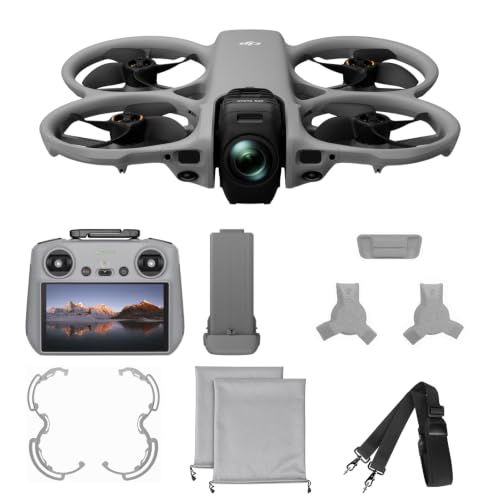
DJI Avata 360 (RC 2) 8K 360° Camera Drone with Protection Kit

Holy Stone HS175D GPS 4K Foldable Drone Under 249g

Holy Stone HS175G 4K EIS Drone, Upgraded HS175D

Bwine F7GIM 6K Photo 4K Video 3-Axis Gimbal Drone

Bwine F7MINI 4K Video 8K Photo 3-Axis Gimbal Drone
Inside Each Recommended Option
If you’ve ever fumbled with a phone clipped to a controller, the F7MINI’s built-in 5.5-inch 1080P screen solves that frustration right out of the box. The remote displays your live feed at 60Hz with 500 nits of brightness, bright enough to read in direct sun on a ranch survey or a backyard shoot. For newcomers, that means no fiddling with apps, no dropped connections, and no cracked-phone-crash anxiety.
It also packs 32GB of internal storage, so you can save clips directly on the controller and review them on the spot. The remote claims roughly three hours of use per charge, which comfortably covers an afternoon of short flights. Compared to the Sewsunny entry later in this list, this Bwine skips the GPS lock-in step and goes straight to live view, which first-timers tend to appreciate.
Good Reasons To Consider
- Self-contained screen means you leave your phone in your pocket
- Three-hour remote runtime covers a full afternoon of flying
- 32GB onboard storage lets you review clips without transferring files
- 500-nit brightness stays readable outdoors in most lighting
- Quoted 8K photo mode offers oversized stills for cropping flexibility
Worth Noting
- Screen-based controller adds bulk to your gear bag versus phone-only remotes
- Higher-resolution stills come at the cost of larger file sizes that fill internal storage quickly
Quick Facts
Made For
First-time pilots who want a phone-free, app-free flying experience without skimping on image resolution.
Skip It When
You need FAA registration compliance for commercial flights; in that case, the Bwine F7GB2 Pro is a more aligned pick.
The F7GB2 Pro earns its place by handling paperwork many hobby flyers forget about. It carries a built-in Remote ID module (a digital license plate that broadcasts your drone’s location, required by the FAA for compliant flights) and a Declaration of Compliance, plus a scannable QR code printed on the drone arm. For pilots who already need to register, that means one less hurdle when the weather clears.
A 3-axis gimbal (a motorized mount that stabilizes the camera on three rotational axes) sits underneath the airframe, smoothing out tilt and yaw (the side-to-side and up-and-down rotations that make amateur footage look shaky). That makes a tangible difference on breezy days. Compared to the screen-equipped F7MINI in slot one, this model trades the integrated display for compliance-ready hardware, which frequent flyers usually weigh heavily.
Points In Its Favor
- 3-axis gimbal produces noticeably smoother footage in crosswinds
- Remote ID compliance removes a paperwork step for registered pilots
- Foldable design survives a backpack trip without a bulky case
- Quoted 4K UHD video handles most creator workflows
Trade Offs
- No integrated screen means you’ll lean on your phone for live view
- Compliance features matter less for purely backyard recreational flyers
Right Fit For
Registered hobbyists and traveling pilots who fly in regulated airspace or want clean, gimbal-stabilized clips.
Look Elsewhere When
You want a phone-free flying experience; the Bwine F7MINI 8K Photo 5.5″ 1080P RC Screen Drone keeps your phone in your pocket from takeoff to landing.
The Sewsunny lands in this list because it bundles two things casual flyers ask for most: GPS-assisted stability and a dedicated remote with its own screen. That combination is unusual at the budget tier, where most controllers either skip GPS or push you to use a phone app. The quoted 600m / 1969ft transmission range means you can scout a section of coastline or a long driveway without losing the feed.
It also accepts dual control, so you can swap between the physical screen remote and a mobile app if your phone happens to be charged. Compared to the F7MINI in slot one, the Sewsunny gives up some on-screen brightness for a lower entry cost, which matters for anyone buying their second drone.
Practical Pluses
- GPS-assisted hovering helps newcomers frame shots without constant stick corrections
- Dedicated 4.5-inch LCD keeps your phone free during flights
- 600m quoted range covers most open-field shooting needs
- Dual control paths let you choose between physical remote and mobile app
Points To Keep In Mind
- 1080P ceiling falls short for creators who crop aggressively in post-production
- Smaller LCD can wash out in harsh midday sun
Built With In Mind
Casual hobby flyers stepping up from a toy drone who want GPS and a screen without paying flagship money.
A Better Fit Elsewhere
For creators who need stabilized 4K video, the Holy Stone HS175G GPS Drone With 4K EIS Camera delivers the cleaner footage budget shoppers usually end up chasing later.
The HS900 sits at a sweet spot that beginners and intermediates both appreciate. It comes in just under 249 grams (around 8.7 ounces), which keeps it out of the FAA registration bracket in the United States for recreational flying. For pilots who’d rather skip paperwork entirely, that single number reframes the whole buying decision.
Inside, a Sony 1/2.3-inch CMOS sensor (a moderately large image sensor that captures more light and detail than typical drone sensors) drives 8K stills and 4K/30fps video, while the 3-axis gimbal handles the stabilization. AI Follow Me, Smart Return, and QuickShots automate the cinematic moves that used to require careful stick input. Compared to the Sewsunny’s smaller screen and 1080P ceiling, the HS900 is in a different imaging league.
Strong Points
- Under 249g weight removes FAA registration friction for hobbyists
- Sony 1/2.3-inch CMOS sensor delivers solid low-light performance
- AI Follow Me tracks moving subjects without constant pilot correction
- QuickShots automates cinematic camera moves for social-ready clips
- Long transmission range (quoted at 20,000ft) keeps the feed stable at distance
Honest Caveats
- Premium features push it past casual-hobby pricing
- No integrated screen means you still rely on a phone for live view
- Lightweight build can struggle in stronger winds above moderate breezes
Spec Overview
Best Suited To
Serious beginners and intermediates who want flagship-tier imaging and AI flight modes without the registration paperwork.
Swap It Out When
If you need an integrated screen on the controller, the Bwine F7MINI 8K Photo 5.5″ 1080P RC Screen Drone covers that specific gap.
The DJI Avata 360 isn’t trying to be a casual drone. It’s an FPV (first-person view) aircraft, which means you fly it from the perspective of the drone itself through goggles or a screen-mounted controller, paired with a 1-inch 8K 360° imaging system that reframes shots after the fact. The 360° capture lets you point the camera anywhere in post-production, even at moments you didn’t think to record.
The Premium Protection Bundle includes a travel case, landing gear extensions, propeller guards, and a neck strap for the RC 2 controller. For pilots who already understand what FPV flight demands, those accessories turn the package into a turnkey kit. Compared to the HS900 earlier, this is a different aircraft entirely: cinematic, immersive, and aimed at content creators who want a specific look.
Where It Helps
- 1-inch 8K 360° sensor unlocks reframing in post-production
- FPV flight style delivers cinematic follow shots that GPS drones can’t
- Protection kit bundles the accessories most pilots buy separately
- Built-in screen on the RC 2 controller removes the phone-clamp step
- Landing gear extensions reduce scrapes on low-altitude landings
Room For Improvement
- FPV flight has a steeper learning curve than hover-and-pan GPS drones
- Premium tier pricing puts it out of reach for casual shoppers
- 360° workflow requires extra editing time compared to flat footage
Feature Snapshot
Who It Suits Best
FPV-curious creators and content pros ready to learn immersive flight for cinematic, reframed footage.
Consider Something Else When
You’re a beginner wanting gentle GPS hovering; the Holy Stone HS900 is the much friendlier starting point.
The HS175D is the kind of drone that quietly handles most weekend tasks. It folds down small enough to toss in a daypack, stays under 249 grams, and uses brushless motors (quieter motors that last longer than the brushed kind because they have fewer wearing parts) for a longer service life. The 46-minute quoted flight time across the included batteries is one of the more generous numbers in this category.
It also brings a 110° wide-angle lens with 90° of adjustable tilt, plus Circle Fly and Waypoint Fly for automated route shooting. For travelers logging hikes or family outings, that adds genuine variety to the footage. Compared to the Sewsunny GPS drone earlier, the HS175D gives up the integrated screen but gains battery endurance and brushless reliability.
A Favorable Mix
- 46-minute quoted flight time covers extended shooting sessions
- Brushless motors offer longer service life than brushed alternatives
- Auto Return adds peace of mind for low-battery or signal-loss moments
- Waypoint Fly automates repeatable routes for time-lapse or property checks
- Under 249g build sidesteps registration requirements
Small Caveats
- 2-axis gimbal (stabilization on two axes rather than three) is less steady than 3-axis options in stronger winds
- No integrated controller screen means you’ll tether to a phone
Whose Shelf It Belongs On
Weekend travelers and hobbyists who want long flight times and reliable brushless motors without flagship pricing.
Reach For A Different Pick When
You need EIS (electronic image stabilization) for smoother motion footage; the Holy Stone HS175G 4K EIS Drone is the natural step up.
The HS175G takes everything useful about the HS175D in slot six and tightens the weakest link: shaky footage. It swaps in a Sony CMOS sensor with a 120° wide-angle lens and adds EIS, a software-driven stabilization that smooths jitters by cropping and shifting the frame digitally. The result is markedly smoother video without the bulk of a mechanical gimbal.
Quoted 60-minute flight time across the included batteries is also a step up. Fast charging reduces turnaround between sessions. Compared to the HS175D’s 2-axis gimbal setup, the EIS approach trades a small crop for noticeably steadier clips, which most casual creators will happily accept.
A Strong Showing
- EIS produces smoother footage than non-stabilized 4K drones in the same tier
- 120° wide-angle lens fits more landscape into each frame
- 60-minute quoted flight time is generous for the category
- Fast-charge batteries shorten turnaround between sessions
- Headless mode simplifies orientation for newer pilots
Things To Weigh
- EIS crops the frame slightly to stabilize, which tightens wide-angle coverage
- Phone-tethered live view still drains your device
- Upgraded feature set pushes it past the original HS175D’s pricing
Perfect Match For
Pilots upgrading from the HS175D who want smoother footage and longer flight without moving to a full mechanical gimbal.
Another Choice May Suit
If your priority is gimbal-grade stabilization for cinematic moves, the Bwine F7GIM 6K Photo 4K Video 3-Axis Gimbal Drone offers true 3-axis mechanical smoothing instead.
The F7GIM leans into “workhorse” territory. A 3-axis brushless gimbal (a gimbal driven by brushless motors for smoother, longer-lasting stabilization) claims a 300% jump in stability accuracy over earlier Bwine generations, which matters when you fly into wind. The 18MP sensor pushes 6K photos and 4K/30fps video, giving inspection and farm work enough resolution to spot fence-line issues or roof damage from altitude.
It also fits the outdoor use case the brand pitches it for: ranch inspection, farm patrols, and remote property scouting. Compared to the HS900 in slot four, this drone is heavier and aimed at pilots who need mechanical gimbal precision over sub-250g convenience.
The Case For It
- 3-axis brushless gimbal holds steady in stronger winds than 2-axis setups
- 6K photo resolution supports detailed inspection work
- 4K/30fps video handles creator and documentation workflows
- Targeted at ranch and property inspection use cases
- Long flight times suit extended outdoor sessions
Practical Considerations
- Larger airframe means it tips the scales past the 249g registration exemption
- Higher resolution fills storage faster, so larger memory cards become a recurring accessory
Key Product Details
Right Fit For
Outdoor pilots running ranch, farm, or property inspections who need wind-resistant gimbal footage more than ultra-light portability.
Where A Sibling Pick Shines
For under-249g convenience without registration, the Holy Stone HS900 covers similar imaging needs in a much lighter airframe.
The second F7MINI on this list lands at the end because it stacks almost everything: a 48MP 1/2-inch CMOS sensor (a sizeable image sensor that gathers more light for sharper results), F1.8 aperture (a wide lens opening that performs better in dim conditions), 8K stills, 4K/30fps video, and a 3-axis gimbal in a sub-249g body. For pilots who want flagship features without registration paperwork, that’s a rare combo.
Its black-and-orange propeller styling is purely cosmetic, but the compact footprint is not. The drone fits a jacket pocket with room to spare, which makes it a natural companion for villa tours, retirement trips, and small-town exploration. Compared to the F7MINI in slot one, you trade the integrated screen for genuine 3-axis gimbal stabilization.
Real Benefits
- Sub-249g weight skips FAA registration for recreational flyers
- 3-axis gimbal in a mini body is unusual at this size
- F1.8 aperture helps in low-light dawn or dusk shots
- 48MP 1/2-inch sensor captures detail-rich stills
- Foldable design packs into a daypack or large pocket
Less-Strong Areas
- Smaller airframe can struggle in winds above moderate gusts
- No integrated controller screen means phone-tethered live view
Who Should Grab It
Traveling pilots and casual creators who want flagship features in the lightest body possible without paperwork.
Skip It When
You fly mostly in windier terrain where a larger airframe holds steadier; the Bwine F7GIM handles rougher air better.
Key Factors That Shape A Drone Decision
Camera resolution and sensor size determine what your footage looks like. Larger sensors like the Sony 1/2.3-inch CMOS in the HS900 or the 1/2-inch sensor in the F7MINI capture more light and detail than smaller setups, which matters in dawn, dusk, or indoor shots.
Weight and registration rules govern where you can actually fly. Anything at or below 249g sidesteps FAA registration for recreational flyers in the United States. Above that line, paperwork and Remote ID modules become part of owning the drone.
Gimbal type changes how footage feels. Mechanical 3-axis gimbals deliver the smoothest results, EIS systems like the one in the HS175G trade a small crop for steadier clips, and 2-axis setups are acceptable in calm conditions but wobble more in wind.
Flight time and battery ecosystem shape how long you stay airborne. Quotes like 46 minutes on the HS175D and 60 minutes on the HS175G matter more for property inspections or travel days than for backyard flights.
Range and transmission reliability keep your feed alive at distance. A 20,000ft quoted range is overkill for a park, but reassuring for anyone scouting along a coastline or large property.
Key Considerations Across These Picks
Traps First Timers Fall Into
Buying on megapixels alone is the most common slip-up. An 8K photo on a tiny sensor often underperforms a 4K photo from a larger, better-tuned sensor in real-world conditions. Sensor size and lens aperture matter more for image quality than headline resolution.
Skipping the registration check is the next pitfall. A heavier drone over 249g without FAA paperwork can ground your new purchase the day it arrives. The HS900 and the F7MINI both dodge that bracket; the F7GIM does not.
Forgetting about wind is a quiet mistake. Sub-250g mini drones are easy to carry but they struggle in real wind. If your flying site sits in an exposed area, you may find a heavier gimbal-stabilized rig like the F7GIM serves you better.
When Paying More Pays Off
Premium tiers in this category typically buy a 3-axis gimbal, a larger sensor, and longer transmission range. The DJI Avata 360 sits at the top for 360° reframing and FPV flight, while the Bwine F7GIM earns its tier with wind-resistant mechanical stabilization. For most casual flyers, mid-tier picks like the HS900 or HS175G cover the same real-world use cases as the flagship models without the flagship tax.
Frequently Asked Questions
Do I need to register a drone under 250 grams?
For recreational flying in the United States, drones under 250g generally skip FAA registration. Drones over that threshold, like the Bwine F7GIM, require registration and often a Remote ID module.
What is a 3-axis gimbal and why does it matter?
A 3-axis gimbal is a motorized mount that stabilizes the camera across tilt, roll, and yaw. It produces noticeably smoother footage than 2-axis gimbals or EIS-only systems, especially in wind.
How important is GPS on a beginner drone?
GPS-assisted hovering holds position when you release the sticks, which makes framing shots and landing far easier for newcomers. Most beginner-friendly picks like the Sewsunny and HS175D include GPS for that reason.
Can I fly these drones without a smartphone?
A few models include integrated screens on the remote, like the Bwine F7MINI in slot one and the DJI Avata 360. Most others rely on a phone app for live view.
What does EIS do on a drone camera?
EIS, or electronic image stabilization, smooths footage by cropping and shifting the frame digitally. It works well for casual video but trims a small portion of the wide-angle coverage compared to a mechanical gimbal.
Bottom Line
The right drone really depends on where and how you plan to fly. Beginners get the smoothest experience from sub-250g picks with GPS, while creators and inspectors usually want the steady hand of a 3-axis gimbal. Pick the profile that matches your typical flying site, and the rest tends to fall into place.