Dim restaurants, golden-hour street scenes, and late-night living rooms don’t have to mean muddy phone photos. The cameras below handle low light on a sensible budget, and each one suits a different kind of shooter, from casual parents to budding creators.
A Quick View Of The Lineup
Sony ZV-1F Compact Digital Camera (Black)
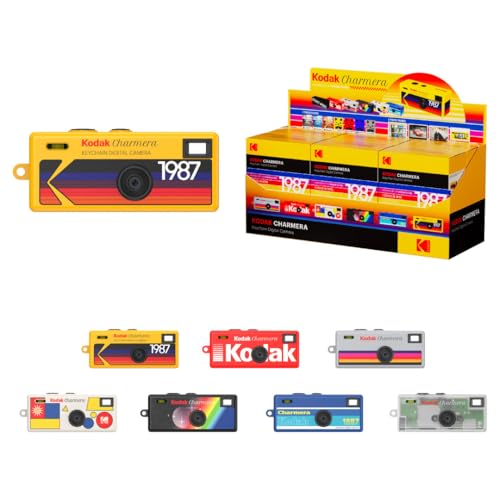
KODAK CHARMERA Keychain Digital Camera Blind Box Set

KODAK PIXPRO FZ45 16MP Compact Digital Camera (Black)

QUIOF 4K Autofocus Vlogging Camera (White)

KODAK PIXPRO WPZ2 16MP Waterproof Digital Camera (Yellow)

ocxu Digital Camera for Kids and Beginners

Saneen 8K Vlogging Camera with WiFi

QUIOF 4K Vlogging Camera (Black)
QUIOF 4K Vlogging Camera (Pink)

KODAK PIXPRO C1 13MP Compact Digital Camera (Tan)
A Deeper Look At The Lineup
Solo creators tired of grainy restaurant footage will find a serious upgrade here. The ZV-1F uses a one-inch type sensor, the larger kind usually reserved for pricier bodies, paired with a 20mm ultra-wide lens that pulls in plenty of ambient light at f/2.0. You can frame yourself at arm’s length without cropping your face out of the shot.
Compared with the teen-focused QUIOF picks later in this list, the Sony trades megapixels and cartoon-friendly features for cleaner files after sunset. Eye autofocus (the camera locks onto a face and tracks it automatically) holds steady while you move, which matters when you walk-and-talk through dim streets.
Good Reasons To Consider
- One-inch sensor gathers meaningfully more light than the tiny chips in most phones and budget compacts, which is the core reason low-light photos stay usable.
- Ultra-wide 20mm lens (the focal length measured in millimeters; lower means wider) frames handheld vlogs without an awkward selfie grip, so cozy cafés stop feeling cramped.
- Eye-tracking autofocus follows you as you move through a frame, sparing you the jumpy hunting common on entry-level bodies.
- Compact body slips into a jacket pocket, making it realistic to carry on evenings out instead of leaving it on the shelf.
Honest Caveats
- No optical zoom, so faraway subjects force you to crop later or walk closer.
- The wide lens can distort faces at very close range, which catches some vloggers off guard.
Who It Suits Best
Content creators and vloggers who shoot indoors at night and want noticeably cleaner footage than a phone delivers without lugging interchangeable-lens gear.
Consider Something Else When
The KODAK PIXPRO WPZ2 is a smarter grab if you mostly shoot at the pool, lake, or ski slope, since the ZV-1F is not sealed against water or dust.
The CHARMERA is more keepsake than serious camera, and that’s the point. Each blind-box bundle ships one of six random finishes (or a secret edition), so gifting feels a little like a trading-card pull. Output sits at 1.6 megapixels, modest by any modern standard, but the camera still handles photo and video duties through a micro SD card slot.
Unlike the Sony ZV-1F, this one doesn’t try to chase dim-light clarity. Instead, it leans into whimsy: four frame overlays and seven filters give teens and casual shooters instant styling without menus. Storage tops out at a 128GB TF card (a tiny memory card format common in compact gadgets), which is far more than the body actually fills.
What Pays Off
- Random charm finish turns a plain camera into a bag accessory and stocking stuffer.
- Tiny form factor makes it easy to hand to a curious kid without worry.
- Filters and frames sidestep editing apps for users who want ready-to-share looks.
Trade Offs
- 1.6MP output and 1440×1080 video look soft on anything bigger than a phone screen.
- Memory card is not included, so first-day shooting requires an extra stop.
Built With In Mind
Teens and casual gift shoppers who want a novelty gadget more than a serious low-light tool.
Look Elsewhere When
The QUIOF 4K Vlogging Camera is a smarter pick for beginners who actually want usable photos and clips, since the CHARMERA leans more toward charm than image quality.
The FZ45 is the family-trip workhorse of this list. It runs on AA batteries, which means a dead set at a roadside rest stop doesn’t end the day, and the 27mm wide-angle setting pulls in landscapes and group portraits without anyone getting cropped out. Four times of optical zoom (a true lens-based zoom that preserves detail, unlike digital cropping) gives just enough reach for school plays and beach scenes.
Compared with the Sony ZV-1F, the FZ45 makes more modest promises. Its 16MP sensor (the light-collecting chip that determines how much detail and noise a photo shows) handles dimly lit hotel rooms acceptably but won’t match the Sony in truly dark restaurants. For travelers who value simplicity over heroics, that trade-off usually feels fair.
What Earns Its Place
- AA power keeps the camera alive anywhere, even on long flights or rural getaways.
- Wide 27mm lens covers family group shots without forcing anyone to step back.
- Optical zoom retains detail when zooming in, unlike the digital zoom found on toy cameras.
Points To Note
- Low-light performance is workmanlike rather than strong, so noisy venues push its limits.
- The plastic body, while light, won’t handle drops the way a sealed adventure camera will.
Key Specs
Best Suited To
Families and casual travelers who want a fuss-free camera that won’t die halfway through a road trip.
Reach For A Different Pick When
The KODAK PIXPRO WPZ2 is the better choice if your trips involve snorkeling, snow, or sand, since the FZ45 has no weather sealing.
The QUIOF in white keeps things simple for first-time shooters who still want modern specs. A 48MP sensor captures heavily detailed stills, and 4K video recording handles the casual YouTube or TikTok ambitions of most beginners. Autofocus on the body is reasonably quick, so subjects rarely slip out of focus mid-sentence.
Where the KODAK FZ45 keeps things old-school with AA batteries, this one ships with a 32GB card in the box. You can shoot out of the package without an extra trip to the store, a small but appreciated touch for gift-givers. Low-light performance from the small sensor can’t match the Sony ZV-1F, but for daytime indoor vlogs it does the job.
Bright Spots
- 48MP stills and 4K video give beginners specs that look great on spec sheets.
- Included 32GB card means unboxing leads directly to shooting.
- Lightweight plastic body is friendly for kids and teens to handle.
Room For Improvement
- The sensor struggles in low light compared with the larger chips in the Sony ZV-1F.
- Plastic build can scratch easily when tossed into backpacks.
Whose Shelf It Belongs On
Young creators and gift recipients who want a real camera with friendly menus and zero setup friction.
Swap It Out When
The Saneen 8K camera is a step up if WiFi transfer straight to a phone matters more than the included card, since it skips cable juggling.
Anyone who has retired a phone to a bowl of rice knows the pain the WPZ2 solves. Rated for depths down to 15 meters and drops from up to 2 meters, this KODAK keeps shooting where ordinary compacts give up. The vivid yellow shell is easy to spot in snow, surf, or trail mud, which is genuinely handy on group trips.
Low-light performance is reasonable for the class thanks to a BSI sensor (a back-illuminated sensor that captures more light for cleaner photos in dim spots), though the fixed f/3.0 lens won’t pull in as much as the Sony ZV-1F’s f/2.0 optic. The 4x zoom is modest but useful for framing distant wildlife without disturbing it.
Positive Points
- Sealed body shrugs off pool sessions, snorkeling, and dusty trails, which is the main reason to buy it over a regular compact.
- BSI sensor manages indoor evening shots better than older waterproof cameras in the same bracket.
- Bright yellow finish is easy to recover when dropped in snow or sand.
Possible Compromises
- Underwater stills look softer than topside shots because water absorbs red light.
- Bulkier than the slimmer KODAK C1, so it doesn’t disappear in a pocket as easily.
Feature Snapshot
Who Will Love This
Outdoor families, snorkelers, and skiers who need a camera that survives whatever the day throws at it.
A Better Fit Elsewhere
The KODAK PIXPRO FZ45 makes more sense for travelers who don’t plan to get wet but still want the AA-battery convenience.
The ocxu leans into the “power on and shoot” promise that parents and grandparents actually want. A 64GB SD card ships in the box, generous enough for hundreds of kid-snapped photos and short clips before anyone thinks about storage. 4K video and a 64MP still mode (a marketing-driven count, since real-world detail depends on the sensor and lens) make the specs look reassuring on the gift receipt.
Compared with the QUIOF and Saneen models, the ocxu cuts some corners on autofocus sophistication. In moderate indoor lighting, it gets the job done, but in a dim restaurant it can hunt before locking on, especially with fidgety subjects. That’s typical for the category, not a deal-breaker, just a reason to choose this for casual daytime use.
Reasons It Performs
- The bundled 64GB card removes the most common first-day frustration.
- Simple menus and minimal setup make it approachable for non-technical gift recipients.
- Lightweight shell is comfortable for smaller hands to hold steady.
Less Ideal Details
- Autofocus is less confident in low light than the Sony ZV-1F or Saneen 8K.
- Plastic body tends to show scuffs after a few months of regular use.
Right Fit For
Kids and teens, or grandparents who want a real camera that’s easier than a phone to grip and share.
Where Another Pick Suits Better
The Saneen 8K camera is a smarter choice if WiFi sharing straight to a phone matters more than the extra bundled storage.
The Saneen 8K is built for creators who hate cables. Built-in WiFi pushes clips and stills straight to a phone app, so a finished vlog can be on social media within minutes of wrapping the shoot. The body also doubles as a webcam over that same wireless link, which is useful for streamers who want better-than-laptop-cam quality.
The 88MP still mode is a marketing stretch, but 8K video capture is the real draw, giving creators room to crop and reframe in post. Low-light sharpness trails the Sony ZV-1F because the sensor and lens are smaller, but for a bedroom studio with a ring light, results look noticeably cleaner than a typical webcam.
The Practical Payoff
- WiFi transfer cuts the cord and gets footage onto editing apps quickly.
- Webcam mode adds value for streamers working from a laptop.
- Compact shell fits on a small tripod for desktop vlog setups.
Things To Weigh
- Low-light quality is acceptable but not on par with a one-inch-sensor camera.
- App setup can take patience the first time, especially on older phones.
Quick Facts
Who Should Grab It
YouTubers and TikTok creators who want fast wireless transfer without investing in a dedicated vlogging camera.
Not Your Match When
The Sony ZV-1F makes more sense for creators who frequently shoot in dim restaurants and want the cleanest possible low-light footage.
QUIOF’s black version is essentially the same camera as the white model earlier in this list, with two real differences that matter: a black shell that hides scuffs better over time, and an anti-shake system that smooths out the jitter from handheld kid footage. The 32GB card still ships in the box, and the controls stay friendly enough for an eight-year-old.
Where the KODAK PIXPRO C1 keeps the lens fixed and the body simpler, this model offers a 16X zoom range (a mix of optical and digital zoom; it pulls in distant subjects but can soften detail at the long end). For a teen who wants to photograph birds in the backyard or stage plays from the back row, that reach is genuinely useful.
Where It Delivers
- Anti-shake helps steady clips when younger hands can’t hold perfectly still.
- Black finish hides fingerprints and minor scuffs better than lighter shells.
- 16X combined zoom adds reach for school events and backyard wildlife.
Factors To Consider
- Color accuracy skews warmer under indoor lamps, occasionally requiring a quick white-balance tweak.
- The small sensor limits performance after sunset.
Made For
Active kids and casual vloggers who shoot mostly during the day and want a tough-looking, low-fuss camera.
Skip It When
The KODAK PIXPRO WPZ2 is a smarter choice if outdoor adventures and water exposure are common, since this one has no weather sealing.
The pink edition is the same capable camera as the black QUIOF, finished in a color that pops in gift wrap. Functionally, you’re getting 4K video, 48MP stills, autofocus, anti-shake, and that 32GB starter card. The only meaningful choice is the color, which sounds trivial until you’re trying to wrap a birthday gift for a tween.
Compared with the KODAK CHARMERA, this is a more serious tool. Where the CHARMERA leans into charm and collectibility, the QUIOF delivers actual usable photos and clips for a similar price tier, especially once a child wants to do more than point-and-shoot.
The Upside
- Color choice makes it a memorable gift without changing how the camera performs.
- Anti-shake and autofocus keep clips watchable even for first-time users.
- The 32GB card means the gift is ready to use the moment it’s unwrapped.
Softer Spots
- Pink finish can show dye transfer from denim pockets if carried without a pouch.
- Low-light performance matches the rest of the budget class, nothing more.
Perfect Match For
Tweens and teens who want a camera in a color that feels like theirs rather than a hand-me-down look.
Another Choice May Suit
The Saneen 8K camera fits better if wireless transfer to a phone is a priority, since this model relies on cables or card readers.
The PIXPRO C1 closes the list with a small, retro-styled body that hides a surprising feature: a fixed 26mm f/2.0 lens. That wide aperture (the size of the lens opening; a lower f-number means more light reaches the sensor) lets more light hit the sensor than most budget compacts can claim, which is the real reason low-light selfies look cleaner than expected.
There’s no zoom to fuss with, which keeps the experience simple but rules out distant subjects. The 13MP BSI sensor delivers pleasant results in well-lit rooms and acceptable ones after dark, falling between the Sony ZV-1F’s strength and the QUIOF models’ weakness. The tan finish adds personality without screaming for attention.
Why It Works Well
- f/2.0 lens is brighter than the typical f/3.5 lens on entry-level compacts, helping in dim rooms.
- Pocket-sized body travels easily for nights out and weekend trips.
- Retro tan finish stands out from the usual black plastic crowd.
Things To Consider
- No optical zoom, so framing relies on your feet.
- 13MP output limits cropping flexibility for big prints.
Right Fit For
Selfie-takers and casual vloggers who want a small, stylish camera that handles evening light better than most budget compacts.
Where A Sibling Pick Shines
The KODAK PIXPRO FZ45 is a better choice when optical zoom and AA-battery convenience matter more than pocketability.
What Matters Most When Shopping For Affordable Low Light Cameras
Sensor Size Over Megapixels
Megapixel counts get the loudest marketing, but sensor size (the physical area of the chip that captures light) decides how clean a photo looks after sunset. A larger sensor gathers more photons per pixel, which means less grain in dim rooms. The Sony ZV-1F’s one-inch sensor is the clearest example in this lineup. Most budget compacts lean on smaller sensors, which is why bright f/2.0 lenses like the one on the KODAK PIXPRO C1 help close the gap. When comparing models, give more weight to sensor and aperture than to headline megapixel numbers, since those tend to be inflated.
Lens Aperture And Optical Stabilization
Aperture controls how much light enters the lens, and a wider aperture (lower f-number) helps in dim restaurants, cozy living rooms, and dusk walks. Look for f/2.0 or f/2.8 if you regularly shoot in these spaces. Optical image stabilization (OIS), which physically moves lens elements to cancel handshake, helps in low light because cameras need slower shutter speeds there, and any wobble becomes visible. The QUIOF models use electronic anti-shake, which is software-based and less effective. Neither is a deal-breaker, but knowing the difference shapes expectations.
Power, Storage, And Sharing Workflow
Some shooters care more about workflow than specs. AA batteries (as on the KODAK FZ45) keep a camera alive on long trips. Bundled memory cards (the 32GB on the QUIOFs, the 64GB on the ocxu) save a separate purchase. WiFi transfer, like on the Saneen 8K, trims the gap between shooting and posting. Match the workflow to how you actually use photos, not just to what sounds advanced on paper.
Intended User And Use Case
A camera that thrills a vlogger may frustrate a grandparent. Match body shape, menu depth, and feature set to the person holding it. Kids benefit from the QUIOF or ocxu’s simple menus. Travelers lean toward the FZ45’s AA power or the WPZ2’s weather sealing. Creators who shoot late lean toward the ZV-1F or C1. There’s no universal winner, just a right answer for each scenario.
Key Considerations Across These Picks
Pitfalls Shoppers Hit
The most common mistake is chasing megapixels without considering sensor and lens quality. A 64MP camera with a tiny sensor and slow lens produces mushy files in dim conditions, while a 13MP camera with a bright lens often looks cleaner. Another trap is assuming weather sealing is standard. None of the QUIOF, Saneen, or ocxu models are rated for water or dust, so leaving them poolside risks damage. Finally, skipping a memory card in the budget is easy to do, since not every bundle ships with one, and the KODAK CHARMERA is a notable example where storage is sold separately.
Where The Extra Money Goes
Stepping up to a camera like the Sony ZV-1F means paying for a larger sensor and a brighter lens, which together deliver meaningfully cleaner low-light footage. Premium bodies also tend to include faster autofocus systems that lock onto subjects in tricky lighting, plus better build quality that holds up to daily wear. The trade-off is clear: more money buys better image quality and fewer compromises, but only if the use case actually demands it. A parent documenting school plays under fluorescent lights may not notice the difference, while a creator filming in candlelit venues absolutely will.
Frequently Asked Questions
Do affordable cameras actually perform well in low light?
Yes, within their limits. Models with larger sensors (like the one-inch chip in the Sony ZV-1F) or bright lenses (like the f/2.0 on the KODAK PIXPRO C1) deliver surprisingly clean results in dim restaurants and indoor spaces. Budget models with small sensors and slow lenses still work, just with more visible grain.
Is a higher megapixel count always better for low-light photos?
No. Megapixels describe image resolution, but sensor size and aperture decide how clean a low-light photo looks. A 13MP camera with a large sensor often outperforms a 64MP camera with a tiny sensor in the same dim room.
Are waterproof cameras like the KODAK WPZ2 good for everyday use?
They are, with caveats. The sealed body is heavier and bulkier than a slim compact, but the ruggedness makes them forgiving around kids, pets, and travel mishaps. For purely indoor home use, a slimmer body is usually more comfortable.
What is optical zoom versus digital zoom?
Optical zoom uses moving lens elements to bring subjects closer without losing detail. Digital zoom simply crops and enlarges the image, which reduces sharpness. Cameras like the KODAK FZ45 advertise optical zoom, while many budget models only offer the digital kind.
Do I need WiFi on a budget camera?
WiFi, like the kind on the Saneen 8K, makes transferring photos and clips to a phone faster and removes the need for cables or card readers. It is genuinely useful for frequent social posters, but casual shooters who don’t mind a quick cable transfer can skip it without missing much.
Closing Remarks
The right affordable low-light camera is the one that fits how you actually shoot, whether that’s dim restaurant vlogs, family trips, or first photos for a curious kid. Lean on sensor size, lens aperture, and workflow over raw megapixel counts, and you’ll land on a pick that earns its space in your bag.