You don’t need a Hollywood budget to get smooth, steady video anymore. Between YouTube creators, remote workers jumping on weekly video calls, and parents chasing every messy milestone on a phone, the demand for stable shots at sensible prices has exploded. The list below pulls together ten affordable video tripods that span pro-style fluid heads, pocketable mini stands, and full creator kits, so you can match the gear to the way you actually shoot.
A Quick View Of The Lineup

Cayer BV30L Video Tripod with Fluid Head, 72″ Heavy Duty
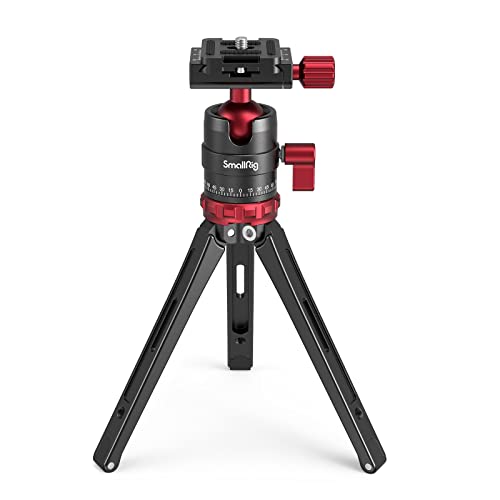
SmallRig Desktop Mini Tripod, Aluminum, 11lb Load

SLIK Pro 700 DX Tripod with 700DX 3-Way Pan-and-Tilt Head

Sensyne 60″ Phone Tripod & Selfie Stick with Remote

SENSYNE 62″ Phone Tripod, Extendable Selfie Stick with Remote

HUOMU Content Creator Vlogging Kit with 75″ Tracking Tripod

Sensyne 72″ Extendable Phone Tripod & Selfie Stick with Remote

NEEWER 74″ Video Tripod TP74 with Fluid Head and QR Plate

HUOMU Vlogging Kit with Tripods, Mic, and RGB Light

HUOMU Aluminum Mini Table Tripod, 4-Level Adjustable
A Deeper Look At The Lineup
The Cayer BV30L reads like a “real” video tripod rather than a repurposed photo stick, and that matters the moment you start panning across a scene. A K3 fluid head (the metal pivoting mount that lets a camera tilt and pan smoothly without jerky stops) carries up to 13.2 lb, so a fully rigged DSLR, a shotgun mic, and a small monitor are not a stretch. The twin-tube aluminum legs lift to about 72 inches, which clears eye level for most adults shooting standing interviews.
The mid-level spreader keeps the legs locked in a stable triangle on smooth floors, and the side-mounted quick release makes swapping cameras fast between setups. If you’re filming weddings, school events, or talking-head YouTube content and need real smooth pans, this is the most capable option in this price neighborhood.
The Upside
- Fluid head delivers buttery 360° pans without stick-slip wobble.
- 13.2 lb payload covers a typical DSLR rig with mic and monitor attached.
- Twin-tube aluminum legs hold their shape under heavy loads.
- Mid-level spreader keeps the base planted on smooth indoor floors.
Things To Consider
- The 75mm flat base is great for video but won’t drop onto a standard 60mm photo bowl without an adapter.
- Heavier than a casual travel tripod; not the pick for backpacking.
- Side-lock quick release can feel stiff in cold weather until it wears in.
Key Specs
Right Fit For
Event videographers, wedding shooters, and serious YouTubers running a mid-weight DSLR rig who want true fluid-head motion.
Where Another Pick Suits Better
Casual phone-only creators should reach for the Sensyne 60″ Phone Tripod instead, since you won’t need the BV30L’s payload or weight.
This SmallRig mini tripod sits in the awkward middle ground between a phone stand and a full-size tripod, and that turns out to be useful. CNC-machined (cut by computer-controlled tools for tight tolerances) aluminum alloy gives it a dense, premium feel, and the 11 lb load rating is wildly generous for something that fits in a coat pocket. The Arca-Swiss compatible clamp (a standardized quick-release plate system used by most camera brands) snaps onto many mirrorless bodies without a separate plate.
The dual-action ball head rotates a full 360° for panoramic stitches and locks firmly once you tighten the single knob. Compared with the Cayer BV30L above, this is the opposite choice: you give up height and reach but gain portability. It shines on a desk for video calls, overhead cooking shots, or low-angle B-roll.
Where It Helps
- Stout 11 lb capacity for a tripod this small, easily holding a mirrorless body.
- Arca-Swiss compatible clamp saves swapping plates between rigs.
- Dual-action ball head gives independent pan and tilt locks.
- Folded footprint slips into a jacket pocket or camera bag side pouch.
Points To Keep In Mind
- Limited max height; not built for standing shots or tall framing.
- Single locking knob feels under-built for repeated quick adjustments.
Whose Shelf It Belongs On
Streamers and remote workers who want a sturdy desk stand for cameras, webcams, or small lights.
A Better Fit Elsewhere
Filmmakers needing tall framing or fluid pans will be happier with the NEEWER TP74 reviewed further down.
The SLIK Pro 700 DX is the grandpa of the lineup, in the best way: it has been around long enough that the design has settled. Aluminum, magnesium, and titanium-alloy legs hit a 75-inch max height with a 19.8 lb load rating, so it can carry a chunky camcorder or a DSLR with a 70-200mm telephoto without complaint. The 700DX 3-way pan-and-tilt head lets you lock each axis independently, which suits precise framing rather than the free-flowing pans of a fluid head.
The trade-off is weight: at 7.1 lb, this is not a “grab and go” tripod. Folded length stretches to about 30 inches, which matters when packing for a flight. If you’re shooting long-lens wildlife video or anchoring a stills camera for hybrid work, the rigidity pays you back every time.
Where It Delivers
- Titanium-alloy leg sections resist flex when fully extended.
- 19.8 lb payload handles telephoto lenses and pro camcorder bodies.
- 3-way head gives precise, separately locked pan, tilt, and rotation axes.
- 15.9-inch minimum height gets you low for tabletop and product work.
Soft Spots
- 7.1 lb body weight adds up on long walks; not built for hiking.
- 3-way head is great for stills but slower than a fluid head for continuous video moves.
Best Suited To
Hybrid shooters pulling double duty on stills and video who prioritize rock-solid framing over fluid motion.
Swap It Out When
Run-and-gun video shooters will find the Cayer BV30L’s fluid head a better match for the way they move.
The Sensyne 60″ doubles as a selfie stick and a tripod without forcing you to choose, which is the whole pitch. The phone holder rotates 360° and is wrapped in non-slip silicone pads that keep your phone from sliding when you tilt to landscape. The included wireless remote pairs over Bluetooth for hands-free starts, a small detail that adds up during a long vlog shoot.
Fully collapsed, the unit shrinks to roughly 13.5 inches, so it rides along in a backpack pocket without dedicated space. The catch is stability: thin aluminum legs on smooth floors can drift if you bump them. For indoor talking-head shots, travel vlogging, or video calls, it’s hard to argue with the price-to-flexibility ratio.
Everyday Wins
- Folds small enough to toss in a daypack and forget it’s there.
- 360° rotation handles portrait, landscape, and overhead angles.
- Bluetooth remote keeps your hands free during take.
- Wide phone clamp fits 2.3″ to 3.9″ devices, including most cases.
A Few Limitations
- Lightweight legs can tip on uneven outdoor ground.
- Not designed for DSLR use, only phones and tiny cameras.
Who Will Love This
Solo content creators, families, and casual travelers who want one tool for selfies, group shots, and short video clips.
Consider Something Else When
If you need extra reach for overhead cooking demos, the Sensyne 72″ Extendable Tripod gives you another foot of height.
The SENSYNE 62″ trades a little folding compactness for two extra inches of reach compared with the 60″ sibling, and that small jump makes a real difference when you’re framing a standing shot. The 360° rotating phone mount covers both orientations, and the extendable shaft locks in stages so you can dial in height without over-extending thin sections.
For most TikTok and Instagram content creators, this lands in a comfortable sweet spot: tall enough to clear adult eye level, light enough to carry on a hike. The wireless remote is the same straightforward Bluetooth trigger you’d expect. Where it falls behind a dedicated video tripod is, predictably, rigidity at full height. Treat it gently on windy days.
Well-Handled Touches
- Standing-height reach without a full-size tripod footprint.
- Multi-stage extension locks hold firm at intermediate heights.
- Remote shutter saves running back to the phone to start clips.
- Combines selfie stick and tripod without a clumsy adapter plate.
Honest Caveats
- Top sections flex slightly under heavier phones with large lenses.
- Bluetooth pairing can drop if the remote sits in a deep pocket.
Made For
Travel vloggers and on-location creators who need standing-height framing from a packable rig.
Reach For A Different Pick When
Shooters wanting pro-grade stabilization should jump to the Cayer BV30L with its fluid head.
The HUOMU vlogging kit solves a specific frustration for new creators: having to buy a tripod, a light, a microphone, and a remote separately and then figuring out how they all fit together. You get a 75-inch auto-tracking tripod (a motorized base that follows your face as you move across the frame), dual LED fill lights, a magnetic wireless microphone system with a charging case, and a remote, all in one bag.
For solo creators filming TikToks and YouTube shorts alone in a room, the face-tracking head is the standout feature; the camera actually moves with you, so you can walk and talk without leaving the frame. The 30-hour battery claim on the microphone system is real comfort on long shoot days. Compared with the entry-level Sensyne sticks above, this trades portability for a much fuller production setup.
Strong Points
- Auto-tracking head keeps you framed while walking demos.
- Wireless mic system with charging case cuts cable clutter.
- Dual LED fill lights handle most indoor lighting situations.
- 75-inch reach covers tall framing without extension wobb
Room For Improvement
- Face tracking works best with clear subject contrast; busy backgrounds can confuse the motor.
- More pieces to charge, store, and keep track of than a simple tripod.
Quick Facts
Perfect Match For
New and intermediate creators launching a YouTube or TikTok channel who want a turnkey setup out of one box.
Not Your Match When
If you already own a good mic and light, the simpler HUOMU Vlogging Kit offers a more focused upgrade path.
The Sensyne 72″ stretches taller than the 60″ and 62″ versions in the same family, and the detachable phone holder is the small upgrade that matters most. You can pull the phone off the stick and slot it into a third-party mount without yanking the whole clamp apart. Reach hits 72 inches, which clears tall framing for group shots, standing presentations, and elevated overhead angles when paired with a small tabletop base.
Build quality matches the rest of the Sensyne lineup: lightweight aluminum that prioritizes portability over absolute rigidity. Treat it as a phone-first tool rather than a camera platform, and you’ll get reliable service. Where it edges out its siblings is versatility, since you can swap the detachable holder between this stick and a clamp or gimbal mount.
What Helps Most
- Detachable phone holder adapts to other mounts in your kit.
- 72-inch reach covers taller framing than shorter siblings.
- Wireless remote works across iOS and Android phones.
- Light enough to carry on multi-location shoots without fatigue.
Worth Noting
- Tall extension is the least rigid section; avoid heavy camera attachments at full reach.
- Phone holder clamp width is generous but excludes larger cases with battery packs.
Who Should Grab It
Group photographers, event hosts, and presenters who want taller reach and a swappable phone mount.
Look Elsewhere When
Run-and-gun videographers should look at the NEEWER TP74, which trades stick convenience for fluid-head stability.
The NEEWER TP74 is the most overtly “video-first” tripod in this lineup, and you feel it the moment you mount a camera. The fluid drag pan head has separate friction controls (knobs that adjust how smoothly the head moves under load) so you can dial in the resistance for a heavy DSLR or lighten up for a mirrorless body. The 75mm bowl base, 360° scale, and bubble level are details you’d expect on rental gear, not at this budget.
Double tandem aluminum legs hold up to 17.6 lb, which covers a cinema-style rig with a follow focus and external recorder. Mid-level spreader and rubber feet keep things planted on smooth indoor floors. For event videographers upgrading from a photo tripod, the TP74 is the move that actually changes how your footage looks.
A Few Strong Suits
- Fluid drag pan head with separate friction controls for tilt and pan.
- 75mm bowl base supports half-ball video heads in a standard video workflow.
- Bubble level helps keep horizons straight during fast setups.
- Telescopic pan handle saves space in the bag when stowed.
Trade Offs
- Heavier carry weight than photo tripods; not a travel-friendly pick.
- Tilt range of -75° to +90° is generous but the drag controls require practice to dial in.
Feature Snapshot
Built With In Mind
Event videographers, wedding shooters, and small-studio creators upgrading from photo tripods to true video support.
Where A Sibling Pick Shines
The Cayer BV30L is a smarter pick for shooters who want similar fluid performance in a slightly lighter package.
This second HUOMU kit zeroes in on the question every new YouTuber actually asks: do I need to buy everything separately? You get a 54-inch full-size tripod, a 4-level adjustable table tripod, a magnetic wireless microphone set, an RGB fill light, a rotating phone clip, a wireless remote, and a Type-C cable in one bundle. For someone with zero gear on hand, that’s a complete first-day setup.
The two-tripod approach is genuinely clever: tall for sitting or standing shots, small for desk angles and overhead work. The RGB light adds creative color options that plain LED panels skip. Where it concedes ground to the larger HUOMU kit above is auto tracking, which this version leaves out in favor of more accessories at the price point.
Benefits That Matter
- Two tripods cover tall and tabletop shots in one bundle.
- Magnetic wireless mic snaps on without fiddling with clips.
- RGB light adds color options for stylized content.
- Complete kit means no surprise accessory shopping on day one.
Possible Compromises
- No motorized face tracking, so manual repositioning is required when you walk.
- Wireless mic battery life is shorter than the larger HUOMU kit’s charging case system.
Who It Suits Best
First-time TikTok and YouTube creators who want one purchase that covers most of the basics without research paralysis.
A Better Fit Elsewhere
Creators who walk and talk on camera will get more from the HUOMU Content Creator Vlogging Kit’s auto-tracking head.
The HUOMU mini table tripod is the smallest thing on this list, and it earns its spot by being the most useful “extra” you can own. The standard 1/4-inch screw (the universal mounting thread shared by virtually every camera, light, and phone clamp) accepts phone holders, action cams, gimbals, microphones, and small fill lights. Four-level height adjustment gives you a tiny bit of framing range without dominating a desk.
It folds flat enough to disappear into a laptop sleeve. Compared with the SmallRig desktop tripod above, it’s lighter on load capacity but cheaper and easier to toss in a bag. For video calls, phone overhead shots, or positioning a lavalier microphone exactly where you want it, this is a quietly indispensable tool.
Good Reasons To Consider
- Universal 1/4-inch screw fits phones, cameras, lights, and mics.
- 4-level height adjustment lets you fine-tune framing on a desk.
- Foldable aluminum body slips into a laptop bag without bulging.
- Stable base for small action cams and phone vlogging setups.
Less Ideal Details
- Limited to tabletop height; not useful for any standing content.
- Slimmer rubber feet can slide on glossy surfaces without a mat.
The Right Fit
Remote workers, podcasters, and overhead-content creators who need a discreet stand that lives on a desk.
Skip It When
You primarily shoot standing content outdoors, where the Sensyne 62″ or 72″ sticks make more sense.
What Matters Most When Shopping For Affordable Video Tripods
Payload and head type drive the real experience. A tripod’s max load (the heaviest camera it can safely support) tells you which body and lens combos it can carry without wobbling, and the head type determines how motion feels. Fluid heads give smooth, dampened pans and tilts that look professional on video. Ball heads and pan-and-tilt heads lock into fixed positions, which is fine for stills or static video but rougher for moving subjects. If your work involves panning to follow people or products, a fluid head is the difference between amateur and polished footage.
Height range matters more than peak height. Max height gets the headlines, but minimum height and folded length affect daily use just as much. Tabletop creators need low-angle reach; travelers need short folded lengths; tall shooters need eye-level extension. Measure your most common shooting position before chasing the tallest spec.
Portability is a feature, not an afterthought. Aluminum tripods are lighter than steel but trade some rigidity. Carbon fiber costs more and shaves weight further. If you’re carrying gear more than a short distance, every pound compounds quickly, and a tripod you leave at home does no work. Phone-first sticks and mini table tripods serve creators who already carry too much.
Accessories can make or break the kit. Quick-release plates (QR plates let you snap a camera on and off without unscrewing), bubble levels, mid-level spreaders, and carrying cases all change daily workflow. A tripod with a sloppy QR plate feels annoying within a week; a tripod with a proper one feels invisible in the best way.
Key Considerations Across These Picks
Where Shoppers Go Wrong
Chasing the tallest max height number often leads people past the tripod they actually need. A 75-inch phone tripod that wobbles at full extension produces worse footage than a 60-inch tripod with a solid locking mechanism. Similarly, overlooking head type turns a video purchase into a stills tripod by accident. Always match the head to the way you intend to shoot, and treat max height as a ceiling you’ll rarely use, not a goal.
When Paying More Pays Off
Stepping up from a phone stick to a fluid-head video tripod is where footage quality jumps most visibly. The Cayer BV30L and NEEWER TP74 cost more than selfie sticks, but they introduce real smooth motion, heavier payload capacity, and pro-style setup features like bowl bases and bubble levels. For anyone filming events, weddings, or long-form talking-head content, the upgrade pays for itself in fewer reshoots and cleaner edits. For phone-only creators shooting short social clips, the sticks remain the smarter call.