Going live used to mean parking a webcam on a shelf and hoping you stayed in frame. Today’s auto tracking cameras follow you around the room, reframe on the fly, and keep your stream looking intentional whether you teach, present, or play games. The hard part is separating the gimmicks from the genuinely useful AI tracking, so this list focuses on models with real motion logic, clean autofocus, and the kind of image quality that survives a long stream session without overheating.
The Choices Worth Comparing

EMEET PIXY Dual-Camera AI-Powered PTZ Camera 4K

OBSBOT Tiny SE 1080P PTZ Webcam AI-Tracking

TONGVEO 4K Conference Room Camera System

OBSBOT Meet 2 4K Webcam with AI Framing

OBSBOT Meet SE 1080P 100FPS AI Framing Webcam

OBSBOT Tiny 3 Lite Spatial Audio 4K Webcam

OBSBOT Tiny SE 1080P 100FPS AI Tracking Webcam
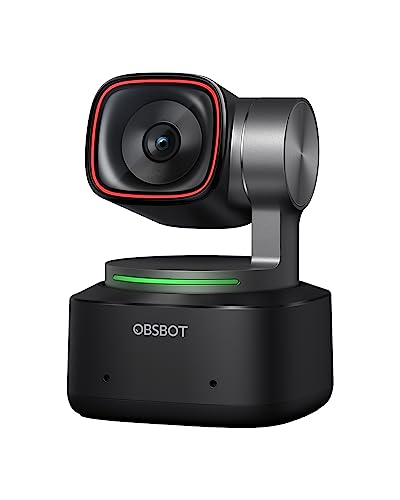
OBSBOT Tiny 2 4K Voice Control PTZ Webcam

OBSBOT Tiny 3 Spatial Audio 4K Webcam

OBSBOT Tail 2 PTZR NDI 4K Camera
Why These Options Stand Out
The EMEET PIXY takes a different route than most webcams by pairing a 4K main imaging camera with a secondary AI camera that watches your face in real time. PDAF autofocus (phase-detection autofocus, a fast focus method borrowed from phones) locks onto you quickly, and that second lens helps the camera tune exposure and skin tone before the picture falls apart under mixed room lighting. For solo creators who pace around during talks or shift between sitting and standing demos, the dual-lens setup keeps the framing intentional instead of slightly laggy.
Compared to the OBSBOT models lower in this list, the PIXY leans into desktop flexibility rather than gimbal motion, so it works well for product unboxings and seated broadcasts where you still want the AI to track subtle head movement. The 1/2.55-inch sensor is generous for a webcam, and owners commonly report that the skin tone correction handles harsh window light better than expected. The honest read is that this one trades true PTZ pan-and-tilt for a smarter fixed-angle approach, which suits most desk-based streamers but not everyone.
Key Advantages
- Dual-camera AI system keeps exposure tuned to your face in mixed lighting
- 0.2-second autofocus lock means less hunting when you lean in to show something on camera
- 4K resolution preserves detail for product close-ups and makeup or craft tutorials
- Skin tone correction runs in real time, useful under fluorescent office lights
Things To Consider
- Fixed-position design rather than full PTZ pan and tilt, so walking around a stage is limited
- Desktop software is required to fine-tune AI tracking, which adds setup time on day one
Built With In Mind
Streamers and remote presenters who sit or stand close to the camera and want premium autofocus plus smart lighting correction without the bulk of a motorized base.
Reach For A Different Pick When
You need true pan and tilt across a stage, in which case the OBSBOT Tail 2 PTZR NDI Camera delivers real motorized movement and broadcast output.
The OBSBOT Tiny SE leans into motion: a dual-axis gimbal (a two-motor bracket that physically pans and tilts) keeps you centered, and the camera shoots 1080p at a high 100 frames per second. That frame rate matters more than resolution for fast hand movements, gaming, or product demos where the slightest stutter ruins the polish. The included mini tripod makes it easy to perch the camera above a monitor or on a shelf without a clamp.
Gesture controls let you start tracking with a wave of your hand, which sounds gimmicky until you are mid-cooking stream with wet fingers. AI composition decides whether you should sit solo, share the frame with a co-host, or crop in tighter on a whiteboard. Where the EMEET PIXY stays anchored, this one physically follows you, which is the right trade for creators who pace.
Real Benefits
- 100 fps capture keeps fast motion smooth, ideal for sports demos and gaming
- Two-axis motorized gimbal tracks walking subjects more naturally than digital crop alone
- Gesture commands reduce touch on the keyboard while you stream
- Mini tripod adds flexible placement without buying extra mounting gear
- Real-time reframing modes handle solo, group, and close-up framing automatically
Worth Noting
- 1080p ceiling means heavy 4K cropping for tight close-ups will soften the image
- Moving parts bring small noise during quiet streams and need occasional recalibration
Made For
Active streamers who walk through tutorials, play rhythm games, or run workout sessions and need smooth motion more than 4K pixel count.
Swap It Out When
Cinematic 4K clarity matters more than motion, in which case the OBSBOT Meet 2 4K Webcam with its larger 1/2-inch sensor is the cleaner choice.
The TONGVEO bundle is built for a different scale of room than the rest of this list. A 4K PTZ camera with 3x optical zoom (a true lens zoom that preserves detail, unlike digital zoom which just crops pixels) and a 93-degree wide field of view covers a conference table or a small sanctuary, while the wireless Bluetooth speakerphone handles pickup across the room. USB 3.0 and HDMI outputs let you route the feed into a stream, a room display, or both at once.
AI auto-tracking follows whoever is speaking, which removes the awkward “camera operator shuffle” in hybrid meetings and small worship services. Compared to the OBSBOT Tiny models earlier in the article, this one is over-spec for a single desk but exactly right for rooms where multiple people need to look polished on camera.
Where It Delivers
- 3x optical zoom lets you isolate a speaker without losing image clarity
- Wireless speakerphone simplifies placement without running audio cables across the floor
- USB 3.0 and HDMI outputs support direct integration with streaming gear and room displays
- Wide-angle capture fits a full conference table without awkward cropping
Trade Offs
- Bulkier hardware needs permanent mounting rather than a quick desk clip
- Setup involves pairing the speakerphone and routing outputs, which adds an afternoon of installation
Right Fit For
Mid-size conference rooms, hybrid teams, and small churches or classrooms that need shared tracking plus clean room audio in one kit.
Look Elsewhere When
You only stream from a personal desk, where the OBSBOT Tiny SE webcam covers your needs without the room-scale hardware.
The OBSBOT Meet 2 trades the motorized gimbal of the Tiny line for a larger 1/2-inch sensor and a fixed design, which puts image quality front and center. For creators who care about cinematic depth, soft background blur, and low-light clarity, this sensor size matters more than another axis of movement. AI framing handles reframing digitally, which keeps the camera body slim enough to perch on the thinnest laptop lid.
This is the pick to choose when your stream is more about how it looks than how much you move. Compared to the EMEET PIXY, the Meet 2 has a slightly larger sensor and a more polished AI framing experience inside OBSBOT’s app. The catch is no PTZ motion, so anyone pacing a stage should keep walking past this model.
What Earns Its Place
- 1/2-inch sensor captures noticeably cleaner low-light footage than smaller-sensor rivals
- 4K resolution paired with digital reframing still preserves detail when you crop in
- Slim body fits over a thin laptop screen without awkward bulk
- AI framing keeps subjects centered without the moving-part noise of a gimbal
Points To Keep In Mind
- No physical pan or tilt means presenters who walk far off-axis drift out of frame
- Digital reframing slightly reduces resolution when the AI crops tight
Who Should Grab It
Remote professionals, podcast hosts, and creators who sit close to the camera and want a polished, sensor-led image rather than robotic motion.
Not Your Match When
You move around a large room, in which case the OBSBOT Tiny SE PTZ webcam with motorized tracking will follow you more reliably.
The OBSBOT Meet SE is the entry point into AI framing for streamers who do not yet need 4K. The 100 fps 1080p feed handles fast hand gestures, gaming reactions, and quick head turns without smearing, and the AI framing digitally recenters you without any moving hardware. That lack of moving parts also means quieter operation, which matters if you record audio close to the webcam.
Think of this as a confidence-building pick for first-time streamers. You get OBSBOT’s app ecosystem and framing logic without the bulk or cost of the bigger Tiny series. Where the EMEET PIXY brings dual-camera intelligence and the OBSBOT Meet 2 brings a large sensor, this one focuses on doing the basics well at a friendlier tier.
What Makes Sense
- 100 fps capture keeps motion clean without paying for 4K overhead
- AI framing in a fixed body removes the moving-part noise of motorized rivals
- Lower cost tier makes AI-assisted streaming accessible for beginners
- App-based tuning means day-one setup is straightforward
Some Limits To Know
- 1080p ceiling looks softer if you crop in heavily for vertical formats
- Smaller sensor means dim rooms show more noise than on the Meet 2
Perfect Match For
Beginners stepping into AI streaming who value smooth motion and easy framing more than maximum resolution.
Consider Something Else When
You already run polished 4K streams and want sharper footage, in which case the OBSBOT Meet 2 4K Webcam is a sensible step up.
The Tiny 3 Lite shrinks the gimbal webcam formula into a smaller, lighter body without giving up 4K capture. The new triple-mic array adds a sense of spatial direction to your voice, so when you turn your head or lean toward the camera, the audio feels less flat than typical webcam mics. PDAF autofocus keeps the lens locked on quickly during fast repositioning.
For creators who travel between desks or set up and tear down frequently, the smaller footprint earns its keep. Compared to the larger OBSBOT Tiny 2 reviewed later, this Lite trim trades a bit of sensor size for a noticeably more packable body. The result feels less like a permanent desk fixture and more like a creator tool you can toss in a bag.
Strengths Worth Knowing
- Noticeably smaller and lighter than earlier Tiny generations, easier to travel with
- Triple-mic array creates more directional, spatial-sounding audio than most webcams
- 4K capture still gives you headroom for vertical-stream cropping
- PDAF autofocus responds quickly when you move product or props close to the lens
Worth Bearing In Mind
- Smaller sensor than the full Tiny 3, so very dark rooms look softer
- Compact base may feel less stable when mounted on tall monitors
Whose Shelf It Belongs On
Mobile streamers and remote presenters who want a compact 4K webcam with directional audio for travel and small desks.
A Better Fit Elsewhere
Low-light image quality matters more than size, in which case the OBSBOT Tiny 2 Webcam with its larger 1/1.5-inch sensor is the smarter pick.
This second appearance of the Tiny SE name on the list shares the same dual-axis gimbal and 1080p 100 fps core as pick two, but ships without the bundled tripod for users who already own a mount. That small difference makes it a cleaner choice for permanent desk setups where a tripod would just clutter the frame. AI tracking keeps you composed, and gesture controls let you toggle modes without leaving your seat.
Daily streamers who run long sessions benefit from the stabilized motor base, which means less digital cropping and more natural movement. Compared to the OBSBOT Meet SE earlier, this one physically pans and tilts where that one reframes digitally. The trade is moving parts, but in a quiet home office the motor noise is rarely an issue.
What It Does Well
- Stable two-axis gimbal produces natural motion as you shift around your desk
- 100 fps capture keeps gestures and game reactions free of motion blur
- Gesture controls simplify one-person streams without reaching for the keyboard
- No bundled tripod reduces clutter for permanent monitor-mounted setups
Honest Caveats
- 1080p ceiling limits cropping for vertical platforms like short-form feeds
- Motorized base requires occasional recalibration if bumped out of alignment
Best Suited To
Daily streamers and remote workers who move naturally while presenting and want tracking that feels physical rather than cropped.
Skip It When
You need absolute 4K sharpness for product close-ups, in which case the OBSBOT Tiny 3 Lite webcam offers a higher-res capture in a similar form.
The OBSBOT Tiny 2 is the model that pushed the AI webcam category forward with a large 1/1.5-inch sensor, voice and gesture controls, and a true gimbal that physically follows you. The 4K resolution at 60 fps preserves fine detail even when the AI reframes or zooms digitally, and HDR (high dynamic range, which balances bright and dark areas in one shot) light correction keeps your face from blowing out under window light. For solo creators who want hands-free control, voice commands like start tracking or zoom in feel less gimmicky once you rely on them.
Compared to the newer Tiny 3 Lite, this one has a bigger sensor and a longer track record of firmware updates. Compared to the EMEET PIXY, it adds physical pan and tilt that the dual-lens AI approach cannot match. You may find the bigger base too tall for some laptop lids, so check your monitor clearance before committing.
Points In Its Favor
- 1/1.5-inch sensor outperforms most webcams in dim rooms
- Voice control plus gestures allow hands-free operation mid-stream
- HDR correction balances window light and indoor lamps without manual tweaking
- 4K at 60 fps gives you room to crop into vertical or close-up formats
- Multiple tracking modes adapt to solo, group, or stage-style presentations
Practical Considerations
- Larger base may overhang thin laptop screens without a tripod or riser
- Voice commands require a quiet environment to avoid false triggers
Right Fit For
Solo creators and remote presenters who want hands-free voice and gesture control paired with strong low-light image quality.
Where Another Pick Suits Better
You need pro broadcast output, in which case the OBSBOT Tail 2 PTZR NDI Camera brings NDI streaming and 60 fps 4K for studio rigs.
The Tiny 3 keeps the gimbal design of its predecessor and adds a noticeably larger 1/1.28-inch sensor plus that triple-mic spatial audio array. PDAF autofocus keeps the lens responsive when you move products or props close to the camera, and 4K at 30 fps gives creators clean detail for both horizontal streams and cropped vertical exports. Where the Tiny 2 already delivered excellent images, this third generation pushes the sensor and audio further in a similar body.
For podcasters who want a webcam that doubles as a directional mic, this one is worth the step up. Compared to the Tiny 3 Lite earlier, the full Tiny 3 has a larger sensor and slightly better low-light performance, though the Lite is the more travel-friendly pick. You may find the design a touch larger than the Lite, which can matter on thinner laptops.
The Value In It
- Larger 1/1.28-inch sensor improves low-light footage over earlier Tiny generations
- Triple-mic spatial audio gives a directional quality to your voice without an external mic
- PDAF autofocus handles fast focus shifts during demos and unboxings
- 4K output leaves room to crop into portrait streams without softening detail
Where It May Fall Short
- Bigger body may overhang very thin laptop screens without an external mount
- Higher cost tier may be more than casual streamers need
Who It Suits Best
Creators who want premium sensor quality plus directional audio from a single device and are willing to pay for the upgrade.
Not Your Match When
Portability matters most, in which case the smaller OBSBOT Tiny 3 Lite webcam is the more bag-friendly alternative.
The OBSBOT Tail 2 is a different class of camera entirely. PTZR (pan, tilt, zoom, and rotate) gives you motorized motion in four directions, and NDI support (Network Device Interface, a protocol that carries video over a network cable) lets the camera feed into broadcast workflows used by studios and event producers. A 1/1.5-inch sensor paired with 50-megapixel capture and 4K at 60 fps means the image stays clean even when the camera moves quickly across a stage.
Where the OBSBOT Tiny line works beautifully on a desk, this one is built for studios, churches, hybrid events, and corporate training rooms. Compared to the TONGVEO conference kit reviewed earlier, the Tail 2 brings stronger AI tracking and broadcast-friendly output but skips the bundled speakerphone. The honest read is that solo streamers rarely need this much camera, but pro setups will appreciate the headroom.
Notable Upsides
- PTZR motion handles complex stage movement with smooth mechanical precision
- NDI output integrates with broadcast and streaming workflows used by studios
- 4K at 60 fps maintains clarity during fast pans or live event coverage
- Large 1/1.5-inch sensor captures high-resolution stills and video from the same unit
- Pro AI tracking tuned for multi-subject scenes like panels and worship services
Things To Weigh
- Cost and complexity exceed what solo streamers typically need
- Requires network cabling and NDI-aware software to unlock the broadcast features
- No bundled speakerphone means pairing with separate room audio gear
Right Fit For
Pro studios, event producers, and large hybrid organizations running multi-camera workflows that benefit from NDI and motorized stage tracking.
A Better Fit Elsewhere
You only need desktop-level AI tracking, in which case the OBSBOT Tiny 2 Webcam covers everyday streaming without the studio hardware.
What To Weigh Before Picking an AI Tracking Camera
Choosing an auto tracking camera for live streaming is less about chasing specs and more about matching the camera to the way you actually present. Solo creators who sit close to the lens usually want sensor size, autofocus speed, and AI framing without needing a motorized gimbal. Creators who pace, demonstrate products, or lead workouts need that physical pan and tilt so the camera follows you naturally rather than cropping in awkwardly.
Resolution matters, but frame rate quietly matters more for fast-moving content. A 1080p feed at 100 fps will look smoother than a 4K feed at 30 fps during gaming or hand-led tutorials. If you stream mostly seated conversation or polished talking-head segments, 4K at 30 fps is the better trade. Most modern PCs handle both, but the bandwidth difference can show up on slower upload connections.
Tracking Style and Mounting
Gimbal-based cameras like the OBSBOT Tiny series physically move, which feels more natural but adds weight, motor noise, and the occasional calibration hiccup after bumps. Fixed-angle cameras like the OBSBOT Meet 2 use digital reframing instead, which keeps the body slim and quiet but cannot follow you across a stage. For most home streamers the fixed approach is the cleaner fit, while presenters who walk should commit to the gimbal route.
Mounting matters too. A tall monitor or laptop lid will not accept every base, and a tripod-mounted camera gives you more framing flexibility at the cost of desk clutter. Worth thinking through where the camera will live before picking a model, especially if you switch between a home office and a travel bag.### Sensor Size and Low LightA larger sensor captures more light, which directly improves low-light footage, dynamic range, and background blur. The OBSBOT Tiny 2 and Tiny 3 use notably larger sensors than most webcams, which is why they handle dim rooms and window light better. EMEET’s dual-camera approach tackles lighting differently, using AI to tune exposure in real time rather than relying on raw sensor size alone.
For most home setups, a large sensor plus HDR correction is enough to handle mixed lighting without manual adjustment. If you stream from a darker room or rely on natural light, sensor size deserves more weight than resolution.### Audio and ConnectivityWebcams have improved dramatically on the audio side, and models like the OBSBOT Tiny 3 series now include triple-mic arrays with spatial direction. That does not replace a dedicated microphone for serious podcasting, but it does mean simpler setups look and sound cleaner. NDI output, HDMI, and USB 3.0 matter only for room-scale or broadcast rigs, not for desktop streamers.
For solo streaming, prioritize AI tracking and image quality first, then check that the audio covers your room without a separate mic. For larger rooms, the TONGVEO bundle pairs tracking with a wireless speakerphone, which is the cleaner all-in-one route.## Smart Choices Before You Commit### Pitfalls Shoppers HitThe most common mistake is buying the highest-resolution webcam without checking whether the tracking method fits the way you present. A 4K fixed camera cannot follow you across a stage, and a 1080p gimbal camera will not deliver cinematic sharpness for product close-ups. Match the tracking style to the content, not the spec sheet.
Another trap is ignoring mounting. A camera with a tall base may not sit on a thin laptop screen, and a tripod-mounted option might dominate a minimalist desk. Test your intended setup before settling on a model.### When Paying More Pays OffThe higher tier buys larger sensors, motorized tracking, and broadcast-level output. For solo creators, the upgrade often shows up as better low-light footage and smoother motion. For studios and event producers, the jump to NDI and PTZR unlocks workflows that cheaper webcams simply cannot support. Spend more when the upgrade changes how your content looks, not just how many features the spec sheet lists.
If you only stream from a desk in a well-lit room, a mid-tier AI webcam will carry you a long way. If you produce live events or shoot in dim conditions, the premium tier earns its keep.## Frequently Asked Questions### Do auto tracking cameras actually follow you smoothly? Most modern AI tracking cameras follow you well within a few feet of the lens. Gimbal models move physically and feel more natural, while fixed-angle models reframe digitally, which can look jumpy if you walk quickly. Matching the tracking style to your movement speed makes the biggest difference.### Is 4K worth it for live streaming? 4K helps if you crop in for vertical platforms, show fine detail, or want headroom for reframing. For seated talking-head streams at 1080p, the difference is harder to spot on most viewers’ screens. Frame rate quietly matters more than resolution for fast motion.### Can I use these cameras without OBS or special software? Yes, all the cameras here work as standard USB webcams with Zoom, Teams, YouTube, Twitch, and most streaming tools. The companion apps unlock deeper AI tuning, gesture customization, and firmware updates, but day-to-day streaming works without them.### What is NDI and do I need it? NDI (Network Device Interface) is a way to send video over a network cable rather than USB. It matters for studios, churches, and event producers running multi-camera workflows. Solo streamers and remote workers rarely need it.### Do AI tracking webcams work in dark rooms? Larger sensors like the 1/1.5-inch and 1/1.28-inch options handle dim rooms well, while smaller-sensor webcams struggle. AI tracking itself can lose you in pitch-black scenes, so adding even a small key light helps any auto tracking camera perform at its best.## Closing RemarksThe right auto tracking camera for live streaming depends on how you present, where you stream, and how polished the final result needs to look. Desk-based creators will find the OBSBOT Meet 2 or Tiny 3 Lite plenty capable, while active presenters should lean into the Tiny 2 or Tiny SE gimbal models. Room-scale and pro studio setups belong with the TONGVEO bundle or the OBSBOT Tail 2 NDI camera. Pick the tool that matches your actual workflow, and the tracking will feel like one less thing to think about on stream.