A 24-70mm f/2.8 sits at the center of most mirrorless kits because it covers everything from wide environmental shots to flattering mid-range portraits without forcing you to swap glass. Walk into a wedding with one on the camera, switch to street photography an hour later, and the focal range stays useful. The hard part is choosing the right version, since each major mount has its own flagship zoom, and third-party makers like Sigma now build credible alternatives at different weights and prices.
The lineup below gathers the strongest current options across Nikon Z, Canon RF, Sony FE, and older DSLR mounts, plus one essential accessory every f/2.8 owner eventually needs. Each pick reflects what the lens is actually built to do, who benefits most, and where a different pick might serve you better.
A Side-By-Side Look

Nikon NIKKOR Z 24-70mm f/2.8 S Zoom Lens

Canon RF24-70mm F2.8 L is USM

Sony FE 24-70mm F2.8 GM II

Nikon NIKKOR Z 24-70mm f/2.8 S II


Canon RF24-70mm F2.8 L is USM (Black)

Sigma 24-70mm f/2.8 DG DN Art Bundle
PROfezzion 72mm Front Lens Cap 2-Pack
Sigma 24-70mm F2.8 DG DN Art Sony E

Canon EF 24-70mm f/2.8L II USM
A Deeper Look At The Lineup
The first-generation Z 24-70mm f/2.8 S became the workhorse that established Nikon’s S-line reputation, and it still earns a place on many Z shooters’ cameras today. Built for the Z mount with a multi-focus stepping motor system, it handles the same mix of wide environmental shots and mid-tele portraits that defines this focal range.
Compared to the Canons that follow in this lineup, this Nikon leans slightly heavier in the hand but rewards you with edge-to-edge sharpness wide open. Wedding photographers who need one lens to cover the ceremony, the reception, and the family formals tend to trust this one most.
What Helps Most
- S-line optical formula that holds detail from f/2.8 across the whole zoom range
- Multi-focus stepping motor (an autofocus system using multiple coordinated motors) for quiet, smooth video pulls
- Weather-sealed barrel that handles light rain and dusty venues
- Strong flare resistance when shooting into window light at receptions
- Customizable control ring for aperture, exposure compensation, or manual focus
Things To Consider
- Heavier than the Sony GM II, so all-day handheld work tires the wrist
- The external zoom extends when racking from 24mm to 70mm, which can shift balance on a gimbal
Feature Snapshot
Made For
Working event and portrait photographers on Nikon Z who shoot in changing light and need one lens that handles it all.
Consider Something Else When
Run-and-gun video creators should look at the Nikon NIKKOR Z 24-70mm f/2.8 S II, since its internal zoom stays balanced on a gimbal.
Canon’s first RF-mount 24-70mm f/2.8 brought L-series build quality (Canon’s professional-grade lens line) into the mirrorless era with a relatively compact barrel and a bright, even rendering style. The optical formula is geared toward hybrid shooters who switch between stills and video without thinking about it.
The dual Nano USM autofocus motors deliver near-silent focusing that holds up for documentary interviews. You can feel the build difference versus the Nikon above when you mount it on an EOS R5, and the customizable control ring is a quiet but useful touch when you want aperture clicks or smooth stepless transitions for video.
Where It Helps
- Bright, contrasty rendering that flatters skin tones
- Dual Nano USM motors for fast, silent autofocus during interviews
- Optical IS (image stabilization) rated up to five stops, helpful in low-light venues
- Weather-sealed L-series construction for travel and outdoor shoots
Trade Offs
- Slightly heavier than the Sigma 24-70mm DG DN Art for Sony E shown later in this list
- The 82mm filter thread means front filters cost more than smaller-thread options
Key Product Details
Whose Shelf It Belongs On
Hybrid EOS R shooters who record interviews, weddings, and travel content where silent autofocus and reliable stabilization matter.
A Better Fit Elsewhere
Sony E shooters on a tighter budget get noticeably more value from the Sigma 24-70mm F2.8 DG DN Art, which lands at a friendlier price for similar image quality.
The second-generation Sony 24-70mm GM II dropped meaningful weight over its predecessor while pushing autofocus performance for hybrid shooters. It is the lightest full-frame f/2.8 standard zoom in its class, and that single change reshapes how it feels on long shoots.
For travel days where you carry one body and one lens for twelve hours, the lighter barrel matters more than raw sharpness numbers. The stepping motors track moving subjects well, and the aperture ring with a de-click switch (a toggle that removes click stops for smooth aperture transitions during video) makes manual exposure changes during video feel natural.
What It Does Well
- Lightest full-frame 24-70mm f/2.8 zoom in its category, easing fatigue
- Fast, quiet stepping motor autofocus that tracks eyes and faces well
- Aperture ring with click/de-click switch for video-friendly operation
- Strong sharpness wide open at both ends of the zoom range
Points To Keep In Mind
- Premium pricing that puts it well above the Sigma 24-70mm DG DN Art
- The front element does not stay fixed during zooming, which matters if you use certain polarizer filters
Quick Technical Notes
The Right Fit
Sony E shooters who travel often and prioritize weight savings and fast autofocus over every dollar saved.
Skip It When
Budget-conscious Sony owners get nearly identical image quality from the Sigma 24-70mm F2.8 DG DN Art for a meaningfully lower outlay.
The second-generation Z 24-70mm f/2.8 S II introduces an internal zoom mechanism, meaning the lens barrel never changes length as you rack through the focal range. For video shooters and gimbal operators, that single design choice fixes a balance problem that has plagued 24-70mm zooms for decades.
Nikon’s latest stepping motor system delivers the quietest, most accurate autofocus in any current Z zoom, and the optical formula pushes sharpness and flare control forward from the original S. You feel the difference on a slider shot where the focus pulls stay smooth and the exposure stays steady.
Useful Strengths
- Internal zoom keeps the lens balanced on gimbals and easy to matte-box (a filter holder mounted on the front of the lens to block stray light)
- Latest-generation stepping motors for silent, accurate autofocus during video
- Improved optical formula with better sharpness and flare control
- Sealed construction suited for travel and outdoor assignments
Points To Note
- Premium pricing reflects the new internal zoom design and updated optics
- Slightly heavier than the original Z 24-70mm S in the hand
Feature Rundown
Best Suited To
Video creators and hybrid shooters on Nikon Z who need stable balance on a gimbal and silent focusing for interviews.
Look Elsewhere When
Still-focused wedding photographers may find the original Nikon NIKKOR Z 24-70mm f/2.8 S covers their needs at a lower cost.
The Canon EF-S 24mm f/2.8 STM is technically a prime, not a zoom, but it lives in the same conversation for APS-C (a smaller-than-full-frame sensor format) Canon owners who want a slim wide-angle companion. On an APS-C body, the 24mm focal length gives a roughly 38mm equivalent view, which works as a discreet street and everyday lens.
It is genuinely pocketable, which makes it the rare f/2.8 lens you forget you are carrying. The STM (stepping motor) autofocus is smooth and quiet for video, and the seven-blade aperture delivers soft backgrounds for headshots when you get close.
What Works In Its Favor
- Ultra-thin pancake-style design that barely adds depth to an APS-C body
- Smooth STM autofocus that stays quiet during video recording
- Seven-blade aperture for smooth out-of-focus rendering
- Light enough to leave on the camera as a walkaround lens
Honest Caveats
- Designed only for APS-C Canon DSLRs, not full-frame EOS R bodies
- Single focal length, so framing flexibility is limited compared to a zoom
Who Should Grab It
Travelers and street photographers on Canon APS-C DSLRs who want the lightest possible f/2.8 lens for everyday carry.
Reach For A Different Pick When
Full-frame Canon shooters should ignore this entirely and consider the Canon RF24-70mm F2.8 L is USM instead.
This listing carries the same Canon RF 24-70mm f/2.8 L IS USM as Pick 2, but it is worth highlighting on its own as the dependable travel and portrait option within the RF lineup. The optical image stabilization and Dual Nano USM motors give it a flexibility edge over older EF designs.
Travel photographers who bounce between landscapes and street portraits find this lens covers almost any scene without swapping glass. The build feels solid in cold weather, and the control ring can be reconfigured for ISO or shutter speed without leaving the viewfinder.
Where It Excels
- Up to five stops of optical stabilization for handheld low-light work
- Customizable control ring that adapts to your shooting style
- L-series weather sealing for travel in unpredictable conditions
- Bright f/2.8 aperture that creates subject separation in portraits
Small Caveats
- The 82mm filter thread adds cost to a complete filter kit
- External zoom extends during use, which can feel unbalanced on smaller gimbals
Perfect Match For
Canon EOS R owners who shoot a mix of travel, portrait, and landscape work and want stabilization they can rely on indoors.
Another Choice May Suit
Sony E shooters with similar needs should consider the Sony FE 24-70mm F2.8 GM II for its lighter weight.
This listing bundles the Sigma 24-70mm f/2.8 DG DN Art for Sony E with a LaCie Rugged Mini 1TB external hard drive and a 64GB SD card. The lens itself is one of the strongest third-party zooms on the market, and the storage extras make it appealing for first-time full-frame upgraders outfitting a kit from scratch.
The Sigma DG DN Art was redesigned from the ground up for mirrorless, so it is smaller and lighter than older Sigma DSLR zooms. A dust and splash-proof body and a zoom lock mechanism (a switch that prevents the lens barrel from extending when not in use) keep the lens safe in travel bags and on dusty shoots.
Standout Benefits
- Compact mirrorless-native design that travels lighter than first-party alternatives
- Dust and splash-resistant barrel for outdoor and travel assignments
- Bundle adds storage and a rugged drive to start shooting immediately
- Strong center-to-edge sharpness across the zoom range
A Few Limitations
- Autofocus tracking is slower than the Sony GM II for fast sports subjects
- Bundle pricing is tied to the included accessories, so check that you actually need the extras
Built With In Mind
Sony E photographers stepping up to full-frame who want a quality zoom plus storage in one purchase.
Where A Sibling Pick Shines
Sony shooters focused purely on the lens should consider the Sony FE 24-70mm F2.8 GM II for faster autofocus.
Most 24-70mm f/2.8 zooms for full-frame cameras use a 72mm or larger front filter thread, which means the original cap that ships with your lens eventually gets lost in a gear bag. PROfezzion’s two-pack solves that with center-pinch caps (caps that snap on by pressing the flexible center) and elastic keepers that tether the cap to the lens strap.
The plastic is sturdy enough for daily use, and the elastic strap keeps the cap from disappearing into a jacket pocket mid-shoot. They are not glamorous, but anyone who has replaced a missing lens cap knows how valuable a spare pair can be.
What Pays Off
- Center-pinch design for quick attachment and removal
- Elastic keepers prevent loss during lens swaps
- Two-pack covers the main lens plus a backup body or filter
Less Ideal Details
- Plastic construction is less protective than metal OEM caps if dropped
Who Will Love This
Photographers with 72mm-thread lenses who lose caps faster than they replace them.
Swap It Out When
Sony shooters using lenses with an 82mm thread should seek out the matching cap size for their GM II zoom instead.
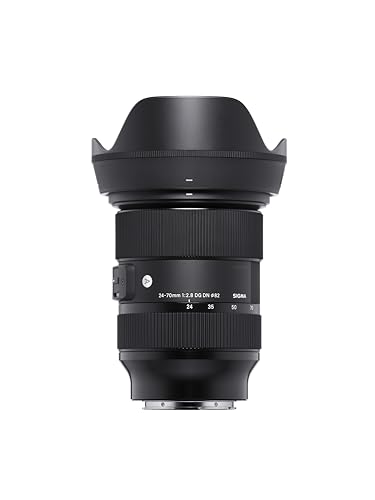
The standalone Sigma 24-70mm f/2.8 DG DN Art for Sony E delivers much of what the Sony GM II offers at a noticeably lower price. Made in Japan and built around a metal-and-composite barrel, it lands at a comfortable weight for travel days and stays sharp wide open from corner to corner.
Compared to the Sony flagship, the Sigma gives up a little autofocus speed for sports, but for portraits, events, and travel it produces nearly indistinguishable files in most lighting. That gap-to-value trade is exactly why the Art line earned its reputation among working photographers.
Noteworthy Benefits
- Lower price than the Sony GM II for very similar optical performance
- Made-in-Japan build quality with a metal mount and composite body
- Compact mirrorless design that balances well on smaller Sony bodies
- Weather sealing for outdoor and travel assignments
Worth Bearing In Mind
- Autofocus tracking is slower than the Sony GM II for fast action
- No optical image stabilization, so you rely on in-body stabilization from the camera body
Right Fit For
Sony E shooters who prioritize optical quality and value over absolute autofocus speed.
Not Your Match When
Sports and wildlife photographers should consider the Sony FE 24-70mm F2.8 GM II for its faster tracking motor.
The Canon EF 24-70mm f/2.8L II USM remains the standard-zoom benchmark for Canon EF-mount DSLR shooters, and many working photographers still rely on it for studio and event work. The redesigned optical formula from its predecessor pushed resolution forward, and the build quality holds up after years of heavy use.
If you shoot a Canon 5D Mark IV or a 1D X body, this lens still produces files you would not trade away lightly. On the mirrorless EOS R system, it adapts cleanly through an official Canon EF-to-RF adapter, so EF-mount owners do not need to abandon their glass when moving bodies.
The Upside
- L-series build quality that holds up through years of professional use
- Sharp optical formula with consistent rendering across the zoom range
- Ring USM (ultrasonic motor) autofocus that is fast and accurate for stills
- Adapts to EOS R bodies via an EF-to-RF adapter without major compromises
Trade-Offs To Consider
- No optical image stabilization, so handheld low-light work leans on the camera body
- Larger and heavier than the RF-mount Canon 24-70mm in this list
Who It Suits Best
Working photographers with Canon EF-mount DSLRs who need a zoom they can rely on for years of heavy use.
Where Another Pick Suits Better
Mirrorless-only Canon shooters should choose the Canon RF24-70mm F2.8 L is USM for its built-in stabilization.
Matching Your Mount And Shooting Style
A 24-70mm f/2.8 lens is a long-term purchase, so the right choice depends on the body you already own and the kind of work you do most. Photographers tend to keep these lenses for a decade or more, which makes matching the mount correctly more important than chasing the latest release.
Start by confirming your camera mount. Nikon Z bodies need the Nikon NIKKOR Z 24-70mm f/2.8 S or its newer S II sibling. Canon RF shooters look at the RF 24-70mm L IS USM. Sony E photographers weigh the GM II against the Sigma Art depending on budget. Canon EF-mount DSLR owners still have the EF 24-70mm f/2.8L II USM as a proven option.
Next, think about how you shoot. Hybrid creators who record video benefit from internal zoom designs like the Z 24-70mm S II, which stay balanced on gimbals. Wedding and portrait shooters lean toward stabilized first-party lenses because the extra stops help in dim venues. Travel photographers often prefer lighter bodies like the Sony GM II to reduce fatigue over long days.
Filter thread size matters more than most shoppers expect. Most full-frame 24-70mm f/2.8 lenses use 72mm to 82mm threads, and the larger filters you need cost more. Building a filter kit around the lens you choose is part of the real cost.
Weight and balance shape daily comfort. A 100-gram difference between competing zooms adds up over a twelve-hour shoot. Holding the lens in a shop before you commit, or comparing published weights, helps you avoid a lens you will dread carrying.
Finally, autofocus performance varies meaningfully between generations. Older stepping motors hunt more in low light, while current-generation linear motors track subjects more confidently. Photographers who shoot sports or moving children benefit from the latest motors most.
What To Weigh Before Clicking Order
Common Shopping Slip Ups
One of the easiest mistakes is buying a 24-70mm for the wrong mount. Sony E, Nikon Z, Canon RF, and Canon EF all look similar in photos but physically will not mount to your camera without an adapter, and adapted performance often disappoints. Confirm the mount on your camera body’s product page first.
Another trap is chasing sharpness numbers without considering autofocus and stabilization. A slightly softer lens with quiet, reliable autofocus and good stabilization often produces more keepers than a sharper lens that hunts in dim light.
Skipping the filter thread cost is a common oversight. A full set of 82mm polarizers, ND filters (neutral density filters that reduce light without changing color), and protective filters costs meaningfully more than the 67mm or 72mm equivalents. Build that into your budget.
Where The Extra Money Goes
Higher-tier lenses earn their premium through better optical formulas, faster and quieter autofocus motors, optical stabilization, weather sealing, and updated coatings that reduce flare and ghosting. Each of those upgrades addresses a real shooting scenario, but not every scenario applies to your work.
Spending more gets you noticeable gains if you shoot in low light, on a gimbal, in unpredictable weather, or for clients who demand edge-to-edge sharpness. Saving the difference makes more sense if you shoot in good light, primarily outdoors, and rarely push the lens to its optical limits.
The Canon RF and Sony GM lines justify the cost for working professionals who depend on the lens daily. Hobbyists who shoot occasionally often get more joy from a Sigma Art or a previous-generation first-party lens, and that trade is completely reasonable.
Frequently Asked Questions
What does f/2.8 mean on a 24-70mm lens?
The f/2.8 refers to the maximum aperture, which is the size of the opening that lets light reach the sensor. A constant f/2.8 means the lens maintains that wide opening across every focal length in the zoom range, giving you consistent low-light performance and shallow depth of field from 24mm to 70mm.
Is a 24-70mm f/2.8 worth it for beginners?
For most beginners, a quality 24-70mm f/2.8 is one of the most useful lenses you can own because it covers landscapes, portraits, and events without forcing lens swaps. The trade-off is weight and cost, so consider whether you will carry it often before committing to a flagship model.
Can I use a 24-70mm f/2.8 for portrait photography?
Yes, 24-70mm f/2.8 lenses work well for environmental portraits where the surroundings matter, and the wide end at f/2.8 creates pleasing subject separation for full-body shots. For tight headshots, many photographers still prefer a fast 50mm or 85mm prime, but the zoom handles most portrait needs.
Do all 24-70mm f/2.8 lenses have image stabilization?
No. Some include optical image stabilization, while others rely on the camera body’s in-body stabilization. The Canon RF, Sony GM II, and many newer designs include optical stabilization, but some third-party lenses and older designs omit it.
What filter size do most 24-70mm f/2.8 lenses use?
Most full-frame 24-70mm f/2.8 lenses use a 72mm or 82mm front filter thread. Check the specific lens’s product page before buying filters, since thread sizes vary even within the same brand across different generations.
Closing Remarks
The right 24-70mm f/2.8 lens depends almost entirely on the camera system you shoot with and the scenarios you face most often. Match the mount first, then weigh stabilization, weight, and autofocus against your real shooting days. Once the basics line up, every lens on this list will reward you with years of capable, versatile images.