A great 20mm prime lens pulls double duty for landscape shooters and environmental portrait photographers who want a wide, clean frame without the bulk of a zoom. The focal length sits in that sweet spot where architectural lines stay mostly straight, indoor spaces feel breathable, and nightscapes gather enough sky to feel vast. These primes also tend to be lighter and faster than wide zooms, which matters when you’re hiking to a ridge or carrying a small bag through a city. The lineup below covers native mounts for Sony, Nikon Z, Fujifilm X, and Micro Four Thirds, plus a couple of cross-platform alternatives that solve specific problems better than the obvious choice.
The Leading Options At A Glance

VILTROX 85mm F2 EVO FE Lens for Sony E-Mount

VILTROX 20mm f/2.8 FE Lens for Sony E

Panasonic Lumix G 20mm f/1.7 Pancake Lens

Nikon NIKKOR Z 20mm f/1.8 S Lens

OM SYSTEM M.Zuiko 20mm f/1.4 PRO Lens

VILTROX 9mm f/2.8 E Wide Angle Lens

VILTROX 13mm f/1.4 APS-C Lens for Fuji X
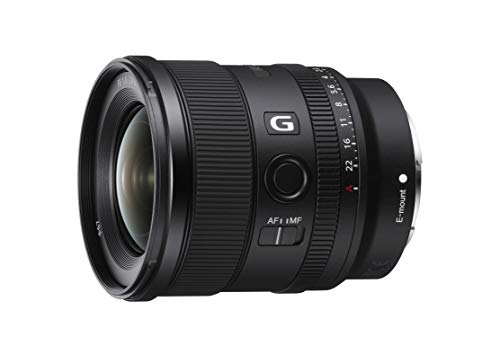
Sony FE 20mm f/1.8 G Prime Lens

VILTROX 20mm f/2.8 Z-Mount Full Frame Lens

A Breakdown Of The Leading Choices
This 85mm sits outside the 20mm conversation on focal length, but it earns its spot here because many Sony E shooters already own a wide prime and want a matching portrait companion from the same brand. The optical formula uses extra-low dispersion glass, which is a type of element that minimizes color fringing along high-contrast edges, helping skin tones stay clean around hairlines and backlit shoulders.
The f/2 maximum aperture (the widest opening the lens can reach, written as f/2) gathers enough light for indoor headshots and lets you melt busy backgrounds into smooth bokeh. Chromatic aberration, the colored halos that sometimes appear in high-contrast scenes, stays well controlled in practice. Sony E shooters who shoot both environmental portraits and tight headshots will appreciate having a telephoto in the bag that handles like a native lens.
The Good Stuff
- Wide f/2 aperture pulls subjects forward with creamy background separation
- ED optics (extra-low dispersion glass that fights color fringing) keep skin tones and backlit edges clean
- Native Sony E mount means autofocus and EXIF metadata (the camera file info like shutter speed and aperture) flow without adapters
- Compact build pairs naturally with small Sony bodies for travel and event work
Things To Consider
- 85mm is a tighter framing than a 20mm wide prime, so it suits portraits more than landscapes
- No weather sealing listed, so rainy shoots call for a cover
Built With In Mind
Sony E shooters who already own a wide prime and want a portrait partner from the same mount system.
Where Another Pick Suits Better
Shooters prioritizing ultra-wide environmental framing should look at the VILTROX 9mm f/2.8 E Wide Angle Lens instead.
This is the small VILTROX wide that most Sony E shooters keep on the camera as a default walkaround. At roughly 157 grams, it disappears into a sling bag and barely adds weight to a small body like the a7C series. The f/2.8 aperture won’t dazzle you with shallow depth of field, but it gathers enough light for golden-hour street scenes and indoor environmental frames.
For travel and everyday storytelling, the lens covers the focal length most people reach for when a 24mm or 28mm feels too tight. Autofocus uses an STM (stepping motor) drive, which is a quiet motor type that moves focusing elements smoothly and works well for both stills and video. Sony E shooters who want one wide prime to leave on the body will find very little to argue with here.
Noteworthy Benefits
- Featherweight build (about 157g) makes it a true always-on lens
- STM autofocus stays quiet for video and street candid moments
- USB firmware update support (in-lens port for future feature upgrades) extends the lens’s useful life
- EXIF data passes to the camera body for clean cataloging later
Trade Offs
- f/2.8 is slower than f/1.8 or f/1.4 alternatives for indoor low light
- No weather sealing mentioned, so coastal or storm-prone shoots need protection
The Right Fit
Sony E photographers who want a compact, affordable wide prime for travel and everyday shooting.
A Better Fit Elsewhere
Shooters who need faster low-light autofocus for astrophotography will get more from the OM SYSTEM M.Zuiko 20mm f/1.4 PRO Lens.
A pancake lens (one that sits nearly flat against the body when mounted) is the smallest prime you can buy for a Micro Four Thirds camera, and this 20mm is the classic example. It gives a roughly 40mm equivalent field of view, which is the focal length after you factor in the smaller MFT sensor, and lands right in everyday-friendly territory. The f/1.7 aperture is wide for the size, bright enough for indoor dinners and twilight street scenes.
The optical layout uses two aspherical elements, which are specially curved pieces of glass that correct distortion and keep the lens physically slim. Multi-coating on the lens surfaces helps suppress ghosting and flare (stray reflections and hazy patches) when shooting into streetlights at night. MFT shooters who want a pocketable normal-wide that disappears on the body will find this hard to beat.
Positive Points
- Bright f/1.7 aperture for the size, rare in pancake territory
- 40mm equivalent focal length suits documentary and street framing
- Aspherical elements help keep distortion low at the edges
- Multi-coating limits flare when shooting into bright light sources
Minor Gripes
- Contrast-based AF is slower than modern phase-detection (a focusing method that uses dedicated sensor pixels for faster, more accurate lock-on) systems on newer bodies
- No weather sealing, so it needs care in damp conditions
Made For
Micro Four Thirds shooters who want the lightest possible everyday prime that still offers a wide aperture.
Skip It When
Photographers needing weather-sealed, fast-focusing glass for pro work will prefer the OM SYSTEM M.Zuiko 20mm f/1.4 PRO Lens.
The NIKKOR Z 20mm f/1.8 S sits in Nikon’s S-line, the tier of Z-mount lenses with the most rigorous optical and build standards. The f/1.8 aperture gathers real low-light light, fast enough for Milky Way arcs over dark skies. The S-line build feels solid in the hand, with a metal barrel and weather sealing that holds up to cold ridge-top shoots and dusty trails.
This is the lens Nikon Z landscape photographers reach for when corners need to stay sharp at f/1.8, not just stopped down. The optical formula includes multiple ED and aspherical elements to keep aberrations low across the wide frame. For working pros who need one ultra-wide that handles every assignment, the S-line pedigree makes this a confident, if heavy, choice.
Reasons It Performs
- Sharp corner-to-corner performance even wide open at f/1.8
- S-line build quality with weather sealing for harsh environments
- Strong low-light gathering for astrophotography and blue-hour interiors
- Silent autofocus stepping motor (a quiet, precise focusing mechanism) for hybrid stills-and-video work
Where It May Fall Short
- Larger and heavier than f/2.8 alternatives
- Premium build carries a higher cost than third-party options
Best Suited To
Nikon Z photographers shooting landscape, architecture, and astrophotography who want flagship-grade optical quality.
Look Elsewhere When
Travelers who value light weight over S-line refinement should consider the VILTROX 20mm f/2.8 Z-Mount Full Frame Lens.
This PRO-grade M.Zuiko delivers an f/1.4 aperture at a 40mm equivalent focal length, which is exceptional for a sealed Micro Four Thirds prime. Astrophotographers love it because the wide opening pulls in starlight that slower lenses miss. The body is weather sealed and finished with a fluorine coating, a special layer that repels water, dust, and oil from the front element, so a quick wipe after a dusty trail handles most of the cleaning.
The manual focus clutch (a mechanism that snaps the lens between autofocus and a tactile manual focus ring) is a thoughtful touch that lets you lock focus precisely when shooting stars on a tripod. Feathered bokeh, meaning the gradual, soft transition from in-focus to out-of-focus areas, looks natural on out-of-focus highlights, which keeps night city lights from looking like nervous little rings. OM SYSTEM and Olympus MFT shooters who want a do-everything wide should give this serious consideration.
A Favorable Mix
- f/1.4 aperture gathers dramatic amounts of light for nightscapes and low-light interiors
- Weather sealing plus fluorine coating handles tough outdoor conditions
- Manual focus clutch makes precise focusing intuitive
- Compact enough to pair with small OM SYSTEM bodies
Some Limits To Know
- PRICE tag reflects the PRO build, higher than MFT starter primes
- Wider than 40mm-equivalent shooters expect, so it’s not a casual everyday for some users
Who Will Love This
Micro Four Thirds photographers who shoot astrophotography, weddings in dim venues, and travel in unpredictable weather.
Another Choice May Suit
Budget-focused travelers who want a smaller, lighter MFT wide should look at the Panasonic Lumix G 20mm f/1.7 Pancake Lens.
Sometimes 20mm still isn’t wide enough. This 9mm f/2.8 covers an extreme angle of view, useful for tiny interiors, dramatic seascapes, and vloggers who need to hold the camera at arm’s length and still keep their face and a backdrop in frame. The optical layout stacks high-refractive, extra-low dispersion, and aspherical elements, all premium glass types, to control distortion across such a wide field of view.
Sony E shooters who vlog, shoot real estate, or chase sweeping landscapes will find the perspective genuinely different from a 20mm. The barrel is short despite the wide coverage, which is unusual at this focal length. For people who specifically want the ultra-wide look and not a balanced everyday prime, this fills a gap the 20mm options on this list can’t.
Everyday Advantages
- Ultra-wide 9mm field of view captures spaces and skies that 20mm can’t fit
- Compact barrel design keeps the camera setup manageable
- Mix of HR, ED, and aspherical elements controls distortion
- Native Sony E mount with full electronic communication
Honest Caveats
- Strong perspective distortion means faces near the edges stretch noticeably
- More specialized than a 20mm, so it’s a second lens rather than a daily carry
Perfect Match For
Vloggers, real estate photographers, and landscape shooters who specifically need an ultra-wide beyond a 20mm field of view.
Not Your Match When
Travelers who want a versatile single wide prime should look at the VILTROX 20mm f/2.8 FE Lens for Sony E.
Fujifilm X shooters have fewer ultra-fast wide primes than Sony or Nikon users, so this VILTROX 13mm f/1.4 fills a real gap. On an APS-C sensor (a sensor smaller than full frame, which narrows the lens’s effective field of view), it gives roughly a 20mm equivalent field of view, right where landscape and environmental photographers like to live. The f/1.4 aperture pulls in real low-light performance.
The STM autofocus motor handles eye detection cleanly for environmental portraits, and the lens supports USB firmware updates through a port on the barrel. The body uses a metal mount for daily durability. Fuji X shooters who want one wide prime that handles nightscapes, street scenes, and travel landscapes will find this a strong everyday carry.
What Earns Its Place
- f/1.4 aperture on Fuji X gives genuine low-light reach
- STM motor pairs well with eye-detection autofocus for portraits
- USB firmware updates future-proof the lens for camera body changes
- Metal mount and solid build for frequent travel use
Things To Weigh
- Heavier than typical Fuji pancake primes
- 13mm focal length gives less reach than a true 20mm equivalent
Whose Shelf It Belongs On
Fujifilm X photographers who shoot nightscapes, environmental portraits, and want a fast wide native to their system.
Reach For A Different Pick When
Sony APS-C or full-frame photographers should look at the VILTROX 20mm f/2.8 FE Lens for Sony E.
This is the Sony native answer for full-frame photographers who want f/1.8 light gathering in a wide prime, and the G designation (Sony’s premium tier, sitting below the flagship G Master line) signals serious optical engineering. The XD linear motors, which are Sony’s extreme dynamic linear autofocus motors, track focus smoothly and silently, a real advantage for hybrid shooters filming walk-and-talk video.
Corner sharpness holds up well wide open, and the lightweight build pairs with smaller a7C-series bodies without unbalancing the rig. The wide aperture opens up astrophotography and blue-hour interiors, while the focal length still frames street scenes and environmental portraits with room to breathe. Sony FE shooters who want one native wide prime that handles stills and video at a pro level will find this hard to pass up.
What Makes Sense
- Native Sony FE mount with full electronic integration
- f/1.8 aperture gathers real low-light for stars and dim interiors
- XD linear autofocus motors stay quiet and accurate for video
- Lightweight body suits travel and gimbal setups
Practical Considerations
- Higher cost than third-party f/1.8 or f/2.8 wide options
- Some users report mild field curvature at f/1.8, meaning the plane of sharpest focus curves slightly across the frame rather than sitting flat
Who Should Grab It
Sony FE photographers who shoot landscapes, astrophotography, and hybrid video and want a single native wide prime.
Where A Sibling Pick Shines
Budget-conscious Sony E shooters will get strong value from the VILTROX 20mm f/2.8 FE Lens for Sony E.
This is the Nikon Z counterpart to the VILTROX 20mm f/2.8 FE, and the two lenses share a similar pocket-friendly philosophy. The Z-mount version brings the same compact body, fast STM autofocus, and USB firmware update support to Nikon mirrorless shooters. It’s small enough to live on a Z fc or Z6 body full time as a default wide.
The optical design uses two ED elements and one extra element of advanced glass to keep chromatic aberration (colored fringes that appear along high-contrast edges) in check, with a clean 10-element construction overall. For Nikon Z photographers who want a wide prime that doesn’t weigh down the camera bag and costs less than the S-line alternatives, this hits a comfortable middle ground.
Useful Touches
- Compact Z-mount build suits small Nikon Z bodies
- ED elements help control color fringing across the wide frame
- USB firmware updates keep the lens compatible with future bodies
- EXIF metadata passes to the body for clean cataloging
Possible Compromises
- f/2.8 won’t match the low-light reach of the NIKKOR Z 20mm f/1.8 S
- No weather sealing listed for harsh outdoor conditions
Right Fit For
Nikon Z photographers who want a lightweight, affordable wide prime for travel and everyday shooting.
Swap It Out When
Nikon Z pros who need S-line optical quality and weather sealing should pick the Nikon NIKKOR Z 20mm f/1.8 S Lens.
DSLR shooters with Nikon F-mount bodies still need wide primes, and this 20mm f/1.8G ED has been a trusted choice for years. The f/1.8 aperture gathers strong low-light, which makes it a staple for wedding, event, and astrophotography work on FX (Nikon full-frame) DSLRs. ED glass keeps fringing under control, and the metal mount feels reassuringly solid in the hand.
You won’t find weather sealing listed or modern linear motors inside, which is part of the trade-off for the older optical design. Nikon DSLR owners who haven’t moved to mirrorless will find this lens pairs cleanly with bodies like the D850, D750, and D780. For anyone holding onto a trusted F-mount system, this remains a sensible pick.
Good Reasons To Consider
- f/1.8 aperture for low-light and shallow depth of field
- ED glass reduces color fringing at the edges
- Trusted track record with working wedding and event photographers
- Native Nikon F mount with autofocus on modern DSLR bodies
Points To Keep In Mind
- Older optical design with no weather sealing
- Autofocus speed lags behind modern mirrorless-native lenses
- Not natively compatible with Nikon Z bodies without an FTZ adapter (Nikon’s mount adapter for fitting F-mount lenses onto Z cameras)
Made For
Nikon DSLR shooters who want a trusted, fast wide prime for FX bodies and aren’t ready to move to mirrorless.
Not Your Match When
Mirrorless-only Nikon Z shooters should choose the Nikon NIKKOR Z 20mm f/1.8 S Lens instead.
What To Weigh Before Choosing A Wide Prime For Your System
A 20mm prime isn’t a one-size-fits-all lens, and the right match depends on your camera system first. Sony E shooters can pick from native first-party glass or affordable third-party options, while Nikon Z users have fewer but well-regarded choices. Micro Four Thirds shooters get the most compact options at the cost of smaller sensor performance, and Fuji X users work within a smaller native lens catalog. Knowing your mount narrows the field fast.
Aperture matters more than focal length for many shooters. An f/1.8 or f/1.4 lens gathers roughly twice the light of an f/2.8, which translates directly into cleaner nightscapes and more flexibility for indoor handheld shooting. The trade-off is size and weight, because faster lenses need bigger glass elements. Travel and street shooters usually prize compact size over a stop of light, while landscape and astrophotography shooters usually want every stop they can get.
Build quality separates workhorse lenses from delicate ones. Weather sealing, fluorine coatings, and metal mounts matter for outdoor and travel use, where rain, dust, and salt air take their toll. Plastic mounts and unsealed bodies cost less and weigh less, but you’ll want to baby them in tough conditions. Decide how rough your shooting really gets before deciding which trade-off is worth it.
Autofocus motor type shapes the experience in ways spec sheets don’t always show. Stepping motors run quietly and smoothly for video. Linear motors track faster but can be louder. Older ring-type motors (focus motors that physically rotate a geared ring to move internal elements) on DSLR-era lenses still focus accurately but sound slower on modern bodies. If you shoot video, prioritize quiet. For stills-only shooting, autofocus speed matters most.
Key Takeaways Across These Picks
Mistakes Worth Dodging
The biggest error is buying a wide prime before checking mount compatibility. A Sony FE lens won’t fit a Nikon Z body natively, and an F-mount lens needs an adapter for mirrorless use. People also tend to underweight size, since a “compact” wide prime still adds noticeable bulk to small travel bodies. Try to feel the balance before committing, especially if you carry the camera for hours.
When Paying More Pays Off
Premium S-line and G-class lenses cost more because they hold sharpness and contrast at wider apertures. For working pros who shoot in dim venues or chase stars on deadline, the extra stop of usable light is worth real money. Hobbyists shooting mostly in daylight will get plenty from more affordable f/2.8 options, so the upgrade pays off most when low-light performance and weather sealing are non-negotiable.
Frequently Asked Questions
What is the main advantage of a 20mm prime lens over a wide-angle zoom? A 20mm prime is usually smaller, lighter, and faster than a wide zoom with similar coverage. The fixed focal length lets the optical design focus on one task, often producing sharper images at the edges of the frame.
Can a 20mm prime be used for portraits? Yes, especially environmental portraits where you show the subject within their surroundings. For tight headshots, longer focal lengths like 50mm or 85mm produce more flattering proportions, so a 20mm works best when context matters.
Do I need a full-frame camera to use a 20mm prime? No, but the field of view changes. On full frame, 20mm gives the expected ultra-wide view. On APS-C sensors it behaves closer to 30mm, and on Micro Four Thirds closer to 40mm, so choose based on the look you actually want.
Is f/2.8 fast enough for astrophotography? For Milky Way arcs in dark-sky areas, f/2.8 works well when paired with longer exposures on a tripod. In urban or suburban light pollution, f/1.8 or f/1.4 gathers noticeably more starlight, which makes a real difference for cleaner night skies.
Should I prioritize autofocus speed or build quality? Match the priority to your shooting style. Hybrid shooters filming video benefit most from quiet, fast autofocus. Still photographers working outdoors in rough weather benefit more from sealed construction and durable mounts.
The Takeaway
The right 20mm prime depends on which camera system you carry and what you shoot most. Sony and Nikon Z users have the most options, MFT shooters get the smallest and lightest, and Fuji X photographers work with fewer but capable choices. Take your time matching the lens to your real shooting scenarios, and the focal length will reward you across landscapes, interiors, and nightscapes for years.