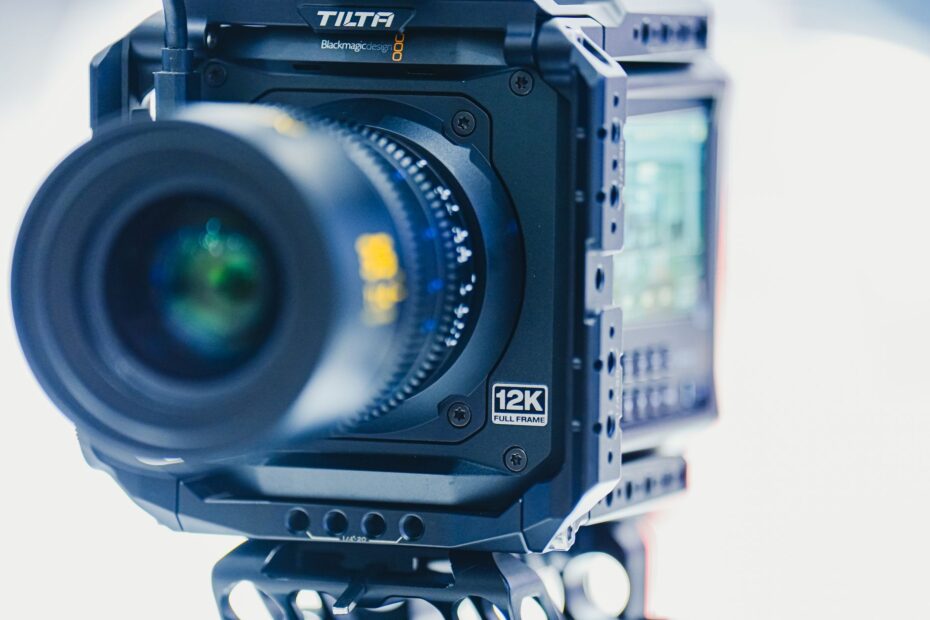
A 36 x 24 mm sensor captures a wider slice of a scene than smaller formats, affecting portrait blur and the weight in your bag. Mount the same 50mm lens on two camera bodies, and your framing can look very different.
You’ll find sensor sizes, crop factors, lens coverage, image-quality trade-offs, and subject-based choices here, so your next camera decision matches the scenes you shoot.
Sensor Size Establishes the Format Difference
A full-frame sensor measures about 36 x 24 mm, matching the image area of 35mm film. That reference size gives your lens markings their familiar field of view, so a 50mm lens acts as a normal-angle lens on a full-frame body.
Crop sensors use a smaller recording area. APS-C appears in many Fujifilm, Nikon, Sony, and Canon cameras, while Micro Four Thirds appears in OM System and Panasonic bodies. Your sensor can have more megapixels without being physically larger because resolution and sensor area are separate specifications.
| Format | Sensor size | Common crop factor | What it changes for you |
|---|---|---|---|
| Full frame | About 36 x 24 mm | 1x | Shows focal lengths at their familiar 35mm field of view |
| APS-C | Smaller than full frame | 1.5x in many systems | Frames a narrower part of the scene with the same lens |
| Canon APS-C | Smaller than full frame | 1.6x | Produces a slightly tighter view than 1.5x APS-C |
| Micro Four Thirds | Smaller than APS-C | 2x | Pairs compact bodies with short telephoto-equivalent lenses |
Neither format suits every assignment. Your choice involves image quality, reach, body size, lens size, and spending, while the subject in front of your camera decides which trade-off matters most.
A distant bird and a dim wedding reception place very different demands on your kit. That difference begins with the crop factor tied to the sensor size.
Crop Factor Alters Field of View Rather Than Focal Length
The smaller recording area trims the outer edges of a lens image circle, leaving a narrower view of the scene. You stand in the same spot, use the same lens, and retain the same optical perspective, yet your frame includes less background.
Crop factor and field of view describe framing, not a hidden change inside the lens. A crop sensor records less of the projected image, much like trimming a print after it has been made.
Focal Length Remains Fixed
A lens marked 50mm stays a 50mm lens on every compatible camera. Its physical optics, focusing distance, compression, and magnification at a fixed distance do not shift because it sits on APS-C or Micro Four Thirds.
Your distant bird fills more of the final frame because the smaller sensor records less surrounding sky. The lens does not become physically longer, and your shooting position still controls perspective.
A crop sensor does not turn a 200mm lens into a physically longer lens. It gives you a tighter frame from the same position, which reduces the amount of trimming needed later.
System Crop Factors Set the Math
Most APS-C cameras use a 1.5x crop factor. Canon APS-C bodies use 1.6x, while Micro Four Thirds uses 2x. Multiply the printed focal length by that figure to describe the full-frame-equivalent field of view.
That calculation matters while planning your lens kit. A canyon overlook can feel frustratingly tight through a lens that looked wide enough on a full-frame body, so check the equivalent view before your trip.
- 1.5x APS-C. A 50mm lens frames like a 75mm lens on a full-frame camera.
- 1.6x Canon APS-C. A 50mm lens frames like an 80mm lens on a Canon APS-C body.
- 2x Micro Four Thirds. A 50mm lens frames like a 100mm lens on a full-frame body.
- Same perspective. Your camera position, not the crop factor, controls facial proportions and background compression.
Equivalent Focal Lengths Clarify Lens Comparisons
A 50mm lens frames like 75mm on a 1.5x APS-C body and like 100mm on Micro Four Thirds. Those figures describe what fits inside your frame, not a change in the lens optics.
| Lens marking | 1.5x APS-C view | 1.6x Canon APS-C view | 2x Micro Four Thirds view |
|---|---|---|---|
| 16mm | 24mm equivalent | 26mm equivalent | 32mm equivalent |
| 24mm | 36mm equivalent | 38mm equivalent | 48mm equivalent |
| 35mm | 53mm equivalent | 56mm equivalent | 70mm equivalent |
| 50mm | 75mm equivalent | 80mm equivalent | 100mm equivalent |
| 85mm | 128mm equivalent | 136mm equivalent | 170mm equivalent |
| 200mm | 300mm equivalent | 320mm equivalent | 400mm equivalent |
Use equivalent focal length while moving between systems, planning a trip, or reading about lenses. It gives you a shared way to judge framing across full-frame, APS-C, and Micro Four Thirds kits.
Once a lens sits on your camera, use the number printed on it during daily shooting. Your viewfinder already shows the frame your sensor records, and repeated use teaches your eye what each focal length delivers.
Those framing differences lead directly to another visible distinction: depth of field. Sensor area changes the aperture needed for the same portrait composition.
Sensor Area Influences Blur, Noise, and Dynamic Range
Matched framing changes the depth-of-field comparison. For a head-and-shoulders portrait from the same position, you use a longer focal length on full frame or move closer with the smaller format. Full frame can render a shallower focus zone at equivalent aperture.
Background Blur Follows Equivalent Aperture
A full-frame 85mm f/2 portrait has a field of view close to a 56mm lens on 1.5x APS-C. At matched framing, the APS-C setup needs about f/1.3 to approach the full-frame depth of field and background blur from f/2.
Your subject distance still changes the result. Move a person farther from a brick wall, and the wall softens on any format; place that wall close behind them, and its texture stays more visible even through a fast lens.
For full-frame vs crop sensor for portraits, the practical advantage is aperture flexibility. Your full-frame setup can reach a shallow-focus look with less extreme lenses, while APS-C lenses need wider apertures for a similar result.
Exposure and Noise Remain Separate Concepts
At the same f-number, shutter speed, and scene brightness, exposure per unit sensor area stays unchanged. A photo at f/2, 1/125 second, and ISO 800 receives the same brightness per square millimeter regardless of format.
Larger sensors gather more total light at equivalent framing and output size. That can give you cleaner low-light performance and more dynamic range at similar sensor technology, though pixel size, resolution, image processing, and lens aperture can narrow or widen the gap.
Those image-quality advantages depend on pairing the body with lenses designed to illuminate its entire sensor.
| Image trait | Full frame tendency | Crop format tendency |
|---|---|---|
| Depth of field | Shallower at matched framing and aperture equivalence | More depth at equivalent framing |
| High ISO output | Can show less visible noise at matched output size | Can show more noise with similar sensor generation |
| Dynamic range | Can retain more shadow detail in difficult light | Varies by sensor generation and processing |
| Background separation | Reaches stronger blur with less extreme apertures | Needs wider apertures for a similar effect |
Sensor size is not a shortcut for judging image quality. A newer APS-C camera with a bright lens can outperform an older full-frame body in the conditions you actually shoot.
Lens Coverage Controls Cross-Format Compatibility
The image circle projected by a lens must cover the sensor behind it. Full-frame lenses cast a larger circle, so a full-frame lens on a crop sensor camera works normally and records the tighter field of view set by that body.
Full-Frame Lenses Cover Smaller Sensors
You can mount a Nikon FX lens on a Nikon DX body or a Sony FE lens on a Sony APS-C body with the proper native mount. The lens covers the smaller sensor with room to spare, though it can feel larger than a crop-specific option.
That flexibility helps your system grow toward a larger sensor body. Yet a large f/2.8 full-frame zoom can remove much of the compact handling that drew you toward APS-C in the first place.
Crop-Specific Lenses Can Leave Dark Corners
APS-C lenses project a smaller image circle. Mounted on a full-frame body, they can show heavy dark corners, called vignetting, because the outer sensor sits beyond the area the lens illuminates.
Some bodies recognize these lenses and enter a reduced-resolution crop mode. Physical mount compatibility does not prove full sensor coverage, so check the mount and lens designation before putting a crop lens on a larger format body.
- Check mount family. Canon RF, Nikon Z, Sony E, and Fujifilm X systems use different mounts.
- Read lens labels. Nikon DX, Canon RF-S, Sony E, and Fujifilm X indicate smaller-format coverage.
- Check crop mode. Your full-frame body can crop automatically or need a menu setting.
- Watch corners closely. A manual lens can mount successfully yet leave dark edges in your image.
Lens coverage also affects the size and weight of a complete kit. A larger image circle requires larger glass, especially in wide-aperture zoom lenses.
System Size and Spending Shape the Practical Trade-Off
A camera body is only one part of the kit in your bag. Wide-aperture lenses for full frame need a larger image circle, and that extra coverage adds glass, diameter, weight, and expense.
Equivalent Kits Reveal the Real Difference
A 24-70mm f/2.8 full-frame zoom can cover weddings and events with strong low-light flexibility, but it carries a substantial physical load. An APS-C 16-55mm f/2.8 reaches a similar field-of-view range in a smaller package, though it does not match the same blur potential.
Your spending includes lenses, spare batteries, filters, and the bag that carries them. A lower body price means little where the focal lengths you need are scarce, heavy, or costly in that mount.
Crop Formats Bring Specific Limits
- Less blur latitude. Your portraits need wider apertures for the same shallow-focus appearance.
- Higher ISO grain. Similar-generation sensors can show more visible noise at matched final output.
- Fewer ultra-wides. Some mounts have fewer bright options below a 24mm-equivalent view.
- Narrower lens selection. Certain specialty lenses appear only in full-frame mount lineups.
- Resolution crop loss. Moving crop lenses to full frame can reduce usable megapixels through crop mode.
Portability remains a serious counterweight. A small APS-C body with a 23mm f/2 or a Micro Four Thirds body with a 25mm f/1.7 can stay in your bag on days a heavy full-frame kit stays home.
Portability and cost matter most when they determine which gear you will actually bring to a particular assignment.
Subject Choice Reveals Which Format Fits Your Work
A dim reception hall shows the full-frame advantage clearly: you can use wider lenses, raise ISO farther, and separate a couple from a crowded background. Portraits, events, night work, and wide landscapes reward that mix of low-light latitude, background separation, and broad-angle lens options.
| Subject | Format that can fit | Reason for the fit |
|---|---|---|
| Portraits | Full frame | Shallower depth of field at practical portrait apertures |
| Events | Full frame | Useful ISO headroom in dim rooms and at night |
| Landscapes | Full frame or APS-C | Wide lenses and dynamic range favor full frame; APS-C travels lighter |
| Wildlife | APS-C or Micro Four Thirds | Tighter framing can fill your frame with distant subjects |
| Sports | APS-C or full frame | Crop reach helps, while autofocus and burst rate can matter more |
| Travel | APS-C or Micro Four Thirds | Compact lenses reduce weight across long walking days |
For wildlife, a 300mm lens frames like a 450mm equivalent on 1.5x APS-C. You gain a tighter frame without carrying a 450mm full-frame lens, which makes a long hike easier to manage.
Video needs a separate check. Sensor size affects framing and depth of field, but autofocus behavior, in-body stabilization, rolling shutter, recording modes, heat limits, and video crops can matter more than format alone for your footage.
Your Shooting Needs Set the Final Choice
Your shooting habits should settle the full-frame vs crop sensor cameras decision more reliably than a format label. Start with your hardest assignment, such as indoor family events, distant birds, or a week of travel with one shoulder bag.
Full Frame Suits Demanding Light and Blur Control
Choose full frame for wide-angle coverage, strong low-light latitude, maximum background blur, and a long-term path using full-frame lenses. A 24mm lens stays genuinely wide, giving your architecture, interiors, and expansive foregrounds room to breathe.
Smaller Formats Reward Consistent Carrying
Choose APS-C or Micro Four Thirds for lower system weight, lower lens spending, telephoto-friendly framing, and compact travel kits. You shoot more successfully with a camera that fits your routine than with a heavier body left at home.
A Short Decision Check Avoids Label-Driven Upgrades
- List your subjects. Write down the three scenes you photograph most during a normal month.
- Map needed lenses. Match each scene to the field of view and aperture your framing needs.
- Price the full kit. Include two or three lenses rather than judging body price alone.
- Carry comparable weight. Hold bodies with equivalent zooms rather than body-only displays.
- Inspect hard-light files. Look at shadows, skin tones, and high ISO images at your normal output size.
Skip an upgrade driven only by the full-frame name. The larger format earns its extra weight and expense only where your present kit blocks a photo you need to make.
Final Thoughts
Sensor size sets possibilities, not your talent or the value of your work. Full frame gives you more room for shallow depth of field, wide views, and difficult light, while crop formats give you reach and lighter kits.
Choose the format whose lens sizes, focal lengths, low-light limits, and carrying weight fit the scenes you repeatedly place in front of your camera. Your strongest option is the kit you bring, understand, and use with purpose.
FAQ
What is the difference between a full-frame and crop sensor camera?
At roughly 36 x 24 mm, a full-frame sensor is larger than the recording area in a crop-sensor camera. Your crop-sensor camera captures a narrower field of view with the same lens, while full frame offers shallower depth of field at equivalent framing and aperture.
Is full frame better than crop sensor?
Full frame is better for your work where shallow depth of field, wide-angle coverage, and high-ISO image quality matter most. A crop sensor can suit your wildlife, travel, sports, and daily carrying needs because your kit can stay smaller, lighter, and less expensive.
Should I get a full-frame or APS-C camera?
Choose full frame where your work centers on portraits, dim events, wide landscapes, or fast lenses with strong background blur. Choose APS-C where your budget, travel load, and distant-subject framing matter more, especially where a 200mm lens giving a 300mm-equivalent view helps your composition.
What happens with a full-frame lens on a crop sensor camera?
A full-frame lens covers your smaller sensor completely and works at its stated focal length, aperture, and focusing behavior. Your camera records a narrower portion of that lens image circle, so a 50mm lens frames like 75mm on 1.5x APS-C or 80mm on Canon APS-C.
Can I use a crop-sensor lens on a full-frame camera?
An APS-C lens can mount on some full-frame bodies that share its mount, but it may leave dark corners because its image circle does not cover the full sensor. Your camera can enter crop mode, which removes those corners while reducing usable resolution.
Does a crop sensor actually magnify the lens?
A 50 mm lens remains 50 mm on a crop-sensor body; only the narrower recorded view changes. It records a smaller central portion of the projected image, producing a tighter field of view and making distant subjects occupy more of your final frame.