Astrophotography used to feel like a club with a steep door fee. Long focal ratios, finicky mounts, software that wanted you to align a polar axis at midnight. Beginners stepping in today have it easier, thanks to compact ED refractors, smart autoguiding scopes, and diagonals that actually hold their alignment. You’re not buying the fanciest gear on the market. You’re buying something that handles a moonlit balcony, a darker backyard, or a weekend trip to a Bortle 4 sky without fighting you every step of the way. This roundup walks through ten beginner-friendly picks that play well with cameras, phones, and steady mounts, plus a few accessories that quietly improve every session.
The Choices Worth Comparing

SVBONY SV48P 90mm Aperture F5.5 Refractor OTA
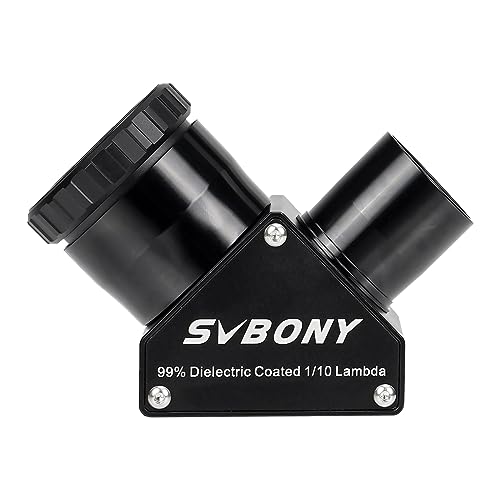
SVBONY SV223 1.25” Telescope Diagonal Mirror
FASHIONARI Smart Refractor Auto-Focus Digital Telescope

XLQFLP 70mm Aperture 300mm Portable Refractor Telescope

CELTICBIRD 80mm Aperture 900 Refractor Telescope with AZ Mount
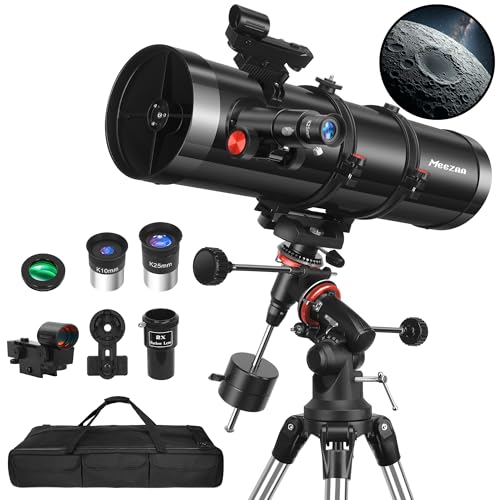
MEEZAA 150EQ Newtonian Reflector Telescope for Beginners

Sky-Watcher Skymax 180mm Maksutov-Cassegrain Telescope

Koolpte 130EQ Reflector Telescope 130mm Aperture

SVBONY SV503 102mm F7 ED Refractor Telescope

Celestron AstroMaster 70AZ Refractor Telescope for Moon & Planets
Why These Options Stand Out
The SV48P is the kind of tube you hand to someone who’s never pointed a telescope at the sky and watch them get a clean shot the same night. At 90mm of aperture (the width of the front lens that gathers light) with a 500mm focal length, it leans toward wide-field imaging, meaning big sweeping targets like the Andromeda Galaxy or the North America Nebula frame up without the fiddly tracking adjustments a long refractor demands.
That balance is the whole story. It’s an OTA, an optical tube assembly without a mount, so you’ll bring your own tripod or tracking mount. Most owners pair it with a small star tracker for two-minute exposures, and the 2-inch rotatable dual-speed focuser (a geared knob that lets you dial focus in tiny increments) gives you the fine control needed for pinpoint stars at high magnification. Compared to the 70mm beginner scopes lower on this list, you collect noticeably more starlight for dimmer targets.
Advantages To Know
- Wide 90mm aperture pulls in more light than the common 70mm starters, helping nebulae and galaxies show real structure.
- Fast f/5.5 focal ratio (aperture divided into focal length, where lower numbers mean brighter images per second of exposure) cuts imaging time in half compared to f/8 or f/9 refractors.
- Dual-speed 2-inch focuser holds calibration firmly during long exposures, so stars stay round.
- Standard 2-inch visual back accepts camera adapters, field flatteners, and most common accessories without adapters.
Things To Consider
- No mount or tripod ships in the box, so budget for a tracking mount or sturdy photo tripod before your first session.
- Achromatic optics (a lens design that doesn’t fully correct color fringing) can show a faint blue-violet halo around bright stars; a mild fringe-reduction filter helps.
Right Fit For
Wide-field astrophotographers shooting big nebulae from a backyard or dark site who already own (or plan to buy) a small tracking mount.
Consider Something Else When
You want a complete grab-and-go setup straight out of the box, in which case the CELTICBIRD 80mm refractor is a friendlier first-night choice.
A star diagonal, an accessory that bends the light path 90 degrees so you don’t have to crouch under the tube, is one of those small upgrades that changes how a telescope feels at the eyepiece. The SV223 uses a dielectric-coated mirror (a thin multi-layer film that bounces more than 99% of incoming light) instead of a cheaper aluminum coating, so image brightness stays close to what the objective lens actually delivers. Pair it with any 1.25-inch eyepiece you already own, and most refractors accept it without an adapter.
The click-lock clamping is the feature you’ll appreciate most in the field. Standard diagonals use a tiny thumbscrew that loosens mid-session if the scope tilts, dropping the eyepiece an inch and ruining your focus. The SV223’s brass clamp ring locks with a quarter turn and stays put. It’s a different kind of buy than the rest of this list: an accessory, not a full telescope, and it works wonderfully with the SVBONY SV48P earlier or any of the refractors covered below.
The Helpful Details
- Dielectric mirror coating preserves brightness, so dim deep-sky targets don’t dim further through the diagonal.
- Click-lock mechanism secures eyepieces with a quick twist, eliminating the wobble of screw-style clamps.
- Standard 1.25-inch barrel fits nearly every eyepiece and Barlow lens (a magnifying accessory that multiplies eyepiece power) on the market.
Honest Caveats
- It’s an accessory, not a complete telescope, so it only makes sense alongside a refractor or compound scope already on your shortlist.
- Mirrors benefit from occasional cleaning; dust on the diagonal surface shows up as faint gray specks in the eyepiece view.
Made For
Anyone who already owns a refractor or compound telescope and wants a more comfortable viewing angle plus a brighter image at the eyepiece.
Look Elsewhere When
You haven’t yet chosen a primary telescope, in which case the SVBONY SV503 102mm ED refractor is a more meaningful first purchase.
Smart telescopes have reshaped the beginner experience, and this FASHIONARI model leans into that trend. The 80mm aperture with a 300mm focal length delivers an f/8.89 system that’s brighter than typical smartphone scopes but still compact enough for a balcony table. Auto-focus means you skip the part most beginners struggle with: manually finding the exact focus point on a dim target at high magnification.
The built-in dual-screen setup lets a group watch the live feed while you frame, which is the part kids and partners love. It’s also a phone-friendly option, pairing to your phone for live viewing and direct capture. Image resolution reaches into 4K territory, and the integrated sensor handles low-light scenes better than a basic phone camera. If you’ve been hesitant about star trackers, equatorial mounts, and polar alignment, this category skips all of that. You point, the scope does the rest.
Where It Delivers
- Auto-focus removes the steepest learning curve from the hobby: getting pinpoint stars without manual adjustment.
- Built-in dual screens make shared viewing with friends or kids genuinely fun instead of one-at-a-time eyepiece peering.
- Compact optical tube plus all-in-one design simplifies storage and travel for balcony, backyard, or cabin nights.
Practical Considerations
- App-dependent workflow means firmware updates and battery charge matter more than with a manual scope.
- At 300mm focal length, deep-sky targets look small in the frame; wide-field imaging is the strength, not planetary close-ups.
Who Should Grab It
Tech-curious beginners who want a guided first-imaging experience and don’t want to learn manual polar alignment before getting their first satisfying photo.
Skip It When
You’d rather learn traditional eyepiece-based observing, in which case the Celestron AstroMaster 70AZ teaches fundamentals that transfer to any telescope you’ll own later.
The XLQFLP is the textbook starter scope: 70mm aperture, 300mm focal length, three eyepieces, a 1.5X and 3X Barlow, a phone adapter, and an adjustable tripod in a single box. You can be looking at the moon within ten minutes of opening the package. Magnification ranges from 15X to 150X, which covers lunar craters, Jupiter’s cloud bands, and Saturn’s rings with enough detail to impress a first-time viewer.
It’s the kind of gift that introduces someone to astronomy without requiring a second purchase. The 70mm aperture is the same size as the Celestron AstroMaster covered below, but the included Barlow lenses double the effective magnification without buying extras. Astrophotography with a phone adapter is technically possible here, though the simple alt-azimuth mount limits you to short exposures of bright targets like the moon.
Notable Upsides
- Three eyepieces plus a 1.5X and 3X Barlow give genuine magnification flexibility from one kit, no extra purchases needed.
- Phone adapter ships in the box, so first astrophotos of the moon happen on night one.
- Lightweight tube and tripod are easy to carry to a balcony, campsite, or grandparents’ backyard.
Small Caveats
- The included tripod tends to vibrate in breezes, so touching the focuser at high magnification causes visible wobble.
- 70mm aperture gathers modest light, so deep-sky objects appear as faint smudges rather than detailed structures.
Best Suited To
Casual viewers and gift-givers who want everything in one box for lunar and bright-planet observing without learning curves.
Not Your Match When
You specifically want long-exposure deep-sky imaging, in which case the MEEZAA 150EQ Newtonian offers dramatically more light-gathering for the same effort.
CELTICBIRD designed this scope for someone who takes astronomy on the road. The 80mm aperture with a 900mm focal length gives you noticeably more reach than the shorter 300mm beginner refractors, so the moon’s craters and Saturn’s rings resolve at higher magnification. The fully coated optics improve light transmission, meaning brighter views of dim objects than uncoated alternatives.
What sets it apart is the travel-friendly framing. The alt-azimuth mount (the simplest mount design, where you push the scope up-down and left-right) is straightforward to set up, and the included carry bag holds the whole kit for camping trips. Phone mount integration is built in, so capturing the moon during a beach weekend doesn’t require extra adapters. Compared to the XLQFLP above, the longer focal length trades wide-field simplicity for better planetary detail.
Good Reasons To Consider
- Long 900mm focal length reaches higher useful magnification for Saturn’s rings and Jupiter’s belts than short beginners.
- Fully multi-coated lens surfaces improve contrast, so faint stars stand out against a darker background sky.
- Carry bag plus AZ mount makes weekend trips and dark-sky excursions practical without renting gear.
A Few Limitations
- Alt-azimuth mount limits long-exposure astrophotography to bright targets like the moon and planets.
- Long tube and tripod combo, while portable, takes up car trunk space compared to compact 70mm scopes.
Who Will Love This
Travelers and casual observers who split time between home and dark-sky weekends, wanting more magnification than starter kits without equatorial complexity.
Another Choice May Suit
Your nights mostly happen on a fixed backyard where tracking matters more than portability, in which case the Koolpte 130EQ reflector brings real deep-sky reach.
This is where the roundup shifts toward serious deep-sky territory. The 150mm aperture collects more than four times the light of the 70mm beginner scopes above, meaning faint nebulae and galaxies actually show structure rather than ghostly smudges. The 650mm focal length keeps the focal ratio at f/4.3, fast enough for shorter imaging sessions on dim targets.
The equatorial mount is the trade-off. An EQ mount (a mount with one axis aligned to Earth’s rotational pole) requires polar alignment before each session: pointing the right axis at Polaris within a degree or two. It’s a real skill to learn, but once you understand it, the slow-motion controls let you track Jupiter as it drifts across the eyepiece with a twist of a knob. For deep-sky imaging this is essential, since stars trail after a few seconds on simpler mounts. If your observing spot has dark skies and you want to actually photograph galaxies and nebulae, the MEEZAA 150EQ is the budget path in.
What Pays Off
- 150mm aperture gathers substantial light, so globular clusters resolve into individual stars and bright nebulae show real shape.
- Equatorial mount with slow-motion controls enables tracking that simpler alt-azimuth mounts cannot match.
- Included phone adapter and moon filter make first astrophotos possible on the same night you start imaging the moon.
Trade-Offs To Consider
- Newtonian reflector design (a telescope using mirrors rather than lenses) needs occasional collimation, which means aligning the internal mirrors using small screws, a maintenance task new owners find intimidating.
- Equatorial mount setup adds real time before each session, including learning polar alignment properly.
- Larger tube and tripod combo is bulkier than refractor setups at similar aperture.
Right Fit For
Patient beginners committed to learning equatorial mount basics who want deep-sky reach without jumping to premium prices.
A Better Fit Elsewhere
You live under heavy suburban light pollution, where the Sky-Watcher Skymax Maksutov’s planetary contrast would serve you better than wide-field deep-sky gathering.
The Skymax is the outlier of the roundup: a serious instrument that lives in the beginner column because you don’t need a degree to use it. The Maksutov-Cassegrain design uses a corrector lens and curved mirror to fold a long focal length into a compact tube. The 180mm aperture gathers significant light, and the long focal ratio produces high-contrast, sharp planetary views that shorter refractors can’t touch.
This is the scope for someone whose primary interest is the moon and planets, plus double stars and tight globular clusters. You won’t use it for sweeping wide-field nebulae, since the long focal length frames small sky patches. Compared to the MEEZAA Newtonian above, the Skymax trades aperture for image sharpness and a sealed optical tube that resists dust and air turbulence at the surface.
A Few Highlights
- Compound Maksutov-Cassegrain design delivers sharp, high-contrast views prized for planetary and lunar detail.
- Sealed tube keeps internal optics cleaner than open Newtonian tubes, reducing maintenance frequency.
- Long focal length in a short tube makes it more portable than the focal length suggests.
Honest Caveats
- Long focal ratio means wide-field deep-sky imaging isn’t its strength; bright planets and compact clusters are.
- Cool-down time before sessions runs longer than refractor designs, since the thick corrector lens takes time to match outside air temperature.
- Heavier optical tube demands a sturdier mount than the smaller beginner refractors on this list.
Right Fit For
Lunar and planetary enthusiasts who value sharp contrast over wide-field reach and don’t mind a heavier, mount-steady scope.
Consider Something Else When
Wide-field astrophotography of the Milky Way or big nebulae is your goal, in which case the SVBONY SV48P or SV503 refractor gives a more appropriate frame.
The Koolpte 130EQ sits in a useful middle spot. The 130mm aperture is smaller than the MEEZAA 150mm above but larger than the 80-90mm refractors, hitting a balance between light-gathering and tube weight. The 650mm focal length paired with the included eyepieces gives 26X and 100X out of the box, and a 2X Barlow doubles those for closer looks at Saturn’s rings or lunar mountain ranges.
The equatorial mount with slow-motion control cables is the real selling point for deep-sky imaging beginners. Once you align the mount, a slow twist of the cable keeps a target centered in the eyepiece as Earth rotates, which is essential for any astrophotography beyond quick phone shots. It’s a step up in learning curve from the AZ mounts earlier, but the trade-off is genuine tracking ability for longer exposures.
Useful Strengths
- 130mm reflector aperture collects noticeably more light than 80-90mm refractors at a moderate price tier.
- Equatorial mount enables proper tracking, so deep-sky imaging becomes a real option rather than just moon and planets.
- Slow-motion control cables allow precise manual tracking without electronic motors.
Worth Noting
- Reflector collimation (mirror alignment) is a routine maintenance task owners commonly report as the trickiest new skill.
- Open tube design means occasional dust on the primary mirror, requiring more cleaning than sealed designs.
Built With In Mind
Beginners ready to learn equatorial mount setup and basic reflector maintenance in exchange for meaningful deep-sky reach.
Reach For A Different Pick When
You want sharp wide-field refractors with less maintenance, in which case the SVBONY SV503 ED refractor removes collimation from your routine entirely.
The SV503 is the most capable refractor on this list. The 102mm aperture with a 714mm focal length gives an f/7 system, which is a sweet spot for wide-field deep-sky imaging. The key feature is the S-FPL51 ED glass, an extra-low dispersion glass that significantly reduces chromatic aberration, the colored halos around bright stars that plague standard achromatic refractors. Stars look sharp and white, even at the edges of the frame.
Fully multi-coated optics (FMC) maximize light transmission, meaning dim nebulae show their actual structure rather than a washed-out version. Compared to the SV48P above, this scope adds ED glass and a longer focal length for tighter star images, ideal for serious astrophotography where every pixel matters. It’s an OTA-only purchase, so budget for a sturdy equatorial mount or tracking platform.
Strong Points
- S-FPL51 ED glass controls color fringing, so bright stars stay sharp without violet halos at the frame edges.
- FMC coatings improve contrast and brightness, helping faint nebulae stand out from the background sky.
- 102mm aperture at f/7 reaches a useful magnification for galaxies while staying fast enough for shorter exposures.
Room For Improvement
- OTA-only design means the mount, finder, and camera adapters are separate purchases.
- Long focal length rewards a sturdy mount; vibrations ruin star images at high magnification, depending on tripod stability.
Perfect Match For
Astrophotography-focused beginners willing to invest in a serious refractor and matching mount for the cleanest star images.
Swap It Out When
You’d rather skip ED-glass costs and start with a basic wide-field refractor, in which case the SVBONY SV48P is the friendlier first step.
The AstroMaster 70AZ is the scope most people picture when they imagine their first telescope. The 70mm fully coated achromatic objective lens (the front lens that gathers and focuses light) produces right-side-up images, meaning the scope works just as well for daytime birdwatching or distant landscapes as for night sky. The alt-azimuth mount is the simplest kind, push up-down and left-right, no polar alignment required.
It’s been around long enough that the design feels proven rather than experimental. Beginners commonly report setting it up in under twenty minutes the first night. The trade-off is the same one every short refractor faces: limited light gathering for deep-sky targets. Jupiter’s moons and Saturn’s rings show clearly, but the Orion Nebula stays a faint green smudge rather than the dramatic cloud you’ll see in 130mm-plus scopes.
Positive Takeaways
- Right-side-up image orientation makes daytime terrestrial viewing just as useful as nighttime astronomy.
- Simple alt-azimuth mount has almost no learning curve, ideal for the first night out.
- Celestron’s long-running model line means widely available replacement parts and accessories.
Less Ideal Details
- 70mm aperture limits deep-sky detail compared to larger scopes; bright planets and the moon are the strengths.
- Stock mount shows vibration at high magnification, which makes focusing at 100X+ frustrating on breezy nights.
The Right Fit
First-night astronomers who want a no-fuss setup that doubles as a daytime spotting scope for the family.
Where A Sibling Pick Shines
You specifically want to photograph deep-sky objects with longer exposures, in which case the MEEZAA 150EQ Newtonian offers the aperture needed for real nebula imaging.
What To Weigh Before Picking Your First Astrophotography Scope
Three attributes matter most when matching a beginner telescope to real-world use, and they interact more than spec sheets suggest. Aperture, the diameter of the front lens or mirror that gathers light, sets the brightness ceiling for any target. Focal length, the distance light travels inside the tube before reaching the eyepiece or sensor, sets magnification and frame size. Mount type decides whether long-exposure deep-sky imaging is even possible without star trails.
Aperture Versus Portability
A 70-90mm refractor travels easily and sets up on a balcony table, but it gathers modest light for faint nebulae. A 130-150mm reflector pulls in dramatically more starlight, yet the tube weighs more and the tripod footprint grows. Beginners commuting to dark sites value portability, while backyard observers with a permanent spot can prioritize aperture.
Mount Type And Tracking
Alt-azimuth mounts, the kind you push up and around, work for visual observation and short phone-camera shots of the moon. Equatorial mounts, with one axis aligned to Earth’s pole, allow slow-motion tracking that keeps stars round during long exposures. For deep-sky imaging beyond quick snapshots, an EQ mount or a motorized tracking platform becomes essential.
Focal Length And Field Of View
Short focal lengths (300-500mm) frame wide star fields and big nebulae comfortably. Long focal lengths (900mm and up) magnify planets and small clusters but show small patches of sky, meaning finding and framing targets takes more patience. ED glass in the lens cuts color fringing, useful when shooting bright stars at the edge of the frame.
Key Considerations Across These Picks
Wrong Turns To Avoid
The most common beginner mistake is buying on magnification alone. A scope claiming 300X power on a 70mm aperture produces a dim, blurry image, because the optics cannot resolve detail at that magnification. Useful magnification tops out at roughly twice the aperture in millimeters, so a 70mm scope realistically delivers around 140X of clean view. Higher numbers in the marketing copy are not better. Another trap is skipping the mount budget: a great optical tube on a flimsy tripod delivers worse images than a modest tube on a steady mount. Vibration ruins stars.
Where The Extra Money Goes
ED glass refractors like the SV503 reduce color fringing, the violet halos that appear around bright stars in standard achromatic lenses. That cleaner star color matters most when framing large nebulae where bright foreground stars sit alongside dim nebulosity. Compound scopes like the Sky-Watcher Skymax fold long focal lengths into short tubes, which matters for portability on planetary imaging trips. Heavier mounts with slow-motion controls add tracking ability, which becomes essential for exposures longer than a few seconds. The upgrade path usually runs: better mount first, then better optics, in that order.
Frequently Asked Questions
What Aperture Works Best For A First Astrophotography Scope?
A 70-90mm refractor or 130-150mm reflector gives a useful balance of light-gathering and beginner-friendly weight. Going larger than 150mm means a heavier mount and longer setup time, which discourages frequent sessions during the learning phase.
Do I Need An Equatorial Mount For Astrophotography?
An equatorial mount helps for exposures longer than a few seconds because it tracks the sky’s rotation along a single axis. For short phone shots of the moon and planets, an alt-azimuth mount is enough. For deep-sky imaging of nebulae and galaxies, an EQ mount or tracking platform is essential.
Can I Use A Phone Adapter For Beginner Astrophotography?
Phone adapters work well for the moon and bright planets, which need only short exposures. For deep-sky objects like nebulae, dedicated astronomy cameras or DSLR/mirrorless bodies paired with longer exposures produce dramatically better results than phones.
What Is ED Glass And Does It Matter?
ED stands for extra-low dispersion, a special glass that significantly reduces chromatic aberration, the colored halos around bright stars caused by light splitting into different wavelengths inside standard lenses. ED glass matters most for wide-field imaging where bright stars sit alongside dim nebulosity, keeping stars sharp and white.
How Much Magnification Can A Beginner Telescope Realistically Use?
Practical magnification tops out at about twice the aperture in millimeters. A 70mm scope delivers clean views at roughly 140X before images turn dim and soft. Pushing beyond that produces empty magnification, where the image gets larger but no sharper.
The Takeaway
Your first scope should match where you’ll actually observe. Balcony and backyard astronomers do well with a 70-90mm refractor or a smart telescope, while those with dark-sky access benefit from the light-gathering of a 130-150mm reflector. The mount matters as much as the optics, since a steady base makes any telescope perform better than its spec sheet suggests. Start with what you’ll use most often, then upgrade one piece at a time as your skills grow.