Cycling cameras have quietly become essential gear, not just for vloggers but for daily commuters who want a record of close calls, racers analyzing their lines, and tour riders documenting long-distance trips. Modern units combine stabilization, waterproofing, and wide-angle lenses that handle low-light streets and dusty trails with equal grace. The right pick depends on where and how you ride, which is why this list spans helmet cams, body-mounted options, and integrated light-and-radar systems. Each model here is built for real outdoor use, with mounting flexibility that matches handlebar, helmet, and chest setups.
The Lineup, Simplified
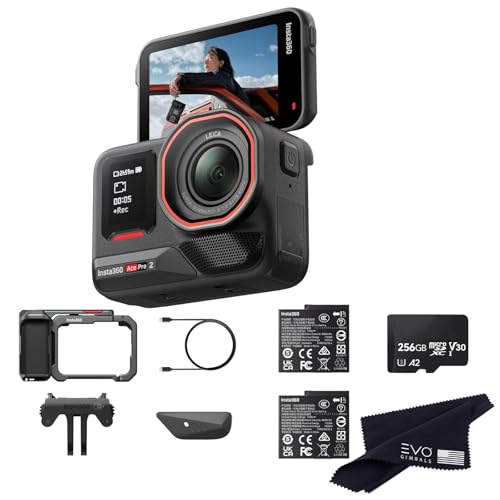
Insta360 Ace Pro 2 Dual Battery Xplorer Bundle
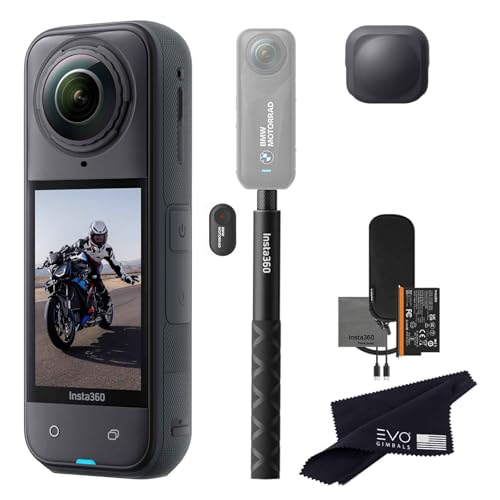
Insta360 X5 BMW Motorrad Limited Edition Basic Bundle

Garmin Varia Vue Cycling Headlight & 4K Camera with RTL515 Radar Bundle

Garmin Varia Vue Cycling Headlight & 4K Camera with RCT715 Radar Bundle
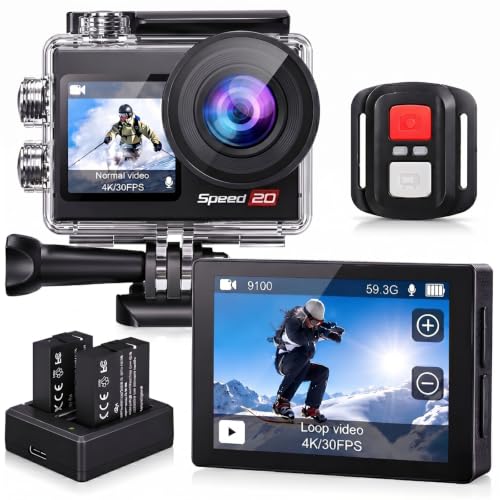
Hiicam 4K Waterproof Action Camera 20MP

CAMWORLD 4K Mini Body Camera with 64GB Card

AKEEYO AKY-730Pro 4K Motorcycle/Bike Dash Cam

AKEEYO-710Pro EIS Motorcycle Camera 4K
Taking A Closer Look At The Options
The Insta360 Ace Pro 2 arrives with serious imaging credentials for cyclists who want footage that looks closer to a short film than a dash-cam log. Built around a large 1/1.3-inch sensor and co-engineered with Leica, this action camera pushes resolution up to 8K while still delivering smooth 4K at 60fps for everyday ride captures. The flip screen makes framing helmet or handlebar angles painless, and the included dual battery bundle plus 256GB card means you can roll out without buying extras on day one.
Compared to the X5 that follows, the Ace Pro 2 uses a traditional wide-angle lens rather than 360 capture, which simplifies editing but limits the reframing flexibility that 360 shooters love. For road cyclists who care about detail in daylight and twilight rides, the sensor size alone is a genuine upgrade over smaller action cams.
Advantages To Know
- The 1/1.3-inch sensor pulls in noticeably more light than typical action cams, which translates to cleaner footage during dawn commutes and shaded forest rides.
- AI noise reduction keeps wind and chain chatter from drowning out voices during vlog-style narration.
- Dual batteries and a 256GB card out of the box mean most weekenders won’t need to budget for storage or spares.
- The flip screen helps you check framing when the camera sits awkwardly on a chest mount or handlebar stem.
Points To Note
- 8K files eat storage quickly, so the included 256GB card may fill up faster than expected on longer tours.
- This is a premium-tier unit, so the jump from budget action cams feels significant in cost.
Key Specs
Made For
Cyclists who want near-cinematic quality and don’t mind paying for flagship resolution and sensor size.
Look Elsewhere When
You specifically want 360 reframing for motorcycle touring, in which case the Insta360 X5 BMW Motorrad Limited Edition Bundle is a better fit.
The Insta360 X5 BMW Motorrad Edition takes a different approach than the Ace Pro 2 by capturing everything around you at once. Twin 1/1.28-inch 48MP sensors stitch a full 360-degree field of view, letting you reframe shots in post rather than committing to a single angle mid-ride. The bundle ships with an invisible selfie stick that effectively disappears from footage, which is genuinely useful for solo touring riders who want clean follow-cam perspectives.
The upgraded battery keeps the camera rolling for substantially longer sessions, a real perk on full-day rides where charging isn’t an option. For motorcyclists who want both front and rear coverage without buying two cameras, the 360 format simplifies the whole rig.
What Makes Sense
- 8K 360 HDR video means you can crop multiple flat-angle edits from one recording session.
- Upgraded battery extends continuous recording substantially compared to standard X5 batteries.
- The invisible selfie stick creates drone-style angles without carrying an actual drone.
- Dual large sensors preserve detail in both bright sun and shaded conditions.
Honest Caveats
- 360 footage requires editing software know-how; casual users may find the workflow heavier than a traditional wide-angle cam.
- This sits at the premium end of the pricing spectrum.
- The BMW Motorrad branding may not appeal to riders outside that ecosystem.
Feature Snapshot
Best Suited To
Motorcycle touring riders and vloggers who want flexible post-ride editing from a single recording.
Swap It Out When
You’d rather have a simpler wide-angle setup with radar and light integration, in which case the Garmin Varia Vue with RTL515 Radar Bundle suits you better.
Garmin’s Varia Vue merges a 4K front-facing camera with a 600-lumen headlight and pairs it here with the RTL515 rear radar that flags approaching vehicles. For road cyclists who already think about visibility, this bundle consolidates three pieces of safety gear into one ecosystem. The included 32GB microSDHC card and power bank let you ride out of the box without buying accessories separately.
Unlike the action cams above, the Varia Vue is purpose-built for cycling rather than adapted from outdoor or helmet use. Auto brightness adjusts the beam based on ambient light, which keeps battery life reasonable during long daytime commutes.
What Works In Its Favor
- The RTL515 radar delivers audible and visual alerts when vehicles approach from behind, a genuine safety layer on busy roads.
- 600 lumens with auto brightness means strong night illumination without constant manual tweaking.
- 4K resolution captures license plates and street signs clearly enough for incident documentation.
- Integration with Garmin cycling computers ties everything into one display.
Worth Bearing In Mind
- The Varia Vue records on demand rather than continuously, so it doesn’t double as a security camera when parked.
- The unit is front-facing only, so rear coverage requires the paired radar unit.
Who Should Grab It
Road cyclists and commuters who treat visibility and rear awareness as non-negotiable safety features.
Where Another Pick Suits Better
If you need always-on rear recording, the Garmin Varia Vue with RCT715 Radar Bundle handles continuous capture instead.
The RCT715 variant of the Garmin Varia Vue bundle swaps the RTL515 for a rear radar with continuous recording capability. That distinction matters more than it sounds: while the standard RTL515 warns you about approaching cars, the RCT715 simultaneously saves footage, turning your bike into something closer to a rolling dash cam. Cyclists who commute in dense urban traffic often want that extra layer of evidence.
The 32GB microSDHC card and power bank bundle mirrors the RTL515 kit, keeping out-of-box setup quick. Front-facing 4K stays consistent across both Garmin options, so your forward image quality is identical regardless of which radar variant you pick.
Useful Highlights
- Continuous rear recording captures incidents whether or not you notice them in real time.
- Vehicle detection provides layered safety feedback with audible and visual cues.
- Pairing with the Varia Vue headlight camera keeps front and rear footage coordinated.
- Bundled storage and power bank reduce setup friction on day one.
Trade-Offs To Consider
- Continuous recording consumes more storage, so you may need to manage files frequently.
- The system is heavier on handlebars than a simple helmet cam, which weight-conscious riders may notice.
Quick Facts
Right Fit For
Urban commuters who want both live alerts and a permanent video record of what happens behind them.
A Better Fit Elsewhere
Riders focused on cinematic motorcycle content should check out the Insta360 X5 BMW Motorrad Bundle for richer capture options.
The Hiicam action camera covers the basics well at a friendlier price than the flagship options earlier in this list. It shoots 4K video and 20MP stills, rides down to 131 feet underwater, and includes a touchscreen for direct menu navigation. EIS, or electronic image stabilization, helps smooth out handlebar vibrations without requiring a gimbal mount.
For casual cyclists who want a capable unit without the premium-tier investment, this camera covers the core feature set without obvious compromises. The 170-degree wide-angle lens captures plenty of peripheral context, which is helpful when documenting traffic situations.
A Few Strong Suits
- 131-foot waterproof rating means rain, splashes, and even snorkel sessions won’t end your recording.
- 170-degree wide-angle lens captures more of the road and surroundings than narrower competitors.
- 5X digital zoom and WiFi connectivity make framing and file transfers straightforward.
- EIS keeps footage stable enough for trail riding where bumps are constant.
Some Limits To Know
- Sensor size and low-light performance don’t match the flagship Insta360 models.
- Battery life on 4K recording sessions tends to be modest compared to higher-tier units.
Feature Card
Perfect Match For
Casual riders and weekend adventurers who want solid 4K performance without flagship pricing.
Reach For A Different Pick When
You need motorcycle-specific features like built-in GPS, in which case the AKEEYO AKY-730Pro offers stronger navigation integration.
The CAMWORLD mini body camera takes a fundamentally different approach from the handlebar-mounted Garmin and larger action cameras earlier in this list. It’s small enough to wear on a chest harness, clip to a helmet, or attach magnetically to metal surfaces, and it ships with a 64GB card so storage isn’t an immediate concern. Mountain bikers and trail riders who don’t want bulk on their bars appreciate the low profile.
The 150-degree field of view and 4K recording capability keep image quality competitive despite the compact body. WiFi connectivity lets you pull clips to your phone without removing the card, which speeds up social sharing after a ride.
Why It Works Well
- Thumb-sized body weight barely registers on a chest mount during long climbs.
- Magnetic mounting adds quick attachment options beyond standard clip mounts.
- The 1.47-inch HD screen lets you frame shots without pulling out a phone.
- Included 64GB card means you can record multiple rides before worrying about space.
Practical Considerations
- Small body means smaller battery, so extended rides need a power bank.
- Magnetic mount is convenient but not ideal for high-vibration off-road use without additional security.
- Limited zoom range compared to larger action cameras.
Whose Shelf It Belongs On
Mountain bikers and riders who want a lightweight, wearable camera that doesn’t dominate the cockpit.
Where A Sibling Pick Shines
Riders needing dedicated motorcycle features should consider the AKEEYO AKY-730Pro for its purpose-built bike integration.
The AKEEYO AKY-730Pro is purpose-built for two-wheeled riders who want dash-cam-level features on a bike. Built-in GPS logs your routes and speed, parking mode keeps watch when you’re off the bike, and loop recording automatically overwrites old files so storage doesn’t fill up mid-trip. The 1.14-inch touchscreen keeps controls accessible despite the compact housing.
Compared to the smaller AKEEYO model that follows, this unit adds GPS integration and a longer claimed battery life of up to 6 hours. IP66 waterproofing handles rainstorms and road spray without needing an external housing.
Well-Handled Touches
- Built-in GPS stamps footage with location and speed data useful for ride logs and incident reports.
- Parking monitor records motion around your parked bike, a useful theft-deterrent feature.
- Up to 6 hours of claimed battery life covers most day-long tours without recharging.
- Loop recording prevents storage anxiety on long trips.
Where It Is Less Suited
- At 4K resolution and 60fps, file sizes grow quickly despite loop recording.
- The 1.14-inch touchscreen is small for users who prefer larger menu interfaces.
At A Glance
Built With In Mind
Long-distance motorcyclists who want route logging, parking surveillance, and dash-cam reliability in one unit.
Consider Something Else When
You primarily ride bicycles on roads and want integrated radar, which the Garmin Varia Vue with RTL515 Bundle delivers more directly.
The AKEEYO-710Pro steps in as a strong middle-ground option for riders who want motorcycle-specific features without the highest price. It captures 4K at 28fps with 20MP stills, includes a G-sensor that locks important footage during sudden impacts, and brings IP66 waterproofing for all-weather riding. The included 64GB card is a nice bonus at this tier.
Versus the AKY-730Pro above, this model drops the GPS module and parking monitor but retains the core image quality and night vision capabilities. For riders who mostly want clean forward footage without extensive route logging, that’s a fair trade-off.
Strengths Worth Knowing
- The G-sensor automatically protects impact footage from being overwritten during loop recording.
- Night vision performance is solid for tunnels, dawn rides, and unlit backroads.
- 142-degree wide-angle lens balances broad coverage with minimal fisheye distortion.
- 64GB card included means storage is covered out of the box.
Possible Compromises
- No built-in GPS means route and speed data isn’t stamped onto footage.
- 4K capped at 28fps, so motion smoothness is slightly less refined than the 730Pro’s 60fps.
The Right Fit
Motorcycle and bicycle riders who want dependable night vision and impact protection without paying for GPS.
Skip It When
You specifically want 360 reframing or 8K resolution, in which case the Insta360 X5 BMW Motorrad Bundle offers a different capture style entirely.
Picking The Right Bike Camera For Your Riding Style
Choosing between action cameras, body cams, and integrated light-and-radar systems comes down to how you actually ride. For road cyclists who commute in vehicle traffic, a system with rear awareness like the Garmin Varia Vue bundles addresses a real safety need that a standalone action camera simply doesn’t cover. Mountain and trail riders usually prioritize weight and mounting flexibility, which favors compact body cameras or traditional action cams mounted to helmets and chest harnesses. Touring motorcyclists often benefit most from purpose-built dash cams with GPS logging and parking surveillance.
Resolution matters, but not in isolation. A 4K camera with poor stabilization produces worse footage than a stabilized 1080p unit, especially on rough roads. EIS, or electronic image stabilization, helps reduce vibration digitally; mechanical gimbals are rare on cycling cameras due to weight and bulk. Wide-angle lenses between 140 and 170 degrees are the sweet spot for capturing road context without extreme fisheye distortion that warps the horizon.
Battery life and storage management quietly separate good cameras from frustrating ones. Loop recording, which automatically overwrites the oldest files when storage fills, removes one common anxiety. G-sensor locking, where the camera protects footage from being overwritten during sudden impacts, ensures you don’t lose the one clip you actually need. Consider how long your typical rides last and whether you’ll have access to charging and file offloading before committing to a unit.
Key Considerations Across These Picks
Common Shopping Slip Ups
A frequent mistake is buying the highest-resolution camera without considering the editing and storage workflow that comes with it. 8K footage looks stunning but requires powerful hardware to edit smoothly and fills cards faster than most casual riders expect. Another trap is overlooking waterproofing ratings; an IP66 rating handles rain and spray, while deeper submersion requires a higher rating. Mounting ecosystem compatibility is also worth checking; proprietary mounts can lock you into one brand’s accessory lineup.
Where The Extra Money Goes
Premium-tier pricing usually reflects larger sensors, which improve low-light performance significantly, and higher frame rates that keep fast motion smooth. The flagship Insta360 models add co-engineered lens systems and AI processing that simpler units skip. Integrated systems like the Garmin Varia Vue bundles bundle radar and lighting that would otherwise require separate purchases. Whether those upgrades matter depends on your typical riding conditions and how much weight you tolerate on your bars.
Frequently Asked Questions
Do cycling cameras need to be waterproof? Most riders benefit from at least IP66 weather resistance for rain and road spray. If you ride in heavy downpours or want to record swim sessions too, look for higher waterproof ratings with documented submersion depth.
How important is electronic image stabilization? Very important on bikes, where constant vibration from rough roads can ruin otherwise good footage. EIS dramatically reduces the shakiness you’d see in raw handheld footage and is worth prioritizing over resolution bumps.
Can I use one camera for both front and rear coverage? Traditional wide-angle cameras capture only forward. The Insta360 X5 captures a full 360 view, which lets you reframe in post. Otherwise, dedicated rear units like the Garmin RCT715 handle continuous rear recording.
What storage size do I need? A 64GB card typically holds several hours of 4K footage before loop recording starts overwriting older files. Longer rides or higher resolutions push toward 128GB or more to avoid overwriting footage you wanted to keep.
Is built-in GPS necessary? GPS is valuable for motorcyclists who want route and speed data stamped onto footage. Casual cyclists and commuters often skip it without missing much, especially if their phone already tracks ride data separately.
Closing Remarks
The right bike camera depends on what you want to capture and how much gear you’re willing to carry. Safety-focused road riders will find the most value in integrated light and radar systems, while adventurers and vloggers may prefer the flexibility of action or 360 cameras. Pick the option that matches your riding reality, not just the one with the longest feature list, and you’ll actually use it on every ride.