There’s a quiet frustration that hits every time you raise a pair of binoculars toward something distant and still have no real sense of how far away it actually is. The reticle sits on the buck, the pin sits below the flag, and your brain has to guess the rest. Modern glass that fuses an optical view with a laser rangefinder, or pairs a long-reaching binocular body with a separate distance tool, solves that guesswork in a single motion. Whether you’re ranging a ridge for a hunt, reading a creek crossing on a backpacking trip, pulling faint star clusters into focus from your backyard, or pulling approach plates at dusk, the right combo of magnification, objective lens, ranging accuracy, and weather sealing changes the whole experience. This roundup walks through ten solid options that span hunting, golf, astronomy, and travel, with honest notes on who each one actually suits.
The Main Contenders
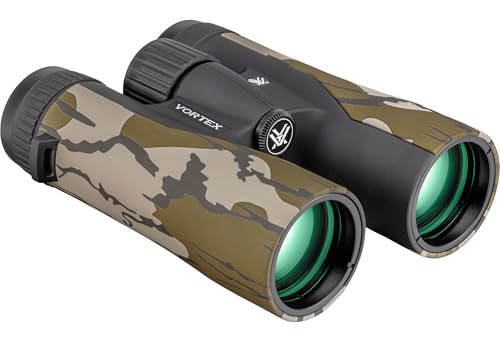
Vortex Crossfire HD 10×42 Binoculars

Vortex Diamondback HD 10×50 Binoculars

Bushnell 10x42mm Trophy XLT Binoculars

Gogogo Sport Vpro GS06 Hunting Rangefinder

Gogogo Sport Vpro Golf Range Finder

Gogogo Sport Vpro Slope Rangefinder 1500/2500 Yards

Gogogo Sport Vpro GS24 Golf & Hunting Rangefinder

Celestron SkyMaster 12×60 Binoculars

Celestron SkyMaster 15×70 Binoculars

Celestron SkyMaster 20×80 Binoculars
Inside Each Recommended Option
You can spot the Vortex Crossfire HD 10×42 from across a parking lot, and that’s mostly because of the Mossy Oak Bottomland wrap, which looks at home on a duck blind or a forest ridge. Underneath the camo, the optical system uses select glass elements with fully multi-coated lenses, which simply means every air-to-glass surface has anti-reflective coatings that help light pass through rather than bouncing back. Chromatic aberration (the colored fringe you sometimes see around high-contrast edges) is reduced, so a treetop against a bright sky stays cleaner than you’d expect at this magnification.
The 10x magnification and 42mm objective split the difference between steady handheld viewing and enough light gathering for dawn and dusk. Compared to the larger Vortex Diamondback HD covered later, this pair is more compact and lighter, but you trade a little low-light brightness for that portability. The roof prism design keeps the body slim, and rubber armor cushions the knocks that happen on a hunt or a long hike. Twist-up eyecups let eyeglass wearers get a full field of view without scraping lenses against glasses.
Everyday Perks
- Fully multi-coated optics pull in enough light for shaded woodland and overcast mornings.
- Rubber armor shell gives you a confident, slip-resistant grip with cold or wet hands.
- Adjustable eyecups and a right-eyepiece diopter (a fine-focus knob that compensates for the difference between your eyes) make long glassing sessions easier on the eyes.
- Tripod-adaptable threading for stable viewing from a truck window or a blind.
- Nitrogen purging and o-ring seals keep internal fogging at bay on chilly mornings.
Worth Noting
- 10x is the upper end of comfortable handheld magnification, so you may notice handshake blur at the longest distances.
- No integrated rangefinder, so you’ll want a separate laser unit if you need distance readings.
- Cleaning the textured rubber armor takes a bit more effort than smooth polymer shells.
At A Glance
Made For
Hunters, hikers, and casual stargazers who want a rugged, mid-size binocular that travels light and survives rough handling.
A Better Fit Elsewhere
Pick the Vortex Diamondback HD 10×50 Binoculars instead, since their larger 50mm objectives pull in more light for serious dawn and dusk glassing.
The Vortex Diamondback HD 10×50 steps up the objective lens to 50mm, which is the diameter of the front light-gathering element. Bigger objectives mean more light reaches your eye, and that extra brightness is exactly what you want when the sun is sitting on the horizon and a buck is about to disappear into timber. You give up some portability compared to the 42mm Crossfire, but you gain an image that stays readable when the lighting gets stubborn.
Like the Crossfire, the optical system uses select glass elements and fully multi-coated lenses, with anti-reflective coatings on every air-to-glass surface. Chromatic aberration stays controlled at the edges of the frame, and color fidelity holds up well against mixed backgrounds. The body keeps the roof prism layout, so it stays relatively compact for a 50mm binocular, and the chassis is armored for outdoor abuse.
Where It Excels
- 50mm objectives noticeably brighten dawn, dusk, and heavily shaded canopy viewing.
- Coating stack reduces glare off water and snow during midday scouting.
- Roof prism body keeps the form factor manageable for a pack or a chest harness.
- Eyecup and diopter adjustments match the comfortable feel of the Crossfire HD line.
Things To Consider
- Heavier than 42mm alternatives, so a tripod becomes useful for long sessions.
- Standalone binoculars with no integrated rangefinder.
- Owners commonly mention the larger exit pupil (the beam of light leaving the eyepiece) takes a beat to align for first-time users.
Quick Facts
Best Suited To
Whitetail hunters, birders, and astronomy dabblers who mostly head out at the edges of the day when light is scarce.
Consider Something Else When
Step up to the Celestron SkyMaster 15×70 if stargazing is the priority, since the larger aperture collects far more starlight than this binocular can.
The Bushnell Trophy XLT 10x42mm is built around the kind of versatility that rewards people who don’t stay in one lane. Cruise ship railings, birding trails, tactical training grounds, and stadium seats all share one common ask: a binocular that can take a beating, stay grippy with wet hands, and pull in a clear view without much fuss. The 10x42mm combination is the most popular format in the category because it balances reach, brightness, and weight in a way that almost everyone can carry for hours.
Bushnell markets this pair for travel, birding, and tactical use, and the design language reflects that. The chassis is rugged enough for rough staterooms and rain on deck, and the wide field of view at 6.2 degrees helps you track moving birds without constant re-aiming. Compared to the Vortex Crossfire HD covered earlier, the Trophy XLT leans slightly toward grab-and-go travel rather than pure hunting, though both are weatherproof and comfortable for extended carry.
Good Reasons To Consider
- Wide 6.2-degree field of view helps with tracking birds in flight or moving scenery from a ship deck.
- 10x42mm sizing keeps the body manageable for long days on the move.
- Tough shell stands up to the kind of drops and scrapes that happen in luggage or a busy field.
- Comfortable eye relief (the distance your eye sits behind the eyepiece) for glasses wearers watching distant shorelines.
Honest Caveats
- No rangefinder, so distance readings require a separate tool.
- Coatings and optical grade don’t quite match higher-tier Vortex models at the same magnification.
- Commonly reported as slightly heavier than slim 32mm travel binoculars.
Who It Suits Best
Travelers, casual birders, and anyone who wants one binocular that survives luggage, weather, and long days on the move.
Skip It When
Choose the Gogogo Sport Vpro GS24 Golf & Hunting Rangefinder if distance numbers matter, since this Bushnell pair has no ranging capability built in.
The Gogogo Sport Vpro GS06 lands as one of the most approachable rangefinders in the category, pairing a 1200-yard measuring range with 6x magnification so you can both range and identify a target without swapping tools. Three measurement modes let you tune the device for golf, hunting, or general outdoor use, which matters more than it sounds when the unit reads fence lines and tree trunks differently from flags and reflectors.
The compact housing fits a hunting jacket pocket, and the controls stay simple enough that you can range a target with one hand while steadying your rifle or rangefinder tripod. Compared to the larger Gogogo Sport Vpro Slope Rangefinder covered later, the GS06 keeps the price approachable for newcomers who want laser ranging without paying for advanced slope features they may not use on day one.
Everyday Advantages
- 1200-yard range covers most woodland, field, and range-finding scenarios for new users.
- 6x magnification helps you identify what you’re ranging without dragging a binocular into the equation.
- Three targeting modes keep the device useful across golf courses and hunting grounds.
- Pocket-friendly size makes it easy to bring along on every trip without a dedicated pouch.
A Few Limitations
- Lower magnification than larger hunting optics, so fine target identification at distance is harder.
- No slope compensation for uphill and downhill shots.
- Battery life depends on usage patterns, and replacement cells are worth carrying on long hunts.
Right Fit For
First-time rangefinder users who want a capable distance tool for hunting, hiking, and casual target practice without a steep learning curve.
Another Choice May Suit
Pick the Gogogo Sport Vpro GS24 Golf & Hunting Rangefinder if slope readings matter, since the GS24 adds angle compensation for uphill and downhill shots.
The Gogogo Sport Vpro Golf Range Finder leans hard into on-course convenience. A magnetic stripe keeps the unit snapped to a golf cart frame so it isn’t sliding around on the console, and the slope toggle lets you switch between tournament-legal mode and slope-adjusted readings on casual rounds. The 900-yard maximum range covers any hole you’ll play, and the half-second measurement speed means you’re not waiting on the device while your group tees off.
With ±1 yard accuracy and an HD LCD that stays readable in bright sunlight, this rangefinder fits golfers who want a fast, low-fuss yardage tool. The 6x magnification is similar to the GS06 covered above, but the menu structure, pin lock behavior, and slope features are aimed at flagstick work. Pin lock with vibration confirms you’ve locked onto the flag rather than the trees behind it, which removes a small but real frustration from older units.
Practical Advantages
- Magnetic strip keeps the rangefinder anchored to a golf cart’s metal frame.
- Slope on/off switch toggles between casual rounds and tournament-legal play.
- Vibration feedback on pin lock confirms flag acquisition quickly.
- USB-C rechargeable 750mAh battery supports long stretches between charges, with up to roughly 20,000 measurements per cycle.
Points To Note
- 900-yard ceiling is shorter than hunting-focused units like the GS06.
- Designed primarily for golf, so hunting-mode features are more limited.
- You’ll need to remember to charge the battery before tournament weekends.
Perfect Match For
Recreational golfers who want slope adjustment, pin lock, and cart-friendly mounting in a rechargeable package.
Reach For A Different Pick When
Choose the Gogogo Sport Vpro Slope Rangefinder 1500/2500 Yards if you want more reach for open-country hunting alongside casual golf use.
The Gogogo Sport Vpro VRP pushes range deeper than the company’s smaller units, with a measurement ceiling that reaches out to 1500 or 2500 yards depending on conditions and reflective target. For open-country hunters working hillsides and big basins, that extra reach can mean the difference between estimating a distance and confirming it. The 7x magnification also tops the 6x found on the GS06 and the golf-focused unit covered above, giving you a slightly more detailed view of what you’re ranging.
The slope switch keeps the device tournament-legal on the golf course while still giving you angle-compensated readings in the field. Flag lock technology targets reflectors up to roughly 300 yards, which handles most pin positions comfortably. Across the Gogogo line, this is the unit that bridges golf and hunting use cases the most cleanly.
The Upside
- Up to 1500-yard measuring range with the option to reach 2500 yards on reflective targets.
- 7x magnification gives a clearer view of distant targets.
- Slope on/off switch adapts between casual rounds and tournament play.
- Flag lock supports accurate targeting to roughly 300 yards.
Small Caveats
- Larger housing than the GS06, so it feels less pocket-friendly.
- Higher magnification slightly amplifies handshake without a steady grip.
- Maximum range is sensitive to target reflectivity and weather, so flat light reduces performance.
Who Should Grab It
Hunters working open country and golfers who want more reach than the standard 900-yard units can deliver.
Look Elsewhere When
Step up to the Celestron SkyMaster 20×80 Binoculars for serious astronomy, since the SkyMaster’s massive 80mm objective gathers far more light than any handheld rangefinder.
The Gogogo Sport Vpro GS24 is built for people whose weekends split between fairways and fall hunting leases. ARC (angle range compensation) adjusts distance for uphill and downhill shots, and slope functions remain available so archers and rifle hunters get true horizontal distance without doing math in their head. Continuous range readings let you sweep across a ridge and pull live updates as the laser hits different surfaces.
Where the GS06 covered earlier focuses on accessible entry-level ranging, the GS24 layers in features for bowhunters and target shooters who need angle-adjusted numbers. The 1200-yard measuring range covers virtually every hunting scenario a recreational shooter will encounter, and the device maintains the same Gogogo button layout that returning users will recognize.
Notable Upsides
- ARC angle compensation gives true horizontal distance for uphill and downhill shots.
- Continuous range readings support sweeping scans across ridges and tree lines.
- Golf, hunting, and bowhunting modes in a single device.
- 1200-yard range covers most recreational hunting scenarios.
Trade-Offs To Consider
- Slightly heavier than the entry-level GS06.
- ARC readings require users to understand slope rules for tournament golf.
- Mode switching adds a small learning curve for first-time rangefinder shoppers.
Feature Snapshot
Whose Shelf It Belongs On
Recreational hunters and golfers who want one rangefinder that handles slope compensation across both sports.
Swap It Out When
Pick the Gogogo Sport Vpro Slope Rangefinder 1500/2500 Yards for greater reach if open country is the primary hunting environment.
The Celestron SkyMaster 12×60 sits at the entry point of large-aperture binoculars, and that 60mm objective lens makes a real difference compared to the 42mm and 50mm hunting binos covered earlier. Aperture is the diameter of the front lens, and more aperture means more light, which is exactly the currency stargazing trades in. The 12x magnification pulls the Andromeda Galaxy, the Pleiades, and the craters along the lunar terminator into view without a telescope.
The body is still manageable enough for short handheld sessions, though a tripod becomes useful as the magnification climbs. The wide field of view is a quiet strength that helps beginners orient themselves under unfamiliar skies. Compared to the larger 15×70 and 20×80 SkyMaster models that follow, the 12×60 is the most forgiving on a wobbly tripod.
The Good Stuff
- 60mm aperture gathers significantly more light than standard daytime binoculars.
- 12x magnification works for handheld viewing and short tripod sessions.
- Wide field of view helps with scanning star clusters and the Milky Way.
- Built-in tripod adapter on most versions for stable, shake-free stargazing.
Things To Weigh Up
- Heavier than 42mm and 50mm hunting binos, so comfort drops during long handheld use.
- No integrated rangefinder, so distance to celestial objects is gauged by star charts.
- Owners commonly note the included eyepiece cups feel basic compared to higher-tier astronomy glass.
Built With In Mind
Beginning stargazers and casual sky-watchers who want one binocular that bridges daytime use and astronomy without dominating a backpack.
Where A Sibling Pick Shines
Move up to the Celestron SkyMaster 15×70 Binoculars if a darker sky and bigger star clusters are the priority, since the larger 70mm aperture collects noticeably more starlight.
The Celestron SkyMaster 15×70 takes the astronomy credentials of the 12×60 covered above and pushes them further. The 70mm objective lens gathers noticeably more starlight, and 15x magnification pulls dimmer objects like nebulae and large open clusters into a comfortable visual size. A built-in tripod adapter threads into a standard photo tripod, which is essentially required at this size for comfortable extended viewing.
For backyard deep-sky observers who don’t want to commit to a telescope yet, this is the sweet spot in the SkyMaster line. Compared to the larger 20×80 model covered next, the 15×70 stays portable enough to carry to a dark-sky site without a dedicated case, and the field of view remains wide enough to actually find what you’re looking at.
Key Advantages
- 70mm aperture pulls in enough light to render brighter nebulae and star clusters.
- 15x magnification balances reach with a usable field of view for finding targets.
- Tripod-adaptable design makes long astronomy sessions comfortable.
- More portable than the 20×80 SkyMaster for travel to dark-sky sites.
A Few Limits To Know
- Too heavy for steady handheld use, so a tripod is essentially required.
- No rangefinder, so distances to celestial objects rely on charts or apps.
- Coatings and contrast don’t match premium astronomy refractors at the same magnification.
Right Fit For
Backyard astronomers and casual deep-sky observers who want a meaningful aperture jump without going full telescope.
Not Your Match When
Pick the Celestron SkyMaster 12×60 if a lighter, more handheld-friendly binocular still fits your stargazing plans.
The Celestron SkyMaster 20×80 is the aperture leader of this roundup. The 80mm objective lens gathers a serious amount of light, which is the single most important spec for deep-sky observation. Faint galaxies, the dust lanes in brighter nebulae, and dense star fields all open up dramatically compared to the smaller SkyMaster models covered above. The 20x magnification also pulls these objects closer without the magnification pushing past what a sturdy tripod can comfortably handle.
Size and weight are real considerations here. These are tripod-mounted instruments first and foremost, and a solid photo tripod or parallelogram mount becomes part of the kit. The trade-off is honest: you get a near-telescope experience in a binocular form factor, but you trade the grab-and-go convenience of the smaller hunting and travel binoculars.
Real Benefits
- 80mm aperture gathers significantly more starlight than smaller binoculars.
- 20x magnification reveals structure in star clusters and brighter deep-sky targets.
- Built-in tripod adapter integrates with standard photo tripods.
- Strong value compared to dedicated astronomy refractors at similar aperture.
Points To Keep In Mind
- Too heavy and too high in magnification for comfortable handheld use.
- Requires a sturdy tripod that can support the size without vibration.
- Not designed for daytime ranging or travel, despite the binocular form factor.
- Commonly reported as bulky to store and transport compared to smaller alternatives.
Feature Rundown
Who Will Love This
Serious backyard astronomers and deep-sky hobbyists who already own or plan to buy a sturdy tripod and want maximum light grasp in a binocular body.
Where Another Pick Suits Better
Step down to the Celestron SkyMaster 15×70 Binoculars if you want a lighter, more travel-friendly astronomy binocular that still pulls in meaningful light.
What Matters Before Choosing Binoculars With Rangefinder
Aperture And Magnification Work Together
Aperture is how much light the binocular can collect, and magnification is how much closer the image appears. Both numbers matter, but they pull in opposite directions. A 10×42 pair like the Vortex Crossfire HD is bright and stable enough for handheld dawn hunting, while a 20×80 like the Celestron SkyMaster gathers far more light but absolutely requires a tripod. If most of your viewing is on foot during the day, 10×42 or 10×50 keeps the experience comfortable. For backyard astronomy or long-distance glassing from a fixed spot, larger aperture and higher magnification deliver the better view.
Matching The Use Case To The Tool
Hunters and shooters typically pair rangefinders with traditional binoculars because they need fast, single-handed distance readings alongside the wider field of view a binocular provides. Golfers reach for dedicated golf rangefinders with slope toggles and pin lock. Stargazers prioritize aperture and tripod stability, since laser ranging is irrelevant for celestial targets. Pick the tool category that matches your primary activity, and the right features will follow.
Coatings, Weather Sealing, And Ergonomics
Fully multi-coated lenses improve contrast and brightness compared to partially coated optics, which matters at dawn, dusk, and under heavy canopy. Nitrogen purging and o-ring sealing keep internal fogging at bay when temperatures shift from a warm truck cab to a cold field. Adjustable eyecups and diopter correction (the small knob that compensates for vision differences between your two eyes) make long sessions comfortable, especially for eyeglass wearers.
Practical Ownership Considerations
Rubber-armored bodies take more effort to clean than smooth polymer shells, but they survive drops and cold grips better. Tripod-adaptable binoculars pay off when magnification climbs above 10x, since handshake blur becomes obvious at higher powers. Rechargeable rangefinders remove battery swaps but require remembering to charge before tournament weekends or long hunts.
Real-World Buying Traps And When To Spend More
Wrong Turns To Avoid
A common slip-up is choosing the highest magnification without considering stability. 20x binoculars on a wobbly handheld view feel worse than a steady 10x pair, so match magnification to your support setup. Another trap is buying a rangefinder without slope compensation for hunting use, since uphill and downhill shots need angle-adjusted distances. Some shoppers also overlook tripod requirements entirely and end up with a beautiful astronomy binocular they can’t comfortably hold.
What The Higher Tier Buys
Premium binoculars justify their cost through better glass, fuller multi-coating, and tighter waterproofing. Higher-tier rangefinders add faster measurement speed, longer effective range on non-reflective targets, and Bluetooth connectivity for logging shots. The honest read is that mid-range options like the Gogogo Sport Vpro GS24 or the Vortex Diamondback HD cover most recreational needs, while spending up makes sense if you spend serious time in low light, in wet weather, or at the extremes of the magnification range.
Frequently Asked Questions
What Does Magnification And Objective Lens Size Mean On Binoculars?
The first number (like 10x) is how much closer the view appears, and the second number (like 42mm) is the front lens diameter that gathers light. Bigger magnification pulls targets closer, while bigger objectives brighten the image.
Are Rangefinders Allowed In Golf Tournaments?
Most tournament play requires slope functions to be turned off, and many units include a slope on/off switch for this reason. Always check the specific event rules before you compete with a rangefinder.
How Far Can A Hunting Rangefinder Measure?
Entry-level hunting rangefinders typically measure out to around 1200 yards on reflective targets, with realistic effective range dropping on dark or small targets in field conditions. Higher-tier units push further on cooperative surfaces.
Can Astronomy Binoculars Replace A Telescope?
Large astronomy binoculars like the 15×70 and 20×80 SkyMaster models offer a wide-field, low-cost alternative to telescopes for casual deep-sky viewing, though they don’t match telescope magnification for planetary detail.
Do I Need A Tripod For 10x Binoculars?
Most people can handhold 10x binoculars comfortably for short sessions, but a tripod or monopod becomes useful during long viewing or when the magnification climbs above 10x.
The Takeaway
The right combination depends less on chasing specs and more on how you’ll actually use the glass. Hunters and casual outdoor users get a lot of mileage from a 10×42 or 10×50 binocular paired with a separate rangefinder that matches their sport. Golfers want slope adjustment, pin lock, and cart-friendly mounting. Stargazers prioritize aperture and tripod support above all else. Pick the category that matches your weekends, and you’ll avoid paying for features you’ll never use while still landing on glass that genuinely performs where it counts.