There’s a particular kind of magic to film photography that digital sensors keep trying to mimic. The grain structure, the warm color shifts, the way highlights bloom into soft halos, the gentle imperfections that make each frame feel handcrafted rather than machine-made. The right stock can make a mundane Tuesday afternoon look like a memory worth framing.
This guide collects ten 35mm films that lean into that vintage character, from sun-soaked color stocks with classic Kodak warmth to high-contrast monochrome for gritty street work. The lineup spans budget-friendly everyday rolls, pro-grade cinema color, and flexible ISOs that handle moody indoor light. Pick by the look you’re chasing and the conditions you actually shoot in.
The Shortlist At A Glance

Kodak Gold 200 35mm Film Bundle 3-Pack

SHD 100 Black and White 35mm Film
SHD 400 Black and White 35mm Film

Kodak UltraMax 400 35mm 4-Pack

Ilford HP5 Plus Black and White Film 2-Pack
Kodak Portra 800 35mm 2-Pack

Kodak Ultramax 400 & Gold 200 6-Roll Bundle

Kodak Ektar 100 Professional 35mm Film
Kodak Ultramax 400 35mm 3-Pack

C200 Color Negative Film ISO 200 35mm
Why These Options Stand Out
Kodak Gold 200 has earned its place as a kind of shorthand for the analog look, the warm golden tones, the slightly grainy texture, the soft contrast that flatters almost any subject. This bundle ships three rolls of 36 exposures each, giving you 108 frames to work through before you need to restock. The included microfiber cloth is a thoughtful touch for keeping camera backs and lenses free of dust before each reload.
You find yourself reaching for this film on beach days, family gatherings, or any moment where the light is on your side. Its ISO 200 rating rewards bright, even conditions and pairs well with compact point-and-shoots or older SLRs. The resulting scans lean nostalgic without going so far that they look artificially filtered.
What Earns Its Place
- Color profile that screams “summer memory” without heavy editing.
- Three-roll pack lowers the per-frame cost for casual shooting.
- Forgiving exposure latitude that handles slight metering slip-ups.
- Cleanly processes at any standard C-41 lab.
- Microfiber cloth included, useful for wiping down camera bodies before loading.
Points To Keep In Mind
- ISO 200 means it struggles indoors without flash or fast lenses.
- Grain becomes more noticeable when you push-process beyond its rated speed.
Who Should Grab It
Anyone loading up for a sunny vacation, a wedding reception in a well-lit venue, or a leisurely weekend walk with a 35mm camera.
Reach For A Different Pick When
The SHD 400 Black and White film suits you better for overcast street sessions where monochrome contrast and extra speed matter more than color warmth.
SHD 100 sits on the slower end of the monochrome spectrum, and that low ISO unlocks a kind of image clarity the faster stocks can’t quite match. You’ll see crisper architectural lines, finer gradation between mid-grey tones, and a smoothness that makes portrait skin look almost luminous. Each roll carries the standard 36 exposures and slips into any camera that accepts 135-format film.
This is a daylight film in the truest sense, happiest under direct sun or well-lit studios. Pair it with a tripod and slower shutter speeds to play with motion, or load it into a sunny-16-friendly manual SLR. For grain purists chasing that classic mid-century photography feel, the result has a clean, almost archival quality.
Where It Delivers
- Sharp detail in well-lit environments thanks to the low ISO rating.
- Traditional monochrome contrast with smooth tonal transitions.
- Fine grain pattern that stays subtle even in larger prints.
- Universal 35mm 135 format fits any standard film body.
A Few Limitations
- Slow ISO demands bright light or a tripod for handheld shooting.
- Single-roll packaging means no bulk savings for extended projects.
- Standard black-and-white development is required, which not every lab offers on quick-service days.
Right Fit For
Beginners building a monochrome portfolio or experienced shooters planning slow, deliberate sessions in golden-hour and midday light.
Look Elsewhere When
The Ilford HP5 Plus two-pack fits you better for variable lighting or indoor documentary work where you need push-processing headroom.
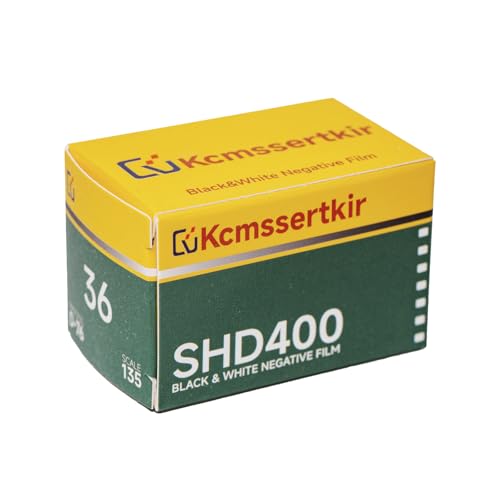
The 400-speed sibling to the SHD 100 brings real-world flexibility without abandoning the classic monochrome aesthetic. ISO 400 is the sweet spot for handheld shooting, indoor scenes, and overcast skies, all situations where slower monochrome stocks leave you fumbling for a flash or a tripod. Each roll covers the same 36 exposures in standard 135 format.
Compared to its slower counterpart, this film embraces a touch more grain, and that texture is often the whole point. Street photographers love it for that gritty, journalistic feel. The film responds well to being pushed one or two stops in development, opening up even dimmer interiors when you need to keep shooting without flash.
Everyday Advantages
- ISO 400 handles most lighting conditions without external flash.
- Visibly present grain adds character to urban and street subjects.
- Push-processable for low-light situations when speed matters most.
- Wide dynamic range keeps shadow detail from collapsing into pure black.
Trade-Offs To Consider
- Visible grain may feel too pronounced for portraits where you prefer a smoother finish.
- Requires standard B&W development chemistry, slightly less convenient than C-41 color.
Best Suited To
Travelers documenting city streets, documentary shooters working in unpredictable light, and anyone who wants one film to cover most monochrome scenarios.
A Better Fit Elsewhere
The SHD 100 Black and White film is a better match when you’re shooting in consistent bright daylight and want the cleanest possible detail in your scans.
Kodak UltraMax 400 has long been a favorite of travelers and casual shooters, and this four-roll pack amplifies its appeal. The 400-speed rating is forgiving enough to cover indoor gatherings, golden hour, and overcast afternoons without constant ISO adjustments. The film produces warm, pleasant color that leans slightly saturated without tipping into cartoon territory.
The classic vintage quality shows up in its highlights, which roll off gently rather than clipping harshly. Skin tones stay natural, which is why this film gets recommended for everything from family reunions to amateur portrait sessions. Owners commonly rely on it as a go-anywhere roll that won’t punish them for unpredictable lighting.
Good Reasons To Consider
- Wide ISO 400 latitude adapts to indoor and outdoor situations alike.
- Consistent warm color rendition across mixed lighting.
- Four-roll format drops per-frame cost compared to single packs.
- C-41 processing means every local lab can develop it quickly.
Softer Spots
- Color accuracy skews warmer than neutral, which may not suit every creative vision.
- Grain is more visible at this speed than slower stocks like the Gold 200 bundle covered earlier.
Who It Suits Best
Travelers wanting one film for the entire trip, parents documenting kids’ activities indoors and out, and beginners who don’t want to think too hard about exposure settings.
Where A Sibling Pick Shines
The Kodak Ektar 100 fits you better when punchy color saturation and ultra-fine grain matter more than low-light flexibility.
Key Specs
Ilford HP5 Plus is the kind of film that quietly shows up in the camera bags of documentary photographers around the world. Rated at ISO 400 with the ability to push to EI 3200 in development, it’s a monochrome workhorse that handles nearly any assignment. The two-roll pack offers a small bulk discount and a chance to try the film on a couple of distinct projects.
The look leans toward medium contrast with a wide tonal scale, meaning shadows retain texture instead of crushing to pure black. Grain is present but controlled, the kind of texture that looks intentional rather than noisy. For photographers chasing that mid-century photojournalism aesthetic, HP5 has been setting the standard for decades.
Everyday Wins
- Exceptional sharpness combined with character-rich grain structure.
- Forgiving exposure latitude that survives metering mistakes.
- Push-processable to high effective speeds for dim interiors.
- Two-roll packaging gives a moderate bulk option for ongoing projects.
- Established reputation among monochrome photographers worldwide.
Things To Weigh
- Higher cost per roll than some newer, less-heritage monochrome options.
- Standard B&W processing required, so plan your lab trips accordingly.
The Right Fit
Intermediate and advanced film photographers working on portrait, street, or fine-art documentary projects who value tonal depth and proven reliability.
Not Your Match When
The C200 Color Negative Film suits casual shooters who want the simplicity of color C-41 processing without managing B&W development chemistry.
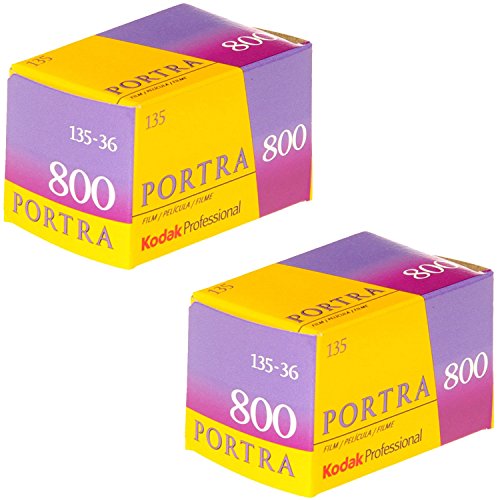
Kodak Portra 800 is the answer for moments when available film stocks just aren’t fast enough. Weddings in candlelit venues, late-night city streets, concerts where flash is forbidden: this is the film for situations where shutter speed matters more than fine grain. The two-roll pack offers enough stock for a small event without breaking your lab budget.
Despite the high ISO rating, the grain structure stays remarkably controlled for a film this fast. Colors stay natural, especially in skin tones, which is one reason event photographers reach for Portra even when they don’t strictly need the speed. You can also push to ISO 1600 in development for those truly desperate lighting scenarios.
What Pays Off
- ISO 800 speed handles low-light scenes without flash.
- Skin tone rendition stays flattering and natural across mixed lighting.
- Push-processable to ISO 1600 for very dim conditions.
- Fine grain for its speed class, an unusual combination.
Where It May Fall Short
- Premium pricing per roll reflects the professional positioning.
- In bright sun, the high ISO can flatten highlights without compensation.
Whose Shelf It Belongs On
Event photographers, concert-goers, and anyone shooting dim indoor scenes where a faster film is non-negotiable.
Swap It Out When
The Kodak UltraMax 400 4-Pack is a better everyday carry for bright outdoor trips where you don’t need the extra speed.
This bundle pairs the two most popular consumer Kodak stocks in a single package: three rolls of Gold 200 and three rolls of UltraMax 400, each offering 36 exposures. The variety lets you match film to conditions without stocking two separate SKUs. A microfiber cloth comes tucked in for camera maintenance.
You reach for Gold 200 on bright days and UltraMax 400 when light gets tricky, and that single bundle covers both scenarios. It’s a smart introduction to the differences between color stocks if you’ve only ever shot one type before. Owners commonly use this as a starter pack when re-entering film after a digital hiatus.
Bright Spots
- Two complementary stocks in one box covers varied lighting.
- 216 total exposures for extended projects or travel.
- Both films use standard C-41 processing for easy lab drop-off.
- Microfiber cloth included for camera and lens cleaning.
Worth Bearing In Mind
- Pre-commits you to three rolls of each stock, which may exceed your Gold 200 needs.
- Bulk packaging assumes you’ll shoot both stocks rather than specializing in one.
Made For
Shooters building a versatile home stash, photography students, and newcomers deciding between warm and neutral color palettes.
Consider Something Else When
The Kodak Ektar 100 is a better specialist choice if you only need punchy, ultra-fine-grain color for landscape work.
Kodak Ektar 100 sits at the top of the company’s consumer color negative lineup, and the difference shows in the scans. Ultra-fine grain, ultra-vivid color, and edge sharpness that holds up under aggressive enlargement. Each roll carries 36 exposures at ISO 100, which means it rewards careful metering and bright conditions.
The look leans vivid and saturated, almost like Velvia’s older slide film cousin but in negative form. Landscapes pop, architecture gains punch, and product photography takes on a commercial gloss. For the classic vintage aesthetic, Ektar offers a slightly different flavor than the warmer Gold: cleaner, more modern, more punchy.
Standout Benefits
- Ultra-fine grain for the smoothest 35mm scans available in color negative.
- Vivid color saturation with distinct edge sharpness.
- Holds up well under enlargement for larger prints.
- C-41 process compatibility for standard lab development.
Points To Note
- Slow ISO 100 means outdoor or studio use primarily.
- Higher per-roll cost than consumer-grade Gold or UltraMax stocks.
- Highly saturated look may not match understated vintage palettes.
Built With In Mind
Landscape and travel photographers, fine-art printers, and anyone willing to slow down for deliberate metering in exchange for top-tier image quality.
Skip It When
The Kodak Gold 200 bundle covers you better for casual sunny-day shooting where speed and warmth matter more than pixel-level grain.
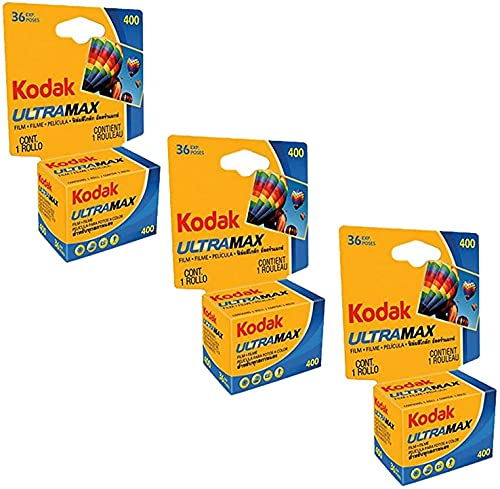
This three-roll pack of Kodak UltraMax 400 totals 108 exposures, which is the kind of supply that lets you relax and shoot freely rather than rationing every frame. Each roll carries the standard 36 exposures at ISO 400 in DX-coded 135 format. The bulk format reduces per-frame cost meaningfully compared to single-roll purchases.
UltraMax 400 earned its reputation as a forgiving color stock with consistent warm results, and the 3-pack makes it accessible for extended trips or class assignments. Photography educators and student photographers often gravitate toward this format because it covers a term’s worth of shooting without reordering. The DX coding on the canister helps automatic cameras set ISO correctly.
A Strong Showing
- 108 total exposures in one purchase for extended shooting schedules.
- DX-coded 135 format works with automatic ISO-setting cameras.
- ISO 400 speed handles indoor and outdoor conditions interchangeably.
- C-41 development accepted at virtually every photo lab.
Some Limits To Know
- Larger initial outlay than a single-roll purchase.
- Cool storage recommended for unused rolls, especially in humid climates, to preserve shelf life.
Perfect Match For
Photography students, heavy shooters building a fridge stash, and anyone who wants the security of knowing film is ready when inspiration strikes.
Another Choice May Suit
The Kodak Ultramax 400 & Gold 200 6-roll bundle is a better option if you want ISO variety in your stash rather than a single stock at volume.
Feature Snapshot
C200 is the entry-level color film for shooters who want the analog experience without the premium price. Rated at ISO 200 and balanced for daylight, it delivers natural color saturation and a smooth grain structure that suits everyday photography. The single-roll, 36-exposure format keeps the commitment small.
The film processes through standard C-41 chemistry, meaning any local lab or mail-order service handles it without special treatment. For casual weekend walks, beginner projects, or gift purchases introducing someone to film, this is a low-pressure starting point. The resulting scans look slightly warmer than clinical digital files, leaning into vintage character without going heavy.
Benefits That Matter
- ISO 200 daylight balance suits common outdoor shooting conditions.
- Standard C-41 process works at any consumer photo lab.
- 36-exposure format fits any standard 35mm camera body.
- Affordable per-roll pricing keeps experimentation accessible.
Practical Considerations
- Single-roll packaging offers no bulk savings.
- Less established brand recognition may concern some shooters building a long-term workflow.
Who Will Love This
Beginners taking their first rolls, gift-givers introducing friends to film, and casual shooters wanting low-stakes weekend frames.
A Better Fit Elsewhere
The Kodak Gold 200 3-Pack is a stronger choice once you’re ready to commit to a more established brand with a recognizable warm color profile.
What To Weigh Before Loading Your Camera
Picking the right 35mm stock depends on a few attributes working together. ISO speed matters most, because it determines which lighting conditions your film can handle without a flash or tripod. Color stocks that develop through the standard C-41 process are easier to get processed at any local lab, while true black-and-white stocks typically require a dedicated B&W chemistry. Some monochrome films can be push-processed in development to higher effective speeds, trading extra grain for usable images in dim light.
Your camera body plays a quiet role too. Manual SLRs from the 1970s and 1980s handle a wide range of speeds but require you to set ISO yourself. Modern point-and-shoots often read DX coding on the canister and set ISO automatically, which only works on coded rolls like the UltraMax 400 pack. Match film to gear, not the other way around.
ISO Speed And The Light You Actually Have
Faster films like ISO 800 Portra save you in dim venues, but that speed costs you fine grain and color accuracy. Slower films like ISO 100 Ektar deliver gorgeous detail, but only when the light cooperates. Most shooters eventually carry two or three stocks in their bag to match conditions as the day unfolds.
Color Versus Black And White
Color negative stocks give you the warm nostalgic look most people associate with vintage photography, with Kodak Gold and Ektar offering distinct flavors. Black-and-white stocks strip the equation down to light and shadow, and the slower monochrome films like the SHD 100 offer sharper detail than most color stocks can manage.
Grain And Your Final Output
Grain is texture, and how much you want depends on where the image ends up. Web shares hide grain that becomes obvious on a 16×20 print. If you’re scanning for Instagram, almost any stock looks smooth. If you’re making wall prints, the slow-speed stocks reward the extra effort.
Key Considerations Across These Picks
Where Shoppers Go Wrong
A common mistake is buying a single stock and expecting it to cover every scenario. ISO 200 color film behaves beautifully on sunny beaches but fails miserably in candlelit restaurants. Shooters who ignore the speed rating end up with underexposed, muddy frames and wonder why film “looks bad.” Match the stock to the conditions of your actual shooting plans, not an idealized version.
Another trap is assuming all black-and-white film looks identical. The difference between ISO 100 and ISO 400 monochrome stocks is dramatic, with grain, contrast, and tonal range shifting significantly. Pick by intended output and lighting, not just aesthetic preference.
Where The Extra Money Goes
Premium films like Kodak Ektar 100 and Portra 800 charge more because the emulsion technology costs more to manufacture. The benefits show up in finer grain, smoother color transitions, and better performance under enlargement. For casual web sharing, the jump isn’t always visible, but for prints larger than 8×10, premium stocks reward the upgrade. Spend more when the final output demands it, and save when it doesn’t.
Frequently Asked Questions
What makes a 35mm film look “vintage”?
A combination of grain structure, color rendition, and contrast handling. Warmer tones, softer highlights, and visible film grain contribute to the nostalgic look. Slower stocks like Kodak Gold 200 produce these characteristics naturally.
Should I start with color or black-and-white film?
Color is easier for beginners because every local lab develops C-41 stock quickly. Black-and-white offers a cleaner learning curve for understanding exposure and tonal range. Both have value, but color is the lower-friction starting point.
How long does 35mm film last?
Properly stored film lasts several years past its expiration date. Refrigeration extends it further. Most shooters store unused rolls in a fridge or cool, dry closet. Exposed film should be developed promptly for best results.
Can I shoot ISO 200 film indoors?
ISO 200 works indoors only with flash or very fast lenses. For low-light indoor shooting without flash, ISO 400 or higher is a better choice. Fast lenses with wide apertures like f/1.8 also help stretch slower films indoors.
Do I need a special camera for these films?
No. All the films listed here use the standard 135 format that fits any 35mm film camera, from vintage SLRs to modern point-and-shoots. DX-coded rolls communicate ISO automatically to cameras that read DX coding.
Closing Remarks
Vintage-style 35mm photography rewards patience and intentionality, which is part of why it stays compelling even in a smartphone world. The right film depends on where you shoot, how you shoot, and what you want the final frames to feel like. Pick the stock that matches your real conditions, load a roll, and let the slower process reset how you see the next 36 frames.