Film photography hasn’t faded; it just got quieter. Whether you’re stepping into analog for the first time or rebuilding a small shelf of mechanical charm, a 35mm point and shoot makes the format approachable. These nine cameras cover the spread from poolside disposables to half-frame reusables to a proper zoom compact with autofocus. Each one solves a different kind of moment, and each one fits a different kind of shooter.
An Overview Of The Picks

KODAK Snapic A1 35mm Film Camera (Ivory White)

Fujifilm Quick Snap Waterproof 35mm Camera
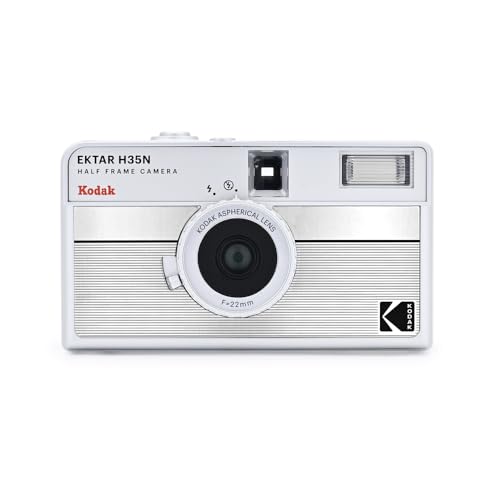
Kodak EKTAR H35N Half Frame Film Camera (Striped Silver)

KODAK EKTAR H35 Half Frame Film Camera (Sage)

Ilford Sprite 35-II Camera (Black)

Ilford Sprite 35-II Reusable 35mm Analog Film Camera

Lomography Fisheye No.2 35mm Film Camera

Pentax IQZoom 170SL Date Camera

1 Shot Point and Shoot 35mm Film Camera (Brown)
The Details Behind The Selections
The Snapic A1 leans into the part of analog that hooks newcomers: low stakes, simple controls, real film. It’s a reusable 35mm body in a small ivory shell that travels well in a coat pocket or small sling. The 3-element glass lens handles general daylight snapshots, while the built-in flash handles the dim corners, and the two-zone focus keeps choices to either close or far without fussy dials. For someone picking up a film camera for the first time after years of phone photography, the Snapic A1 reduces the new format to a few habits rather than a checklist.
The body itself is light enough to forget you’re carrying it, which matters on long walks or weekend trips. Multiple-exposure support lets you try layering without buying a second camera, and the bundled option with a 24-exposure roll means you can shoot the day you get it. The trade-off is that no film or AAA battery ships in the box by default, so you’ll need to budget those in.
What It Does Well
- Two-zone focus removes the distance-decision step that confuses new film users.
- 3-element glass lens produces sharper daylight photos than typical plastic disposable lenses.
- Built-in flash with red-eye reduction covers indoor and evening scenes.
- Multiple-exposure mode lets you stack two scenes on one frame for creative play.
- Lightweight, compact body slips into jacket pockets and small bags comfortably.
Points To Note
- Film and AAA battery must be purchased separately on most listings.
- Two-zone focus is less precise than a multi-zone autofocus system for moving subjects.
- The plastic shell is fine for casual use but won’t shrug off heavy drops.
Who It Suits Best
First-time film shooters who want a reusable body with a gentle learning curve and don’t need fast autofocus.
Look Elsewhere When
You mainly shoot near water or snow; the Fujifilm Quick Snap Waterproof handles that environment better.
Disposable but tougher than it looks, the Quick Snap ships pre-loaded with 27 exposures of 800-speed color film, and the housing is rated for roughly 17 feet underwater. That opens up pools, lakes, snorkeling, beach afternoons, and snowy conditions that would damage a typical plastic point and shoot. The 800-speed film is the real win: it handles low light better than the 400-speed film found in most disposables, so dusk and overcast days still produce usable frames.
It’s a single-use camera, so once the roll is done, the body is done. That’s a fair exchange for the waterproof seal and the included microfiber cloth for wiping it down between dips. A hand strap keeps it from drifting when you’re treading water, and the wide focal length suits group scenes. You give up reloading, manual settings, and creative controls, but you gain a body that survives environments nothing else on this list can handle.
Useful Touches
- Pre-loaded 800-speed film handles low light better than typical disposable 400-speed stock.
- Waterproof to about 17 feet, so pools, snorkeling, and rain aren’t off-limits.
- 27 exposures per camera give a full day of shooting without reloads.
- Hand strap included for safe handling around water.
- Bundled microfiber cloth makes drying between dips quick.
Small Caveats
- Single-use design means you toss the body after the last frame.
- No creative settings or focus controls beyond point and press.
- Seals need a quick rinse and dry between saltwater sessions to stay reliable.
Made For
Beach trips, snorkeling outings, ski days, and anyone who wants a camera that survives rough environments without extra cases.
Swap It Out When
You’d rather reload film and shoot for years; the Ilford Sprite 35-II Reusable fills that role.
The H35N takes the simple half-frame format of its sibling (the H35) and stacks on creative tools that most reusables skip. A built-in star filter turns tiny light sources into four-beam flares, and a bulb mode opens the shutter for long exposures so you can paint light trails or capture night scenes. The coated, improved lens is a meaningful step up from basic plastic optics, and the tripod socket is a quiet acknowledgment that bulb exposures need stability.
Half-frame shooting doubles your exposures per roll, which lowers the cost per shot for someone experimenting. Focus-free operation keeps the camera approachable, and the striped silver finish gives it some shelf presence. Owners commonly report that the star filter is more useful than expected for street scenes at night, and the bulb mode is genuinely the headline feature here compared to the plain H35.
A Few Highlights
- Built-in star filter creates four-beam flares on small light sources without extra glass.
- Bulb mode enables long exposures for light trails and night work.
- Coated improved glass lens improves clarity over typical plastic reusable optics.
- Half-frame format doubles shots per 36-exposure roll.
- Tripod socket supports stable long-exposure photography.
Honest Caveats
- No film or AAA battery ships in the box; budget for both.
- Bulb mode drains batteries faster than standard shooting.
- Half-frame negatives need re-scanning care if you self-develop.
Who Will Love This
Creative shooters who want film tricks like star bursts and long exposures without buying separate accessory filters.
Consider Something Else When
You want a simpler half-frame for travel; the KODAK EKTAR H35 keeps the format without the extra features.
The H35 is the no-frills cousin of the H35N, and that’s its whole pitch. Half-frame shooting means a 36-exposure roll produces roughly 72 images, which cuts the per-shot cost in half and makes film experimentation feel less expensive. The pocket-sized body is genuinely small enough to carry every day, and the focus-free design removes the most common stumbling block for analog newcomers.
A built-in flash covers the indoor and evening scenes that basic reusables tend to miss. Compared to the H35N above, you lose the star filter, bulb mode, and tripod socket, which is a fair trade if those features don’t match your shooting style. For someone who just wants to walk around and shoot without fiddling, the H35 covers the basics at a lower entry point.
Practical Pluses
- Half-frame format roughly doubles shots per standard roll.
- Lightweight, pocketable body suits daily carry.
- Focus-free operation keeps controls minimal for newcomers.
- Built-in flash handles dim indoor scenes.
- Simple instructions make it approachable for analog hobbyists at any level.
Things To Consider
- No star filter, bulb mode, or tripod socket compared to the H35N.
- Film and AAA battery sold separately on most listings.
- Half-frame negatives are smaller and harder to scan at high resolution.
The Right Fit
Daily-carry shooters and budget-minded beginners who want to stretch film further without buying extra accessories.
Reach For A Different Pick When
You want creative film effects built in; the Kodak EKTAR H35N includes bulb mode and the star filter.
The Sprite 35-II is the smallest step up from a disposable camera, and that’s the appeal. It’s a reusable, reloadable 35mm body designed for people experimenting with film for the first time without committing to a full-priced reusable. Ilford, a well-known name in film, built it for a “no frills” experience that strips photography back to the essentials: load film, advance, shoot, repeat.
The fixed shutter speed of 1/120s and the 31mm f/9 fixed-focus wide-angle lens keep the camera predictable in daylight. A built-in flash covers the simple night scenes, and a single AAA battery powers it. For someone who just wants to try film without buying a more feature-heavy camera, the Sprite 35-II is the lowest-commitment reusable on this list.
Positive Takeaways
- Reusable body reduces waste compared to disposable cameras.
- Fixed-focus 31mm wide-angle lens suits daylight snapshots well.
- Built-in flash supports low-light shooting on a single AAA battery.
- Simple operation makes it approachable for first-time film users.
- Loads any standard 35mm film, color or black-and-white.
Where It May Fall Short
- Fixed 1/120s shutter limits low-light versatility.
- f/9 fixed-focus lens keeps close subjects blurry in some conditions.
Built With In Mind
First-time film experimenters who want a reusable camera without the controls of a more advanced compact.
A Better Fit Elsewhere
You want more versatility from a reusable body; the Ilford Sprite 35-II Reusable listing adds the same body with more documentation.
This listing of the Sprite 35-II expands on the basic version with the same core spec sheet: 31mm f/9 single-element wide-angle lens, fixed 1/120s shutter, and ABS body construction. It’s positioned for people stepping into 35mm film who want a reusable option that doesn’t add waste to their habit. The fixed-focus design keeps results consistent for daylight scenes, and the 1-meter-to-infinity focus range covers most walk-around shooting.
The built-in flash recycles in about 15 seconds, which is slow compared to higher-end compacts but workable for casual night use. You can load any 35mm film you like, color or black-and-white, which makes the Sprite a useful platform for testing different film stocks without burning through a more expensive body. Owners commonly note the wrist strap is comfortable enough for everyday handling.
The Upside
- Reloadable body supports any standard 35mm color or black-and-white film.
- Fixed-focus wide-angle lens captures well-focused daylight scenes consistently.
- ABS plastic body is light enough for daily carry.
- Built-in flash covers simple nighttime snapshots.
- Included wrist strap adds drop protection for outdoor use.
Some Limits To Know
- Flash recycle time of about 15 seconds slows burst shooting.
- Single AAA battery means you should keep a spare on hand.
Best Suited To
Hobbyists testing multiple film stocks on a single body without committing to a higher-priced reusable compact.
Another Choice May Suit
You want a zoom range and autofocus; the Pentax IQZoom 170SL delivers both in a more capable compact.
The Fisheye No.2 is the odd one in this lineup, and that’s the point. The 170-degree field of view captures the kind of curved, immersive frame that conventional lenses can’t produce, which is exactly why Lomography built it. Street photographers, party shooters, and creative hobbyists tend to gravitate to it because the look is impossible to fake in post.
The camera supports multiple exposure and long exposure modes, which expand what you can do with the wide-angle look beyond a single snap. A built-in flash handles dim environments, and the body loads any standard 35mm film. The honest read is that the fisheye is a specialty tool rather than a daily carry, but for the right project, nothing else on this list delivers that distinct visual.
Points In Its Favor
- 170-degree field of view creates the curved fisheye look in-camera.
- Multiple exposure mode layers frames for surreal compositions.
- Long exposure support enables light-painting and night work.
- Built-in flash covers dim environments without extra gear.
- Loads any standard 35mm film stock.
Practical Considerations
- Fisheye distortion isn’t for every subject or shooting style.
- Specialty tool with a narrower use case than a normal-lens camera.
Perfect Match For
Creative shooters chasing a wide, distorted look for street, party, or experimental projects that normal lenses can’t match.
Where A Sibling Pick Shines
You want everyday snapshots with a normal field of view; the KODAK EKTAR H35 covers that with simpler controls.
The Pentax IQZoom 170SL is the most advanced camera on this list, and it’s the one for someone who wants zoom range and proper autofocus in a 35mm body. The 38-170mm 4.5x zoom covers wide group shots to tight portraits without changing lenses, and the passive 5-point autofocus system tracks subjects more reliably than the fixed-focus reusables elsewhere on the list. Automatic film loading, advance, and rewind remove every manual step that discourages new users.
The multi-mode flash with red-eye reduction is built for indoor social events, which is where most casual 35mm shooting happens. Compared to the simpler bodies above, the IQZoom asks you to learn a couple of mode buttons and watch battery life more carefully, but it gives back real creative range in return. Date imprinting is the kind of small touch that adds character on archival prints.
Good Reasons To Consider
- 38-170mm zoom range covers wide to telephoto without changing lenses.
- Passive 5-point autofocus handles moving subjects better than fixed-focus cameras.
- Automatic film loading, advance, and rewind simplify the shooting process.
- Multi-mode flash with red-eye reduction supports indoor and evening scenes.
- Date imprinting adds a nostalgic detail to prints.
Potential Compromises
- Larger and heavier than basic reusable point and shoots.
- Used market pricing and condition vary; inspect before committing.
Right Fit For
Travel shooters and hobbyists who want zoom range and reliable autofocus in a classic 35mm compact.
Not Your Match When
You want a small pocketable body; the KODAK EKTAR H35 is a fraction of the size and weight.
The 1 Shot is a half-frame reusable with a retro shell, marketed toward film camera hobbyists who want a starter body without buying separate accessories. The half-frame format doubles the exposures per roll, which keeps film costs manageable. A built-in flash handles dim environments, and the included roll of ISO 400 black-and-white film means you can shoot the day the camera arrives.
Focus-free operation and a lightweight body make it approachable for beginners and convenient for travel. It’s positioned for portrait work in particular, which fits the half-frame vertical orientation well. Owners commonly note the brown finish gives it a different shelf presence than the silver-and-sage H35 family.
A Few Strong Suits
- Half-frame format doubles shots per 36-exposure roll.
- Built-in flash covers dim scenes without separate gear.
- Included ISO 400 black-and-white film ships ready to load.
- Focus-free operation keeps controls minimal for beginners.
- Retro brown finish gives the body a distinctive shelf look.
Worth Bearing In Mind
- Battery is not included, so plan for an AAA purchase.
- Half-frame negative size limits large print quality.
Whose Shelf It Belongs On
Hobbyists and beginners who want a half-frame kit with included film for portraits and travel photography.
Where Another Pick Suits Better
You want more creative controls like bulb mode; the Kodak EKTAR H35N adds the star filter and long exposure.
Choosing The Right 35mm Point And Shoot Camera For Your Style
Decide Between Disposable And Reusable First
The single-use Quick Snap and the reloadable cameras serve different needs. Disposables win on convenience and survival in tough conditions, but the moment you want to swap film stocks, learn from mistakes, or shoot more than a couple of rolls a year, a reusable body pays off. Most newcomers end up wanting a reusable after their first disposable run, so skipping straight to one saves both money and waste.
Match The Camera To The Environment
The Quick Snap waterproof is the only body here that handles pools, snorkeling, and snow reliably. Everything else is a fair-weather shooter at best. If your photography happens at a desk, on city streets, or at family gatherings, any of the reusable options work, but if your scenes include water or sand, that’s the deciding factor.
Half-Frame Doubles Your Shots Per Roll
The H35, H35N, and 1 Shot all use half-frame format, which captures two images per standard 35mm frame. A 36-exposure roll becomes roughly 72 photos. That cuts per-shot film cost in half, which matters when you’re learning and shooting a lot of test frames. The trade-off is smaller negatives that are harder to scan at high resolution and less forgiving of cropping.
Know What Creative Controls You Actually Want
Most cameras here are point-and-shoot simple, which is the appeal. The H35N stands apart by adding bulb mode and a star filter, and the Lomography Fisheye No.2 adds multiple and long exposure. If those features sound fun, pick the camera that includes them. If not, you’ll likely find the simpler bodies faster to learn and easier to enjoy.
Key Considerations Across These Picks
Pitfalls Shoppers Hit
A common mistake is buying a reusable body and forgetting that film and a battery are separate purchases. Every reusable on this list needs an AAA cell, and only one ships with film in the box. Another misstep is treating half-frame cameras like full-frame models: the negative size is genuinely smaller, so large prints look softer than full-frame scans. Finally, picking the cheapest disposable for a vacation only to find it can’t survive water, sand, or a hard drop is a common regret.
Why Top Tier Costs More
Higher-tier models in this category, like the Pentax IQZoom 170SL, add zoom range, multi-point autofocus, and automatic film handling. Those features cost more because they involve more moving parts and more complex electronics. For someone who wants zoom versatility and reliable focus on moving subjects, the upgrade is worth it. For a learner who mainly shoots still scenes in daylight, a basic reusable body gives the same fundamental film experience at a fraction of the cost.
Frequently Asked Questions
What Film Should I Buy For A 35mm Point And Shoot?
Most of these cameras load any standard 35mm film, color or black-and-white. Beginners often start with ISO 400 color negative film because it handles varied light well and is widely developed.
Can I Use The Same Camera For Color And Black-And-White Film?
Yes. Reusable bodies like the H35, H35N, Sprite 35-II, and 1 Shot all accept any 35mm stock. You finish one roll, swap in another, and the camera doesn’t know the difference.
Do These Cameras Need Batteries?
Every reusable on this list runs on a single AAA battery, which powers the flash and the light meter. The waterproof Quick Snap is fully mechanical and pre-loaded, so it doesn’t need one.
Are Disposable Cameras Worth It For Travel?
For one-off trips, harsh conditions, or gifts, disposables are convenient and tough. For ongoing travel photography where you want control over film choice and reloads, a reusable body is more economical and more rewarding.
How Do I Get My Film Developed?
Most local photo shops and mail-order labs develop standard 35mm film, including half-frame and full-frame rolls. Many labs return scans digitally along with prints, which is the simplest workflow for casual shooters.
Closing Remarks
Pick the camera that matches how you actually shoot, not the one with the most features on paper. A simple reusable gets you further than a complicated compact you never carry, and a single-use waterproof beats any camera that stays home because the conditions look risky. Film rewards consistency, so the right 35mm point and shoot is the one you’ll actually have with you when a moment shows up.