Hauling a mirrorless setup through an airport, stuffing two bodies into a backpack for a wedding gig, or keeping an instant-print camera safe in a tote all run into the same wall: one bag rarely covers all of it. The right fit depends on body size, lens count, and whether you carry a tripod or a laptop alongside the gear.
This roundup sorts through six styles that handle real use cases, from slim instant-camera shells to hard-shell backpacks built for outdoor work. You’ll see which one matches your kit, and which trade-offs make sense for the way you actually shoot.
The Shortlist At A Glance

ciciglow Protective Clear Case for Mini 12 (Green)
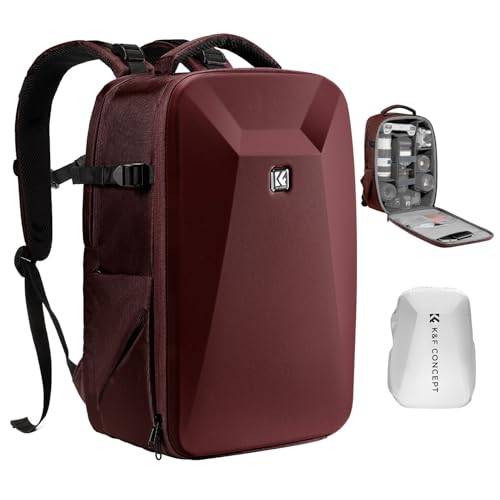
K&F CONCEPT Camera Backpack Hardshell Photography DSLR Bag

K&F CONCEPT Camera Backpack Hard Shell 20L Photography Bag

LTGEM Camera Case for Canon/Sony/Nikon with 4 Dividers

LTGEM Medium Camera Case Bag for Multiple Lenses (Black)
Meet The Standout Selections
Instant cameras take a beating at weddings, picnics, and weekend trips, which is exactly where this transparent hard cover earns its keep. The shell uses PC material, a rigid polycarbonate plastic that resists scuffs while letting the camera’s color show through. A click-style locking buckle secures the body, and the 1:1 cutout means every button and dial stays accessible without removing the case.
Unlike the backpack options that follow, this one targets a much smaller form factor and a different kind of shooter. The adjustable shoulder strap adds real value for someone who wants their Mini 12 swinging at their side rather than rattling around in a tote. A built-in photo storage compartment handles already-printed snaps, replacing a separate photo album for casual outings.
Standout Benefits
- Transparent design shows off camera color while protecting from scratches
- Detachable, length-adjustable strap handles heavier loads comfortably
- Built-in photo storage slot eliminates need for a separate album
- Click-lock buckle opens and closes with one hand
- 1:1 cutout keeps buttons, dials, and lens fully accessible
Things To Consider
- Hard plastic can show fingerprints and smudges after handling
- Fits only the Mini 12 form factor, nothing larger
At A Glance
Who It Suits Best
Owners of an Instax Mini 12 who want everyday scratch protection plus a way to carry printed photos without buying an extra album.
Skip It When
You’re carrying multiple lenses or a DSLR, because the FINTIE case and the LTGEM models below handle that workload much more sensibly.
This K&F CONCEPT backpack steps up to a real working setup: a DSLR or mirrorless body, several lenses, a flash, and a 15.6-inch laptop, all under one rigid top panel. The 22-liter capacity (that’s roughly 1,340 cubic inches of storage) gives enough room for a full day on location, and the hard front shell absorbs the kind of bumps that soft bags pass straight through to your gear.
Compared to the ciciglow case above, this is a completely different category of carry. Removable modular inserts let you reconfigure the dividers for different body-lens combinations, which matters for anyone switching between a prime setup and a zoom-heavy wildlife kit. The dedicated laptop compartment at the back is a quiet win for editors who travel with a workstation.
Reasons It Performs
- Hard front shell guards against crushing pressure during travel
- Removable padded dividers adapt to bodies, lenses, and flashes
- Rear slot fits up to 15.6-inch laptops for on-location editing
- External dimensions of 17.3 x 11 x 7 inches hold a working kit comfortably
Honest Caveats
- Hard shell adds noticeable weight versus fabric-only packs
- Capacity tops out around 22L, so tripod carry needs a separate strap
- Larger footprint may feel bulky in tight subway or crowded venue aisles
Key Product Details
Made For
Working photographers and serious hobbyists who fly or commute often and need a laptop alongside their camera gear.
Look Elsewhere When
You need genuine weather sealing for outdoor shoots, because the K&F CONCEPT 20L backpack below is built specifically for all-weather use.
Shooters who lose light in canyons or chase rain across ridgelines need a bag that shrugs off weather, and that’s the lane this K&F CONCEPT backpack fills. The front panel uses PU leather (a coated, water-resistant synthetic) over a rigid shell, while the surrounding fabric repels water and absorbs impact. For most weekend hikes with a camera kit, that combination handles drizzle and dust without drama.
What separates this from the 22L sibling above is the open-access layout. Dual full openings on the upper and lower sides mean you can grab a lens without unpacking the whole bag, which is huge on a moving trail. Six customizable compartments and side pockets for a tripod and water bottle round out a thoughtful adventure-oriented design.
The Practical Payoff
- Water-repellent fabric plus PU leather shell handles light rain
- Dual full openings let you access gear from top or side without unpacking
- Side pockets with straps carry a tripod and water bottle securely
- Six customizable compartments fit drones alongside camera gear
Points To Keep In Mind
- 20L capacity is tighter than the 22L sibling reviewed above
- PU leather can stiffen in extreme cold
- No dedicated laptop compartment listed in the available specs
Best Suited To
Landscape and travel photographers who shoot outdoors in unpredictable weather and want quick side access to lenses on the move.
Another Choice May Suit
Studio and event shooters who rarely leave pavement should consider the LTGEM Medium Camera Case Bag instead, since its lower-profile design is friendlier to indoor setups.
Compact instant printers and pocket-sized digital cameras need protection that doesn’t swallow them whole, and this FINTIE case hits that sweet spot. The hard EVA shell (EVA being ethylene-vinyl acetate, a tough foam-rubber hybrid that absorbs shock) wraps the device tightly while a soft interior lining prevents everyday scratches from the camera’s own movements inside the case.
Unlike the ciciglow cover reviewed first, this one skips the photo storage slot and instead uses an inner mesh pocket for cables and small accessories. An elastic strap holds the camera or printer in place so it doesn’t slide around during transport, which matters for anyone carrying the case in a backpack alongside books or laptops.
The Case For It
- Hard EVA shell absorbs drops and bumps well for the price class
- Inner mesh pocket stores cables and small accessories neatly
- Elastic strap secures the device against sliding during transport
- Soft interior lining prevents scuffing on the camera body
Worth Noting
- Hard shell adds bulk compared to a soft pouch
- Compatibility list is specific to Kodak models only
Perfect Match For
Owners of a Kodak Step, Mini 2 HD, Mini 2 Retro, PRINTOMATIC, or Smile Printer who want compact hard-shell protection with cable storage built in.
Reach For A Different Pick When
You shoot with a Mini 12 or any non-Kodak instant, because the ciciglow case reviewed first is purpose-built for that specific body shape.
Camera case compatibility lists usually cover two or three models, so seeing a single case fit the Canon R5, Sony a7 IV, and Nikon Z6 III is genuinely unusual. This LTGEM design accepts an extensive range of DSLRs and mirrorless bodies, plus four movable dividers and a tripod slot for shooters who travel with a full kit.
Compared to the K&F CONCEPT backpacks above, this is a classic shoulder-strap case rather than a backpack, which trades hands-free carry for faster body access. The trade-off works well for studio work, event coverage, and short walks where you want your camera ready the instant something happens.
A Few Strong Suits
- Cross-brand compatibility with most major DSLR and mirrorless models
- Four movable dividers customize the interior to your kit
- Tripod accommodation for shooters who carry a support
- Shoulder strap design allows fast body access
Practical Considerations
- Heavier load on one shoulder over long shoots
- Less protective shell than the hard-shell backpacks above
Quick Facts
Who Should Grab It
DSLR and mirrorless shooters with mixed-brand gear who prioritize quick access over hands-free carrying for studio or event work.
Where A Sibling Pick Shines
Long hikes and travel days suit the K&F CONCEPT 20L Hard Shell backpack better, since its dual openings and weather resistance handle outdoor movement much more comfortably.
Medium-format shooters don’t exist in the mirrorless era, but medium-sized camera cases absolutely do, and this LTGEM bag lands in that useful middle ground between compact pouches and full backpacks. It accepts the same broad Canon, Sony, and Nikon compatibility as the larger LTGEM model above, just in a smaller, more bag-friendly footprint.
The medium size works particularly well for hybrid mirrorless shooters who carry two or three lenses plus a body, which describes a huge slice of the photography market. You may find the trimmer profile easier to live with day-to-day, especially if you’re commuting by transit or working from a small studio space.
Strong Points
- Medium size balances capacity with everyday carry comfort
- Broad brand compatibility across Canon, Sony, Nikon, and Fujifilm
- Smaller footprint than the larger LTGEM case reviewed above
Less-Strong Areas
- Less padding depth than larger cases for heavier telephoto lenses
- Won’t accommodate a full drone kit alongside a body and lenses
Whose Shelf It Belongs On
Hybrid mirrorless shooters carrying a body plus two or three lenses who want a compact daily case without backpack bulk.
Swap It Out When
You regularly carry a drone or four or more lenses, because the K&F CONCEPT 22L backpack has the divider count and side pockets built for that workload.
Picking 2 Camera Bags That Actually Fit Your Workflow
Match The Bag To The Body, Not The Other Way Around
Camera bags fall into three broad categories: instant-camera shells, shoulder cases, and backpacks. Instant shells like the ciciglow and FINTIE cases protect a single small device, while shoulder cases like the LTGEM pair fit a DSLR or mirrorless setup with one or two lenses. Backpacks from K&F CONCEPT scale up to full working kits with laptops, multiple lenses, and tripod storage. Picking the right category matters more than any feature inside the bag.
Sizing Up Capacity Without Buying Twice
Capacity numbers only tell part of the story because interior layouts vary so much. A 20L backpack with smart dividers can hold more usable gear than a 25L sack with loose pockets. Look for movable padded dividers that let you reshape the interior as your kit changes, since lens collections rarely stay the same size year to year.
Material And Protection Trade-Offs
Hard shells add weight but block crushing force, which matters for checked luggage and crowded public transit. Water-repellent fabrics handle drizzle and dust better than they handle downpours, so dedicated rain covers still earn their keep for serious weather work. Soft padded cases weigh less and cost less, but they pass sharp pressure straight through to your gear, so they suit controlled environments more than travel days.
Comfort And Carry Style For Real Schedules
Backpacks distribute weight across both shoulders and free your hands, which is why travelers and outdoor shooters gravitate toward them. Shoulder cases give faster body access, which matters for events and street work where the moment disappears if you have to set the bag down and unzip. The honest read is that the “right” carry style depends on whether you shoot faster than you walk, or walk farther than you shoot.
Key Considerations Across These Picks
Pitfalls Shoppers Hit
One common trap is choosing a bag by its capacity number alone, then discovering the interior dividers don’t match the actual shape of your gear. Always check the listed compatible camera models against your own body, since compatibility lists vary widely between brands and bag types. Another mistake is overlooking the difference between a hard shell and a water-repellent coating, because they protect against very different threats.
Where The Extra Money Goes
Higher-tier camera bags invest in tougher shell materials, better zippers, and more flexible divider systems rather than just adding brand markup. You pay for reinforced stitching at stress points, denser foam padding, and weather sealing that holds up over years of use. For working photographers who shoot daily, that durability quickly justifies itself. For casual shooters who pull the bag out a few times a month, a more modest case often makes more sense.
Frequently Asked Questions
How Do I Know If A Camera Bag Will Fit My Specific Camera Model?
Check the manufacturer’s compatibility list against your exact body model, since “DSLR” or “mirrorless” labels cover wildly different sizes. Measure your body with a lens attached and compare to the bag’s internal dimensions when listed. Compatibility lists from the manufacturer are the most reliable starting point.
What’s The Difference Between A Hard Shell And A Padded Soft Case?
A hard shell uses rigid materials to resist crushing pressure from outside, which matters for checked baggage and crowded spaces. A padded soft case uses foam and fabric to absorb minor bumps and scratches but transfers sharper pressure straight through. For travel, hard shells win; for short daily carries, padded cases are usually lighter and more comfortable.
Can I Fit A Laptop Inside A Camera Backpack?
Some camera backpacks include a dedicated laptop compartment, and the K&F CONCEPT 22L model handles up to 15.6-inch laptops according to its specifications. Not every backpack lists laptop capacity, so verify before you buy if editing on location matters to your workflow.
Should I Get A Backpack or A Shoulder Case?
Backpacks distribute weight across both shoulders and leave your hands free, which suits travel and outdoor shooting. Shoulder cases offer faster body access for events and street work. Choose based on whether you shoot faster than you walk, or walk farther than you shoot.
How Important Is Weather Resistance For A Camera Bag?
It depends entirely on where and how you shoot. Water-repellent fabric handles drizzle and dust for most situations, while dedicated rain covers handle heavier storms. For outdoor and travel shooters, weather resistance matters a lot. For studio-only work, it’s less critical.
Closing Thoughts
The right camera bag depends on the body, the lenses, and how you actually move through a shooting day. Match the bag’s category to your kit, double-check the compatibility list against your exact model, and pick a carry style that fits your real schedule. With those three decisions handled, the rest comes down to personal taste in color, weight, and layout.