Film photography has settled into something comfortable, the way a worn leather bag does. You carry it because it slows you down in the right places, makes you think about light, and hands back a physical object you can hold. The 35mm format sits at the center of that revival: affordable to shoot, forgiving to develop, and small enough to take everywhere.
This roundup covers cameras and film that suit different kinds of shooters. Some want full creative control with interchangeable lenses, others just want a small companion that turns a roll into memories. A few of these are reusable bodies you’ll keep for years, and a couple are one-time-use cameras built for a single trip or wedding. Pick the one that matches how you actually shoot, not the one with the most specs.
A Quick View Of The Lineup

Canon EOS Rebel G SLR AF Film Camera with 35-80mm Lens (Renewed)

SHD 100 Black and White 35mm Film ISO 100
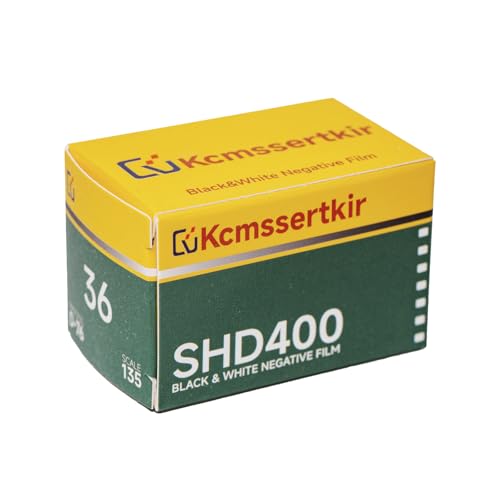
SHD 400 Black and White 35mm Film ISO 400

Kodak Drake 35mm One-Time-Use Camera Bundle

KODAK Snapic A1 35mm Film Camera (Ivory White)

Nikon F6 AF 35mm Film SLR Camera (Body Only)

C200 Color Negative Film ISO 200 35mm

Canon EOS Rebel G Film SLR Camera Kit with 35-80mm Lens

Canon EOS Elan 7 35mm SLR Camera (Body Only)

Kodak EKTAR H35N Half Frame Film Camera (Glazed Blue)
A Closer Look At Each Pick
The Canon Rebel G carries a reputation in film circles for being approachable without being stripped down. It pairs an autofocus 35mm SLR body (SLR, or single-lens reflex, means you compose through the actual lens using a mirror and prism) with a Canon 35-80mm zoom, which covers everyday portraits through wide group shots without forcing you to swap glass.
This Renewed listing appeals to anyone dipping a toe into manual-control film without committing to a fully mechanical camera. You get full program modes plus manual override, useful when you want to learn exposure hands-on. For most people returning to film, that’s enough to keep the learning curve gentle.
A Favorable Mix
- Built-in autofocus removes the focus-priority guesswork common with manual SLRs
- Canon EF lens mount opens access to a huge library of affordable used glass
- Program, aperture-priority, and manual modes cover both learning and creative phases
- Zoom range covers portraits, street, and casual landscapes in one walkaround
Things To Consider
- Renewed condition means cosmetic wear and battery condition vary between units
- Two CR123A batteries sit in the grip and are easy to overlook when sourcing replacements
Best Suited To
Enthusiasts learning exposure control who want autofocus to handle the technical layer while they focus on composition.
Where Another Pick Suits Better
The Canon EOS Rebel G kit with the same lens is the better fit if a lower upfront outlay matters more than the refurbished listing’s specific stock.
SHD 100 is a 36-exposure black-and-white roll built for situations where light behaves itself: clear afternoons, open shade on a calm day, and controlled studio setups. ISO 100 (a measure of the film’s sensitivity to light; lower numbers mean finer grain but more light needed) is the slowest speed in this lineup, and it shows up in image character as fine grain and smooth tonal transitions.
Compared to the SHD 400 covered next, this roll trades versatility for cleaner results. For most sunny-day shooters, that tradeoff is worth it.
Key Advantages
- Fine grain keeps textures sharp in landscape and architecture work
- Low ISO suits tripod-based long exposures during golden hour
- Single roll format keeps the budget controlled while you learn
- Standard 135 (35mm) cassette fits every body in this roundup
Worth Noting
- ISO 100 struggles indoors without flash or supplemental lighting
- Limited tonal punch compared to higher-speed monochrome stocks
Right Fit For
Daylight shooters who want crisp architectural or landscape negatives without paying premium-stock prices.
Look Elsewhere When
The SHD 400 is the smarter choice if your subjects move between bright sun and dim interiors on the same outing.
The SHD 400 occupies the practical middle of monochrome film: fast enough to handle overcast streets, dim restaurants, and handheld twilight shots without flash. ISO 400 doubles the working range of the SHD 100 above, and the visible grain becomes part of the look.
You load it the same way and run it through any 35mm body in this list. For travelers and street shooters, ISO 400 is usually the safer everyday choice.
A Few Strong Suits
- Handles overcast days without forcing slow shutter speeds
- Works for indoor portraits at reasonable apertures
- Visible grain adds texture that suits documentary aesthetics
- Standard C-41-compatible monochrome (lab processes it alongside color)
Trade Offs
- Grain is heavier than ISO 100, which can soften fine detail
- Less forgiving of lens flare and harsh contrast scenes
- Single-roll packaging means frequent reorders for heavy shooters
Who It Suits Best
Street and travel photographers who shoot on the move and can’t always choose their light.
A Better Fit Elsewhere
The SHD 100 suits you better when shooting only in bright daylight and you want cleaner negatives.
The Kodak Drake is a pre-loaded 35mm camera with a built-in flash, sold as a single-use bundle meant to be handed in for processing when the roll is finished. You get roughly 27 exposures of Ultra Max 800 film, which is forgiving for low light and fast subjects.
This is the simplest entry point on the list. No settings to think about, no extra purchases needed up front, and you hand it off to a lab when done. For most people at weddings, beach trips, or theme parks, that hands-off flow is exactly the point.
Everyday Perks
- Pre-loaded with high-speed film for varied lighting
- Built-in flash handles indoor and night situations
- Compact size fits in jacket pockets and small bags
- Simple point-and-shoot operation needs no learning curve
Room For Improvement
- Single-use construction means no second roll without buying another camera
- Plastic lens limits sharpness compared to reusable bodies
- Flash-only low-light performance produces flat, frontal lighting
Feature Snapshot
Made For
Casual event-goers and travelers who want film results without buying a reusable body or loading film manually.
Skip It When
The KODAK Snapic A1 is the better call if you’d rather reload and reuse the same camera across multiple trips.
The KODAK Snapic A1 is a reusable point-and-shoot with a 3-element glass lens (a lens built from three individual glass pieces, which corrects distortion more effectively than a single-element optic) and a 2-zone focus system that switches between near and far subjects. The auto flash includes red-eye reduction, and the multiple-exposure feature lets you layer two frames onto one negative.
It runs on a single AAA battery and accepts any standard 35mm film, which keeps ongoing costs predictable. For most first-time film shooters, that mix of simplicity and creative room is the appeal.
Notable Gains
- Lightweight plastic body fits in small bags and large pockets
- Auto flash with red-eye reduction handles casual portraits
- Multiple-exposure mode invites playful double-frame experiments
- Reusable design avoids the recurring cost of disposable bodies
Honest Caveats
- 2-zone focus is less precise than rangefinder or SLR focusing
- Fixed focal length limits framing flexibility on busy subjects
- No exposure compensation means dim scenes often come out underexposed
Perfect Match For
First-time film shooters who want a reusable, low-fuss camera without manual controls.
Swap It Out When
The Canon EOS Rebel G kit is the better fit if you want creative control through interchangeable lenses.
The Nikon F6 sits at the top of Nikon’s film SLR lineup, with an integral motor drive, TTL phase-detection autofocus (the camera measures incoming light through the lens to set accurate exposure and focus), and a full spread of exposure modes from program to manual. It accepts every Nikon F-mount lens except the older pre-AI types.
Compared to the Canon EOS Elan 7 covered later, this body targets shooters who treat film as a serious medium rather than a casual hobby. For most working professionals and dedicated enthusiasts, that translates to confidence the body won’t be the weak link.
Where It Helps
- Multi-CAM 2000 autofocus module handles low-light focusing reliably
- Program, shutter-priority, aperture-priority, and manual modes cover any workflow
- Compatible with the full modern Nikon F-mount lens lineup
- BriteView focusing screen aids manual-focus confirmation
Points To Keep In Mind
- Body-only listing means you’ll need to budget for a lens separately
- Complex metering system takes time to learn for newcomers
- Used market prices have climbed as supply tightens
Technical Highlights
Whose Shelf It Belongs On
Professionals and serious enthusiasts who want a film body that won’t limit demanding projects.
Reach For A Different Pick When
The Canon EOS Elan 7 is the better match if you’d like a capable SLR with broader availability and a friendlier learning curve.
C200 is a daylight-balanced color negative film at ISO 200, the most common compromise speed for color shooting. It processes through standard C-41 chemistry (the same development process used by photo labs worldwide for color prints), so any local lab handles it without specialized ordering.
Pair it with the Nikon F6 or Canon Rebel G bodies earlier in this list and you’ve got a versatile color workflow for travel and everyday shooting.
Everyday Advantages
- ISO 200 handles mixed daylight without forcing constant exposure shifts
- Smooth grain suits portraits and skin-tone reproduction
- 36 exposures per roll fits standard processing lab workflows
- Works in any 35mm body in this roundup
A Few Limitations
- Color rendition varies more in low light than premium stocks
- Single-roll packaging adds up for high-volume shooters
- Less latitude (the film’s ability to capture detail in very bright or very dark areas of a scene) than higher-priced color films
The Right Fit
Color shooters who want reliable, affordable daylight film without chasing specialty stocks.
Consider Something Else When
The SHD 400 black-and-white roll is the better pick if you specifically want monochrome character.
The Canon EOS Rebel G kit pairs the same autofocus SLR body reviewed earlier with the 35-80mm zoom lens, often at a more accessible price point. Canon’s AIM control system ties metering and autofocus into a single decision, which simplifies the picture-taking process for new users.
Compared to the Renewed Rebel G in the first slot, this kit typically comes from different seller stock and condition grading. You may find a cleaner cosmetic example here for similar money.
Where It Delivers
- Kit lens covers walkaround range without additional purchases
- AIM system balances exposure and focus automatically
- Eleven exposure modes support both automatic and manual workflows
- EF lens mount unlocks decades of Canon glass
Points To Note
- Plastic lens mount on the kit zoom limits long-term durability
- Retractable flash range is shorter than larger SLRs
Feature Rundown
Who Will Love This
Budget hobbyists who want a complete SLR kit in one purchase without shopping for a lens separately.
A Better Fit Elsewhere
The Canon EOS Elan 7 body is the smarter choice if you already own Canon glass and just need the body.
The Canon EOS Elan 7 brings seven-point wide-area autofocus and a 35-zone evaluative metering system (the meter reads light across the whole frame and weighs different zones to choose the best exposure) into a mid-tier SLR body. It also offers high-speed and silent rewind modes for shooters who need either quick turnaround or quiet film changes.
Compared to the Nikon F6 covered earlier, this body sits in the enthusiast sweet spot: capable, broadly available, and friendlier on the wallet. For most hobbyists with EF glass already on the shelf, that’s the practical fit.
Practical Pluses
- Seven focusing points give more framing flexibility than basic 3-point systems
- Silent rewind is useful for quiet environments like ceremonies
- 35-zone metering balances tricky lighting reliably
- Eye-control start on some variants keeps operation fluid
Small Caveats
- Body-only listing requires separate lens purchase
- Battery life depends on CR2 cells that aren’t always easy to find locally
- Used condition varies widely by seller
Built With In Mind
Enthusiasts with existing Canon EF glass who want a reliable mid-tier body to mount it on.
Where Another Pick Suits Better
The Canon EOS Rebel G kit is the better fit if you don’t already own a lens and want a complete starter bundle.
The Kodak EKTAR H35N shoots half-frame 35mm, which means each roll yields roughly 72 exposures instead of the standard 36 because each frame uses only half the negative area. It includes a built-in star filter, a bulb function for long exposures, and a coated glass element that improves sharpness over earlier H35 versions.
It runs on a single AAA battery and accepts any standard 35mm film. For most experimental shooters, the half-frame format alone changes how you think about a roll.
Strengths Worth Knowing
- Half-frame doubles the exposures per roll, lowering per-shot cost
- Built-in star filter creates four-point flares on light sources
- Bulb mode supports long exposures for night and light-trail work
- Coated lens improves clarity over earlier H35 versions
Potential Drawbacks
- Smaller negative size limits enlargement quality compared to full-frame
- Focus-free design requires adequate depth of field to keep subjects sharp
- Star filter cannot be disabled, which limits ordinary shooting
Perfect Match For
Experimental shooters who want creative flexibility and doubled exposure counts on a single roll.
Reach For A Different Pick When
The KODAK Snapic A1 is the better match if you want a straightforward point-and-shoot without built-in creative effects.
Factors To Weigh Before Choosing 35mm Film Cameras
The first decision point is whether you want control or simplicity. SLRs like the Nikon F6 and Canon Rebel G offer interchangeable lenses and full manual exposure control, which rewards the time you put in but requires patience. Reusable point-and-shoots like the KODAK Snapic A1 and Kodak EKTAR H35N trade flexibility for portability and ease.
Format choice matters as much as the camera itself. Full-frame 35mm is the standard; half-frame doubles exposures per roll but halves negative size, which affects print quality. One-time-use cameras like the Kodak Drake bundle film and body into one package for events where you don’t want to load a roll in advance.
Lens mount compatibility shapes long-term cost. Canon EF and Nikon F mounts both have decades of affordable used glass, which lets you grow a system without buying new. The KODAK Snapic A1 and EKTAR H35N use fixed lenses, so creative range comes from film choice and shooting style rather than optics.
Choosing The Right Film And Format Pairings
Film speed (ISO) determines how much light the roll needs to expose properly. ISO 100 like the SHD 100 gives fine grain in bright daylight but struggles indoors. ISO 400 like the SHD 400 handles mixed light and handheld low-light work without flash. ISO 200 color like the C200 sits between the two and suits most daylight color shooting.
Key Considerations Across These Picks
Pitfalls Shoppers Hit
The most common mistake is buying a body without checking lens compatibility or power supply. The Rebel G uses CR123A batteries, the Elan 7 takes CR2 cells, and the KODAK Snapic A1 runs on a single AAA. Stocking the right battery type ahead of time prevents missed shots on day one. Another frequent miss is overlooking that body-only listings like the Nikon F6 and Canon Elan 7 need a separate lens purchase, which can push the total cost higher than a complete kit.
Where The Extra Money Goes
Higher-tier SLRs like the Nikon F6 add features that matter under pressure: faster autofocus in dim light, more sophisticated metering for tricky scenes, and compatibility with modern autofocus lenses. For casual weekend shooters, those gains rarely justify the cost. For working photographers or anyone shooting weddings and travel professionally, the upgrade pays back in fewer missed frames and more predictable exposure.
Frequently Asked Questions
Are 35mm film cameras still worth buying in 2026?
Yes. Film stocks remain widely available, processing labs still run C-41 and black-and-white chemistry, and the cameras themselves are durable enough to last decades with basic care. You trade convenience for a slower, more deliberate shooting process.
What is the difference between ISO 100 and ISO 400 film?
ISO 100 film has finer grain and needs more light to expose correctly, which makes it ideal for bright outdoor conditions. ISO 400 is faster, meaning the film is more sensitive to light and works in dimmer settings, at the cost of slightly heavier grain.
Do reusable film cameras save money compared to disposables?
Over several rolls, yes. A reusable body pays for itself after roughly three to five disposable cameras, and you gain control over film choice and exposure settings.
What batteries do these cameras need?
It varies by model. The Canon Rebel G uses two CR123A cells, the Canon EOS Elan 7 takes CR2 batteries, and the KODAK Snapic A1 runs on a single AAA. Check the specific camera’s manual before stocking up.
Can I use modern digital lenses on these film cameras?
EF-mount Canon lenses and F-mount Nikon lenses work on their respective film SLRs. Modern digital-only lenses without aperture rings may not work correctly on older film bodies, so verify compatibility before mounting.
The Takeaway
A 35mm film camera is less about chasing image quality and more about choosing a shooting rhythm that fits your life. Beginners often find their footing with the KODAK Snapic A1 or the Kodak Drake bundle, then graduate to the Canon Rebel G kit as they crave more control. Enthusiasts with existing glass tend to gravitate toward the Canon Elan 7 or Nikon F6. Pick the camera that matches the kind of photographs you actually want to make, and let the rest follow.