Film photography keeps finding new hands. Students shoot weddings on Portra 400, hobbyists reload Tri-X into half-century-old bodies, and travelers swap disposable cameras for a six-pack of Fujifilm 200 before a long trip. Whatever brings you to 35mm, the stock you load shapes everything that follows on the negative.
The Shortlist At A Glance
The Shortlist At A Glance

Kodak UltraMax 400 35mm Film 4-Pack

Ilford HP5 Plus Black and White Film 2-Pack
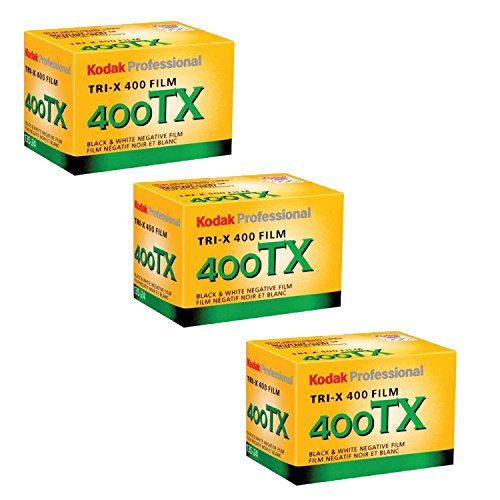
Kodak Tri-X 400TX Black & White Film 3-Pack

Kodak Portra 160 35mm Color Film
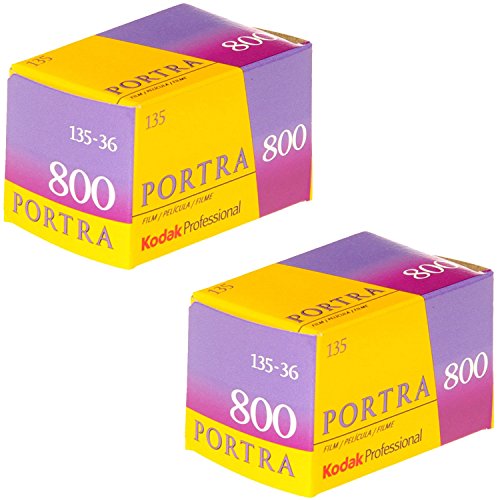
Kodak Portra 800 35mm Color Film 2-Pack

Fujifilm 200 35mm Color Film 6-Pack Bundle

Kodak Ektar 100 35mm Color Film 2-Pack

Ilford HP5 Plus 35mm Bulk Film 100-Foot Roll
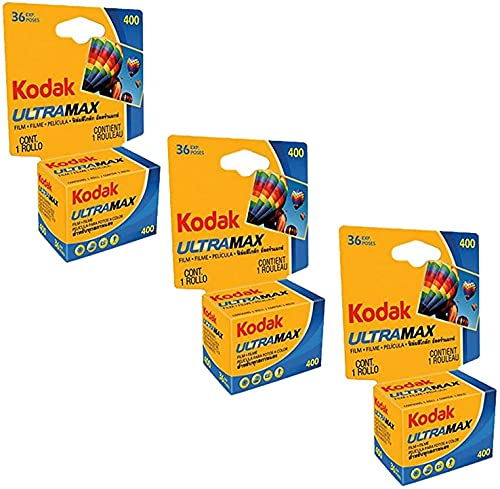
Kodak UltraMax 400 35mm Film 3-Pack

Kodak Portra 400 35mm Color Film 5-Pack
The Picks, Examined More Closely
UltraMax 400 is the film most people cut their teeth on, and the four-roll bundle covers a long stretch of casual shooting. ISO 400 gives you enough flexibility for overcast afternoons, indoor gatherings, and golden-hour portraits without swapping rolls mid-walk.
Color rendition leans warm and forgiving, which is a relief when lighting turns mixed. Process C-41 (the standard development chemistry used for most color negative films worldwide) means any local lab handles it. Compared with the smaller three-roll UltraMax pack later, you pay a slight premium per roll for the convenience of one fewer reload.
What Helps Most
- ISO 400 handles a wide range of real-world lighting, from sunny streets to dim restaurants
- DX-coded cassettes (the metal contact strip that auto-sets ISO on modern cameras) set the speed automatically in most bodies
- Four rolls mean you can shoot a full trip without resupplying
- C-41 processing is universally available, even at big-box drugstores
Things To Consider
- Grain is a touch more visible than slower stocks like Ektar 100
- Skin tones skew warm, which may not flatter every portrait subject
Feature Snapshot
Right Fit For
Casual shooters and travelers who want one roll to cover most daylight and indoor situations without overthinking exposure.
Swap It Out When
Studio portrait specialists chasing softer pastel rendering will get more from the Kodak Portra 160 instead.
HP5 Plus is the black-and-white equivalent of an old friend. Nominally rated at ISO 400, it produces sharp negatives with fine grain and a medium-contrast look that flatters most subjects without heavy dodging and burning.
The film’s wide exposure latitude means a stop or two of overexposure rarely ruins a frame, which matters when metering conditions change quickly. In mixed indoor light, HP5 Plus holds shadow detail well. Compared with the Tri-X review that follows, HP5 Plus tends to render slightly smoother midtones, while Tri-X pushes harder contrast.
Notable Upsides
- Push-processable (exposing and developing at a higher ISO than rated) up to EI 3200 for low-light shooting
- Generous exposure latitude forgives metering mistakes during fast-moving shoots
- Two-roll pack suits short trips without leaving extra film sitting in a hot car
- Develops in standard black-and-white chemistry at home or any lab
Honest Caveats
- Black-and-white only, so it can’t substitute for color rolls on mixed assignments
- Slightly more grain than finer-grained stocks like Ilford FP4 Plus
Built With In Mind
Students learning darkroom basics and travel photographers who want a forgiving monochrome stock for unpredictable lighting.
Consider Something Else When
Shooters chasing the classic gritty photojournalism look should reach for the Kodak Tri-X 400TX reviewed below.
Tri-X has been the gritty black-and-white standard since the 1950s, and the 400TX formula keeps that reputation alive. Rated ISO 400, it handles dim street scenes, indoor reportage, and stage work without forcing a tripod into your hands.
The three-roll format suits a long assignment or a single ambitious project. Tri-X’s signature is its pronounced grain and high contrast, which gives portraits and street scenes a punchy, photojournalistic feel. Push-processing in standard developers extends its working range for darker conditions. Compared with the smoother HP5 Plus above, Tri-X leans harder on the highlights.
Standout Benefits
- Classic grain structure recognizable from decades of photojournalism
- Forgiving in low light at its rated speed
- Responds well to a wide range of developers, from D-76 to Rodinal
- Three-roll pack covers longer documentary projects
Practical Considerations
- Visible grain may not suit clean, fine-art portrait styles
- Higher contrast means less latitude for error in flat lighting
Feature Snapshot
Best Suited To
Street and documentary photographers who want grain, contrast, and the unmistakable Tri-X aesthetic.
A Better Fit Elsewhere
Architectural shooters wanting ultra-fine grain and tonal subtlety will prefer Ilford HP5 Plus from earlier in the list.
Portra 160 is the quiet achiever of the Portra family. The slower ISO rewards bright scenes with exceptionally fine grain and beautifully smooth tonal transitions, which is exactly what portrait photographers want when the light is cooperating.
Skin tones are rendered with natural warmth rather than the more saturated look of faster films. The film also scans cleanly for high-resolution hybrid workflows. Compared with the UltraMax 400 reviewed earlier, Portra 160 demands more careful metering and stronger light, but it returns a more refined image.
A Few Highlights
- Exceptionally fine grain for a color negative film
- Natural skin tones suited to portraiture and editorial work
- Wide exposure latitude for studio-style lighting variations
- Strong archival stability for long-term prints and scans
Worth Noting
- Slower ISO requires brighter conditions or longer exposures
- Color saturation reads slightly muted compared with Ektar 100
Whose Shelf It Belongs On
Portrait and studio photographers working in well-lit environments who prioritize skin tone accuracy and fine detail.
Look Elsewhere When
Outdoor landscape shooters chasing vivid saturation will get more from the Kodak Ektar 100 reviewed later.
Portra 800 solves a real problem. When you’re shooting a concert, a candlelit reception, or a dusk street scene, slower color films force you into tripod territory. ISO 800 (and the ability to push to 1600) gives handheld shooting real flexibility.
The two-roll pack suits an evening event or a short low-light trip. Despite its speed, the film keeps grain finer than you’d expect, which is why it became a wedding-photography staple for reception work. Compared with the Portra 160 above, you trade some fine-grain smoothness for far better low-light reach.
Useful Highlights
- ISO 800 reaches into dim interiors without flash
- Can be pushed one stop to 1600 when light really drops
- Color rendition stays natural, even at higher speeds
- Two-roll pack matches most single-event needs
A Few Limitations
- Grain becomes visible when scanned at very high resolutions
- Cost per roll runs higher than slower stocks
Perfect Match For
Event photographers and concert-goers who need color in dim environments without resorting to flash.
Skip It When
Daylight landscape shooters will get cleaner results from the Kodak Portra 400 reviewed near the end.
Fujifilm 200 is the easygoing color stock most people load first. ISO 200 lands it squarely in daylight territory, where its fine grain and pleasant green-leaning palette really sing on landscapes, beach trips, and family outings.
The six-roll bundle (with a microfiber cleaning cloth added in) covers an extended vacation without reordering film mid-trip. The stock processes in standard C-41 chemistry. Compared with the UltraMax 400 reviewed earlier, Fujifilm 200 demands more light but rewards you with noticeably cleaner grain and slightly cooler colors.
Useful Strengths
- Fine grain for a budget-friendly color film
- Bright, slightly cool palette suits landscapes and casual portraits
- Six rolls reduce reordering during long trips
- C-41 process means any lab develops it
Points To Note
- ISO 200 struggles indoors without flash or a fast lens
- Color profile skews cool, which may not flatter every subject
Quick Facts
Who Should Grab It
Beginners and travelers shooting mostly outdoors who want an affordable bulk pack of forgiving color film.
Another Choice May Suit
Shooters working in mixed indoor lighting should consider the Kodak UltraMax 400 4-Pack for more flexibility.
Ektar 100 is the most saturated film in Kodak’s color negative lineup. At ISO 100, it produces extraordinarily fine grain, vivid reds and blues, and the kind of punchy color that makes landscapes and architecture look almost three-dimensional.
The two-roll pack suits a focused landscape trip or a stock for portfolio work. Ektar 100 demands strong light or a tripod for handheld shooting. Compared with the softer Portra 160 reviewed earlier, Ektar trades gentle pastels for visual intensity, which is exactly what travel photographers want when chasing blue skies and fall foliage.
The Upside
- Ultra-fine grain for a 35mm color negative
- Vivid saturation ideal for landscapes, architecture, and travel
- Excellent enlargement potential from a 35mm negative
- Optimized sharpness for high-resolution scanning
Factors To Consider
- ISO 100 requires strong daylight or longer shutter speeds
- Skin tones can read overly saturated for portrait work
Who Will Love This
Landscape, architecture, and travel photographers who want maximum color impact and fine-grain detail in their scans.
Reach For A Different Pick When
Portrait specialists wanting natural skin tones will find the Kodak Portra 160 a more flattering option.
The 100-foot bulk roll of HP5 Plus is for shooters who burn through film by the dozen. A bulk loader lets you wind the film into reusable cassettes (the plastic canisters your film comes in) at home, dropping the per-roll cost dramatically.
The film itself is identical in character to the two-pack reviewed earlier: ISO 400, wide exposure latitude, and forgiving black-and-white tones. This format only makes sense if you already own a bulk loader and reusable cassettes. Compared with the pre-packaged HP5 Plus 2-Pack, you save money but take on the loading workflow.
Practical Pluses
- Significantly lower cost per 36-exposure roll
- Same proven HP5 Plus emulsion as the standard packs
- Wide exposure latitude for both studio and street work
- Long roll fits heavy shooting schedules without reordering
Practical Considerations
- Requires a bulk loader and reusable cassettes to use
- Loading takes time and a dust-free space to avoid scratches
Key Product Details
Made For
High-volume film shooters, photography labs, and darkroom enthusiasts who already use a bulk loader and want serious per-roll savings.
Where Another Pick Suits Better
Casual shooters without bulk-loading equipment should grab the pre-packaged HP5 Plus 2-Pack reviewed earlier.
The three-roll UltraMax 400 pack delivers 108 frames of dependable color film, which is plenty for a long weekend or a moderately busy shooting week. ISO 400 keeps it useful in mixed lighting, and C-41 processing keeps it accessible everywhere.
This pack sits between the smaller four-roll bundle reviewed earlier and single-roll purchases. The film performs identically to other UltraMax 400 stock. The DX coding (metal contact pattern that lets the camera auto-detect ISO) sets ISO automatically on compatible bodies. Compared with the Fujifilm 200 6-Pack, this is a warmer, more versatile color choice for less predictable conditions.
A Favorable Mix
- 108 exposures cover most short trips without reordering
- ISO 400 suits varied lighting from sunny streets to indoor events
- Warm color palette flatters casual portraits and travel scenes
- C-41 process accepted at virtually every lab
Some Limits To Know
- Grain is more visible than slower 100 or 200 ISO stocks
- Color profile skews warmer than Fujifilm 200
The Right Fit
Weekend shooters and hobbyists who want a balance of frame count, flexibility, and approachable pricing.
Not Your Match When
Heavy shooters should consider the larger UltraMax 400 4-Pack for fewer reloads, or the bulk option for best per-roll pricing.
Portra 400 is the film wedding photographers reach for when they cannot control the light. ISO 400 handles everything from bright outdoor ceremonies to dim reception halls, and its color rendition stays natural across both extremes.
The five-roll pack covers a full wedding day or several portrait sessions without reordering mid-event. Portra 400 also scans beautifully for hybrid workflows. Compared with the Portra 160 reviewed earlier, you give up a little fine-grain smoothness for vastly better low-light reach. Compared with Portra 800, you keep better highlight detail in daylight while still handling indoor scenes.
What It Does Well
- Balanced ISO 400 handles a wide range of real-world lighting
- Natural color rendition suited to skin tones and mixed light
- Strong scanning characteristics for hybrid digital workflows
- Five rolls cover an entire event or multi-session shoot
Points To Keep In Mind
- Per-roll cost is higher than slower or bulk-pack options
- Fine grain does not match the ultra-smooth Portra 160
Feature Snapshot
Who It Suits Best
Wedding, portrait, and hybrid photographers who need one film that performs from morning light through evening receptions.
Where A Sibling Pick Shines
Low-light event specialists needing maximum speed should pick the Portra 800 reviewed earlier for its extra reach.
What Matters When Choosing 35mm Film
ISO Speed and Lighting Reality
ISO (the film’s sensitivity to light, where higher numbers mean faster) sets the boundary of where a film can shoot. Slower stocks like ISO 100 and 160 reward bright daylight with the cleanest grain, while faster stocks like 400 and 800 trade some smoothness for indoor reach. Pick your ISO around the lighting you actually shoot in, not the lighting you wish you had.
Color vs Black and White
Color negative film processes in C-41 chemistry and delivers the warm or cool palettes most people associate with film. Black-and-white stocks process in dedicated B&W developers and let you shape tone and contrast more deliberately in the darkroom or during scanning. Many photographers carry one of each.
Grain, Resolution, and Scanning
Grain is the visible texture in a film image, and finer grain generally means cleaner scans at high enlargement. Slower films (Ektar 100, Portra 160) win here, while faster films accept a little more texture in exchange for low-light reach. If you plan to scan and print large, grain matters more than it does for contact prints or web sharing.
Pack Size and Workflow
Pre-loaded rolls are convenient but cost more per frame. Bulk rolls require a loader and reusable cassettes but bring the per-roll cost down significantly. Match the format to your shooting volume and your tolerance for the loading workflow.
Things Worth Knowing Before Loading a Roll
Pitfalls Shoppers Hit
A common trap is buying slow film (ISO 100 or 160) for indoor shooting, then wondering why every frame is blurry from slow shutter speeds. Match ISO to lighting first, then to aesthetic. Another mistake is loading expired film without a speed adjustment: older film loses sensitivity, so rating it at a higher ISO compensates for the loss.
When Paying More Pays Off
Premium stocks like Portra 160 and Ektar 100 deliver noticeably finer grain, richer color science, and better scanning characteristics than budget color films. The upgrade is worth it for portrait and landscape work where image quality shows. For casual snapshots and learning projects, the value-tier films handle the job without strain.
Frequently Asked Questions
What ISO film is best for beginners?
ISO 400 is the most forgiving starting point. It handles indoor and outdoor scenes without forcing constant exposure adjustments, and the major brands all produce reliable 400-speed stocks.
Is black-and-white film harder to develop than color?
Color negative (C-41) is easier for most labs, but home black-and-white development is actually simpler because the chemistry is more forgiving and temperature-stable. Many beginners find B&W the smoother path.
Can I use 35mm film in any 35mm camera?
Almost any 35mm SLR, rangefinder, or point-and-shoot accepts standard 35mm cassettes. Only a handful of specialty bodies (like the original Olympus Pen half-frame cameras) take different formats.
How should I store unused film?
Keep film in a cool, dry place away from direct sunlight. Refrigeration extends shelf life for long-term storage, but let rolls return to room temperature before loading to avoid condensation.
Does expired film still work?
Expired film loses sensitivity and gains color shifts over time, but it still produces images. Rating it at a higher ISO compensates for the loss, and many shooters deliberately buy expired film for its aesthetic quirks.
Closing Thoughts
The right 35mm film depends on what you point your camera at and what you want to see when the negatives come back. Color shooters heading into mixed light will lean toward Portra 400, monochrome lovers chasing grain will reach for Tri-X, and budget-conscious travelers will load UltraMax or Fujifilm 200 with confidence. Pick the stock that fits your real shooting conditions, and the camera does the rest.