A 35mm lens is the workhorse most photographers reach for first. It frames the scene the way your eyes actually see it, making it just as useful for a casual street walk as for a planned portrait session. The catch is that “35mm” behaves differently depending on your sensor size, your camera system, and how you plan to shoot.
We’ve pulled together ten solid contenders spanning mirrorless standards, DSLR classics, wide-angle alternatives, and portrait-friendly options. Each one earns its place for a specific reason, whether that’s optical quality, compact handling, autofocus speed, or weather sealing. Match the lens to your camera mount and shooting style, and you’ll likely find a pick here that fits.
The Choices Worth Comparing
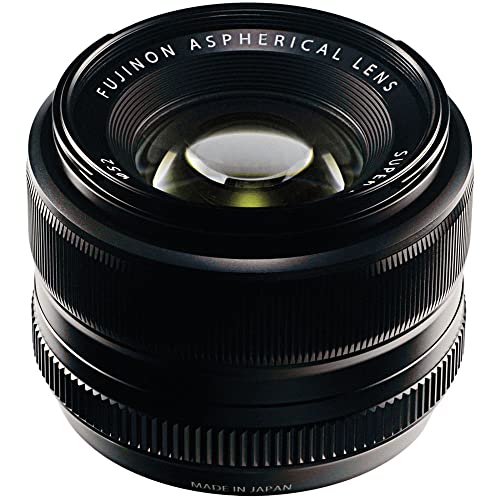
Fujifilm XF35mmF1.4 R

VILTROX AF 35mm F1.7 Air E-Mount APS-C Lens
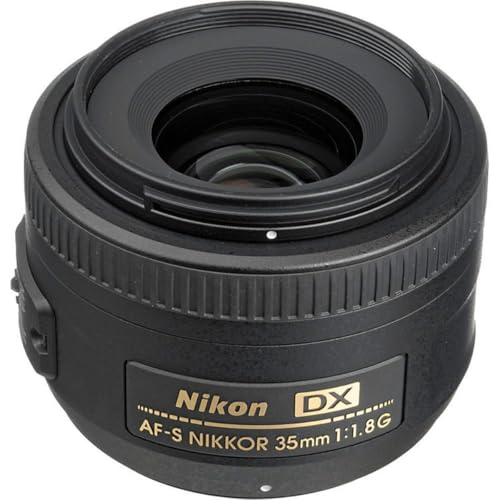
Nikon AF-S DX NIKKOR 35mm f/1.8G

Fujinon XF35mmF2 R WR Black

VILTROX AF 15mm F1.7 APS-C Wide-Angle Prime

VILTROX AF 25mm F1.7 APS-C Ultra Compact

Meike 55mm F1.4 AF STM APS-C Portrait Prime
Meike 85mm F1.8 SE Mark II STM AF for Canon EF

Meike 35mm F2.0 AF STM Full Frame Portrait

VILTROX AF 35mm F1.7 Air STM APS-C Portrait Prime
More Details On Our Top Picks
The original XF35mm F1.4 has earned its reputation the slow way, through years of street, documentary, and environmental portrait work on Fujifilm X bodies. The 44.2-degree angle of view lands right around what most people consider a “natural” perspective, so framing feels intuitive from your first walk around the block.
Built around eight optical elements in six groups with an aspherical element, the lens balances correction with character. Photographers often describe its out-of-focus rendering as one of its quiet strengths. At roughly 4.1 ounces in package weight, it stays light enough for a full day of handheld shooting without shoulder fatigue.
Bright Spots
- Fast F1.4 aperture helps in dim interiors and evening street scenes
- Natural perspective mirrors how your eyes frame a scene
- Smooth background blur at moderate subject distances
- Lightweight build suits long walking days
- Wide manual-focus ring with a firm, deliberate feel
Things To Consider
- No weather sealing, so rainy shoots call for a cover
- Autofocus speed lags behind newer stepping-motor designs
Built For The Dedicated Fujifilm Shooter
Fujifilm X-series users who shoot a lot of street and travel work will get the most out of its rendering style.
Skip It When
The Fujinon XF35mmF2 R WR is a better fit for shooters who regularly face wet weather or dust.
VILTROX built the Air series for shooters who want a 35mm field of view without the bulk. At roughly 6.3 ounces, this optic disappears into a small sling or coat pocket, paired with a body like the a6400 or FX30. The 45-degree angle of view keeps framing natural for documentary walks.
Autofocus runs through an internal STM motor, which tends to stay nearly silent during video. The F1.7 aperture gathers enough light for indoor cafes and twilight streets. It targets the E-mount specifically, so Sony APS-C mirrorless users get a clean fit without adapters.
What Works In Its Favor
- Featherweight design reduces arm fatigue on long shoots
- Quiet autofocus suits casual video recording
- Bright aperture helps in low-light interiors
Worth Noting
- No weather sealing, so humid or dusty settings call for care
- Plastic mount construction may concern heavy daily users
- Not designed for full-frame Sony bodies
Feature Snapshot
Made For The Travel Photographer
Sony APS-C shooters who pack light and want a true walk-around prime will appreciate the Air’s footprint.
Look Elsewhere When
Fujifilm XF35mmF1.4 R serves better if you shoot on X-mount and want a faster F1.4 aperture.
This 35mm prime has been on Nikon DSLR shoppers’ shortlists for years, and it remains a steady choice for DX-format bodies. The picture angle lands around 44 degrees, equivalent to roughly 52.5mm on a full-frame sensor. That makes it a versatile everyday focal length for portraits, environmental scenes, and casual street work.
Inside, eight elements in six groups handle the optical correction, and a Silent Wave Motor drives autofocus. Manual focus override lets you fine-tune without leaving AF mode. The aperture range stretches from F1.8 to F22, giving flexibility for low light and bright outdoor scenes alike.
Useful Touches
- Manual focus override helps in tricky lighting
- Compact form pairs nicely with smaller DX bodies
- Reliable F1.8 aperture for indoor shooting
Trade Offs
- Designed for F-mount, so Z-series shooters need an adapter
- Screw-on filter only, no front element customization beyond that
Best Suited To
Nikon DSLR owners using DX bodies like the D3500, D5600, or D7500 will find the natural fit here.
Swap It Out When
VILTROX AF 25mm F1.7 APS-C Ultra Compact suits Sony E-mount users who want a smaller, lighter walk-around lens.
Where the original XF35mm F1.4 trades weather sealing for character, the XF35mm F2 R WR flips the priority. With eight seals throughout the barrel, it shrugs off light rain, dusty trails, and temperatures down to about 14 degrees Fahrenheit. The 53mm equivalent angle keeps framing familiar.
Autofocus runs fast and quiet, roughly 0.08 seconds in optimal conditions. That makes it useful for travel shooters who switch between stills and casual video. Aperture stops at F2, narrower than its F1.4 sibling, but the smaller barrel and lighter weight are the trade-offs.
Where It Delivers
- Sealed against splashes and dust for outdoor use
- Snappy autofocus for moving subjects
- Compact enough to balance on smaller X-series bodies
Points To Note
- Half-stop less light gathering than the F1.4 version
- Pricing may sit higher than older used copies of the F1.4
Who Should Grab It
Fujifilm shooters who travel through unpredictable weather or shoot in dusty environments get real value from the seals.
Where Another Pick Suits Better
Fujifilm XF35mmF1.4 R fits photographers who prioritize background blur and a slightly softer rendering style.
This pick shifts away from the standard 35mm focal length toward something wider and more situational. The 15mm prime offers an 84.9-degree field of view on Sony APS-C bodies, which translates into roughly 22.5mm full-frame equivalent. Vloggers and travel creators often reach for this kind of width to fit more of the scene without backing up.
It targets Sony E-mount cameras like the ZV-E10, FX30, a6400, and a6700. The bright F1.7 aperture helps indoors where lighting gets tricky, and the small footprint suits run-and-gun video setups. Architecture and tight interiors benefit most from the broader perspective.
Everyday Wins
- Wide angle captures rooms and landscapes without repositioning
- F1.7 aperture handles dim interiors during travel vlogs
- Light enough to pair with compact vlog rigs
Room For Improvement
- Not a true 35mm, so it doesn’t match the “natural eye” feel
- Edge sharpness may soften at wide-open aperture
Whose Shelf It Belongs On
Sony APS-C vloggers and travel creators who prioritize wide framing over standard perspective will find this useful.
Consider Something Else When
Standard-view street shooters get closer to what they want from VILTROX AF 35mm F1.7 Air E-Mount APS-C Lens.
At 25mm, this VILTROX prime lands a touch wider than the standard 35mm focal length on APS-C. It suits Sony E-mount bodies and leans toward shooters who want a casual, slightly broader everyday view. The compact barrel feels balanced on smaller cameras like the a6000 series.
The bright F1.7 aperture works with nine circular blades, which VILTROX describes as producing creamy background blur. An STM stepping motor keeps focusing smooth and quiet, helpful when recording vlogs or video interviews. Built-in electronic aperture control and EXIF transmission round out the modern feature set.
Notable Gains
- Compact form factor suits slim mirrorless kits
- Quiet autofocus benefits hybrid stills and video work
Honest Caveats
- Slightly wider than classic 35mm, so portraits feel less intimate
- No weather sealing for unpredictable outdoor conditions
- Plastic construction may show wear with heavy daily use
Quick Facts
The Right Fit
Sony APS-C shooters who want a small, bright everyday lens and prefer a slightly wider framing style.
Another Choice May Suit
VILTROX AF 35mm F1.7 Air STM APS-C Portrait Prime fits those wanting a true 35mm perspective for hybrid use.
Stepping away from the strict 35mm focal length, this Meike 55mm F1.4 lands in portrait territory on Sony APS-C bodies. The 82.5mm equivalent framing tightens headshots and three-quarter poses nicely, isolating subjects with the wide aperture. It targets E-mount cameras ranging from older a5000-series bodies up to the a6700.
An STM stepping motor drives autofocus with minimal noise, which helps in quiet environments like libraries or intimate indoor shoots. Linear-response manual focus offers precise adjustment, while EXIF data and electronic aperture control integrate cleanly with the camera. The F1.4 aperture gathers meaningful light for evening street portraits.
Practical Pluses
- Wide F1.4 aperture produces strong background separation
- Quiet autofocus for video and quiet indoor work
- Linear manual focus response aids precision focusing
Small Caveats
- Longer focal length changes working distance for framing
- No weather sealing for outdoor portrait sessions
Who Will Love This
Sony APS-C portrait shooters who want flattering subject isolation without stepping up to full-frame glass.
Reach For A Different Pick When
Standard-view photographers get closer to what they want from Meike 35mm F2.0 AF STM Full Frame Portrait.
This 85mm prime targets Canon EF-mount DSLR shooters, an older system that still has a devoted following. The focal length produces a flattering perspective for headshots, weddings, and environmental portraits. A minimum focus distance of 0.65m lets you get reasonably close to subjects without intrusion.
The aperture range stretches from F1.8 to F16, with a horizontal angle of view around 23.4 degrees on full-frame bodies. Autofocus runs through an STM motor designed for smooth, quiet operation during video capture. It covers a wide compatibility list spanning older Rebel-series bodies up through the 5D Mark IV and 6D Mark II.
Where It Excels
- Classic 85mm focal length suits traditional portrait framing
- F1.8 aperture creates strong subject separation
- Broad EF-mount compatibility across many Canon DSLRs
Some Limits To Know
- Longer focal length needs more working space indoors
- Designed for EF-mount, not RF mirrorless bodies
- Maximum magnification of 0.17X limits close-up framing
Made For
Canon DSLR owners running weddings, family portraits, or studio work where 85mm remains a foundational focal length.
Not Your Match When
Mirrorless Canon shooters should explore a different option, since this lens is built for the EF system.
Designed specifically for Sony E-mount full-frame bodies, this 35mm covers the sensor without vignetting concerns. It works with cameras spanning the original A7 through the A7 IV, A7R IV, A7C II, and A9 series. The Type-C firmware upgrade port means the lens can pick up future compatibility tweaks without a service visit.
An STM motor drives autofocus with strong tracking and supports Eye AF on newer bodies. EXIF data transmits properly, and electronic aperture control integrates with the camera’s PASM modes. At F2.0, it gathers plenty of light while keeping the optical formula manageable in size.
Strengths Worth Knowing
- Full-frame coverage without dark corners
- Eye AF support on modern Sony bodies
- Firmware upgrade port for future-proofing
A Few Limitations
- F2.0 max aperture trails behind F1.7 and F1.4 options
- Plastic mount construction may bother heavy daily users
Spec Overview
Best Match For
Sony full-frame shooters who want a native 35mm without adapting APS-C glass or paying flagship prices.
Where A Sibling Pick Shines
The Fujifilm XF35mmF1.4 R fits those on Fuji X-mount who value the brighter F1.4 aperture and character.
This 35mm prime mirrors the Air series design we covered earlier but adds an STM autofocus motor for quieter operation. The 52.5mm equivalent on APS-C keeps framing natural, and the F1.7 aperture helps in dim indoor scenes. It’s built for Sony E-mount APS-C bodies like the ZV-E10 II, a6700, and FX30.
Background blur benefits from the wide aperture, useful for vloggers who want a softer backdrop behind talking-head segments. The compact form factor suits hybrid shooters carrying a single body plus lens for travel. STM stepping motors tend to keep focusing smooth during video transitions without audible clicks.
Advantages To Know
- F1.7 aperture enables stronger subject-background separation
- Quiet STM autofocus benefits video recording
- Lightweight for travel and vlog setups
Where It Is Less Suited
- APS-C only, so full-frame Sony users need a different option
- No weather sealing for unpredictable outdoor shoots
Perfect Match For
Sony APS-C hybrid shooters and vloggers who want a 35mm perspective with quiet, video-friendly autofocus.
A Better Fit Elsewhere
Meike 35mm F2.0 AF STM Full Frame Portrait suits full-frame Sony shooters seeking a native 35mm without crop concerns.
Picking the Right Prime for Your Camera and Style
A 35mm lens is often the first prime photographers buy, but “35mm” behaves differently across sensor formats. On a full-frame body, 35mm reads as a natural wide angle. On an APS-C sensor, that same lens covers a tighter field of view, landing closer to a 50mm equivalent. Match the lens to your camera mount first, then consider aperture, weight, and sealing.
Sensor Format and Mount Compatibility
Your camera mount determines which lenses even fit. Sony E-mount splits into APS-C and full-frame versions, with many APS-C lenses also working on full-frame bodies in crop mode. Fujifilm X-mount, Canon EF, and Nikon F-mount each have their own ecosystem. Buying a lens that physically mounts to your camera is step one; matching it to your sensor size avoids dark corners or wasted wide-angle coverage.
Aperture and Low-Light Shooting
A wider maximum aperture (lower F-number) gathers more light and produces shallower depth of field. F1.4 and F1.7 lenses work well indoors and for portraits with creamy background blur. F2.0 or higher still handles dim scenes but with more of the frame in focus. If you mostly shoot outdoors in daylight, a slower aperture saves weight and cost.
Size, Weight, and Daily Carry
Compact primes around 6 to 10 ounces disappear into small bags and suit travel, street, and vlogging. Heavier optics often signal faster apertures or more complex optical designs. Think about how you’ll carry the lens: a heavier prime on a small body can feel front-heavy during long walking sessions.
Autofocus and Video Use
Stepping motors (STM) tend to focus quietly and smoothly, which matters for video recording. Older ring-type or micromotor AF systems work fine for stills but may show up on audio. If you split time between photos and video, prioritize a lens with modern AF and electronic aperture control.
Key Considerations Across These Picks
Where Shoppers Go Wrong
A frequent misstep is buying a lens without confirming the mount and sensor compatibility. An E-mount APS-C lens physically fits a Sony full-frame body, but you’ll either shoot in crop mode or accept heavy vignetting. Equally common is chasing the brightest aperture without considering weight; F1.4 glass often weighs more and costs significantly more than F2.0 alternatives.
Why Top Tier Costs More
Faster apertures, weather sealing, and more complex optical formulas all add cost. Premium models like weather-sealed F1.4 primes include extra lens elements to correct aberrations at wide apertures. The price jump reflects engineering rather than brand alone. Whether that upgrade is worth it depends on how often you shoot in demanding conditions, and whether the optical edge shows up in your final images.
Frequently Asked Questions
What does a 35mm lens do on an APS-C camera? On an APS-C sensor, a 35mm lens produces a tighter field of view, roughly equivalent to about 52mm on a full-frame body. That makes it behave more like a “normal” portrait focal length than a wide angle.
Is F1.8 enough for low-light shooting? F1.8 gathers enough light for most indoor and evening scenes, especially when paired with modern sensors that handle high ISO well. For very dim environments, F1.4 or F1.7 offers more headroom.
Can I use a full-frame 35mm lens on an APS-C body? Yes, full-frame lenses mount on APS-C bodies and use the central portion of the image circle. You get the manufacturer’s stated focal length with a tighter crop of view.
Do I need weather sealing on a 35mm prime? Sealing matters if you regularly shoot in rain, snow, or dusty environments. For controlled indoor work and dry-weather street shooting, it’s a nice extra rather than a necessity.
What’s the difference between STM and other autofocus motors? STM (stepping motor) systems focus quietly and smoothly, making them well-suited for video. Older ring-type or micromotor designs can be faster for stills but noisier overall.
The Takeaway
A 35mm lens earns its reputation by being useful in nearly every situation, from street walks to environmental portraits. Match it to your camera system, decide how much weight you want to carry, and pick an aperture that fits your lighting. Any lens on this list, chosen thoughtfully, should serve you well for years of shooting.