Driving with a traditional dash cam means trusting one forward-facing lens to tell the whole story. A side-swipe, a rear-end shunt, or a hit-and-run at the curb all happen outside that narrow field of view. Modern multi-channel and 360-degree cameras close those gaps, recording front, rear, sides, and cabin at once so evidence holds up when it matters.
Whether you commute daily, run rideshare, or want rock-solid protection for road trips, the picks below cover the main flavors of car cameras and the mounts that help action shooters position them well.
The Picks In Brief
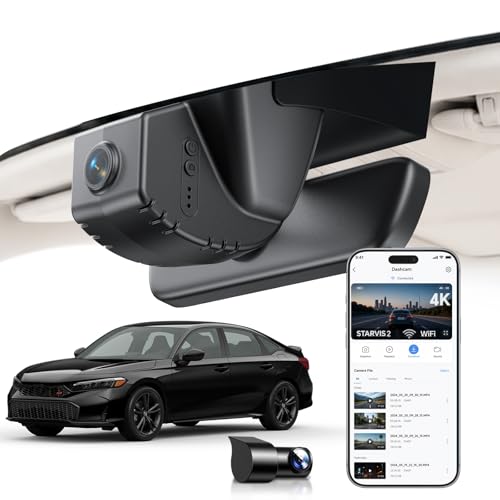
OVAMAN OEM-Fit 4K Dual Dash Cam for Honda Civic

VAUBORTTI Heavy-Duty Camera Wall/Desktop Mount

VAZESWIN 5-in-1 Suction Cup Car Camera Mount

IIWEY N6 4-Channel 360° Dash Cam with 128GB Card
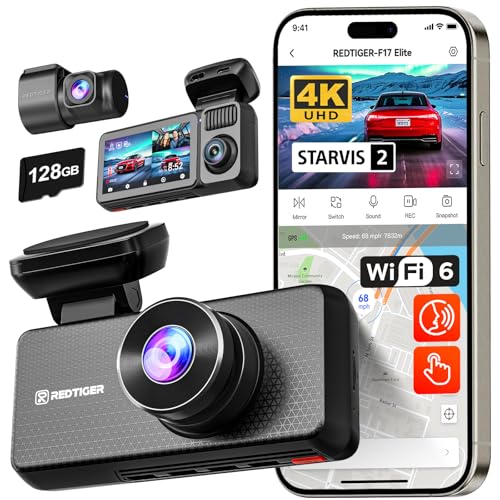
REDTIGER F17 Elite 4K 3-Channel Dash Cam with STARVIS 2

IIWEY N5 4-Channel Dash Cam 360° View

CURRENBA 4-Channel 360° Dash Cam with 64GB Card

IIWEY N6 PRO 4K STARVIS 2 4-Channel Dash Cam

REDTIGER F17 4K 3-Channel Dash Cam with STARVIS 2
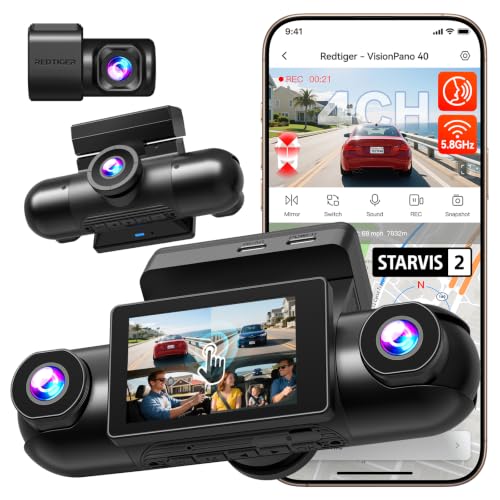
REDTIGER VP40 4-Channel 360° Dash Cam with 8 IR Lights
Inside Each Recommended Option
The OVAMAN stands apart from the rest of this list because it isn’t a generic suction-cup unit. The black housing is shaped to replace the factory mirror cover on U.S. Honda Civic and Civic Si models from 2022 through 2026, plus the Civic Type R from 2023 onward. That OEM-style fitment means no dangling wires across the headliner and no chunky mount blocking the windshield.
Unlike the action-camera mounts further down the list, this one is purpose-built for recording. The dual-lens 4K setup with a 128GB card targets drivers who want clean footage without thinking about positioning every drive. It suits Civic owners who care about a stock-looking cabin more than they care about removable versatility.
What It Does Well
- OEM-style replacement cover matches late-model Civic cabins
- 4K dual-lens recording captures front and rear simultaneously
- 128GB card included means no separate storage purchase
- Clean installation looks closer to factory than aftermarket mounts
Things To Consider
- Fitment depends on matching the mirror cover and roof-light connector, so verification matters before buying
- Limited to specific Civic and Type R model ranges, useless for other vehicles
- Non-removable once installed, which complicates swapping to a new car
Built With In Mind
Honda Civic and Civic Type R owners from 2022 onward who want a factory-looking install and dual 4K coverage.
Look Elsewhere When
The VAZESWIN 5-in-1 Suction Cup Car Camera Mount suits drivers who want a removable action-cam setup they can move between cars.
The VAUBORTTI mount is the odd one out here, and that is exactly why it earns its place. While the other picks live inside the car, this one gives you a serious rig for garage studios, workbench cameras, or security positions where a 360-degree body cam needs a stationary perch. The aluminum alloy body and base pair with a 1-inch hard TPU joint ball, which translates to a heavier, sturdier feel than plastic alternatives.
For drivers who also shoot product video or run a workshop CCTV setup, the 1/4″-20 threaded screw (a standard camera mounting thread) opens compatibility with DSLRs, action cameras, and CCTV housings. Dual ball heads mean you can swing the camera through nearly any angle and lock both joints with a single knob twist.
Advantages To Know
- Aluminum alloy construction handles heavier camera bodies without flex
- Dual ball heads allow free rotation into awkward angles
- Standard 1/4″-20 thread fits most cameras and housings
- Single large knob locks both joints for fast repositioning
Trade Offs
- Wall or desktop only, so it has no role in actual driving footage
- Bulkier than a suction rig, which limits portable use
Right Fit For
Creators and workshop tinkerers who need a rock-solid stationary mount rather than something that travels with the car.
Consider Something Else When
The VAZESWIN 5-in-1 Suction Cup Car Camera Mount is the better choice for drivers who need actual in-car mounting on glass.
Action-camera drivers know the frustration of a single suction cup letting go mid-drive. The VAZESWIN sidesteps that with five large suction cups, each roughly 3.5 inches across, arranged in a triangle pattern that distributes the load. Twist the central lock to the “ON” position and the rig pulls down tight against the glass or body panel.
Unlike the dedicated dash cams further down this list, the VAZESWIN is just a mount. Pair it with your own GoPro, Insta360, or DJI body and you control the camera angle, the resolution, and the editing pipeline. The aluminum alloy base with composite reinforcement keeps things stable even on rough pavement.
What Works In Its Favor
- Five-cup design holds firm on bumpier roads than single-cup mounts
- Works across multiple action camera brands rather than locking you in
- Triangle geometry spreads load across a wider contact patch
- Easy to remove and reposition without leaving residue on glass
Honest Caveats
- Requires you to bring your own camera, which adds to the total cost
- Bigger footprint than a single-cup rig, so it covers more windshield area
Best Suited To
Action-camera enthusiasts who already own a 360 shooter and want a sturdy way to mount it on a car for road-trip content.
Skip It When
The IIWEY N6 PRO 4K STARVIS 2 4-Channel Dash Cam is the cleaner choice for drivers who want a complete recording system out of the box.
The IIWEY N6 leans hard into true surround coverage. Four channels record simultaneously, covering front, rear, and both sides of the vehicle at once, which is the kind of setup that protects you from the angle you forgot to check. The 170-degree front and rear fields of view pair with 150-degree side lenses, so blind spots shrink dramatically compared to a two-channel dash cam.
Eight infrared lights around the side lenses handle low-light conditions, an underrated feature for night-shift drivers. Unlike the OVAMAN at the top of this list, the N6 is a universal mount that works in any car, and a 128GB card is in the box so you can start recording immediately after wiring it in.
The Case For It
- Four-channel recording captures incidents on any side of the vehicle
- Adjustable side cameras can be angled toward specific blind spots
- IR night vision helps document late-evening parking lot events
- 128GB card bundled, removing an extra purchase step
Points To Note
- More wiring to route than a simple front-and-rear setup, which complicates DIY installs
- Side camera positions may need occasional adjustment after rough roads
Quick Facts
Who Should Grab It
Rideshare drivers, fleet operators, and anyone parked on busy streets who needs proof from every direction.
Swap It Out When
The REDTIGER F17 Elite 4K Dash Cam makes more sense for drivers who want higher-resolution front capture with fewer total channels.
The F17 Elite is REDTIGER’s higher-resolution answer in the dash cam world. The 8MP IMX678 front sensor and 4MP IMX675 rear sensor, both built on STARVIS 2 technology (a Sony sensor line optimized for low-light sensitivity), deliver sharper detail than typical dash cams manage, which is the difference between reading a license plate and squinting at a blur after a hit-and-run.
Compared to the IIWEY N6’s four-channel approach, the F17 Elite runs three channels at higher per-channel quality. Voice control, 5GHz WiFi at roughly 30 MB/s transfer speeds, and built-in GPS round out a feature set aimed at commuters who offload clips to their phone regularly.
Well-Handled Touches
- True 4K front capture reads plates and signs at distance
- STARVIS 2 sensors pull in color and detail after sunset
- 5GHz WiFi speeds shorten the wait when pulling footage off the device
- Voice commands keep your hands on the wheel during tagging
Worth Bearing In Mind
- Higher resolution files eat storage, so the 128GB card fills faster than on lower-res units
- Three-channel setup misses dedicated side coverage the IIWEY N6 provides
Feature Snapshot
Whose Shelf It Belongs On
Detail-focused commuters who want license-plate-readable footage and don’t need a fourth side channel.
A Better Fit Elsewhere
The IIWEY N6 PRO 4K STARVIS 2 4-Channel Dash Cam is the smarter choice if you want STARVIS 2 quality with full 360 coverage.
The IIWEY N5 keeps the four-channel 360 format approachable. It records 1080P across all four lenses by default, with a 2.5K-plus-1080P mode for drivers who want extra detail up front. The 3-inch IPS screen on the unit makes angle adjustments easier than fishing through a phone app every time.
Unlike the F17 Elite above, the N5 targets shoppers who would rather have more angles than more pixels per angle. Power comes through the supplied cigarette lighter charger, not a USB-C cable, so plan a 12V socket or hardwire kit before installing.
Features That Help
- Four simultaneous channels at approachable pricing for the format
- 170-degree front coverage keeps intersections well documented
- Switchable 2.5K front mode when license plate detail matters
- Built-in screen simplifies in-car angle tweaks
Small Caveats
- Stock 1080P per channel won’t read distant plates as cleanly as 4K units
- Cigarette-lighter-only power rules out some clean hardwire setups
Spec Overview
Who It Suits Best
First-time dash cam shoppers who want full surround coverage without stepping into premium pricing territory.
Another Choice May Suit
The CURRENBA 4-Channel 360° Dash Cam is a sensible alternative if you want a 4K front lens with three 1080P companions.
The CURRENBA takes a balanced swing at the four-channel category. A 4K front lens handles the priority direction, while three adjustable 1080P lenses cover rear, left, and right with enough flexibility to aim at specific blind spots. The 3-inch IPS screen mirrors the IIWEY N5 setup, useful for fine-tuning angles on the fly.
Compared to the IIWEY N5, this model trades away some flexibility in resolution switching for a sharper default front capture. A 64GB card ships in the box, which is a smaller starting footprint than the 128GB units but enough for several days of typical driving before loop recording kicks in.
What Earns Its Place
- 4K front lens anchors the system at usable detail
- Three adjustable 1080P companions cover rear and both sides
- IPS screen makes menu navigation and angle setup easier than app-only units
- Card pre-installed for day-one recording
A Few Limitations
- Smaller included card means more frequent overwrites on heavy commuters
- Rear and side lenses stay at 1080P, so distant plate reads are limited
Feature Rundown
Perfect Match For
Daily commuters who want 4K detail up front and full surround coverage without paying for premium STARVIS 2 sensors.
Reach For A Different Pick When
The REDTIGER F17 4K 3-Channel Dash Cam is the better route if you can live without side channels and want stronger low-light capture instead.
The N6 PRO takes everything the IIWEY N6 does and pushes the imaging up a tier. STARVIS 2 sensors across the system, paired with 4K front capture, mean low-light performance finally catches up to daytime detail. For drivers who park on dimly lit streets or commute before dawn, that matters more than megapixel counts suggest.
Unlike the CURRENBA below it on this list, the N6 PRO requires the original car charger for power or a separately sold hardwire kit. That detail is worth knowing up front if your vehicle lacks a cigarette socket or if you plan to use 24/7 parking mode.
Everyday Advantages
- STARVIS 2 sensors across channels keep color and detail after dark
- 4K front capture handles plate reads at greater distance
- 128GB card ships in the box
- Four-channel layout captures every direction at once
Points To Keep In Mind
- USB-C to USB-C cables are not supported, which trips up some owners trying alternative power sources
- 24/7 parking mode needs a hardwire kit purchased separately
Best Suited To
Security-minded commuters and rideshare drivers who want the strongest low-light performance with full 360 coverage.
Where A Sibling Pick Shines
The REDTIGER VP40 4-Channel 360° Dash Cam is worth considering if you want rotatable lenses and dedicated cabin IR lighting.
The F17 sits below the Elite in REDTIGER’s lineup but keeps the essentials intact. The STARVIS 2 IMX675 sensor drives a 4K front lens, with 1080P covering the cabin and rear, and HDR processing balances the bright-and-dark scenes that fool lesser dash cams. The 5.8GHz WiFi band is the underrated spec here, opening up faster phone transfers when you pull clips after an incident.
Compared to the F17 Elite above, this model ships with a 64GB card instead of 128GB and drops the second STARVIS 2 sensor on the rear. Field of view stays generous at 150 degrees front, 160 degrees cabin, and 155 degrees rear.
The Value In It
- STARVIS 2 sensor on the front lens at a more accessible tier
- 5.8GHz WiFi speeds up clip transfers compared to 2.4GHz units
- Wide cabin angle captures the full interior and backseat
- HDR helps in mixed lighting like tree-lined roads at sunset
Some Limits To Know
- 64GB storage means more frequent overwrites for high-mileage drivers
- Rear lens sits at 1080P rather than the Elite’s 2.5K resolution
Who Will Love This
Frequent file-offloaders who want STARVIS 2 image quality without stepping into the Elite tier.
Not Your Match When
The IIWEY N6 PRO 4K STARVIS 2 4-Channel Dash Cam is a stronger pick if you need side-channel coverage rather than just three angles.
The REDTIGER VP40 closes out this list with one of the most flexible physical designs. Four rotatable wide-angle lenses mean you can point each one at a specific direction, whether that is a blind spot, a door, or the full cabin. Dual STARVIS 2 sensors and 2.5K front and rear capture push daytime detail higher than most four-channel units manage.
Unlike the IIWEY N6 PRO, the VP40 puts eight infrared lights into the system for night-shift clarity. Cab rideshare drivers in particular benefit from cabin footage that actually shows faces after dark, rather than silhouettes.
Key Advantages
- Rotatable lenses dial into specific blind spots or door angles
- Dual STARVIS 2 sensors handle low-light driving with real color
- 2.5K front and rear capture plates and tail lights at distance
- 8 IR lights illuminate cabin footage for night rideshare
Factors To Consider
- More moving parts (rotatable lenses) means occasional re-aiming after rough roads
- Higher resolution across channels fills storage faster than basic 1080P units
Made For
Rideshare drivers and night commuters who need cabin footage and adjustable angles in one package.
A Better Fit Elsewhere
The IIWEY N6 4-Channel 360° Dash Cam is a sensible alternative for shoppers who prefer fixed side angles and a more accessible price.
What To Weigh Before Choosing A 360 Camera For Car
Channel Count And Field Of View
The single biggest fork in this category is how many directions you want covered. A two-channel front-and-rear setup handles the most common incident types, but side-swipes and parking-lot dings still happen outside that view. Four-channel systems like the IIWEY N6 and REDTIGER VP40 close that gap, though they add wiring complexity and storage demands. For most commuters, three or four channels deliver the right balance of evidence and install effort.
Sensor Quality In Low Light
A dash cam is only useful if it captures readable footage at night, when many incidents happen. STARVIS 2 sensors (a Sony sensor line built for low-light sensitivity) consistently outperform older sensors in dim garages and unlit streets. If your commute crosses poorly lit areas or your car sits in a dark driveway, that sensor tier pays off. Daytime-only drivers can save money with older sensor tech without meaningful loss.
Storage, Loop Recording, And Card Capacity
Most dash cams overwrite the oldest footage when the card fills, which is fine for routine driving but means you need enough capacity to keep recent incidents until you back them up. A 64GB card works for short commuters, while 128GB suits rideshare work and high-resolution 4K recording. Match card size to resolution and channels so loop recording does not eat the clip you need before you review it.
Power Source And Parking Mode
Cigarette-lighter power is the simplest install, but it usually means no recording when the car is off. Hardwire kits unlock 24/7 parking mode, which catches hit-and-runs in parking lots. Some units, like the IIWEY N6 PRO, support parking mode only through a separately sold hardwire kit, so factor that into planning if continuous surveillance matters to you.
Key Considerations Across These Picks
Where Shoppers Go Wrong
A common slip is buying a high-resolution dash cam and then pairing it with the smallest card included. 4K footage at four channels fills storage faster than expected, and the loop recording cycle may overwrite an incident before you can save it. Another trap is choosing a fixed-fitment OEM-style cam, like the OVAMAN, without confirming the exact mirror cover and connector match your vehicle. Always verify fitment before installing, and size your card to your resolution and drive frequency.
What The Higher Tier Buys
The jump from a basic 1080P dash cam to a STARVIS 2-equipped 4-channel unit is not just sharper footage. Premium tiers add better dynamic range, faster WiFi for transferring clips, and parking mode that actually works in low light. For most daily drivers, the mid-tier delivers enough quality. The upgrade pays off for rideshare operators, security-conscious commuters, and anyone whose car sits in dim locations overnight.
Frequently Asked Questions
What Does 360 Mean For A Car Camera?
A 360 car camera uses multiple lenses, typically three or four channels, to cover front, rear, and side views simultaneously. Some units stitch those feeds together for a single panoramic view, while others record each channel as a separate stream for clearer evidence.
Do I Need A 360 Camera Or A Regular Dash Cam?
Regular two-channel dash cams cover most rear-end incidents but miss side and curb-side events. A 360 setup makes sense for rideshare, fleet, and city driving where side-swipes and parking incidents are common. Drivers who mostly park in safe spots and commute on highways often find a two-channel setup sufficient.
How Is Night Vision Handled On These Cameras?
Most models use infrared lights around side or cabin lenses, paired with sensitive image sensors like STARVIS 2. The IR lights illuminate close-range subjects without visible glow, while the sensor pulls in color and detail from low ambient light. Pure darkness still degrades footage, so some street lighting helps.
Can I Install A 360 Dash Cam Myself?
Many installs are DIY-friendly with adhesive mounts and cigarette-lighter power, especially for two- and three-channel units. Four-channel systems route more wiring along the headliner and door seals, which takes patience. Hardwiring for parking mode is best left to someone comfortable with automotive electrical work.
Will A 360 Dash Cam Drain My Battery?
In normal driving mode, no. The cam draws power only while the engine runs. In 24/7 parking mode, the unit pulls a small current continuously, and a weak or aging battery may not start the car after several days of sitting. A dedicated dash cam battery pack or a low-voltage cutoff solves that for most shoppers.
Wrap Up
The right 360 camera for car comes down to where you drive, where you park, and how much wiring you want to tackle. Civic owners get the cleanest install from the OVAMAN, action shooters want the VAZESWIN mount, and security-focused commuters land on the IIWEY N6 PRO or REDTIGER VP40. Match the system to your routine rather than chasing the highest spec sheet, and your footage will be there when you need it.