Aerial footage used to demand a backpack full of gear and a checklist of regulations. Today, 4k camera drones fold to the size of a water bottle, hover with palm takeoff, and record video sharp enough to crop without losing detail. Creators, travelers, and weekend hobbyists now share airspace with film crews in a way that felt impossible only a few years back. If you want cinematic 4K without the bulk or the steep learning curve, this list lines up eight quadcopters that earn attention.
The Leading Options At A Glance

DJI Flip (RC-N3) 4K Drone Under 249 g

DJI Neo 2 Fly More Combo RC-N3

Skyrover S1 Mini Drone 4K/60fps 8K Photo

DJI Mini 4K Drone Combo Under 249 g

Mini 4K FPV Drone for Beginners
SKYROVER X1 4K/60fps Drone Combo

SKYROVER X1 Drone with Screen Controller
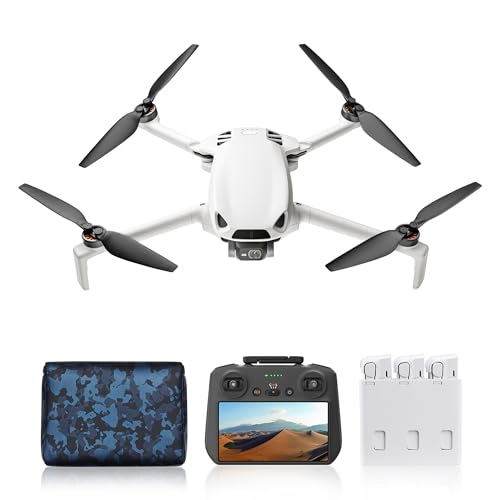
Skyrover S1 Mini Drone with Screen Controller
A Closer Look At Each Pick
The DJI Flip earns its travel-ready badge with a folded footprint that disappears into a daypack. Built-in propeller guards wrap each arm, which makes close-quarters flights less risky around benches, tree branches, and curious onlookers. A 3-axis mechanical gimbal steadies footage while the drone handles wind correction in the background.
Video transmission stretches out to roughly 13 km, which is far beyond anything most recreational pilots need but reassuring for those who fly in open countryside. Palm takeoff means you can launch from a flat hand without laying out a landing pad. Compared with the heavier Mini 4K on this list, the Flip feels more like a wearable tool than a piece of equipment.
Notable Upsides
- Sub-249g weight keeps it out of the strictest registration categories in most regions.
- 3-axis gimbal stabilization produces steady horizon lines during walking pans.
- Auto return home feature adds a safety net when signal drifts or battery dips low.
- 31-minute single-battery runtime covers a full hike overlook without a swap.
- Foldable guards protect props during bag storage, a real-world plus for backpack travel.
Worth Noting
- Wind handling near coastal cliffs may feel underpowered, given the light airframe.
- Single battery in the standard kit means swapping cells mid-session for longer outings.
Right Fit For
Solo travelers and vloggers who want a grab-and-go drone that handles wide landscapes without filling a camera bag.
Look Elsewhere When
Creators chasing a built-in remote display for sunny shoots should consider the SKYROVER X1 Drone with Screen Controller further down the list.
At roughly 151 grams, the DJI Neo 2 is one of the lightest drones on this roundup, and the Fly More Combo includes the RC-N3 controller plus extra batteries for longer sessions. Full-coverage propeller guards wrap each rotor, a thoughtful detail for anyone flying near windows or renters with anxious neighbors.
ActiveTrack subject tracking follows moving people, bikes, or pets without constant stick input, which lowers the bar for first-timers. Gesture control and palm takeoff keep the experience close to magic for those stepping into aerial video for the first time. The RC-N3 remote gives traditionalists a familiar layout once they outgrow phone-only flight.
What Works In Its Favor
- C0-class certification eases regulatory friction for casual pilots in many regions.
- ActiveTrack keeps moving subjects framed without manual stick correction.
- Gesture shortcuts make solo filming practical when no spotter is around.
- Lightweight shell means props stop quickly in the event of a brush with branches.
Trade-Offs To Consider
- Small frame limits wind tolerance, so open fields beat coastal gusts.
- Image quality trails the larger 1/1.3″ sensor drones later on this list.
Made For
First-time flyers, families, and casual creators who want a forgiving drone that starts with a palm launch and grows with their skills.
A Better Fit Elsewhere
Pilots focused on long-range transmission and obstacle avoidance should look at the SKYROVER X1 4K/60fps Drone Combo.
The Skyrover S1 Mini leans into the imaging side of the 4K drone category. A 1/2-inch CMOS sensor pushes 4K/60fps video and 8K/48MP stills, the kind of resolution that survives aggressive crops in post. Forward obstacle avoidance adds a layer of insurance when you fly with the drone facing into a scene rather than back toward you.
Versus the slimmer DJI Neo 2 reviewed earlier, the S1 Mini brings a noticeably larger sensor that captures richer color in late golden hour. Vertical shooting supports social-first framing for short-form creators. A firmware update unlocks the full resolution ceiling, so a quick app check on day one pays off.
The Value In It
- 1/2-inch sensor handles low-light scenes better than typical mini drone cameras.
- 4K/60fps video supports smooth slow-motion in editing timelines.
- Forward obstacle avoidance reduces the chance of tree strikes on approach shots.
- 8K stills give travel photographers room to crop while keeping detail intact.
- Vertical shooting mode targets social-first creators without manual reframing.
Some Limits To Know
- Higher resolution modes demand a recent microSD card and a fast phone for previews.
- Firmware tuning takes patience, as full 8K unlocks only after an update.
Best Suited To
Vloggers and travel videographers who want cinematic motion and large stills from a drone that still slips into a carry-on.
Swap It Out When
Pilots who prefer a built-in remote display and longer combined flight time should reach for the Skyrover S1 Mini Drone with Screen Controller later in this guide.
The DJI Mini 4K is the practical anchor of this list. Sub-249g weight keeps the regulatory path smooth in most regions, and the combo includes two batteries that combine for up to 62 minutes of flight time. That extra runtime transforms a quick neighborhood flight into a full evening shoot without rushing back to swap cells.
A 3-axis mechanical gimbal steadies 4K UHD video, while QuickShots automated maneuvers give social creators polished moves without a learning curve. The DJI Fly app now lives on the manufacturer’s site rather than Google Play, so a direct download keeps setup smooth. Compared with the DJI Flip above, the Mini 4K trades the flip-out guards for longer airtime per charge.
A Strong Showing
- 62-minute combined runtime from the two included batteries.
- 3-axis gimbal keeps footage level during walking launch and landing.
- Auto return home reduces loss anxiety when flying far afield.
- QuickShots templates simplify cinematic moves for casual users.
Honest Caveats
- App sourcing now happens through DJI’s site, an extra step for new owners.
- Lacks the propeller guards found on the Flip, so first flights warrant open space.
Who It Suits Best
Everyday flyers and family travelers who want the most reliable all-around pick without paying for pro-tier features they will rarely touch.
Reach For A Different Pick When
Filmmakers chasing 4K/60fps and larger sensors should consider the Skyrover S1 Mini Drone 4K/60fps 8K Photo instead.
The Mgfdget Mini Drone keeps the learning curve gentle for anyone curious about aerial video. Brushless internals outrun brushed designs for everyday wear, which is meaningful for a beginner drone that may see its share of rough landings. A 90-degree adjustable camera angle adds framing flexibility without forcing mid-air tilts.
Altitude hold and one-key return give nervous pilots a way to pause and recover, while gesture selfies remove the need for a second person at the controls. Waypoint fly lets you trace a path on a map for hands-off B-roll. Compared with the DJI Mini 4K reviewed earlier, this one skips obstacle avoidance and trades image refinement for a lower entry cost.
Everyday Perks
- Brushless motor handles frequent flights better than older brushed designs.
- Gesture selfie mode helps solo creators frame shots without a spotter.
- Foldable arms shrink the drone to a small carrying footprint.
- Two included batteries extend practice sessions for new pilots.
Points To Keep In Mind
- No obstacle avoidance means pilot eyes carry the safety load entirely.
- FPV preview quality trails the stabilized feed of the DJI Mini 4K and Flip.
- Wind tolerance is modest given the lightweight shell.
Perfect Match For
Casual learners, teens, and gift shoppers who want a low-stakes 4K drone to grow into without a heavy upfront spend.
Where Another Pick Suits Better
Anyone who wants palm takeoff and subject tracking should look at the DJI Neo 2 Fly More Combo RC-N3 a few entries up.
The SKYROVER X1 packs pro-leaning features into a sub-249g shell. A 1/1.32-inch CMOS sensor paired with an f/1.7 aperture captures clean 4K/60fps HDR footage and detailed 48MP stills. The combination of a larger light-capture area and a brighter lens shows up clearly in golden-hour and indoor scenes.
360-degree obstacle avoidance wraps the airframe in a protective bubble, which lowers the mental load when flying through trees or near structures. Three batteries in the combo deliver 96 minutes of total runtime, plenty for most outings. AI Night Shot modes help preserve detail once the sun drops below the horizon. Compared with the smaller Skyrover S1, the X1 adds that wraparound sensing layer.
Key Advantages
- 1/1.32-inch sensor with f/1.7 aperture handles low light better than smaller mini sensors.
- 360-degree obstacle avoidance reduces crash risk in tight outdoor environments.
- 96-minute combined flight time across three batteries covers full-day shoots.
- AI Night Shot modes preserve color and detail in dim conditions.
- Vertical shooting supports social-first framing without cropping.
A Few Limitations
- More sensors and batteries mean a slightly heavier bag than the DJI Flip.
- Full feature set pays off most for users who actually shoot in varied lighting.
Whose Shelf It Belongs On
Confident hobbyists and content creators who film across mixed lighting and want wraparound safety without a bigger airframe.
Not Your Match When
Travelers who value an integrated screen on the controller should consider the SKYROVER X1 Drone with Screen Controller up next.
The SKYROVER X1 with Screen Controller shares its airframe and sensor with the previous pick but swaps the standard remote for a 5.5-inch HD touchscreen built into the controller. The screen is rated at 700 nits, which keeps the preview legible in direct afternoon sun without pulling a phone out of a pocket.
That dedicated display removes the friction of phone compatibility issues, an annoying reality for any drone pilot whose device struggles with the manufacturer’s app. The same 96-minute combined flight time, 360-degree obstacle avoidance, and AI Night Shot modes carry over from the sibling model. Pilots who already own a phone-tethered remote may not need the upgrade, but those flying often in bright outdoor settings will appreciate the clarity.
What It Does Well
- 5.5-inch HD touchscreen rated at 700 nits stays legible in direct sun.
- Built-in display removes dependency on phone tethering and app permissions.
- Same 1/1.32-inch sensor delivers sharp 4K/60fps HDR footage.
- 360-degree obstacle avoidance travels with the airframe across both X1 kits.
- 96-minute total runtime supports extended outdoor sessions.
Less Ideal Details
- Controller with built-in screen adds bulk versus the phone-only remote.
- Higher combined weight may push carry decisions toward a larger bag.
Who Should Grab It
Outdoor pilots and prosumer creators who film in bright sunlight and prefer a self-contained controller over a phone tether.
Skip It When
Casual flyers happy using a phone screen should save cost with the standard SKYROVER X1 4K/60fps Drone Combo above.
The Skyrover S1 Mini with Screen Controller closes out this roundup by combining the smaller S1 airframe with the dedicated 5.5-inch touchscreen remote. Three batteries in the combo push total flight time up to 120 minutes, which is genuinely long for a sub-249g drone in this category.
Auto Track subject tracking lets the drone follow a person, bike, or pet through a scene without constant pilot input. The 7.45-mile video transmission range is generous for a mini drone, though most pilots will fly well within visual line of sight. Compared with the larger SKYROVER X1 reviewed just above, this S1 trades a bigger sensor for longer total flight time and a lighter travel footprint.
Well-Handled Touches
- 120-minute combined flight time from three included batteries.
- 5.5-inch HD touchscreen controller removes phone-tether hassles.
- Auto Track subject tracking simplifies solo action filming.
- Vertical shooting supports social-first creators out of the box.
- Sub-249g airframe keeps regulatory friction low in most regions.
Things To Weigh Up
- Sensor size trails the larger X1, so low-light scenes look less detailed.
- Three batteries and a screen-equipped controller add total carry weight.
Built With In Mind
Travel videographers who want long combined runtime and a self-contained controller in a compact airframe.
Consider Something Else When
Pilots who film heavily in dim settings may prefer the larger 1/1.32-inch sensor on the SKYROVER X1 Drone Combo.
What Matters Most Before Choosing A 4K Camera Drone
Sensor Size and Image Pipeline
Sensor size is the single biggest driver of image quality. A 1/2-inch or 1/1.32-inch CMOS sensor gathers noticeably more light than the smaller chips often found in entry-level mini drones. That extra light translates to cleaner footage in golden hour, less noise indoors, and richer color across blue-hour skies. A bright aperture like f/1.7 widens that advantage further, especially when shooting into the sun.
Weight, Regulations, and Travel Reality
A drone under 249g sidesteps the strictest registration and licensing categories in most regions, which is why nearly every pick here targets that threshold. For travelers, that weight also means packing the drone alongside a mirrorless camera without weighing down a daypack. Always verify the latest local rules before flying, since regulations shift over time.
Gimbal Stabilization and Flight Modes
A 3-axis mechanical gimbal keeps the horizon level even when the pilot walks or the wind shifts, and it is the standard for serious 4K aerial video. Automated flight modes like QuickShots, ActiveTrack, or Auto Track add cinematic moves without years of stick time. Pilots who fly primarily in tight spaces will appreciate obstacle avoidance, while open-field flyers can rely more on visual judgment.
Battery Strategy and Runtime
Most mini drones advertise 25 to 40 minutes per battery, so a combo with two or three cells multiplies usable airtime significantly. Longer total runtime also reduces stress during longer hikes or travel days when charging options are limited. Storage and charging of multiple batteries adds bulk, so balance total flight time against carry weight for your style of flying.
Key Considerations Across These Picks
Pitfalls Shoppers Hit
Many first-time drone shoppers chase the highest resolution number without checking the sensor size behind it, which leads to noisy footage in anything but bright daylight. Skipping local regulation research is another common mistake, since a beautiful drone grounded by paperwork quickly loses its appeal. Finally, ignoring controller ergonomics results in tired hands and shaky footage, so weight, grip, and screen layout matter more than spec sheets suggest.
Where The Extra Money Goes
Stepping up to a larger sensor, wraparound obstacle avoidance, or a built-in remote screen adds tangible capability, but those upgrades pay off most for pilots who actually use them. A traveler flying one sunset per trip gains little from a 96-minute battery combo, while a content creator filming weekly in mixed lighting benefits from every extra minute and feature. The honest read is to match the upgrade to your real flying rhythm rather than the spec sheet ceiling.
Frequently Asked Questions
Do I need a license to fly a 4K camera drone?
Rules vary widely by country and even by city. A drone under 249g typically falls into the lightest category, which often waives formal licensing, but local restrictions on altitude, distance, and airspace still apply. Check your local aviation authority’s site before the first flight.
How important is a 3-axis gimbal?
A 3-axis gimbal is the difference between cinematic footage and shaky clips that need software stabilization in post. For 4K recording, mechanical stabilization matters more than ever, since cropping and reframing magnify any wobble. Every drone on this list includes either a 3-axis mechanical gimbal or relies on digital stabilization, so match the choice to your tolerance for post-production work.
Can mini drones handle wind?
Lightweight sub-249g drones feel wind more than heavier models, and sustained gusts above 20 mph can push them off course. Flying in open valleys early in the morning typically gives the calmest air, while coastal cliffs demand extra caution. Owners commonly report that obstacle avoidance and auto return help most in gusty edge conditions.
How long do drone batteries last?
A single battery typically covers 25 to 40 minutes of flight depending on conditions, which is why most combos on this list include two or three cells. Cold weather, aggressive maneuvers, and high winds shorten real-world endurance. Charging multiple packs between flights keeps a long shooting day on schedule.
Is 4K/60fps worth it over 4K/30fps?
4K/60fps lets you slow footage to half speed in editing while keeping full resolution, which adds production polish to action and travel clips. For static landscape shots, 4K/30fps is plenty. Pick 60fps if slow motion or smoother motion blur matters to your style.
Wrap Up
A great 4K camera drone comes down to honest matching between flying habits and the airframe in front of you. Travelers chasing light bags gravitate toward the DJI Flip or the DJI Mini 4K, while content creators building a kit lean toward the SKYROVER X1 or the screen-equipped S1. First-time pilots land comfortably with the DJI Neo 2 or the Mgfdget Mini. Pick the one that fits how, where, and how often you actually fly, and the rest of the experience tends to fall into place.