Shopping for a new camera shouldn’t feel like homework, but it often does. Spec sheets blur together, marketing claims pile up, and the gap between a beginner-friendly body and a flagship workhorse can feel impossible to judge from a product page alone. This roundup sorts through ten real options for different kinds of shooters, from creators building a YouTube channel to parents who just want sharper vacation photos than a phone can deliver.
An Overview Of The Picks
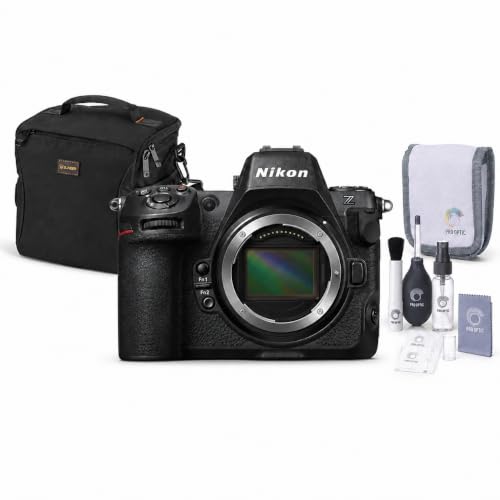
Nikon Z8 Mirrorless Camera Body Bundle, 4K 120p

Canon EOS R50 Mirrorless Camera Lens Kit, 24.2MP

Canon EOS R6 Full-Frame Mirrorless Camera, 4K
Sony Alpha a6400 APS-C Mirrorless Camera Body

Canon EOS M50 Mirrorless Vlogging Camera Kit

Canon EOS R6 Mark II Mirrorless Camera (Body Only)
Canon EOS R50 V Mirrorless Camera Kit, APS-C

KODAK PIXPRO FZ45 16MP Compact Digital Camera

KODAK PIXPRO WPZ2 16MP Waterproof Digital Camera

KODAK PIXPRO C1 13MP Compact Digital Camera
Why These Options Stand Out
The Nikon Z8 sits in flagship territory, packing a 45.7MP stacked full-frame sensor into a body built for high-stakes shoots. A stacked sensor (a design where the readout circuitry sits directly on top of the pixels) reads data extremely fast, which is why this camera can shoot 4K at 120 frames per second without the rolling shutter wobble you see on slower chips. The bundle adds a strap, battery, charger, body cap, eyecup, accessory shoe cover, and a small Flashpoint monolight so you can start shooting portraits or product work right away.
For working photographers and dedicated enthusiasts, that mix of resolution and speed is rare. The 493-point autofocus system tracks erratic subjects like dancers, athletes, or wildlife across most of the frame. If you mostly shoot static scenes, you may not tap into what makes the Z8 special, so lighter bodies in this list make more sense for travel or casual use.
Bright Spots
- 45.7MP full-frame stacked sensor delivers sharp stills and clean 4K 120p video
- 493-point autofocus tracks moving subjects across nearly the entire frame
- Bundle includes a battery, charger, strap, and a Flashpoint monolight for a basic lighting start
- Strong weather-sealed body for outdoor assignments in less-than-ideal conditions
Honest Caveats
- Raw files are large, so you’ll want multiple high-capacity memory cards on hand
- Body and lens costs add up quickly for owners building a full kit
- Heavier than APS-C alternatives, which matters on long hikes
Key Specs
Made For
Working professionals and serious hobbyists who shoot both high-resolution stills and demanding 4K video projects.
Look Elsewhere When
Travelers who want something lighter should consider the Sony Alpha a6400, which fits more easily into a day bag.
Canon’s EOS R50 is the entry point most first-time mirrorless shoppers end up comparing against, and for good reason. The 24.2MP APS-C sensor (a smaller-than-full-frame chip that keeps the body and lenses compact) captures crisp stills and oversampled 4K video that looks better than the resolution alone suggests. The included RF-S 18-45mm lens covers wide-angle group shots and short telephoto portraits in one walkaround option.
What separates the R50 from older entry models is the guided interface. Scene modes explain themselves on screen, and the autofocus detects people, animals, and vehicles without you having to hunt through menus. If your goal is a clean, capable camera you can hand to a family member and have them succeed, the R50 fits that brief.
A Few Strong Suits
- Lightweight body and retractable kit lens slide easily into a small bag
- Guided menus and automatic scene modes reduce the learning curve
- Subject-detection autofocus tracks people, pets, and vehicles without manual setup
- 24.2MP APS-C sensor delivers detail for prints up to roughly 11×14 inches
Points To Keep In Mind
- No in-body stabilization means handheld low-light shots need steady hands or a fast lens
- The RF-S lens lineup is still growing, so some specialty lenses require adapters
Whose Shelf It Belongs On
First-time camera owners stepping up from a smartphone who want simple controls and reliable autofocus.
Swap It Out When
Vloggers who prioritize vertical video should look at the Canon EOS R50 V, which bakes that workflow into the body.
The original EOS R6 carved out a sweet spot for hybrid shooters who needed full-frame quality without flagship pricing. A full-frame sensor (the same physical size as a 35mm film frame) gathers more light than smaller chips, which means cleaner shadows and better low-light performance. The DIGIC X processor drives 4K video and continuous shooting up to 12fps with the mechanical shutter, and dual UHS-II card slots let you back up images in real time.
Compared to the entry-level Canon EOS R50 reviewed earlier, the R6 trades beginner menus for manual dials and deeper customization. For event photographers, wedding shooters, and anyone covering kids’ sports, the autofocus reliability and dual card redundancy alone justify the move up.
Everyday Advantages
- Full-frame sensor delivers cleaner low-light images than APS-C alternatives
- Dual UHS-II SD slots allow instant backup or overflow recording
- Up to 12fps mechanical shooting captures fast action without switching to electronic mode
- DIGIC X processor handles 4K video with minimal rolling shutter
Worth Bearing In Mind
- Body-only listing means you’ll need an RF lens on hand or budgeted separately
- 4K recording has recording-time limits in some modes, so long interviews may need a break
Built With In Mind
Hybrid shooters covering events, family milestones, and short video projects who need full-frame image quality.
Another Choice May Suit
Owners wanting the latest autofocus refinements should look at the Canon EOS R6 Mark II for its improved subject detection.
The Sony a6400 earns its place in many a traveler’s bag because it crams serious autofocus into a body small enough to forget you’re carrying it. Real-time eye autofocus and object tracking were headline features at launch, and they remain snappy in everyday use. The 24.2MP APS-C sensor captures 4K video, and the tilting screen helps with waist-level street shots or self-recording.
If you’re stepping up from a smartphone, the menu system feels denser than Canon’s beginner-friendly layout, though custom function buttons help once you settle in. For street, travel, and casual portrait work where size matters, the a6400 punches well above its class.
A Strong Showing
- Real-time eye autofocus locks on quickly for portraits and candid people shots
- Compact body slides into jacket pockets when paired with a pancake lens
- 425 phase-detection points cover most of the frame for off-center subjects
- Tilting screen simplifies vlogging and overhead food or product shots
Trade-Offs To Consider
- No in-body stabilization means relying on stabilized lenses for low-light video
- Body-only kit requires a separate lens purchase for most shooting styles
- Battery life is shorter than larger full-frame bodies during heavy video use
Best Suited To
Travelers and street photographers who want pro-level autofocus in a compact, everyday-carry body.
Where Another Pick Shines
Beginners who prefer a guided interface should consider the Canon EOS R50 for its simpler menu layout.
The EOS M50 has stuck around for a reason: it’s one of the most affordable ways to get genuine 4K capture in a Canon body. The 24.1MP APS-C sensor records 4K UHD at 24p, which is the frame rate most cinematic content targets. The included EF-M 15-45mm zoom gives you a wide-to-short-telephoto range without buying extra glass.
The trade-off sits in autofocus and lens selection. Canon’s EOS M mount has fewer native lenses than the newer RF system, so you’ll lean on adapters if you want full-frame glass later. For someone starting out who wants 4K video on a tighter budget, though, the M50 still earns consideration.
Strong Points
- 24.1MP APS-C sensor records 4K UHD at 24p for cinematic footage
- Vari-angle touchscreen flips forward for self-recording
- Built-in electronic viewfinder helps in bright outdoor conditions
- Includes the EF-M 15-45mm kit lens for immediate shooting
Small Caveats
- EF-M lens ecosystem is smaller than Canon’s newer RF lineup
- 4K recording uses a crop, so wide-angle shots feel tighter than expected
- Older processor means slower menu response than the EOS R50
Right Fit For
Budget-conscious beginners and casual vloggers who want 4K video without entering flagship pricing territory.
Reach For A Different Pick When
Long-term creators planning to expand their lens collection should consider the Canon EOS R50 for its RF mount future.
The R6 Mark II refines the original R6 with a higher-resolution 24.2MP sensor, improved autofocus subject detection, and faster burst rates. Where the original R6 was already strong for events and family work, the Mark II steps into territory closer to flagship bodies for action and wildlife. It records oversampled 4K from the full sensor width, which means sharper detail than line-skipped video.
Owners upgrading from the original R6 will notice the cleaner autofocus when shooting dogs, horses, and birds, plus the deeper buffer for long bursts. If you shoot indoor sports under gym lighting, the high-ISO performance is a meaningful upgrade.
Real Benefits
- 24.2MP full-frame sensor balances resolution with strong high-ISO performance
- Improved subject detection tracks animals and vehicles more reliably than the original R6
- Oversampled 4K video produces detailed footage with minimal moiré
- Dual card slots continue the pro-style backup workflow
Trade-Offs
- Body-only listing means budgeting for at least one RF lens
- Higher-tier resolution than the original R6 means more storage planning
Who Will Love This
Enthusiasts and working creators ready to step up from an entry-level body for hybrid stills and 4K video work.
Not Your Match When
Vloggers needing a built-in vertical video workflow should look at the Canon EOS R50 V instead.
The R50 V pulls Canon Cinema EOS features down into the EOS R lineup, which is a meaningful shift for video-first creators. A tally lamp on the front confirms recording at a glance, and the camera outputs vertical video natively for TikTok, Reels, and Shorts. The included RF-S 14-30mm power zoom lens lets you zoom smoothly during recording without touching the lens barrel.
For live streamers, the clean HDMI output and live product-focused modes simplify streaming workflows compared to converting a stills camera into a webcam. The 24.2MP APS-C sensor is the same as the standard R50, so stills quality carries over.
Real-World Strengths
- Tally lamp and vertical video output simplify social-first content creation
- Power zoom lens enables smooth on-camera zooming during recording
- Live streaming features reduce the need for extra capture software
- Lightweight body pairs well with small gimbals and travel rigs
Things To Consider
- RF-S lens ecosystem is still growing for specialty video glass
- Battery life drains faster with heavy streaming use
Key Specs
Who Should Grab It
Vloggers and live streamers who shoot primarily vertical or social-first video and want creator features built in.
Consider Something Else When
Hybrid shooters who split evenly between stills and traditional landscape video should consider the Canon EOS R6 Mark II.
The PIXPRO FZ45 leans into the opposite end of the camera market: simple, affordable, and approachable. A 16MP sensor and 4x optical zoom cover everyday snapshots, and the camera runs on AA batteries, which means you can find replacements at any gas station. For grandparents, kids, and casual travelers, that ease of use outweighs the absence of advanced controls.
You won’t shoot professional 4K video with this body, and the small sensor struggles in dim restaurants, but for daylight vacation photos the FZ45 delivers exactly what most casual users want.
The Practical Payoff
- AA battery operation means replacements are available anywhere
- Compact body slips into a jacket pocket or purse
- 4x optical zoom covers wide group shots and closer subjects
- Simple menu layout avoids overwhelming first-time users
Soft Spots
- Small sensor struggles in dim restaurants and evening indoor scenes
- No interchangeable lens system limits long-term creative growth
Perfect Match For
Families and casual users who want a no-fuss point-and-shoot for vacation snapshots and everyday moments.
Skip It When
Anyone planning to learn manual controls should consider the Canon EOS R50 for its interchangeable lens system.
The WPZ2 is built for the places your phone fears to go. Waterproof to about 15 meters, shockproof from roughly 2-meter drops, and sealed against dust, it survives snorkeling sessions, river kayaking, and dusty hiking trails. The 16MP sensor and 4x zoom cover the same everyday range as the FZ45, but inside a body you can drop without a second thought.
Image quality remains modest in low light, and serious underwater photographers will want a dedicated housing system. For pool days, beach vacations, and lake trips, though, the WPZ2 takes the worry out of using a camera near water.
Positive Points
- Waterproof to 15 meters for snorkeling and shallow diving
- Shockproof design handles accidental drops on rocky terrain
- Bright yellow body is easy to spot in bags or underwater
- Simple controls work well with cold or wet fingers
Factors To Consider
- Underwater image quality trails behind mirrorless cameras in dedicated housings
- Fixed lens limits creative flexibility for advanced shooters
The Right Fit
Beachgoers, snorkelers, and hikers who want a rugged point-and-shoot they can take anywhere.
A Better Fit Elsewhere
Travelers who want better low-light results should consider the Canon EOS R50 with a weather-sealed lens.
The PIXPRO C1 is the smallest option in this lineup and leans into pure simplicity. A 26mm fixed wide lens (no zoom to fuss with) handles selfies and group photos with a bright f/2.0 aperture that helps indoors. The 2-inch rear screen previews framing clearly, and 4x digital zoom lets you crop closer when needed.
You won’t get 4K video or manual controls, but the C1 is the kind of camera you toss in a bag and forget until someone wants a photo. For kids, parties, and quick social clips, the fixed-lens approach removes most decision fatigue.
Notable Upsides
- Tiny body slips into pockets for spontaneous shooting
- Fixed wide lens keeps framing simple and consistent
- Bright f/2.0 aperture helps in dim party environments
- Tan finish stands out from typical black electronics
Less Ideal Details
- No zoom range limits framing flexibility for distant subjects
- Small sensor struggles in low-light group photos
Who It Suits Best
Casual users who want a fun, ultra-portable camera for selfies, parties, and everyday snapshots.
Where A Sibling Pick Shines
Anyone needing zoom range or better low-light performance should look at the KODAK PIXPRO FZ45 instead.
What To Weigh Before Picking Your 4k Mirrorless Camera
Sensor size sets the tone for everything else. A full-frame sensor gathers more light than APS-C, which means cleaner shadows and better high-ISO performance for indoor events or evening street photography. APS-C sensors, like those in the Canon EOS R50 and Sony a6400, deliver smaller bodies, lighter lenses, and friendlier prices. For most beginners, APS-C offers the best balance of quality and portability.
Autofocus behavior matters more than pixel counts for hybrid shooters. Modern subject detection, like the eye-tracking on the Sony a6400 and improved animal detection on the Canon EOS R6 Mark II, takes the guesswork out of portraits and family photos. Look for systems that detect specific subjects if you shoot people, pets, or sports regularly.
Video features deserve close attention if you vlog or document family events. Clean HDMI output simplifies streaming, while oversampled 4K produces sharper footage than line-skipped video. The Canon EOS R50 V bakes vertical video and tally lamps into the body, which removes post-production work for social-first creators.
Ecosystem and lens cost should factor in beyond the body price. Sony’s E-mount and Canon’s RF mount both offer deep lens catalogs, while the older EF-M mount used by the Canon EOS M50 has fewer native options. For long-term growth, mount choice often matters more than the initial body.
Practical Buying Tips For Camera Shoppers
Where Shoppers Go Wrong
Buying a flagship body on day one is a common trap. The Nikon Z8 reviewed here is a professional tool, but most casual shooters never push beyond what an APS-C body offers. Starting with a Canon EOS R50 or Sony a6400 and upgrading lenses over time usually produces better photos than a flagship body paired with a kit zoom.
Ignoring lens costs is another frequent mistake. A camera body is only as capable as the glass in front of it, so budgeting half your total spend for lenses prevents buyer’s remorse. The Sony a6400 and Canon EOS R6 Mark II both ship body-only, which means planning ahead for at least one lens.
When Paying More Pays Off
Higher-tier bodies like the Canon EOS R6 Mark II and Nikon Z8 earn their price through better autofocus, stronger low-light performance, and more durable weather sealing. If you shoot indoor sports, weddings, or wildlife regularly, that reliability translates to fewer missed moments. For once-a-year vacation shooting, the extra cost rarely justifies itself over a capable APS-C body.
Frequently Asked Questions
What does 4K mean on a mirrorless camera?
4K refers to video resolution of roughly 3840 x 2160 pixels, which is about four times the detail of 1080p Full HD. More pixels mean sharper footage and more flexibility to crop or stabilize in editing without losing quality.
Do I need a full-frame sensor for 4K video?
Not necessarily. APS-C sensors like those in the Canon EOS R50 and Sony a6400 record high-quality 4K video that looks excellent on most screens. Full-frame sensors offer advantages in low light and shallow depth-of-field control, but they also mean larger, heavier bodies and pricier lenses.
What lens should I buy first with a mirrorless camera?
A standard zoom like an 18-45mm or 24-70mm equivalent covers most everyday situations. For portraits, add a fast 50mm prime later. The kit lenses bundled with the Canon EOS R50 and Canon EOS R50 V are good starting points before investing in specialty glass.
How important is in-body image stabilization?
In-body stabilization (IBIS) reduces camera shake for handheld low-light photos and smoother video walkthroughs. Bodies like the Canon EOS R6 Mark II include IBIS, while entry-level models like the Canon EOS R50 rely on stabilized lenses. If you shoot a lot of video handheld or in dim light, IBIS is worth prioritizing.
Can I use my old DSLR lenses on a mirrorless camera?
Usually yes, with the right adapter. Canon EF lenses work on RF bodies through official adapters, and Sony A-mount lenses adapt to E-mount bodies. Autofocus performance sometimes slows slightly through adapters, so native lenses remain the smoothest experience.
Closing Remarks
The best 4k mirrorless camera is the one that matches your actual shooting habits. Working pros who need flagship resolution and burst speed will appreciate the Nikon Z8, while families and travelers may find the Canon EOS R50 or Sony a6400 hits the right balance. Take a beat to think about where you’ll actually use the camera, then match the body to that scene rather than chasing specs on a sheet.