6K capture used to live behind a feature wall most hobbyists never crossed. These days, the format sits inside cameras you can actually hold, mount, and travel with, whether you’re shooting narrative shorts, documentary work, or run-and-gun social content. The picks below cover a real spread of needs: cinema-grade Blackmagic bodies for film-style projects, action-style cameras for adventurers and vloggers, and bundle kits for shooters who’d rather not chase accessories separately. Each one earned its spot for a specific reason, and the trade-offs are spelled out honestly.
A Snapshot Of The Selections

Blackmagic Pocket Cinema Camera 6K (EF Mount)

Blackmagic Pocket Cinema Camera 6K Pro (CINECAMPOCHDEF06P)

SJCAM SJ30 6K Action Camera with Wireless Mic

Blackmagic Pocket Cinema Camera 6K G2 (EF Mount)

Blackmagic Pocket Cinema Camera 6K G2 Bundle (EF)

SJCAM SJ30 6K 128GB Underwater Action Camera

Blackmagic Pocket Cinema Camera 6K Pro

SJCAM SJ30 6K 64GB Underwater Action Camera

Blackmagic URSA Mini Pro 4.6K G2 Camcorder
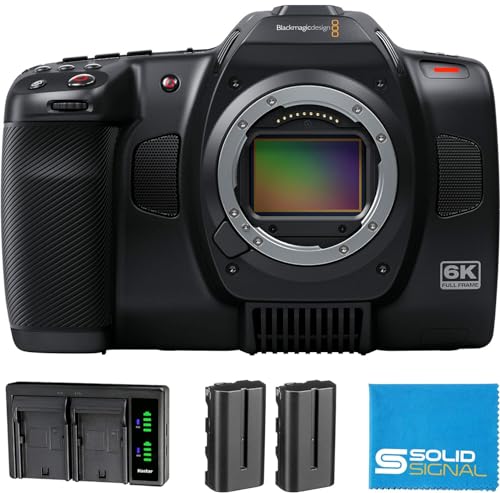
Blackmagic Cinema Camera 6K Power Bundle (L Mount)
The Details Behind The Selections
The original Pocket 6K made 6K capture feel possible without a rental house invoice. It uses a Super 35 sensor (a sensor format larger than standard photo sensors, prized for cinematic depth) paired with a Canon EF mount, opening the door to a massive library of stills and cine glass. For indie filmmakers cutting shorts or music videos, the file structure and color science give you plenty of room to grade.
If you’re moving up from a DSLR or mirrorless setup and want genuine cinema workflow tools, this camera feels like the right first step. Compared to the Pro version that follows, it’s a more straightforward tool with fewer built-in luxuries, but the image pipeline stays the same.
Real-World Strengths
- EF lens mount unlocks decades of Canon glass, which matters if you already own L-series primes or zooms.
- Records full 6K at smooth frame rates, so you can crop in post without giving up resolution.
- Wide dynamic range (the range of brightness a sensor can capture from dark shadows to bright highlights) holds detail in tricky lighting, useful for golden-hour outdoor shoots.
- Built-in 5-inch touchscreen helps with focus pulling when shooting solo.
Things To Consider
- No internal ND filters (Neutral Density filters reduce light without changing color, letting you shoot wide apertures in bright sun), so daylight shooters may need to carry glass or screw-on filters.
- Battery life on Canon LP-E6 cells tends to feel short on long takes, so packing spares is wise.
- Body run time warms up during extended recording, something to know before wrapping a long interview.
Feature Snapshot
Who It Suits Best
Indie filmmakers and student directors who already own Canon EF glass and want a true cinema workflow on a modest budget.
Where Another Pick Suits Better
For brighter outdoor work where built-in ND filters matter more than price, the Blackmagic Pocket Cinema Camera 6K Pro (CINECAMPOCHDEF06P) earns its premium.
This Pro variant adds the two features outdoor shooters complain about missing most: built-in ND filters and a brighter HDR-capable screen. The Super 35 sensor and EF lens compatibility stay identical to the original 6K, which means your color grading workflow carries over unchanged. For documentary crews and wedding videographers chasing midday sun, the ND filters alone change how you shoot.
The trade-off is the higher tier price, and the body gains some weight from the added electronics. Compared to the URSA Mini Pro reviewed later, this still feels handheld-friendly, which matters for one-person crews.
The Value In It
- 2, 4, and 6 stop built-in ND filters cut down on gear you have to carry and swap in the field.
- Up to 25,600 dual native ISO keeps footage usable when the sun drops fast.
- Flexible recording to SD UHS-II (high-speed memory cards), CFast 2.0 (professional-grade solid-state media), or external USB-C SSD drives.
- Same 13 stops of dynamic range as the original, so shadows and highlights stay recoverable.
Points To Note
- Heavier than the base 6K, which may bother gimbal operators working long days.
- Still draws battery fast during continuous 6K recording, so planning around battery swaps matters.
- Requires fast media cards to actually hit top frame rates, a hidden cost to budget for.
Made For
Run-and-gun documentary shooters and event videographers who regularly transition between indoor and bright outdoor light in a single shoot.
Swap It Out When
If your work leans toward travel and underwater rather than narrative film, the SJCAM SJ30 6K 128GB Underwater Action Camera makes more practical sense.
This is a completely different beast from the Blackmagic cameras, and that is the point. The SJ30 is an action camera that shoots up to 6K (and higher interpolated modes), built for mounting on helmets, handlebars, or chest rigs. It ships with a wireless lavalier mic, which solves the long-standing weak point of action cameras: scratchy onboard audio.
The bundled external battery handle pushes runtime out to roughly seven hours of 4K recording, a real advantage on hiking days and motorcycle tours. The honest read is that 6K on a small action sensor cannot match the cinema depth of a Super 35, but for travel vloggers, that trade-off rarely matters.
Useful Strengths
- Included wireless mic upgrades dialogue capture well beyond built-in mics.
- Stacked battery system extends shooting sessions past what most action cams offer.
- Multiple resolution modes (including 6K) give cropping flexibility for social cutdowns.
- Compact body fits standard action camera accessories and mounts.
Honest Caveats
- Small sensor struggles in low light compared to the larger Blackmagic bodies, so indoor footage tends toward noise.
- Higher resolution modes crop the field of view, which can make action framing feel tighter than expected.
- Action camera ergonomics mean fewer manual controls than cinema bodies, limiting creative exposure choices.
Right Fit For
Travel vloggers, motorcyclists, and outdoor content creators who want longer runtimes and a wireless mic in the box without buying accessories separately.
Not Your Match When
For underwater use specifically, the SJCAM SJ30 6K 128GB Underwater Action Camera is the more sensible sibling.
The G2 generation tightens up the original Pocket 6K formula in ways solo creators notice. The headline addition is support for external SSD recording over USB-C, which means longer continuous takes without filling up tiny cards mid-shoot. You also get a slightly revised body and improved thermal behavior for longer clips.
For YouTube creators running one-person interviews or travel narratives, the G2 strikes a useful middle ground between the original 6K and the Pro. Compared to the base 6K reviewed first, you trade up mainly for SSD convenience and a more refined body.
A Favorable Mix
- External SSD support opens up longer recording windows for documentary-style work.
- Same Super 35 sensor and 13 stops of dynamic range as the rest of the Pocket line, so footage matches up cleanly.
- Active EF mount keeps your Canon lens ecosystem working.
- Dual native ISO up to 25,600 for flexible low-light shooting.
Some Limits To Know
- Still no built-in ND filters, so bright sun demands add-on solutions like the Pro model.
- External SSDs add another piece of gear to manage on location.
Best Suited To
Solo content creators and documentary shooters who need long takes and want to avoid card swaps in the middle of important moments.
Consider Something Else When
If ND filters and a brighter screen matter more than SSD recording, the Blackmagic Pocket Cinema Camera 6K Pro (CINECAMPOCHDEF06P) wins out.
Buying a cinema camera body alone is a little like buying a car without seats. This bundle solves that by pairing the original 6K body (not the newer G2, though the ergonomics are similar) with a Lexar 64GB SDXC card and a two-pack of Watson NP-F550 batteries with chargers. For first-time buyers, that means you can unbox and shoot the same day.
The included NP-F550 cells are widely available aftermarket, so you can scale power without hunting for obscure replacements. Compared to the standalone original 6K reviewed earlier, the extra battery runtime alone justifies the upgrade for wedding and event shooters.
Strengths Worth Knowing
- Two NP-F550 batteries and a charger keep you rolling past a single charge window.
- Lexar 64GB SDXC card handles the camera’s high-bitrate recording without bottlenecking.
- EF lens mount keeps the camera compatible with a huge used lens market.
- Bundle pricing typically undercuts buying each piece separately.
Where It May Fall Short
- Uses the original 6K body without the G2’s SSD recording advantage.
- Watson batteries add bulk compared to the slimmer Canon LP-E6 cells used in newer Blackmagic bodies.
Who Should Grab It
First-time cinema camera buyers who’d rather skip the accessory rabbit hole and start shooting meaningful projects from day one.
Look Elsewhere When
If SSD recording is a must-have for your workflow, the standalone Blackmagic Pocket Cinema Camera 6K G2 (EF Mount) makes more sense.
Snorkelers, freedivers, and casual scuba shooters usually have to choose between a waterproof housing and decent video quality. This SJ30 variant skips the housing drama with a sealed body ready for underwater work, plus the same extended battery handle setup found on the standard SJ30. The 128GB onboard means you can leave the microSD card slot empty for longer dive sessions.
For divers and snorkelers, the convenience of not managing a separate housing is the real story. Compared to the land-focused SJ30 reviewed earlier, the trade-off is a slightly larger body that doesn’t disappear into a pocket quite as cleanly.
Everyday Wins
- Sealed underwater body removes the housing setup, so you can transition from dry land to water in seconds.
- 128GB internal storage covers extended dive logs without swapping cards.
- Wireless mic included for above-water narration segments.
- Up to roughly seven hours of 4K recording with the external battery handle.
Worth Bearing In Mind
- Underwater color accuracy still needs correction in post, since red wavelengths fade fast at depth.
- Depth rating limits should be checked before any technical diving, since recreational ratings vary.
Perfect Match For
Snorkelers, freedivers, and recreational scuba enthusiasts who want a single camera for both above-water and below-water shooting.
A Better Fit Elsewhere
For purely land-based action shooting, the standard SJCAM SJ30 6K Action Camera with Wireless Mic keeps things simpler and lighter.
The Pocket Cinema Camera 6K Pro shares the Pro’s signature upgrades but ships in a slightly different configuration. You still get the Super 35 sensor, EF mount, and built-in ND filters, paired with a brighter tilt screen that helps in harsh sun. For hybrid shooters who split time between stills and video, the higher nit display is a real productivity boost.
Compared to the original Pro body reviewed earlier, this configuration suits photographers stepping into motion work. The honest trade-off is that you carry more weight than the standard 6K body, and battery drain rises with the brighter display.
What Makes Sense
- Bright tilt screen makes outdoor framing and focus pulling far easier.
- Built-in ND filters (2, 4, and 6 stops) handle most outdoor lighting situations.
- 13 stops of dynamic range preserves highlight and shadow detail.
- EF lens mount unlocks a huge ecosystem of Canon cinema glass.
Trade-Offs
- Brighter screen draws more battery than the original 6K’s display, so spares still matter on long shoots.
- Heavier than the base 6K body, which can tax gimbal setups.
Built With In Mind
Hybrid shooters and photojournalists moving into motion work who need a screen that holds up outdoors.
Where A Sibling Pick Shines
For studio-bound narrative work with longer takes, the Blackmagic URSA Mini Pro 4.6K G2 Camcorder offers more rigging flexibility.
The 64GB underwater SJ30 trims storage down for casual users, which actually makes sense for shorter snorkeling trips or vacation shooting where you’ll offload clips nightly. The body keeps the same sealed underwater design and the extended battery handle found on its larger-storage sibling. For first-time action camera shoppers, it removes the temptation to overpay for capacity you won’t fill.
Compared to the 128GB underwater version reviewed earlier, the smaller internal storage is the only real difference. If your shooting style is short-burst rather than marathon-dive, that trade-off saves real money.
Notable Upsides
- Sealed body works straight out of the box for snorkeling and pool use.
- Wireless lavalier mic handles above-water commentary without extra purchases.
- Compact, mount-friendly form factor fits standard action camera accessories.
- Lower capacity helps casual users avoid overspending on storage they’ll never use.
Factors To Consider
- 64GB caps continuous recording sessions, so longer dive trips need offload plans.
- Same small-sensor low-light limits as the rest of the SJ30 line.
Whose Shelf It Belongs On
Casual action camera shoppers and families who want an underwater-capable camera without paying for storage they’ll never fill.
Another Choice May Suit
For longer dive sessions or documentary-style underwater projects, the SJCAM SJ30 6K 128GB Underwater Action Camera is the upgrade.
The URSA Mini Pro 4.6K G2 is technically a 4.6K camera rather than 6K, but it earns a place on this list because it remains one of the most capable Blackmagic bodies for studio and broadcast work. It accepts interchangeable EF, PL, B4, and F mount options, which is rare and invaluable for rental houses and multi-format productions.
With 15 stops of dynamic range, this is the body for crews who already know they need rigging rails, external monitors, and shoulder-mount setups. Compared to the smaller Pocket cameras reviewed earlier, the URSA is a different category altogether.
Where It Helps
- Interchangeable lens mount system covers EF, PL, B4, and F glass.
- 15 stops of dynamic range give generous latitude for color grading.
- Built-in 4-inch LCD for monitoring and menu navigation.
- CFast 2.0 and SD recording slots handle high-bitrate professional codecs.
Where It Is Less Suited
- Body size and weight rule out casual run-and-gun use.
- 4.6K native resolution is lower than the Pocket 6K line, so very resolution-sensitive buyers may notice.
Who Will Love This
Studio crews, rental houses, and broadcast teams who value rigging flexibility and dynamic range over compact size.
Reach For A Different Pick When
For solo shooters wanting compact cinema capture, the Blackmagic Pocket Cinema Camera 6K G2 (EF Mount) is far easier to deploy.
The Cinema Camera 6K uses a full-frame 24 x 36mm sensor (matching the size of 35mm film, larger than Super 35), paired with an L-mount that opens up Panasonic, Sigma, and Leica lens ecosystems. The bundled power kit adds two extra NP-F570 batteries and a dual charger, which directly addresses the short-runtime complaint Blackmagic users commonly raise.
For narrative filmmakers chasing organic skin tones and rich color, this is the most cinematic body in the lineup. Compared to the Pocket 6K bodies reviewed earlier, the full-frame sensor gives shallower depth of field and cleaner low-light performance.
Points In Its Favor
- Full-frame sensor unlocks cinematic depth of field and high-ISO clarity.
- L-mount compatibility expands lens choice beyond the Canon EF ecosystem.
- Two extra NP-F570 batteries plus a dual charger extend shooting sessions significantly.
- Built-in optical low-pass filter reduces moire (unwanted rainbow-like artifacts on fine patterns) on patterned fabrics.
Things To Weigh
- Full-frame glass tends to cost more than equivalent Super 35 or APS-C lenses.
- Body size sits between the Pocket line and the URSA line, so it does not disappear into small bags.
Who Should Grab It
Narrative filmmakers and cinematographers building a serious cinema kit around full-frame L-mount glass who want batteries included from day one.
Skip It When
If a compact Super 35 body fits your workflow better, the Blackmagic Pocket Cinema Camera 6K Pro (CINECAMPOCHDEF06P) is easier to live with.
Picking The Right 6K Body For Your Work
Sensor Size And What It Means In Practice
Super 35, full-frame, and the smaller action camera sensors each shape the look of your footage in real ways. Super 35 sits in the sweet spot for cinema work, with natural depth of field and a wide lens compatibility sweet spot. Full-frame sensors take that further with shallower focus falloff and better low-light performance, but they demand larger, more expensive glass. Action camera sensors trade image quality for portability, which is the right call when mounting matters more than mood.
For most narrative shooters starting out, Super 35 hits the most flexible balance. Documentary crews chasing cinematic look in low light benefit from stepping up to full-frame. Travelers and vloggers will find action sensors plenty for their use case.
Lens Mount Compatibility
Mount choice locks you into an ecosystem more than any single spec. EF gives you access to decades of Canon glass at every price point, including cinema primes and affordable zooms. L-mount opens Panasonic, Sigma, and Leica lenses for hybrid shooters. PL and B4 mounts are professional broadcast and cinema choices that come with significantly higher cost. Pick a body whose mount matches lenses you already own or can afford to add over time, since lenses typically outlast camera bodies across upgrades.
Recording Formats And Storage
ProRes, Blackmagic RAW, and H.264 each carry different trade-offs in post. RAW and ProRes give you grading latitude but chew through storage, which is why bodies that record to external SSDs or large CFast cards earn their premium for documentary work. Compressed formats save space but limit how far you can push color correction.
Action and vlog cameras lean on compressed formats because storage and workflow need to stay simple. Match the recording format to how much time you want to spend in post-production after the shoot.
Built-In ND Filters And Bright Sun
Built-in ND filters sound like a small detail until you shoot a wedding at noon without them. Three-stop options handle midday sun with wide-aperture primes. Bodies without internal ND demand either add-on filter solutions, faster shutters (which can affect motion blur), or constant iris changes, all of which slow down shooting.
Key Considerations Across These Picks
Pitfalls Shoppers Hit
The biggest mistake is buying a camera body without budgeting for media cards, batteries, and a rig. Cinema cameras eat storage fast, especially at 6K resolution, and the included accessories in standard bundles are rarely enough for real shoots. Another common trap is matching a premium body with cheap lenses, which bottlenecks the sensor’s potential. Finally, ignoring ergonomics leads to buyer’s remorse after the first long shoot, so checking grip, weight, and screen brightness matters more than spec sheet headlines.
What The Higher Tier Buys
Premium 6K bodies earn their premium through real-world production gains, not just spec bumps. You get better dynamic range for recovering highlights, internal ND filters that save you from filter juggling, and recording formats that give post-production teams room to grade aggressively. Bodies like the Cinema Camera 6K also include rigging points and cooling systems for marathon shoots. For working professionals, those upgrades pay back through faster shoots and more flexible deliverables. For hobbyists, the lower-tier Blackmagic bodies or SJ30 action cameras deliver honest performance at a far friendlier entry point.
Frequently Asked Questions
What does 6K resolution actually give you?
6K captures roughly nine times the detail of 1080p, which means more cropping room in post, sharper downscaled output, and the ability to pull stills from footage without mushy detail. For most social and web delivery, 4K is plenty, but 6K future-proofs against monitor upgrades.
Do you need 6K for YouTube or social work?
Not strictly. 4K looks great on every current display and editing pipeline. 6K makes sense if you plan heavy reframing, want maximum grading latitude, or shoot for clients expecting future-proof deliverables. Vloggers and travel creators can usually get away with 4K action cams.
Can these cameras replace a dedicated cinema camera?
For indie narrative work and documentary, yes. For high-end commercial production with extensive VFX pipelines, larger sensor bodies and dedicated rigs still win. The Blackmagic Cinema Camera 6K reviewed here closes that gap considerably with its full-frame sensor and professional codecs.
How important is dynamic range for everyday shooting?
Wider dynamic range gives you more recoverable detail in shadows and bright windows, which matters whenever you cannot control lighting. For interviews, golden-hour exteriors, and mixed-light interiors, 13 stops or more makes editing far more forgiving.
What accessories should you budget for separately?
Plan for fast media cards, at least one extra battery, a quality tripod or gimbal, and an external monitor if your body lacks a flip screen. Lens adapters and matte boxes add cost too, depending on the mount and look you want to achieve.
Closing Remarks
Your best 6K cinema camera is the one that matches the work you actually do. Narrative shooters gain the most from full-frame or Super 35 bodies with strong dynamic range, while action and travel creators get more mileage out of compact sealed cameras with extended batteries. Pick the body that fits your shooting style and budget, then invest in lenses and storage where it counts.