Biking with a phone strapped to your handlebars almost never ends well. Wind noise drowns out the engine or the chain, the mount wobbles, and a single pothole can end the recording, or the phone, in a heartbeat. A purpose-built action camera solves all of that, and the current generation records footage sharp enough to relive a climb or a descent frame by frame. This list covers cameras that hold up to sweat, rain, gravel spray, and helmet vibration, with picks that span budget helmet cams to flagship 360 rigs.
The Picks In Brief
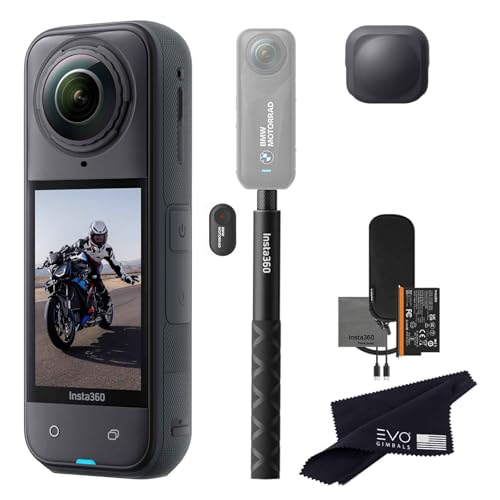
Insta360 X5 BMW Motorrad 8K 360 Action Camera

Frelisty Mini Body Camera 26g Ebony
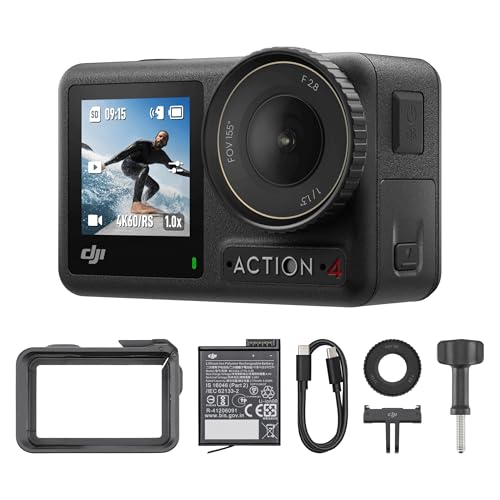
DJI Osmo Action 4 Essential Combo

Insta360 Ace Pro 2 Dual Battery Xplorer Bundle

AKASO Brave 4 4K Waterproof Action Camera

AKASO EK7000 4K EIS Action Camera

AKASO EK7000 Pro 4K Touch Screen Bundle
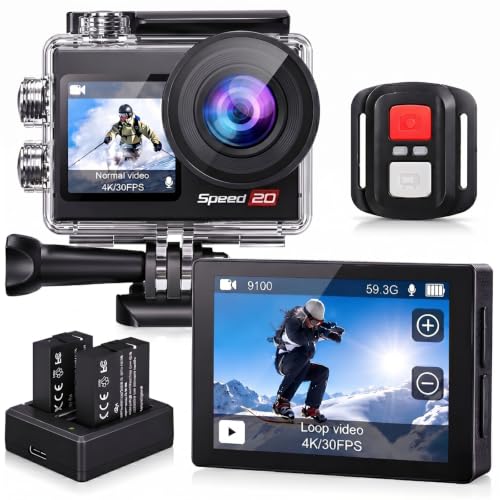
Hiicam 4K Dual-Screen Action Camera

CAMWORLD 4K Mini Body Camera with 64GB Card

GoPro HERO8 Black Retail Bundle
More Details On Our Top Picks
For motorcyclists who want one camera that captures the road, the bars, the dash, and the helmet all at once, the Insta360 X5 BMW Motorrad bundle reframes the way action footage is shot. Unlike the EK7000 and Brave 4, which record a fixed forward angle, this 360 rig uses twin lenses to record everything around you, then lets you pick the framing in post. You can mount it once and never re-angle it mid-ride.
The kit pairs that versatility with a longer-lasting battery built for endurance runs, plus a stealthy selfie stick that vanishes from the final frame. For someone building a cinematic vlog, it is hard to beat a single device that does the work of three traditional cameras.
The Helpful Details
- Dual 1/1.28″ sensors with 48MP stills keep detail when you crop into a 360 frame in editing.
- 8K 360 HDR video records in challenging sun, shadow, and tunnel transitions without blown highlights.
- Upgraded 2800mAh battery extends continuous recording far beyond standard packs, useful on long tours.
- The invisible selfie stick removes the boom from footage, creating third-person shots no helmet mount can match.
Honest Caveats
- Editing 360 footage takes longer on a laptop and demands more storage than a standard single-lens clip.
- The body is larger and heavier than the Frelisty Mini Body Camera, so chest-mount comfort varies by rider.
Made For
Serious motorcyclists and vloggers building cinematic, multi-angle edits from a single recording session.
Consider Something Else When
Commuters who want a featherlight, set-and-forget camera should look at the Frelisty Mini Body Camera instead.
At 26 grams, the Frelisty Mini Body Camera is closer to a stack of quarters than a typical action cam, and that weight disappears against a chest strap or jersey pocket. Compared to the larger DJI Osmo Action 4, this little unit is built for riders who barely want to feel a camera on their body. The matte ebony finish helps it vanish into dark kit, too.
For urban cyclists, gravel commuters, and anyone wanting an unobtrusive POV from a long ride, the form factor is the headline feature. It ships with a waterproof housing, so a sudden downpour or a puddle splash is not a problem.
Positive Takeaways
- 26g body is light enough for all-day wear on a lanyard or chest mount.
- Included waterproof case lets you keep recording through rain and stream crossings.
- Compact footprint is friendly to helmets with limited venting or tight straps.
Points To Note
- Image quality and stabilization typically sit a step below larger flagship sensors like the Osmo Action 4’s 1/1.3″ chip.
- Small size can make retrieving and operating the camera mid-ride fiddly for gloved hands.
Best Suited To
Riders who want a barely-there POV camera for long commutes or touring days.
Look Elsewhere When
Filmmakers who want flagship low-light performance should consider the DJI Osmo Action 4 instead.
Twilight commutes, dawn trail rides, and dim forest singletrack are where most action cameras fall apart, and that is exactly where the DJI Osmo Action 4 Essential Combo earns its keep. Its large 1/1.3-inch sensor pulls in significantly more light than the smaller sensors inside the AKASO Brave 4 and EK7000 line. Grain stays manageable, and shadows retain structure.
Color science runs deep here: 10-bit color and D-Log M preserve grading headroom for cinematic edits. The Essential Combo keeps the package minimal, so you add only the mounts your bike actually needs.
Why It Works Well
- 1/1.3-inch sensor with 2.4μm pixels reduces noise in low-light tunnel and dusk footage.
- 10-bit color depth and D-Log M give editors room to grade without banding.
- Auto white balance adapts when you cross dappled light or dip into shade.
Trade Offs
- The Essential Combo skips some accessories, so helmet or handlebar mounts often need separate purchase.
- Compared to the Insta360 X5, you commit to a single fixed viewing angle per shot.
Key Specs
Whose Shelf It Belongs On
Riders who log dawn patrols, evening commutes, or shaded singletrack and want clean, gradable footage.
Skip It When
Riders who want full 360 reframing should step up to the Insta360 X5 BMW Motorrad instead.
The Insta360 Ace Pro 2 Xplorer Bundle is the choice when image quality is non-negotiable. Co-engineered with Leica, the 1/1.3-inch flagship sensor captures up to 8K30fps and 4K60fps, so you can pull crisp stills straight from the timeline. The 2.5-inch flip screen is a small detail that changes a lot: framing yourself on a chest mount becomes guesswork-free.
The Dual Battery Xplorer configuration doubles runtime out of the box, so longer tours don’t force a mid-ride swap. For content creators who already know they will edit, the AI noise reduction cleans up wind and chain noise in software.
The Value In It
- Flagship 1/1.3-inch sensor paired with Leica color tuning produces natural, contrasty images.
- Flip screen makes chest and selfie mounting far easier to frame.
- Dual batteries included extend ride time without a power-bank scramble.
- 8K stills pulled from footage are publication-ready for thumbnails and prints.
Practical Considerations
- 8K files fill memory cards quickly and need a capable computer for smooth editing.
- Premium pricing puts it well above the AKASO Brave 4 and EK7000 Pro tiers.
Feature Snapshot
Right Fit For
Content creators and dedicated hobbyists who want flagship image quality and a flip screen for self-framing.
Swap It Out When
Budget-focused riders just starting out should begin with the AKASO EK7000 Pro instead.
The AKASO Brave 4 hits a price point that makes it a no-brainer for first-time action cam owners, and for kids or guests who want a camera for a single ride. It records 4K at 30fps and 20MP stills, which is plenty for casual trail documentation and YouTube uploads. The 170-degree adjustable view angle helps when you switch from chest to handlebar mounting.
Image stabilization is built in, so handlebar wobble stays manageable on smoother surfaces. Where it falls short of the DJI Osmo Action 4 or Insta360 Ace Pro 2 is dynamic range and low-light clarity, which is the usual trade-off at this tier.
Useful Strengths
- Affordable 4K30fps recording fits entry-level budgets.
- Four view angles (170°, 140°, 110°, 70°) adjust to handlebar, chest, or helmet placement.
- 20MP stills handle casual photo needs without a separate camera.
Some Limits To Know
- Stabilization is less refined than the Osmo Action 4, so rough trails may show more jitter.
- Low-light footage looks softer than flagship 1/1.3-inch sensor models.
Feature Snapshot
Perfect Match For
Casual riders, beginners, and families who want a capable action camera without flagship pricing.
A Better Fit Elsewhere
Riders who frequently ride at dusk should consider the DJI Osmo Action 4 for stronger low-light capture.
The AKASO EK7000 is the camera many people buy first, and for good reason. It records 4K at 30fps, takes 20MP stills, and supports external microphones for clearer audio in wind. Compared to the older non-Pro EK7000 base, this generation adds electronic image stabilization, which is the single biggest upgrade for bike footage.
Waterproofing to 131 feet (with the included case) means rain and stream crossings are not a worry. The wrist remote is a nice touch for triggering recording without dismounting.
Practical Advantages
- Built-in electronic image stabilization smooths out handlebar and helmet shake.
- External microphone support improves audio clarity in wind, a common action cam weakness.
- 131ft waterproof housing protects against rain, mud, and shallow water crossings.
Honest Caveats
- No touch screen means menu navigation relies on buttons, slower than the EK7000 Pro.
- Color science and dynamic range trail flagship models like the Insta360 Ace Pro 2.
Who Should Grab It
First-time action cam owners who want stabilization, waterproofing, and external mic support at low cost.
Not Your Match When
Riders who prefer touch-based menus and faster setting changes should look at the AKASO EK7000 Pro.
The EK7000 Pro takes the formula of the base EK7000 and adds a 2-inch IPS touch screen, which sounds like a small change but transforms day-to-day use. Changing modes, previewing shots, and adjusting resolution all happen with a tap instead of a button press sequence. The helmet accessories kit included in the bundle means you can mount it the day it arrives.
It still records 4K at 30fps and 20MP stills, with the same 131-foot waterproof rating as its sibling. If you are unsure between this and the older EK7000, the touch screen is the deciding factor for most riders.
Everyday Perks
- 2-inch IPS touch screen simplifies settings, preview, and playback.
- Bundled helmet accessories kit covers the most common mounting needs.
- 5X digital zoom offers framing flexibility when a lens swap is not possible.
Smaller Limitations
- Touch screen can be sluggish with wet or gloved fingers in cold weather.
- Low-light clarity remains a step behind the larger sensors in DJI and Insta360 flagship models.
Who It Suits Best
Riders who want touch-screen convenience and a complete mount kit at a wallet-friendly price.
Reach For A Different Pick When
Riders needing flagship 8K detail should consider the Insta360 Ace Pro 2 Xplorer Bundle instead.
Multi-sport riders juggling a bike, snorkel mask, and a helmet can lean on the Hiicam 4K Action Camera without swapping devices. The dual-screen setup (front status display plus rear touch screen) makes framing on a chest or selfie-stick mount far less guess-dependent. 4K at 60fps is a step up from the 30fps limit on the AKASO EK7000 and Brave 4, which helps when you want smoother motion on fast descents.
The 170-degree wide-angle lens captures more of the trail, and the 131-foot waterproof rating handles the occasional creek crossing. The included remote and WiFi make it friendly to riders who don’t want to pull out a phone to start a clip.
Points In Its Favor
- 4K60fps recording produces smoother motion on fast descents than 30fps models.
- Dual screens simplify self-framing on a chest or selfie-stick mount.
- 5X zoom and 170° wide lens give flexibility when the trail opens up.
- 131ft waterproof body handles rain, mud, and shallow water crossings.
Some Limits To Know
- Sensor size trails flagship 1/1.3-inch models, so dusk footage looks softer.
- Bundled mounts are basic, so serious riders may want to upgrade the helmet mount later.
Quick Facts
Built With In Mind
Multi-sport riders and commuters who want one camera for cycling, snorkeling, and casual action use.
Where A Sibling Pick Shines
Riders who prioritize low-light clarity over multi-sport flexibility should look at the DJI Osmo Action 4.
The CAMWORLD 4K Mini Body Camera leans into a magnetic mounting system that lets you snap it onto a chest plate, a backpack strap, or a metal bike surface in seconds. The 1.47-inch HD screen keeps the body small while still letting you frame and review without a phone. A 64GB card ships in the box, which is one less thing to buy on day one.
For cycling commuters and pet-friendly riders, the 150-degree field of view produces a natural-looking first-person angle without the heavy fisheye distortion common to 170-degree lenses.
Practical Pluses
- Magnetic mount makes attaching and detaching faster than traditional clip mounts.
- 64GB card included removes the need for a separate purchase.
- 150° FOV gives a natural POV look with less fisheye warping.
Less Ideal Details
- Magnetic mount works best on metal surfaces; fabric-only mounting still needs a clip accessory.
- Image stabilization and dynamic range trail larger flagship models like the Insta360 Ace Pro 2.
Right Fit For
Casual POV riders, commuters, and pet-activity recorders who want quick magnetic mounting.
Where Another Pick Suits Better
Off-road mountain riders needing rugged waterproof action should consider the AKASO Brave 4 instead.
The GoPro HERO8 Black Retail Bundle is a turnkey option for riders who don’t want to chase accessories from three different listings. You get the camera, a Shorty mini extension pole, a head strap, a 32GB SD card, and two rechargeable batteries in one box. The folding fingers at the base let you swap mounts quickly, which matters when you switch from a chest harness to a bar mount between rides.
The HyperSmooth 2.0 stabilization is still one of the smoother systems in the category, and the streamlined side door makes battery swaps less of a hassle in the field. It is an older generation, but the ecosystem of mounts is the deepest in the action cam world.
Standout Benefits
- Complete accessory bundle removes the need to shop for mounts and a memory card separately.
- HyperSmooth 2.0 stabilization handles rough trail chatter well.
- Folding mounting fingers speed up swaps between bar, chest, and helmet setups.
Practical Considerations
- Newer sensors in the DJI Osmo Action 4 and Insta360 Ace Pro 2 capture more light at dusk.
- It is an older generation, so longer-term firmware support will wind down sooner than current flagships.
Feature Snapshot
Whose Shelf It Belongs On
Riders who want a single-box solution with batteries, mounts, and storage ready to go.
Reach For A Different Pick When
Riders who want 360 reframing should look at the Insta360 X5 BMW Motorrad bundle instead.
What To Weigh Before Choosing An Action Camera For Biking
The right action camera depends less on the spec sheet and more on how, where, and how often you ride. A commuter who logs 30 minutes of city traffic has very different needs than a mountain biker chasing technical descents.
Mounting Style And Body Position
Where a camera sits on the bike or rider changes the footage more than the resolution does. Handlebar mounts capture a forward-rider perspective with minimal body bob, but they transmit every vibration straight from the fork. Chest and helmet mounts add body lean and head-turn to the shot, which reads as more dynamic but picks up more wind noise. The Insta360 X5’s invisible selfie stick and the Frelisty Mini Body Camera’s wearable form are two very different answers to the same mounting question.
Sensor Size And Low-Light Performance
A larger sensor, like the 1/1.3-inch chips in the DJI Osmo Action 4 and Insta360 Ace Pro 2, pulls in more light per frame. That matters for dawn commutes, shaded singletrack, and any ride that ends after sunset. Smaller sensors, common in budget picks like the AKASO EK7000, handle bright daylight well but get noisy once the light drops. Image stabilization (EIS) smooths out vibration, while optical stabilization shifts the lens itself. For most biking use cases, modern electronic stabilization does the job.
Resolution, Frame Rate, And File Handling
4K at 30fps is the everyday sweet spot for sharing online, while 4K at 60fps gives smoother motion and cleaner slow-motion in edits. 8K recording, as on the Insta360 X5 and Ace Pro 2, future-proofs footage and offers cropping room, but it fills memory cards fast and demands a capable computer. Match resolution to your editing habits, not just the biggest number on the box.
Durability, Waterproofing, And Battery Life
Action cameras live hard. Look for at least basic waterproofing for rain and puddle splash, a sturdy mounting system, and a battery that covers your typical ride length with margin. The Insta360 X5 BMW Motorrad bundle’s upgraded 2800mAh pack is built for long touring days, while smaller body cams like the Frelisty Mini trade battery size for weight savings.
Key Considerations Across These Picks
Pitfalls Shoppers Hit
A common mistake is chasing the highest resolution on the box without considering how the footage will be stored, edited, and watched. An 8K file on a phone that only displays 1080p is wasted data. Another trap is buying a body-only camera and then discovering the helmet mount, batteries, or memory card are all separate purchases, which is why bundles like the GoPro HERO8 Black Retail Bundle exist. Riders also sometimes overlook mounting position: a chest mount on a loose jersey creates more wobble than the same camera on a proper harness.
Where The Extra Money Goes
Higher-tier models justify their cost in three areas: larger sensors for low light, more refined stabilization algorithms, and better color depth for grading. The Insta360 Ace Pro 2’s Leica-tuned color profile and the DJI Osmo Action 4’s 10-bit D-Log M workflow are real upgrades, not just marketing. The extra spend pays off most when you edit your footage, run a vlog, or shoot professionally. Casual riders who post a clip to social media once a month will see less return on that investment.
Frequently Asked Questions
What Resolution Do You Need For Biking Videos?
4K at 30fps covers most biking content, while 60fps adds smoother motion for fast descents. 8K is useful for cropping in post, but adds storage and editing demands.
Are Action Cameras Better Than Phone Mounts On Handlebars?
Purpose-built action cameras handle vibration, water, and impacts far better than phones, and most have image stabilization tuned for high-motion use. Dedicated mounts also let you position the camera without blocking your screen.
How Important Is Waterproofing For A Biking Camera?
Rain, puddle splash, and sweat happen on nearly every ride, so even basic splash resistance is worth having. Deeper waterproofing matters more if you also swim, kayak, or ride through stream crossings.
Can These Cameras Mount On A Helmet Safely?
Yes, most picks include or support helmet mounts, but always check the strap and adhesive for tightness before each ride. A loose mount at speed is a safety issue, not just a video quality one.
Do I Need A Gimbal If The Camera Has Stabilization?
Modern electronic stabilization on the DJI Osmo Action 4, Insta360 Ace Pro 2, and GoPro HERO8 handles most biking vibration without a separate gimbal. Mechanical gimbals add bulk, and most riders find built-in stabilization sufficient for handlebar and chest mounts.
Bottom Line
The best action camera for biking is the one that matches your mount, your light, and your edit style. Flagships like the Insta360 X5 and Ace Pro 2 deliver top-tier image quality and creative flexibility, while budget picks like the AKASO EK7000 Pro and Hiicam 4K cover the basics well for casual riders. Match the camera to the ride you actually do, and the footage will look better for it.