Cycling means different things to different people: a dawn commute through traffic, a gravel weekend with friends, or a long-distance tour where every descent deserves a second look. A good cycling camera has to keep up with all of it, handling vibration, weather, and the occasional crash without burying you in menus. This roundup pulls together ten options worth considering, from flagship 360 rigs to pocket-sized wearables and one very tall tripod for sideline recording.
The Lineup, Simplified
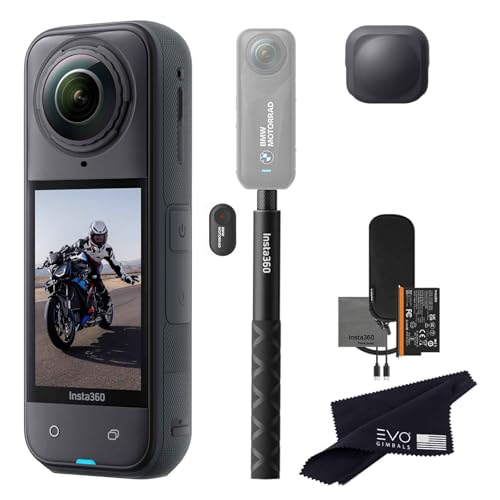
Insta360 X5 BMW Motorrad Limited Edition Basic Bundle 8K 360 Action Camera

Insta360 Ace Pro 2 Dual Battery Xplorer Bundle 8K Action Camera
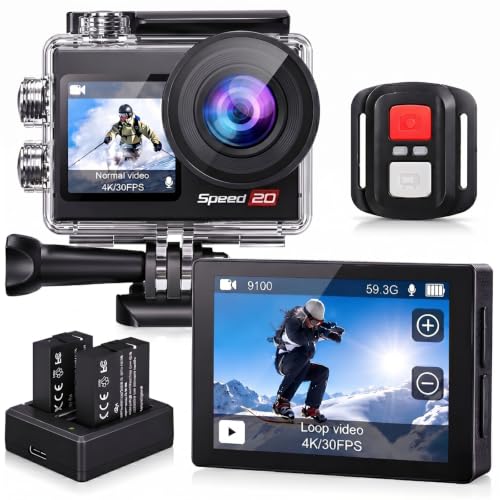
Hiicam 4K Waterproof Action Camera 20MP Touch Screen 131FT

AKASO EK7000 4K30FPS 20MP WiFi Action Camera with EIS

AKASO EK7000 Pro 4K30fps Action Camera with Touch Screen

AKASO Brave 4 Action Camera 4K30 Ultra HD Waterproof

CAMWORLD 4K Mini Body Camera with 64GB Card and Magnetic Mount

XbotGo Falcon All-in-One 4K AI Sports Camera Green

XbotGo Falcon All-in-One AI Action Camera 4K Sports Camera

XbotGo NT4 PRO Carbon Fiber Tripod 12.8ft Extra Tall Sport Stand
More Details On Our Top Picks
The Insta360 X5 sits at the top of the lineup for one simple reason: it captures everything around you, then lets you decide the frame later. Two large 1/1.28-inch sensors paired with 8K 360 HDR video mean the rear, sides, and front are all on the record during a chaotic descent. For cyclists who pass scenery too quickly to compose a shot in the moment, that reframing freedom is the whole pitch.
The BMW Motorrad edition bundles an invisible selfie stick and lens cap, which translates to cleaner point-of-view angles and a small amount of protection out of the box. Compared to the single-lens picks later in this list, the X5 is heavier and demands a fast memory card to keep up with 8K throughput.
Well-Handled Touches
- Dual 1/1.28-inch 48MP sensors pull in serious light for early morning or late evening rides.
- 8K 360 HDR video means you can crop, pan, and reframe in post without losing resolution.
- The bundled invisible selfie stick removes the camera from your footage automatically, giving you drone-style third-person angles.
- Rugged waterproof body handles rain, splashes, and the occasional creek crossing.
Honest Caveats
- File sizes balloon quickly at 8K, so you will want larger memory cards and a real backup routine.
- 360 reframing adds a learning curve for anyone new to the editing app.
- Battery life drops in cold weather, which matters on winter commutes and alpine climbs.
Key Specs
Made For
Riders who want maximum creative flexibility, especially those tackling technical descents or multi-surface tours where missing a shot is not an option.
Where Another Pick Suits Better
The CAMWORLD 4K Mini Body Camera is a better fit for cyclists who prefer a tiny wearable form over a larger 360 rig on the bars.
If the X5 is about capturing everything, the Insta360 Ace Pro 2 is about capturing one beautifully composed frame. Co-engineered with Leica, it pairs a 1/1.3-inch sensor with Leica’s color science, which matters most on rides that swing from forest shade into open sunlight. You see the difference in skin tones, foliage greens, and the way it handles backlit horizons.
The Dual Battery Xplorer Bundle ships with a spare battery, which doubles your ride time without adding bulk. Where the AKASO EK7000 Pro leans toward simplicity, the Ace Pro 2 leans toward serious creative control with its flip screen, 8K30fps capture, and AI noise reduction for cleaner audio at speed.
The Practical Payoff
- Flagship 1/1.3-inch sensor delivers strong dynamic range across shifting light.
- 8K30fps and 4K60fps cover both cinematic and high-frame-rate slow motion.
- 2.5-inch flip screen makes vlog framing and selfie angles far easier to nail.
- Dual battery bundle extends shooting time on all-day rides and tours.
- AI noise reduction helps wind-rush audio sound cleaner at road speed.
Things To Consider
- A flagship sensor means premium pricing over the AKASO options below.
- Best results come with a fast UHS-I card, so factor that into your setup.
- Some advanced settings need a short learning period before they click.
Feature Snapshot
Best Suited To
Touring cyclists, vlog-style riders, and anyone who wants top-tier color science and audio without stepping into a full 360 workflow.
Reach For A Different Pick When
Budget-focused commuters will find the Hiicam 4K Waterproof Action Camera delivers the essentials at a much friendlier entry point.
Hiicam’s 4K action camera is the kind of pick you hand to a friend who keeps asking whether they need an action cam. It hits the core specs most cyclists actually use: 4K capture, 20MP photos, electronic image stabilization (EIS, software-based shake smoothing), a 170-degree wide lens, and a touchscreen for fast menu tweaks. The 131-foot waterproof rating is generous overkill for road cycling, but it doubles the camera for snorkel trips and lake rides.
The package includes a remote and WiFi, which means you can start a recording or pull footage without dismounting in sketchy traffic. Coming from the Insta360 X5 above, the sensor size and low-light reach are clearly smaller, yet for daylight commuting and weekend loops the footage looks better than the price tag suggests.
Everyday Perks
- 170-degree wide angle captures the road, your bars, and most of the surroundings.
- Touchscreen interface makes mode switches faster than button-only menus.
- 131-foot waterproof rating adds durability for wet commutes and off-bike use.
- WiFi and remote let you control recording without unmounting the camera.
Worth Noting
- EIS helps but cannot match the smoothness of premium flagship stabilization on rough gravel.
- Low-light performance trails the larger-sensor Insta360 picks above.
- Battery life at 4K is shorter, so plan for a spare on longer rides.
Quick Facts
Who It Suits Best
Casual commuters, beginners, and riders who want solid 4K footage without paying flagship prices.
Not Your Match When
Creators chasing the richest color science should look at the Insta360 Ace Pro 2 instead.
The AKASO EK7000 has been around long enough to feel like a familiar tool rather than a gamble. It records 4K at 30 frames per second, captures 20MP stills, and supports an external microphone, which is a quiet perk for cyclists who want cleaner commentary over wind noise. The 131-foot waterproof housing and included remote make it a forgiving first action cam.
Compared to the newer AKASO EK7000 Pro reviewed next, this one uses a smaller screen and lacks a touchscreen interface. The trade-off is a lower entry price, and for many first-time owners that is exactly the right call.
What Stands Out
- External mic support cleans up voice audio that built-in mics usually muddy.
- 131-foot waterproof housing protects against weather and rough trail spray.
- WiFi connection makes file transfers to a phone simple and quick.
- 4X digital zoom gives you a bit of reach when composing shots.
Points To Keep In Mind
- No touchscreen means mode changes happen through buttons, which takes practice.
- 4K here is interpolated rather than native, so detail is softer than on premium models.
Right Fit For
First-time action cam shoppers and casual cyclists who want a proven, budget-friendly setup that just works.
Look Elsewhere When
Riders who want a touchscreen and helmet accessory bundle should consider the AKASO EK7000 Pro instead.
The EK7000 Pro takes the bones of the original EK7000 and adds the screen cyclists kept asking for: a 2-inch IPS touchscreen. Settings, playback, and mode switches happen with a tap instead of a sequence of small buttons. It also bumps zoom from 4X to 5X and ships with a helmet accessory kit, so the box gets you on the road without a separate shopping trip.
Compared to the AKASO Brave 4 below, the Pro is built around a slightly newer chassis and more polished interface. Where it shows its limits is in low-light scenes, where a flagship sensor like the one inside the Insta360 Ace Pro 2 pulls clearly ahead.
What Pays Off
- 2-inch IPS touchscreen makes daily operation noticeably faster.
- Helmet accessories included for handlebar and head mounting right out of the box.
- 131-foot waterproof housing covers rain, puddles, and creek crossings.
- 5X digital zoom adds a touch of compositional flexibility.
Small Caveats
- EIS is solid for road cycling but can struggle on aggressive mountain bike descents.
- Low-light detail trails flagship-sensor cameras.
Technical Reference
Whose Shelf It Belongs On
Riders who want touchscreen convenience, a helmet kit in the box, and a price that leaves room for a memory card or two.
Swap It Out When
Touring cyclists chasing richer color and low-light performance should step up to the Insta360 Ace Pro 2.
The AKASO Brave 4 is the pick for cyclists who like to dial in their framing before they click record. Its standout feature is the adjustable field of view (FOV): 170 degrees for sweeping point-of-view shots, 140 for a slightly tighter feel, 110 for medium shots, and 70 degrees when you want a more traditional, less distorted look. Most budget cameras lock you into one wide option and call it a day.
4K at 30fps and 20MP photos cover the usual spec sheet, and image stabilization helps take the edge off handlebar vibration. Compared to the EK7000 Pro above, the Brave 4 trades some touchscreen polish for that FOV control, which matters more to riders who care about how their footage actually looks.
Positive Takeaways
- Four FOV settings (170°, 140°, 110°, 70°) give real compositional flexibility.
- Waterproof housing supports cycling, swimming, and casual snorkeling.
- 4K30 and 1080P60 give you both resolution and smooth frame rate options.
- Image stabilization tames light road vibration.
Trade Offs
- The interface is button-driven rather than touchscreen, which slows setup.
- Low-light clarity does not match flagship-sensor cameras.
Who Will Love This
Riders who want to control how their footage looks without moving up to a flagship price bracket.
A Better Fit Elsewhere
Creators who want a single camera that captures everything around them will get more mileage from the Insta360 X5.
CAMWORLD’s mini body camera leans hard into the wearable side of cycling footage. It is genuinely thumb-sized, ships with a 64GB card in the box, and uses a magnetic mount that snaps onto a chest harness or jersey in seconds. The 150-degree wide-angle lens captures a true first-person perspective, closer to what your eyes actually see than a bar-mounted action cam.
Compared to the larger AKASO EK7000 Pro, the trade-off is clear: a smaller body means a smaller sensor and shorter battery life. For short rides and POV-heavy vlogging, though, that footprint is the entire reason to pick it.
The Case For It
- Thumb-sized form factor disappears on a chest mount or collar clip.
- Magnetic mounting makes repositioning faster than traditional clamps.
- 64GB card included means you can start shooting immediately.
- 1.47-inch HD screen offers quick framing checks on the fly.
Less Ideal Details
- Smaller sensor means low-light footage looks grainier than flagship picks.
- Battery life is shorter, which limits extended ride recording.
- Wind noise can be more noticeable at speed without an external mic option.
Feature Rundown
Perfect Match For
Riders who want a wearable, low-profile POV camera for commutes, urban exploration, and short adventures.
Consider Something Else When
Cyclists who need all-day battery life and 360 reframing should consider the Insta360 X5 instead.
The XbotGo Falcon is built around a clever idea: a sports camera that follows you on its own. Its AI tracking recognizes the rider (or another subject) and pans the frame to keep them centered, which is genuinely useful when you are riding solo and want third-person-style footage without a friend behind the lens. The green finish is a small touch, but it makes the camera easier to spot on a crowded cockpit.
The all-in-one pitch includes 4K recording and live streaming, so it pulls double duty for cyclists who want to broadcast training rides. Compared to the Insta360 Ace Pro 2 reviewed earlier, the Falcon trades manual creative control for hands-free automation.
The Value In It
- AI auto-tracking keeps the rider centered without a camera operator.
- 4K recording pairs nicely with built-in live streaming.
- All-in-one design reduces the need for extra accessories.
- Setup is straightforward for riders new to AI camera features.
Where It Is Less Suited
- Auto-tracking works best in clear sight lines; dense forest or heavy traffic can confuse it.
- Manual framing control is more limited than on traditional action cams.
Built With In Mind
Solo cyclists who want cinematic follow shots without recruiting a friend or carrying a separate gimbal.
Where A Sibling Pick Shines
Riders who want richer color science and full manual control will find more in the Insta360 Ace Pro 2.
The standard XbotGo Falcon keeps the same AI auto-tracking engine as the green edition but drops the color accent for a more neutral look. Functionally, both Falcons share the same 4K pipeline, AI subject recognition, and live streaming support, so the choice between them comes down to cosmetic preference and any color-specific bundle differences.
For content creators, the appeal is the same: hands-free tracking that lets you focus on the ride instead of the camera. The trade-off versus a flagship like the Insta360 X5 is that you give up the 360 reframing freedom in exchange for simpler operation.
A Strong Showing
- AI tracking reduces the need for manual panning during solo rides.
- 4K capture plus live streaming for creators who broadcast training or events.
- All-in-one form factor keeps the kit minimal.
- Neutral color option blends more cleanly with most cockpit setups.
Practical Considerations
- AI tracking depends on clear subject visibility; cluttered urban scenes can throw it off.
- Battery life is shorter when live streaming is active.
Who Should Grab It
Creators who want auto-tracking and live streaming in one tidy package, and who prefer a more understated color option.
Skip It When
Riders chasing the most cinematic 360 reframing will find the Insta360 X5 a stronger creative tool.
The XbotGo NT4 PRO is the odd one out in this list, and that is on purpose. It is a 12.8-foot carbon fiber tripod designed to pair with the Falcon cameras above, which means it does not sit on your handlebars at all. Instead, it stands on the sideline at races, training sessions, or skills drills, giving coaches and event videographers a bird’s-eye view of the action.
Carbon fiber keeps the weight manageable at around 6.57 pounds, and the air-cushioned center column protects the camera during height adjustments. For pure cycling-on-the-bike footage, none of the other picks here substitute for an action cam, but for coaching or event recording this tripod fills a gap the rest of the list cannot.
Where It Delivers
- 12.8-foot reach captures an overhead, scouting-style view of the course.
- Carbon fiber construction balances rigidity with transport-friendly weight.
- Air-cushioned center column protects mounted cameras during adjustments.
- Horseshoe foot pads add stability on grass, gravel, and indoor floors.
Factors To Consider
- It is a sideline tool, not a ride-along camera, so it does not replace any of the picks above.
- Full 12.8-foot extension requires careful setup on uneven ground.
Essential Details
Right Fit For
Coaches, race organizers, and event videographers who need a stable, elevated mount for the XbotGo Falcon cameras.
Consider Something Else When
You want footage from the rider’s perspective; pair any of the helmet or bar-mounted picks above with a chest harness instead.
What To Weigh Before Choosing An Action Camera For Cycling
Mounting style shapes the entire experience, so start there. Chest mounts deliver a true first-person feel but can bounce on rough trails, while handlebar mounts stay stable yet show more of the cockpit and less of your line. Helmet mounts split the difference, though they add weight to your head on long climbs.
Stabilization matters more than resolution for cycling footage. Electronic image stabilization (EIS) smooths digital shake, while optical stabilization moves the lens itself for cleaner results. A 4K30 clip with good stabilization usually looks better than a 6K clip with none, especially on gravel or cobbles.
Battery life, weather sealing, and audio quality are the three trade-offs that decide long-term happiness. A camera that dies at mile 20 of a century ride is not useful, and wind noise at 25 mph will ruin the cleanest sensor’s audio. Look for removable batteries, a rated waterproof depth that exceeds your wettest ride, and either wind-reduction processing or external microphone support.
Key Considerations Across These Picks
Where Shoppers Go Wrong
The most common slip is chasing resolution over stabilization, which leaves cyclists with sharp but shaky footage they never watch again. Another frequent mistake is buying a camera without checking the mount ecosystem; a great camera on a wobbly handlebar bracket still produces wobbly video. Finally, riders often skip memory card speed class requirements, ending up with dropped frames at the worst possible moment.
Where The Extra Money Goes
Higher-tier models earn their cost through larger sensors, better dynamic range, and smarter processing. A flagship sensor pulls in noticeably more light during dawn or dusk rides, and advanced AI tracking on the XbotGo Falcon line replaces a camera operator entirely. Paying more also tends to mean better audio handling, longer battery life, and a more refined app experience for editing on the road.
Frequently Asked Questions
What Mount Should I Use For Cycling Footage?
Helmet mounts give a natural first-person line of sight, while chest harnesses add a stable, slightly wider angle that captures more handlebar movement. Handlebar mounts work well for stable road shots but transmit road buzz into the footage on rougher surfaces.
Do I Really Need 4K Resolution?
For social sharing and casual viewing, 1080P60 is often enough, but 4K gives you room to crop and stabilize in post. Riders who want to pull stills from video also benefit from the extra resolution.
How Important Is Weatherproofing For A Cycling Camera?
It matters a lot, especially for commuters and touring cyclists who ride through rain or splash through puddles. Look for at least a splash-resistant body, with a fully waterproof housing if you plan to ride in heavy weather or use the camera for off-bike water sports.
Can I Use An Action Camera As A Dashcam?
Yes, most modern action cams support loop recording, which automatically overwrites the oldest clip when the card fills. This makes them a smart, versatile choice for commuters who want one device for both cycling footage and driving.
How Do I Avoid Wind Noise At Speed?
Mount the camera as close to your body as possible, use a foam windscreen if available, and consider an external microphone placed under a jacket or in a quieter airflow area. Several flagship cameras also include AI noise reduction that helps cut wind roar in post.
Wrap Up
The right cycling camera comes down to how you ride and what you want from the footage. Solo riders chasing cinematic angles will lean toward 360 reframing or AI tracking, while commuters and beginners often get more value from a proven budget pick. Match the camera to your most common ride, not your most ambitious one, and the footage will follow.