A good hunting camera does two jobs at once: it scouts so you don’t have to, and it stays out of the way when you’re closing in. The right pick turns long sits on a stand into useful intel, mapping which trails deer use and when, while a wearable cam records the moments you actually pull the trigger. This roundup covers eight models built for exactly that split duty, from solar-powered cellular scouts you can leave for months to compact body cams that document the hunt from your chest. Each option suits a different style of hunting, so the goal is matching your terrain and patience level to the gear that fits.
The Leading Options At A Glance

Meidase P200 WiFi Trail Camera, 64MP 1296P Bluetooth Game Camera with No-Glow Night Vision Motion Activated Waterproof

4K Mini Body Camera with 64GB Card, Thumb Action Camera with WiFi, HD Screen & Magnetic Mount, Wearable POV Camera
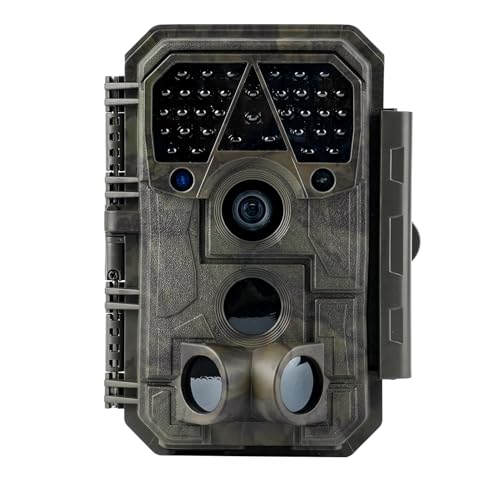
Meidase P70 (Non-Cellular, Non-WiFi) Trail Camera, 64MP 1296p, Game Cameras with No-Glow IR Night Vision

GoPro HERO8 Black Retail Bundle with Shorty, Head Strap, 32GB SD Card, and 2 Rechargeable Batteries
SPYPOINT Flex-M Solar Bundle, Cellular Trail Camera with Solar Panel, GPS, Night Vision, Dual-Sim LTE

Meidase P300 Pro (Non-Cellular) WiFi Trail Camera, Dual-Antenna 165ft Range, 7800mAh Battery, 0.1s Trigger Speed

Meidase P300 WiFi Trail Camera, Dual-Antenna 165ft Range, 0.1s Trigger Speed, 64MP Photos, 1296p HD Video

SPYPOINT Flex-S-Dark Ultimate Pack with SD Card + LIT-22, Solar Cellular Trail Camera, Built-in Solar Panel, 40MP Photos
Inside Each Recommended Option
The Meidase P200 trail camera sits in a sweet spot for hunters who want app-based scouting without monthly fees or cellular contracts. A Sony Starvis sensor handles low-light situations well, capturing 64MP stills and 1296P video that you can pull straight to your phone over Bluetooth and WiFi. No-glow infrared LEDs keep the unit invisible to deer at night, which matters when you’re trying to learn movement patterns around a feeding area without spooking animals off your land.
For most weekend hunters running a few acres, this combination hits the mark. You avoid the subscription costs that come with cellular units, and the Bluetooth pairing cuts down on tree-climbing for SD card swaps. Compared to the Meidase P70 later in this list, the P200 trades simplicity for the convenience of phone-based downloads, which is the main reason it’s a smart starting point.
Why It Works Well
- WiFi and Bluetooth pairing lets you check captures without climbing up to the camera.
- No-glow IR keeps the unit dark to wary bucks and nocturnal predators alike.
- 64MP stills paired with 1296P video give you enough detail to judge antler growth across weeks.
- App-based settings adjustments mean fewer trips back to the trail for simple tweaks.
- No monthly subscription, unlike the SPYPOINT cellular models in this roundup.
Things To Consider
- WiFi transfers slow down in dense cover, so you may still need an SD card swap occasionally.
- Battery life runs shorter than the dual-antenna P300 Pro if you leave it out through a full season.
Right Fit For
Hunters stepping into scouting for the first time and wanting a phone-friendly trail cam without subscription costs.
Where Another Pick Suits Better
The Meidase P300 Pro is the stronger pick if you plan to leave a single camera on one stand for an entire fall and winter.
This thumb-sized body cam trades the static scouting role for hands-free footage from your side of the stand. It records 4K at 30fps through a 150° wide lens, which captures enough peripheral view to make the footage feel like reliving the moment rather than staring through a keyhole. The 1.47″ HD screen on the back helps you frame shots and review clips without fishing out your phone, while a magnetic mount snaps onto chest plates or packs in seconds.
Hunters who run spot-and-stalk or push thick cover for hogs tend to get the most out of a wearable unit. You can mount it on a cap brim, a backpack strap, or a chest harness, and it stays light enough that you forget it’s there. It’s a different category from the Meidase trail cams covered above, since this one captures your movement rather than the animal’s, which is exactly the swap some hunters want.
Key Advantages
- 4K at 30fps and a 150° wide field of view give footage a true first-person feel.
- Magnetic mount clicks onto ferrous gear fast when seconds count in the field.
- Includes a 64GB card so you can start filming the day it arrives.
- Light enough to forget on a cap brim during long stalks.
Honest Caveats
- Body-mount position picks up heavy breathing and fabric rustle during slow stalks.
- Battery life under continuous 4K recording drops faster than most hunters expect on cold mornings.
- It’s a wearable capture tool, not a scouting trail camera, so pairing it with a static unit makes more sense for serious data gathering.
Made For
Mobility-first hunters who want to record the stalk, the shot, and the recovery from a first-person perspective.
Skip It When
The Meidase P200 is a smarter pick if your priority is wildlife scouting rather than capturing footage of the hunt itself.
The Meidase P70 strips scouting back to the basics, and for many hunters that’s a feature rather than a limitation. It records 64MP photos and 1296p video with no-glow infrared LEDs, runs on standard batteries, and stores everything on an SD card without any app pairing or wireless setup. That lack of connectivity also means no firmware glitches to wrestle with and no chance of a phone setting accidentally wiping your data.
This is a strong pick if you scout food plots or small property where checking the camera is part of the routine. The trade-off is hands-on retrieval, since you have to pull the card to see what you’ve got, but for weekend hunters on a tighter budget, that extra step is worth saving on subscription and smart features. Think of it as the dependable truck of trail cams: less refined than its siblings, but it just works.
What Makes Sense
- No app, no subscription, no WiFi to configure, which means fewer things to break in the field.
- 64MP stills with 1296p video deliver more resolution than most hunters actually need for trail reading.
- No-glow LEDs stay invisible to deer, even in open food-plot scenarios.
- Simpler internals tend to be more reliable over long unattended stretches.
Room For Improvement
- Requires a physical SD card pull every time you want to review footage.
- No remote settings adjustment, so any tweak means a walk back to the camera.
Key Specs
Best Suited To
Hunters managing food plots or small tracts who don’t mind making routine card swaps and want a no-fuss scouting tool.
Look Elsewhere When
The Meidase P300 Pro is a stronger match if your hunting style involves cameras mounted high on trees you don’t want to climb every week.
The GoPro HERO8 has been around long enough that the ecosystem around it is mature, and the retail bundle leans into that. You get the camera body, a Shorty mini tripod, a head strap mount, a 32GB SD card, and two rechargeable batteries right in the box. That setup covers most wearable configurations a hunter might try without buying accessories separately, from a chest harness to a bow-mounted angle.
Where the HERO8 shines is stabilization and accessory variety. Folding fingers at the base make swapping mounts fast, and HyperSmooth footage stays steady even when you’re glassing at full draw. For hunters who hike long distances or chase hogs with a group, the proven durability and wide accessory wall beat any newcomer. Just don’t expect trail-cam functionality; this is purely a capture tool.
Practical Pluses
- Bundle includes a Shorty, head strap, SD card, and a spare battery, so the kit is ready on day one.
- Wide mount compatibility means you can swap from head strap to bow mount in seconds.
- Compact pocketable body fits a hunting pack without taking up space.
Points To Keep In Mind
- Older generation GoPro, so newer models outresolve it for still photography.
- Not a scouting tool; this records your hunt rather than the animals.
- Audio picks up wind noise on exposed ridges unless you add an external mic.
Who Will Love This
Active hunters who move a lot, hike far, and want a proven wearable with the accessories already in the box.
Swap It Out When
The CAMWORLD 4K Mini Body Camera is a more affordable wearable option for hunters who don’t need the full GoPro mount ecosystem.
The SPYPOINT Flex-M Solar Bundle flips the scouting model on its head: you don’t visit the camera, it visits you. A compact solar panel keeps the internal battery topped off, while dual-SIM LTE sends captures straight to the SPYPOINT app on your phone. For hunters running leased land an hour away or out-of-state properties, that changes scouting from a chore into a coffee-break check-in.
IP65 water resistance and a built-in GPS tag mean the unit shrugs off rain and tracks its own location if you forget which ridge you hung it on. It does depend on cellular signal at the mount site, which is the main reason hunters in remote canyons should test coverage before committing. In most settled hunting regions, though, this is the closest thing to a set-it-and-forget-it trail camera available.
Features That Help
- Solar panel extends deployment so you can leave it across an entire season in many regions.
- Cellular delivery means you never disturb the area by walking back to check.
- Dual-SIM LTE improves coverage in marginal signal areas compared to single-SIM units.
- Built-in GPS helps relocate the camera when you return months later.
- Night vision handles after-dark captures for nocturnal predators like coyotes.
Less Ideal Details
- Requires cellular signal at the mount site, which limits use in deep canyons.
- Photo transmission plans may still be needed depending on usage volume.
- Solar charging depends on adequate direct sunlight, so shaded north-facing slopes underperform.
Feature Snapshot
The Right Fit
Landowners and out-of-state hunters who want continuous scouting updates without driving to the property each week.
Reach For A Different Pick When
The Meidase P200 is a better match for hunters in cellular dead zones who still want phone-based access to their images.
The P300 Pro is the model to reach for when one camera has to hold up across an entire season. The 7800mAh internal battery is the headline feature: it outlasts standard AA-powered units by a wide margin, especially in cold-weather hunting where alkalines struggle. Two external antennas extend the WiFi pairing range to roughly 165 feet in open areas, so you can pull footage from your truck without climbing.
A 0.1-second trigger speed matters more than most specs suggest. Fast-moving deer and hogs often cross the frame in under half a second, and slower triggers miss the lead animal entirely. The Pro also ships with a 64GB industrial-grade SD card rated for constant write cycles, which matters since standard cards can corrupt after months of motion-triggered writes. Compared to the P200, the P300 Pro trades portability for endurance.
What Pays Off
- 7800mAh battery handles full-season deployment without mid-winter swaps.
- Dual antennas extend WiFi range, so you can pull captures without a ladder.
- 0.1s trigger captures fast-moving deer that slower cams would miss entirely.
- 64MP stills give you room to crop and still read antler details from a distance.
- Industrial-grade SD card handles continuous motion-triggered writes better than consumer cards.
Practical Considerations
- Heavier than entry-level units because of the larger battery pack.
- WiFi range drops sharply through metal tree stands and thick trunks.
Perfect Match For
Hunters running one long-term camera on a high-traffic trail who don’t want to climb down for battery changes mid-season.
Consider Something Else When
The SPYPOINT Flex-M Solar Bundle is worth a look if cellular delivery matters more than raw battery capacity.
The P300 is essentially the P300 Pro without the upgraded battery and bundled SD card, and that distinction matters more on paper than in the field for most hunters. You still get dual-antenna WiFi with the same 165-foot range, the same 0.1s trigger speed, and 64MP photo capture. For hunters who already own quality SD cards and prefer to swap in their own rechargeable AA setup, the P300 hits a middle ground.
What separates this from the P200 higher up the list is antenna performance. In real testing, dual antennas make a meaningful difference when the camera is hung 12 feet up on the back side of a tree, where single-antenna units can struggle to maintain a stable phone connection. Compared to the P70, the P300 adds WiFi convenience without giving up the no-subscription approach.
Real Benefits
- Dual antennas keep the WiFi link stable even on the leeward side of large trees.
- 0.1s trigger speed catches deer crossing the frame at full trot.
- No subscription fees, unlike SPYPOINT’s cellular models.
- 64MP image resolution gives plenty of crop room for antler scoring.
Some Limits To Know
- SD card is not included, so you’ll need to budget for a quality card separately.
- Standard battery configuration won’t match the P300 Pro’s seasonal endurance.
Quick Facts
Whose Shelf It Belongs On
Hunters wanting the P300 Pro’s antenna and trigger performance without paying for the larger internal battery.
A Better Fit Elsewhere
The Meidase P300 Pro is the stronger choice if you’d rather skip buying SD cards and rechargeables separately.
The Flex-S-Dark Ultimate Pack is the kit you reach for when you want one box to handle every scouting job for the season. SPYPOINT pairs the Flex-S-Dark camera with a LIT-22 lithium battery pack and an SD card, plus the built-in solar panel that keeps the unit topped off in good light. No-glow LEDs run invisible to mature bucks, and you can toggle between no-glow and low-glow modes remotely through the app.
What sets this apart from the Flex-M covered earlier is the included lithium battery pack, which boosts cold-weather performance noticeably. Alkaline and NiMH cells lose capacity fast once temperatures drop below freezing, and a lithium pack keeps the unit pushing photos through late-season sits. The trade-off is the higher entry cost, which is why this earns its place as a long-term investment rather than a starter unit.
The Upside
- Bundled lithium battery pack performs reliably in late-season cold snaps.
- Built-in solar panel extends deployment across multiple months.
- No-glow LEDs are toggleable remotely between no-glow and low-glow modes.
- Cellular delivery cuts out return trips for basic scouting checks.
- Includes SD card and mounting strap for an out-of-box setup.
Where It May Fall Short
- Higher cost than non-cellular units, so the value only shows up over multi-season use.
- Still requires cellular signal at the mount site, which rules out deep wilderness placement.
Feature Card
Built With In Mind
Multi-season hunters who want a hands-off cellular camera with cold-weather battery performance ready to deploy.
Another Choice May Suit
The Meidase P300 Pro is worth a look if you don’t want a subscription plan and prefer to swap batteries yourself.
What To Weigh Before Buying Action Cameras For Hunting
The first fork in the road is whether you need a camera that scouts for you or one that records what you do. Trail cams sit on a tree and document animal patterns across weeks, while wearable action cams capture your movement, the shot, and the recovery from a first-person angle. Many serious hunters run both at once: a static camera on a high-traffic trail and a wearable for documenting active stalks.
Resolution matters, but not in the way marketing suggests. Anything from 20MP and up gives you enough detail to judge antler points and body condition, so chasing the highest megapixel count rarely changes scouting outcomes. Trigger speed is the more practical spec, and a 0.1-second trigger is the modern benchmark; slower cameras miss the lead deer of a group more often than people realize.
Connectivity splits the category into three tiers. SD-card-only units are the simplest and cheapest, but they force routine trips back to the camera. Bluetooth and WiFi trail cams let you pull captures from your phone without climbing. Cellular models with solar panels deliver directly to your phone but depend on signal strength and may involve a transmission plan.
Night vision type is another quiet but important spec. No-glow infrared LEDs stay invisible to deer and predators alike, which matters on pressured public land. Low-glow LEDs cast a faint red glow that can spook wary bucks, so they’re a poor fit for mature-animal hunting.
Finally, consider the weatherproofing rating and battery configuration. IP65 or better handles rain and snow without issue, which most hunting regions demand. Lithium battery packs outperform alkalines once temperatures drop below freezing, so hunters in northern climates should weight that decision carefully.
Key Considerations Across These Picks
Traps First Timers Fall Into
New scouting hunters often assume more megapixels always mean better images, when in practice the difference between 40MP and 64MP rarely shows up unless you’re aggressively cropping. A more common mistake is ignoring trigger speed, since a slow camera can produce beautiful images of empty trails. Cellular camera buyers sometimes forget to test signal strength at the actual mount site, which leads to frustration when photos never deliver. Plan a scouting hike with your phone first to confirm coverage.
What Separates Premium From Basic
The price gap between entry-level and premium hunting cameras mostly reflects three things: build quality, sensor performance in low light, and connectivity features. Premium models like the SPYPOINT Flex-S-Dark include lithium battery packs that survive cold weather, faster triggers that catch movement at the edge of the detection zone, and remote settings adjustment through an app. Whether those upgrades justify the cost depends on how often you hunt, how far you travel to your stand, and how much you value not making return trips just to swap SD cards.
Frequently Asked Questions
Do action cameras work well for hunting in cold weather?
Most modern units handle light frost and brief snow exposure, but battery performance drops sharply in sub-freezing temperatures. Lithium battery packs hold up far better than alkaline cells, which is why cold-climate hunters should look for that configuration specifically.
Is a cellular trail camera worth the subscription cost?
Cellular scouting pays off when your hunting property is far from home or you lease multiple parcels. Hunters on a single local property can usually get the same data from a WiFi or SD-card model without recurring fees.
What trigger speed should I look for in a hunting camera?
Aim for 0.1 seconds or faster for deer and similar game. Anything slower than 0.3 seconds regularly misses the lead animal of a group crossing the detection zone, which can skew your movement-pattern data.
Can a body camera replace a trail camera?
Not really, since they serve opposite purposes. Body cams record your hunt from a wearable perspective, while trail cams passively document wildlife patterns. Many hunters use both for a complete picture.
How high should I mount a trail camera?
Around chest height or higher works for most setups, but the sweet spot is 8 to 12 feet up, angled slightly downward. That height puts the lens above typical browse line and reduces theft risk on public land.
Closing Thoughts
The right hunting camera depends less on specs and more on your hunting style, your property access, and your tolerance for subscription fees. Match the camera to the way you actually hunt, and the gear pays for itself in better patterns and better memories of the season.