Mounting a camera on your helmet sounds simple until wind vibration ruins every clip. The right setup balances weight, angle adjustability, and a quick-release path so you can swap cameras between bikes, helmets, and handheld uses without re-balancing everything each ride.
This roundup covers ten options, from standalone cameras to the mounting kits and tethers that hold everything in place. Whether you tour long-distance on a sport bike or commute on a daily scooter, you’ll find a combination here that fits your camera body, your helmet shape, and the kind of footage you want to bring home.
The Shortlist At A Glance

RAM MOUNTS Action Camera Ball Adapter (B Size)
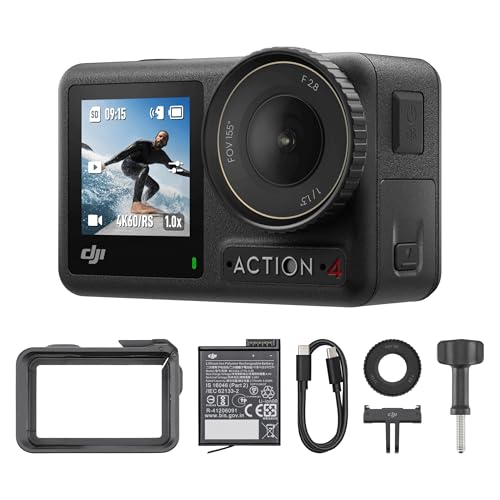
DJI Osmo Action 4 Essential Combo

Sevrwell Stainless Steel Tether Lanyard (3-Pack)

Insta360 Motorcycle Bundle Complete Mounting Kit

GoPro Magnetic Latch Mount (HERO13)

SKYJFFJ Aluminum Ball Handlebar Mount

Kewig Magnetic Quick-Release Adapter (X1, 2-Pack)

Kewig Magnetic Quick-Release Adapter (X1+R16)

CAMWORLD 4K Mini Body Camera

Kewig Universal Helmet Chin Camera Mount
Inside Each Recommended Option
For riders already invested in the RAM ecosystem, the B Size Ball Adapter plugs straight into any RAM double socket arm and gives you that satisfying modular build quality. The rubber ball sandwiched between two aluminum plates holds angle precisely, even after weeks of vibration on a touring bike.
It attaches to the underside of most GoPro-style cameras (the two-prong mount below the housing) and replaces your factory thumbscrew bracket. Once fitted, you can pair it with any B size arm you already own, which makes it a logical upgrade if you’re moving a camera between a motorcycle and a UTV, for example.
Positive Takeaways
- Plugs directly into existing RAM B size double socket arms, no new system to learn
- Rubber ball design absorbs high-frequency vibration that loosens cheaper mounts over time
- Compatible with GoPro and most action cameras using the standard two-prong footprint
- Modular setup means you can move one camera between bikes, helmets, and vehicles without re-buying hardware
Things To Consider
- This is just the ball adapter; you still need a RAM arm and base to mount it on a helmet or bar
- Adds bulk above the camera body, which can catch wind at highway speeds
Who It Suits Best
Riders who already own RAM arms and want a clean, modular way to swap cameras between machines.
Skip It When
You ride a single bike and don’t yet own a RAM arm; the SKYJFFJ Aluminum Ball Handlebar Mount comes with everything in one box.
The Osmo Action 4 sits in a sweet spot for helmet filming where the light changes constantly. Its larger 1/1.3-inch sensor (the imaging chip behind the lens, which controls how much light and detail the camera captures) pulls in noticeably more detail in overcast skies, tunnels, and dusk rides than smaller-sensor competitors. For riders who run the same commute across sunrise and sunset, that flexibility pays off quickly.
The Essential Combo bundles a battery and basic frame so you can mount it straight onto any standard GoPro-style two-prong base. Once you’ve tried a magnetic quick-release like the Kewig X1 adapter later in this list, swapping between helmet, chesty, and bike mounts takes a single motion.
Reasons It Performs
- Larger sensor size helps when you’re threading between shadow and sun on twisty back roads
- Waterproof housing means rain, puddles, and stream crossings are not a worry
- Standard GoPro mounting footprint keeps third-party helmet and bar mounts compatible
- 10-bit color depth (over a billion shades, versus the 16 million of standard 8-bit) gives you more grading room in post for cinematic edits
Points To Keep In Mind
- Battery life drops in cold weather, so winter riders should carry a spare
- The combo skips some accessories you may eventually want, like an extra battery or external mic adapter
Made For
Daily commuters and weekend tourers who film in mixed lighting and want one camera that handles rain, dust, and night rides.
Consider Something Else When
You’re chasing the absolute smallest footprint for chin-mount first-person shots; the CAMWORLD 4K Mini Body Camera is lighter and more discreet.
Key Specs
No matter how good your adhesive mount is, vibration loosens things. The Sevrwell tether is a 35-inch stainless steel cable that runs from your camera body to a strap on your wrist, jacket, or helmet, so a failing mount becomes a nuisance instead of a $400 paperweight on the pavement.
It comes in a three-pack, which is useful if you film with multiple cameras or lend gear out. The stainless steel resists rust from sweat and road spray, and the swivel clip keeps the cable from tangling when you turn your head.
A Favorable Mix
- Three-pack means you can tether every camera you own, or keep spares in your tank bag
- Stainless steel cable resists the rust that plain steel lanyards pick up over a season
- Works across GoPro, DJI, Insta360, and budget SJ4000-style cameras
- Swivel clip end keeps the cable from twisting when you turn your head at speed
Soft Spots
- Adds weight and bounce to lightweight setups, which can show up in footage as a slight pendulum motion
Right Fit For
Riders running $300-plus cameras on adhesive mounts who want a backup plan when the glue fails.
Reach For A Different Pick When
You mostly ride at low speeds on a scooter; the Kewig Universal Helmet Chin Camera Mount stays put with proper surface prep and no tether needed.
If you film with more than one camera body, buying mounts piece by piece adds up fast. The Insta360 Motorcycle Bundle ships with the brackets, extensions, and adhesive pads for helmet, handlebar, and chest mounting across the Insta360 X-series, the GoPro HERO line, and DJI Osmo Action cameras. One box, multiple setups.
The kit plays nicely with the brand’s 360-degree cameras, which need careful alignment to capture clean reframed shots. For traditional flat cameras like the GoPro HERO12, the bundle still works but you may not use every included bracket.
The Value In It
- One purchase covers helmet, bar, and chest mounting without hunting for individual parts
- Compatible with Insta360, GoPro, and DJI cameras, so households with mixed gear only need one kit
- Designed around 360 cameras’ specific alignment needs
- Strong adhesive pads rated for high-vibration motorcycle use
Worth Noting
- More pieces than a single-purpose rider needs, so storage in a small tank bag gets crowded
- Some mounts are tuned for 360 cameras and feel like overkill for a flat HERO body
Best Suited To
Riders with an Insta360 X-series or Ace Pro who want one bundle that handles every mounting position on the bike.
A Better Fit Elsewhere
Stick with the Kewig Universal Helmet Chin Camera Mount if you only need one well-engineered helmet solution.
Pulling a camera off a thumbscrew mount with cold fingers is one of the small annoyances of winter riding. GoPro’s Magnetic Latch Mount snaps the HERO13 Black into place with magnets and a latch, so removing the camera is a one-second pull instead of a finger-fumble with a screw.
It attaches to any existing GoPro mount you already use, which means you can drop it onto a helmet mount, chest harness, or bar clamp without buying new bases. For riders who switch from bike footage to handheld shooting at every stop, the time savings add up.
Strengths Worth Knowing
- Magnetic alignment means the camera seats correctly every time without fumbling with thumbscrews
- Drops onto standard GoPro two-prong mounts already on your helmet or bar
- Latch adds a positive lock so the camera won’t fall out even over rough terrain
- Official GoPro accessory, so fit and finish match the HERO13 body exactly
Less Ideal Details
- HERO13-specific; HERO12 and older GoPros use a different latch geometry
- Adds a thin base that lifts the camera slightly off the mount surface
Who Should Grab It
HERO13 Black owners who swap cameras between helmet, chesty, and bar positions throughout the day.
Look Elsewhere When
You shoot with a DJI Osmo Action body; the Kewig X1 magnetic adapter is built for that ecosystem instead.
Single-cylinder thumpers and big-bore twins transmit serious vibration through the handlebars, and that frequency range is exactly what destroys plastic camera mounts over a season. The SKYJFFJ uses a CNC-milled aluminum ball and arms (cut from a solid block of metal on a computer-controlled mill, which keeps tolerances tight) that hold their grip even after thousands of miles on rough pavement.
The 360-degree ball lets you rotate the camera into any angle before locking it down with a single Allen key. Setup takes longer than a quick-release magnetic system, but for bar-mounted work where vibration is the enemy, the trade-off pays off.
Strong Points
- Solid aluminum construction resists the vibration fatigue that cracks plastic bar mounts over time
- 360-degree rotation means you can point the camera forward, backward, or at yourself with one adjustment
- Universal two-prong base accepts GoPro, DJI, Insta360, and AKASO cameras without adapters
- Single-bolt lockup holds angle firmly through aggressive cornering
Trade Offs
- Allen-key tightening is slower than magnetic quick-release systems like the GoPro Magnetic Latch Mount
- Heavier than plastic bar mounts, which matters on lightweight bicycles and pit bikes
Whose Shelf It Belongs On
Vibration-heavy riders on thumper motorcycles, ADV bikes, or older air-cooled twins who need a bar mount that survives.
Swap It Out When
You want to swap between bikes in seconds; the Insta360 Motorcycle Bundle lets you move the camera without re-aligning an Allen bolt.
Quick Facts
For Osmo Action 3, 4, or 5 Pro owners, the Kewig X1 adapter is the missing piece between DJI’s native mount and any third-party GoPro-style base on the market. You stick one puck on your helmet mount and another on your bar mount, and the camera snaps between them with a magnetic click.
Getting two adapters in the box makes it easy to keep one on the helmet and one on a backup base at home, or to equip two cameras with the same quick-release standard. The catch is that the magnet only lines up correctly once, so you need to verify the latch clicked before pulling away.
What Works In Its Favor
- Two adapters in one box covers helmet, bar, or backup mount without buying a second pack
- Magnetic alignment means even with gloves on, the camera seats correctly
- Brings the Osmo Action line into the wider world of GoPro-style two-prong mounts
- Latch adds positive retention so the magnet alone isn’t doing all the work
Practical Considerations
- Does not fit Osmo Action 2, 6, or Osmo Nano, so check your exact model before ordering
- You’ll want to verify the latch seated correctly before riding; the magnet alone can fool you
Perfect Match For
DJI Osmo Action 3, 4, or 5 Pro riders who swap between helmet and bar positions every ride.
Not Your Match When
You shoot with a HERO13 body; GoPro’s own Magnetic Latch Mount is the matching accessory there.
Feature Snapshot
The X1+R16 version of Kewig’s magnetic adapter adds a 1/4-inch-20 threaded hole (the standard tripod screw thread used by every camera tripod, selfie stick, and grip on the market) on the back of the mount. That small addition turns a pure quick-release into a hybrid that also clamps onto a tripod or selfie stick when you stop riding.
For vlog-style riders who film the bike, the trailhead, and the campsite on the same trip, the threaded mount means you don’t have to bring a separate clamp to attach the camera to a mini tripod at lunch.
A Few Highlights
- 1/4-inch-20 thread on the back accepts selfie sticks and tripods without an extra plate
- Same magnetic quick-release core as the X1 adapter above, so it works with the same mounts
- Handy for riders who film more than just the ride, like campsite or trailhead B-roll
- One mount handles both bike-mounted and off-bike shooting positions
Minor Gripes
- Same Osmo Action compatibility limits as the X1 two-pack, so older and newer Osmo bodies won’t fit
- Single mount in the box, so outfitting helmet and bar needs two purchases
Who Will Love This
Riders who want their helmet camera to double as a tripod-mounted vlogging camera between rides.
Where Another Pick Suits Better
You only ride and never film off the bike; the Kewig X1 2-Pack covers two mount positions at a similar cost.
Big cameras pull on a helmet mount, and over a two-hour ride that weight becomes a neck issue. The CAMWORLD Mini shrinks the action camera down to thumb size while still recording 4K and shipping with a 64GB card in the box, so you can ride straight out of the package.
The 150-degree lens captures a wider field of view than typical action cams, which helps when the camera sits on a chesty or collar mount rather than at eye level. WiFi connectivity lets you pull clips to your phone without unmounting the camera.
Notable Upsides
- Thumb-sized body cuts helmet weight noticeably compared to standard action cameras
- 64GB card included means zero extra purchases to start filming
- 150-degree wide field of view works well for off-center mount positions like chest or collar
- Magnetic back plate speeds up swaps between mounts and a fridge or metal surface
Honest Caveats
- Small sensor means low-light footage is grainier than the DJI Osmo Action 4 above
- No native waterproofing claim beyond splash resistance, so wet-weather riders need a housing
Built With In Mind
Riders who prioritize a low-profile helmet setup and film mostly during daylight rides.
Another Choice May Suit
You ride at dawn, dusk, or into the night often; the DJI Osmo Action 4’s larger sensor handles low light much better.
At A Glance
Chin mounts give you the most immersive first-person angle on a motorcycle, because the camera looks where you look. Kewig’s chin mount uses a bendable polymer base that flexes to match the curve of a full-face helmet, then sticks down with an adhesive pad built for the vibration a motorcycle puts through the chin bar.
The kit includes two sets of adhesive pads, which matters because a clean re-mount on the same helmet is hard once you’ve pulled the original pad off. The angle adjustment range covers most riding postures, from tucked sport to upright touring.
Practical Advantages
- Bendable base conforms to curved chin bars that rigid mounts can’t follow
- Two adhesive pads in the box let you remount without buying spares right away
- Compatible across GoPro, DJI Osmo, and Insta360 camera bodies
- Angle adjustment covers tucked, upright, and touring riding positions
Some Limits To Know
- Adhesive needs 24 hours of cure time before a ride, which catches first-timers off guard
- Removing the mount later can lift helmet paint, so plan placement carefully
The Right Fit
Riders who want the classic chin-bar first-person shot and ride full-face helmets most of the time.
Where A Sibling Pick Shines
You wear an open-face or modular helmet; the SKYJFFJ Aluminum Ball Handlebar Mount avoids chin-bar mounting entirely.
What To Weigh Before Choosing A Helmet Camera Setup
Helmet filming is a system, not a single product. The camera, the mount, and the release mechanism all have to play nicely together, and the wrong combo shows up as wobbly footage, loose screws, or a camera bouncing off at highway speed.
Match The Mount To The Helmet Type
Full-face helmets take chin or top mounts well because the shell is rigid. Modular and open-face helmets flex at the chin bar, so adhesive mounts tend to peel under high vibration. For those helmets, a handlebar or chest harness from the Insta360 Motorcycle Bundle often gives cleaner results than a chin mount.
Decide How Often You Swap Cameras
Riders who leave one camera bolted to one helmet don’t need magnetic quick-release systems. Riders who film handheld, on the bike, and on a tripod will save real time with the GoPro Magnetic Latch Mount on HERO13 bodies or the Kewig X1 adapters for DJI Osmo Actions. The friction of unscrewing a thumbscrew with cold or gloved hands adds up over a season.
Build In A Backup Plan
A tether like the Sevrwell lanyard costs little and saves a camera when adhesive fails. Even strong 3M VHB pads (the high-bond acrylic foam tape commonly used for action camera mounts) work loose over a season of heat cycling and vibration. Adding a tether to your wrist, jacket zip, or helmet strap turns a worst-case moment into a recoverable annoyance.
Picking The Right Setup Without Overpaying
Where Shoppers Go Wrong
The most common slip-up is buying a hero camera and skipping the mount entirely, then trying to MacGyver a solution with whatever hardware store bracket is at hand. The second most common is trusting the included adhesive pad in cheap kits without cleaning the helmet surface with isopropyl alcohol first. Both lead to cameras bouncing off at speed.
When Paying More Pays Off
Spending up usually buys two things: better vibration tolerance through metal construction like the SKYJFFJ aluminum mount, and quicker mount swaps through magnetic systems. For casual weekend riders, the entry tier gets the job done. For commuters logging 10+ hours a week or ADV riders on washboard roads, the upgrade from plastic to aluminum and from thumbscrew to magnetic tends to pay for itself in saved cameras and saved time.
Frequently Asked Questions
Do I need a special mount for motorcycle helmet use?
Any GoPro-style two-prong mount works for most action cameras, but motorcycle-specific mounts use stronger adhesives and vibration-tested construction. The Kewig Universal Helmet Chin Camera Mount and the SKYJFFJ Aluminum Ball Handlebar Mount are both designed for motorcycle vibration rather than just gentle outdoor use.
What is the best camera position on a helmet?
Chin-bar mounts give the most natural first-person angle because the camera moves with your head. Top mounts capture a slightly higher, more passenger-style view that some riders prefer. Whichever you choose, surface prep with isopropyl alcohol before applying adhesive prevents most peel-off issues.
Can I use one mount across different camera brands?
Yes, as long as every camera uses the standard two-prong base, which most action cameras do. The Insta360 Motorcycle Bundle and the SKYJFFJ aluminum mount both accept GoPro, DJI, and Insta360 bodies. Some newer DJI cameras like the Osmo Action 6 need their own adapters, so always check compatibility before buying.
How do I keep footage from being shaky on a motorcycle?
Vibration is the enemy. Use aluminum or rubber-isolated mounts rather than rigid plastic, balance the camera close to the mount point to reduce pendulum motion, and add a tether like the Sevrwell lanyard as a backup. Electronic stabilization in the camera itself helps, but mechanical stability comes first.
Are magnetic mounts safe on a helmet?
For moderate speeds and smooth roads, yes. Magnetic mounts like the Kewig X1 and GoPro Magnetic Latch Mount hold firmly under normal riding conditions. At sustained highway speeds over rough pavement, the magnetic hold can weaken slightly, so a tether adds insurance.
Closing Remarks
The right helmet camera setup depends on how you ride as much as what you shoot. Pick the camera body first, match the mount to your helmet type, and add a tether or quick-release system based on how often you swap setups. The ten options above cover most realistic combinations, so start with the camera you trust and build the mount system around it.