Wildlife photography used to demand a long lens and a thicker wallet, but the truth in 2026 is different: a growing wave of compact trail cameras and superzoom point-and-shoots can put sharp, useful images within reach without draining your savings. You don’t need to chase elusive subjects through the brush to capture them either. A well-placed motion-triggered camera in your backyard, a creek edge, or a game trail can log the behavior you’d never see in person.
This roundup covers nine picks that balance cost, image quality, and the kind of ruggedness real fieldwork demands. Some sit quietly in the woods for weeks on end, while others fit in a jacket pocket for hiking or birding trips. Whether you want casual snapshots of songbirds or serious scouting shots of deer, there’s a path here that respects both your budget and your patience.
A Side-By-Side Look

Meidase P200 WiFi Trail Camera 64MP 1296P (App Control)

Meidase P60 Pro Trail Camera 2K 48MP 100ft Night Vision

Meidase P80 Pro Trail Camera WiFi Bluetooth 48MP 1296p
Meidase P90 Pro WiFi Trail Camera 64MP 1296p (Non-Cellular)
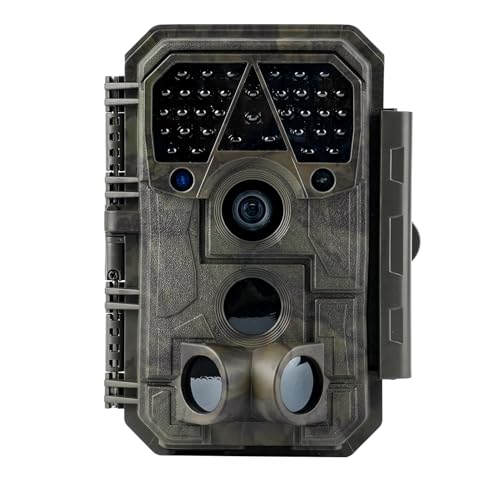
Meidase P70 Trail Camera 64MP 1296p No-Glow IR (Non-WiFi)

Panasonic LUMIX DMC-FZ70 16.1 MP 60x Optical Zoom

Meidase P300 Pro WiFi Trail Camera Dual-Antenna 165ft (7800mAh)

Meidase P300 WiFi Trail Camera Dual-Antenna 165ft 64MP 1296p

Panasonic LUMIX FZ300 12.1 MP 4K Splash & Dustproof (Leica 24x)
Inside Each Recommended Option
The Meidase P200 sits at the top of this list because it threads a rare needle: a Sony Starvis sensor at a price most newcomers can absorb. Starvis sensors, originally built for surveillance, pull in light most trail cameras miss, so dawn, dusk, and overcast days look noticeably cleaner than they would on a cheaper CMOS.
You control the camera through the Meidase Mobile app over Bluetooth and WiFi, which means you can adjust settings and pull clips without climbing up to the mount or pulling the SD card. For someone running a single camera in a backyard or a known game crossing, the workflow improvement is real. The P200 is also non-cellular, so there’s no monthly fee to keep it working.
The Case For It
- Sony Starvis sensor delivers cleaner low-light frames than typical trail cameras in this range
- 64MP stills and 1296P HD video capture enough detail to identify antler points and individual animals
- App-based control removes the most annoying part of trail camera ownership: ladder trips
- No-glow infrared keeps the camera invisible to deer, raccoons, and curious trespassers
Things To Consider
- Battery life depends heavily on how often the sensor fires; high-traffic sites drain cells faster
- WiFi pairing requires the phone to be relatively close, which limits true remote use
Key Specs
Who It Suits Best
Backyard naturalists and new hunters who want sharper images than entry-level cameras without paying for cellular service.
Where Another Pick Suits Better
The Meidase P300 Pro fits you better if your camera lives deep in the woods where 165 feet of wireless range would save a real hike.
The P60 Pro earns its spot by solving a quiet problem most shoppers don’t think about: file size. It records in H.264 MP4, which compresses footage more efficiently than older codecs, so an SD card fills up far slower and downloads run quicker when you sit down to review the week.
Night vision rated up to 100 feet gives you a workable buffer beyond the usual 60- to 80-foot range, useful when the camera points across a clearing rather than down a tight trail. Its 0.1-second trigger speed is fast enough for most medium-speed wildlife like coyotes, foxes, and deer on the move.
What Stands Out
- H.264 video format cuts storage demands and speeds up card transfers
- 100-foot night vision range covers wider clearings, not just narrow paths
- IP66 weather rating handles rain and dust without extra housing
- 2K video resolution offers noticeably more detail than standard 1080P
Worth Noting
- Lacks the mobile-app convenience of the P200, so settings changes happen at the camera
- 48MP stills are solid but trail behind the P200’s 64MP Sony Starvis output
Made For
Users who leave cameras deployed for weeks at a time and value storage efficiency over app-based control.
Consider Something Else When
The Meidase P80 Pro is a stronger fit when you want Bluetooth and WiFi control without stepping up to a larger sensor model.
Field of view is the P80 Pro’s calling card. The 110-degree lens captures roughly three times the lateral coverage of a typical 60-degree trail camera, which translates into far fewer blank corners when animals skirt the edge of the frame.
It pairs that wider view with super-low-light sensor sensitivity, so the same scene at dusk holds together instead of dissolving into grain. Like the P200, it uses the Meidase Mobile app for previews and settings, with Bluetooth handling device discovery and WiFi handling the heavier lifting.
Notable Upsides
- 110-degree field of view reduces missed subjects at the edges of the frame
- Super-low-light sensitivity keeps color and detail in fading daylight
- App-based workflow matches the P200 for consistent user experience
- No-glow infrared LEDs keep the unit hidden from skittish wildlife
Trade Offs
- Wider field of view can introduce some edge distortion at close range
- 48MP resolution is slightly lower than the P200’s 64MP ceiling
Feature Snapshot
Best Suited To
Property owners and researchers working open meadows, food plots, or wide clearings where animals rarely approach head-on.
Look Elsewhere When
The Meidase P60 Pro suits you better if you mainly film tight game trails and prefer longer night-vision throw over wider angles.
The P90 Pro sits near the top of the Meidase trail-cam family, with the same Sony Starvis sensor found in the P200 but tuned for slightly more refined daytime color and cleaner audio capture on video. The result is footage that holds up when you actually try to identify individual animals or share clips.
It targets the user who cares about both stills and video equally. If your goal is documenting trophy bucks or building a year-long behavioral record, the extra clarity over entry-level models starts to matter once you sit down to review weeks of footage.
Positive Takeaways
- Sony Starvis sensor delivers strong results in both bright sun and dim cover
- 1296P HD video records with clean audio for ambient field context
- App-based settings save ladders and tree-climbs during routine tweaks
- IP66 weather sealing for long deployments in exposed locations
Points To Note
- Costs more than the P200 for image quality that looks similar in casual review
- Non-cellular design still requires in-person proximity for full app use
The Right Fit
Serious hobbyists and researchers who want top-tier image quality without paying for a monthly cellular plan.
Reach For A Different Pick When
The Meidase P300 Pro is the smarter buy if you frequently check cameras mounted in hard-to-reach spots and need longer wireless range.
The P70 strips out the wireless features entirely, and that turns out to be its strength. Without WiFi or Bluetooth radios draining the battery, you can expect significantly longer deployments between swaps, depending heavily on how often the sensor fires.
The f/1.6 aperture lens gathers more light than typical trail cameras, and the 0.1-second trigger speed catches fast-moving subjects without the frustrating half-second lag of cheaper models. Side sensors widen the detection zone for animals approaching from oblique angles.
What It Does Well
- Long battery life thanks to no wireless radios drawing power
- f/1.6 lens captures more light in low-light conditions
- 0.1-second trigger speed handles quick deer and coyote movement
- 100-foot no-glow infrared range for stealthy nighttime captures
Honest Caveats
- No wireless features means every settings change happens at the camera
- Lacks the mobile previews that make app-enabled models easier to manage
Whose Shelf It Belongs On
Off-grid hunters and property managers who prioritize long deployment windows and don’t mind physical visits for setup and retrieval.
A Better Fit Elsewhere
The Meidase P200 makes more sense when you want app control and don’t want to retrieve SD cards by hand after every visit.
The FZ70 represents a different approach to affordable wildlife photography: a handheld superzoom instead of a stationary trail camera. Its 60x optical zoom covers a 20mm wide-angle to a 1200mm telephoto range, optical rather than digital, so image quality holds up across the full zoom range.
That reach turns a casual hike into a wildlife expedition. Birds in distant trees, deer across a meadow, or even the moon all fall within reach of the lens. Optical image stabilization helps tame the handshake that becomes obvious at long focal lengths.
Useful Highlights
- 60x optical zoom with image stabilization reaches distant subjects without digital cropping
- 20mm wide-angle is useful for habitat and landscape context shots
- Full 1080/60i HD video recording for action clips
- 3-inch LCD on the back for framing and reviewing on the trail
Small Caveats
- Older point-and-shoot sensor limits low-light performance compared to modern cameras
- Body is bulkier than a phone, which matters on long hikes
Quick Facts
Who Will Love This
Hikers, birders, and casual naturalists who want a single camera that handles wide landscapes and distant wildlife on the same outing.
Skip It When
The Meidase P200 serves you better when your subjects are nocturnal, distant, or in places you’d rather not stand with a camera for hours.
The P300 Pro solves the specific frustration of trail cameras mounted in awkward places. Dual external antennas push the WiFi working range out to roughly 165 feet in open areas, enough to stand at the edge of a clearing and connect to a camera strapped high on a tree or perched on a fence post.
The 7800mAh battery is the other headline feature. Where most trail cameras run on AA cells that need swapping every few weeks of heavy traffic, this unit’s larger power pack should comfortably outlast comparable models in similar conditions. The 64GB industrial SD card included in the box means you can deploy the camera without a separate shopping trip.
Notable Gains
- Dual antennas maintain stronger wireless connections at greater distances
- 7800mAh battery extends deployment windows between charges
- 64GB industrial SD card included for immediate field use
- 0.1-second trigger speed keeps up with fast wildlife movement
Worth Bearing In Mind
- Larger battery adds weight and bulk compared to standard AA-powered models
- WiFi signal weakens through metal structures and dense vegetation in real conditions
Perfect Match For
Field users who deploy cameras in remote, hard-to-access spots and need wireless control plus long battery life in one package.
Not Your Match When
The Meidase P70 fits you better if you want a smaller, lighter unit and don’t need wireless features for your routine.
The P300 brings the dual-antenna long-range wireless design down a step from the P300 Pro, trading the larger battery for a slimmer form factor that suits users who don’t need multi-month deployments. Its 120-degree detection angle covers a noticeably wider arc than standard trail cameras.
That detection arc matters as much as the lens view, because the camera only triggers on motion it can sense in the first place. A 120-degree detection zone catches animals approaching from the sides, not just head-on, which leads to more keepers per week of footage.
The Practical Payoff
- 120-degree detection angle improves trigger rates for oblique approaches
- 165-foot wireless range reduces ladder and tree-climb hassles
- 0.1-second trigger keeps up with fast-moving wildlife
- Useful for both wildlife observation and property security
Room For Improvement
- Battery life is shorter than the P300 Pro’s larger power pack
- Wider detection can occasionally trigger on wind-blown vegetation
Who Should Grab It
Property owners who want one camera to handle both backyard wildlife observation and casual security monitoring.
Swap It Out When
The Meidase P300 Pro makes more sense for users running cameras in remote spots where the larger battery meaningfully extends field time.
The FZ300 earns its place through a combination that handheld wildlife photographers quietly love: a constant f/2.8 aperture across the entire 24x zoom range, paired with a splash and dustproof body. The fast aperture holds shutter speeds high in dim light, which matters when you’re shooting at 600mm in overcast woods.
It also records 4K video, which is unusual at this price point and useful for cropping still frames out of action clips. The 1/2.3-inch sensor is small by modern mirrorless standards, but the bright lens more than compensates in the conditions wildlife photographers actually shoot in.
Bright Spots
- Constant f/2.8 aperture across the zoom range keeps images bright at full telephoto
- Splash and dustproof body handles wet, muddy field conditions
- 4K video recording enables still-frame extraction from action clips
- Leica DC lens optics maintain sharpness across the zoom range
Less-Strong Areas
- 12.1 megapixels limits heavy cropping compared to higher-resolution rivals
- Smaller sensor struggles in very low light relative to larger-sensor cameras
Quick Technical Notes
Built With In Mind
Wildlife photographers who hike in changeable weather and need a sealed, fast-aperture camera that handles low light gracefully.
Where A Sibling Pick Shines
The Panasonic LUMIX DMC-FZ70 is the better value if you want longer optical reach and don’t need 4K video or weather sealing.
What To Weigh Before Picking Your Affordable Wildlife Camera
Choosing affordable cameras for wildlife photography really comes down to how and where you shoot. Stationary trail cameras suit remote observation, while handheld superzooms suit hikers who want active control over framing. Knowing your dominant use case narrows the field fast.
Sensor and Image Quality
Sensor type affects how clean your images look in tough light. Sony Starvis sensors, found in several Meidase models, were designed for low-light surveillance and tend to outperform standard CMOS sensors after dusk. Higher megapixel counts give you more room to crop in on a distant subject, but only if the lens and sensor can actually resolve that detail.
Trigger Speed and Detection Zone
Trigger speed, measured in fractions of a second, determines whether your camera catches the action or misses it. A 0.1-second trigger is fast enough for most deer, coyotes, and foxes. The detection zone matters just as much: a wider arc catches animals approaching from oblique angles, which can be the difference between a useful clip and an empty SD card.
Night Vision and Stealth
No-glow infrared LEDs keep the camera invisible to wildlife and passersby, which matters for both animal behavior and security use. Range ratings from 60 to 100 feet cover most yard and clearing scenarios, but dense brush reduces effective distance. Match the camera’s reach to the actual terrain you’re covering.
Power, Storage, and Connectivity
Battery life varies dramatically based on trigger rate, video length, and wireless features. Cameras without WiFi or Bluetooth typically run longer on the same batteries because radios aren’t drawing power. Cloud and cellular features are convenient but usually require subscriptions, which add up over time. For most users, local SD storage plus occasional manual downloads keeps things simple.
Smart Choices Across The Lineup
Common Shopping Slip Ups
The most frequent mistake is buying a camera with a fast trigger but a narrow detection zone, which leads to missed animals at the edges. Another is overestimating night vision range: a 100-foot rating assumes open ground, not thick brush. Consider your actual terrain before trusting the spec sheet.
Where The Extra Money Goes
Higher-tier trail cameras typically add larger batteries, dual-antenna wireless, or premium Sony Starvis sensors. Handheld superzooms step up to constant apertures and weather sealing. The upgrade is worth it when your conditions match the feature: remote locations justify better batteries, wet weather justifies sealing, and dim cover justifies brighter lenses.
Frequently Asked Questions
What is a good megapixel count for affordable wildlife cameras?
For trail cameras, 16 to 48MP is a practical sweet spot that balances file size with usable detail. Handheld superzooms often use lower megapixel counts with brighter lenses, which can produce cleaner images than a higher megapixel count on a small sensor.
Do trail cameras need a subscription?
Not necessarily. Non-cellular models like the Meidase P200 and P300 Pro store everything locally on an SD card, with no monthly fees. Cellular cameras transmit images over a data plan, which adds recurring costs over the life of the device.
How important is trigger speed?
It matters more than most shoppers realize. A 0.1-second trigger captures fast-moving deer and coyotes, while a 0.5-second trigger often produces empty frames. For stationary wildlife like birds at a feeder, trigger speed becomes less critical.
Can handheld superzooms replace trail cameras?
For active wildlife observation, superzooms offer framing and zoom control that trail cameras cannot. For hands-off, multi-day observation of game trails or feeders, trail cameras run unattended in any weather. The two tools serve different jobs.
What does IP66 weather rating mean?
IP66 means the camera resists strong water jets and is fully dust-tight, suitable for outdoor use in heavy rain. It is not the same as submersion proofing, but it covers nearly every weather scenario a trail camera will encounter in the field.
Wrap Up
Affordable cameras for wildlife photography have come far enough that budget no longer dictates quality. Trail cameras with serious sensors and thoughtful features now sit alongside superzoom compacts that rival dedicated wildlife setups, each covering a different slice of the hobby. The right pick depends on whether you want to wait patiently for animals to come to the camera or go out and meet them halfway. Either way, your next frame is closer than it used to be.