Packing a phone works, right up until you want real optical zoom, a flip screen for your own clips, or a small dedicated body that survives a sweaty day in a backpack. A compact travel camera earns its spot when it slips into a jacket pocket, runs off a common battery, and produces files you actually want to keep. The picks below cover everything from pocketable vlogging tools to tiny keychain cams that turn a Saturday walk into shareable footage, and each one was selected for a specific kind of traveler.
The Shortlist At A Glance
Sony ZV-1F Compact Digital Camera (Black)

Canon PowerShot V10 Compact Vlogging Camera (Black)

Canon PowerShot SX500 IS 16MP Digital Camera (Black)

W & O Mini Keychain Digital Camera 1080p (Pink)

2026 Upgraded 4K Digital Camera 64MP WiFi (Black)

QUIOF Digital Camera 4K 48MP Vlogging (Black)
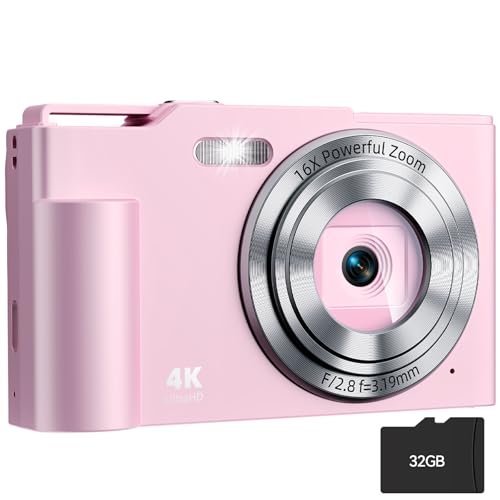
Krlun FHD 4K Digital Point and Shoot Camera

HOTU Mini Keychain Digital Camera 1080p (Rose Gold)
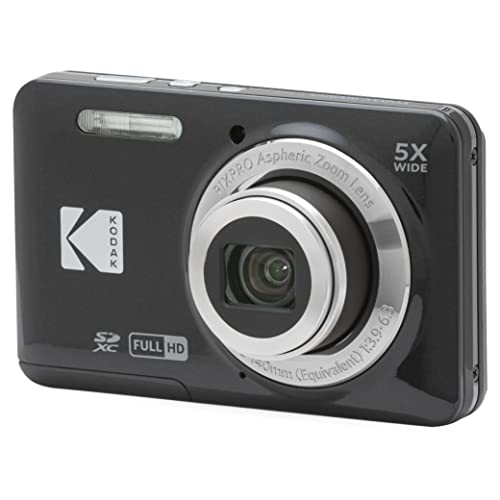
KODAK PIXPRO FZ55 16MP Compact Digital Camera (Black)
The Picks, Examined More Closely
The Sony ZV-1F is built for one specific job: putting the camera operator in the frame. An ultra-wide 20mm lens lets you hold the camera at arm’s length and still capture a full backdrop, which matters when you vlog in a tight hotel room or under a crowded market canopy. The one-inch sensor (a chip much larger than what phones or tiny keychain cams use) gives you real low-light headroom and natural background blur, so evening street scenes look cleaner than you might expect from a pocket body.
You won’t find manual zoom rings or an optical viewfinder here, and that is the point. Where the earlier G-series cameras tried to be everything to everyone, this one leans into creator workflows, with face-priority autofocus that stays glued to you as you walk and talk. Compared to the Canon PowerShot V10 covered below, the ZV-1F gives up some portability in exchange for noticeably better low-light footage.
Noteworthy Benefits
- The one-inch sensor pulls in usable footage from dim cafes and neon-lit alleyways where smaller sensors struggle.
- The 20mm wide angle keeps your face and the location in frame without forcing a selfie-stick.
- Eye-AF (eye-detection autofocus, a system that locks focus on a person’s eye) and tracking stay on your face during walking shots, so you spend less time fiddling.
- Real background separation gives your travel clips a more cinematic feel than a phone capture.
Things To Consider
- There is no optical zoom, so distant landmarks will look closer on a phone with a telephoto lens.
- The wide angle can introduce mild face distortion if you shoot too close, which most travelers only notice in tight head-and-shoulders framing.
Right Fit For
Vloggers and content creators who want strong low-light video in a body that still fits in a coat pocket.
Where Another Pick Suits Better
Photographers who need reach across a safari or city skyline should grab the Canon PowerShot SX500 IS instead for its 30x optical zoom.
The Canon PowerShot V10 looks like nothing else on this list because it was designed from the ground up for hands-free solo filming. A built-in kickstand lets you set it on a café table or a low wall without a tripod, and the upright body sits naturally in your palm. A one-inch CMOS sensor (Canon’s name for its active light-capturing chip) records 4K while a stereo microphone captures sound up top, so you can leave the external mic at home for casual travel diaries.
The flip-out LCD tilts to face you, which is genuinely useful when the camera is propped up a few feet away. Where the Sony ZV-1F leans on its wide lens for framing, the V10 leans on its livestream-ready setup, making it a slightly more friendly choice for creators who want to plug straight into a social platform. The trade-off is a fixed wide-angle lens with limited zoom range.
The Helpful Details
- The integrated stand removes the need for a tripod on most surfaces, which simplifies travel packing.
- Stereo microphones up front pick up voices cleanly for narrated city walks.
- Image stabilization (a system that reduces blur from hand movement) helps smooth handheld clips on uneven streets.
- Live streaming support makes it a quick path to going live without a capture card.
Points To Keep In Mind
- The fixed wide zoom means distant subjects stay small, which is limiting on safari or stadium trips.
- Owners commonly report that the small built-in battery asks for a midday top-up on busy shoot days.
Who It Suits Best
Solo creators who vlog in cafés, hotels, and tourist stops and want a self-contained setup without extra mounts.
A Better Fit Elsewhere
If you want optical zoom for wildlife or landmarks, the Canon PowerShot SX500 IS is the stronger match.
The SX500 IS is the odd one out on this list. It’s older, it is no longer the current generation, and it does not pretend to be pocketable in the same way as the rest. What it offers is a 30x optical zoom lens with image stabilization (a built-in mechanism that compensates for small hand tremors to keep long shots sharp), starting at a 24mm wide angle and stretching far enough to frame a distant church tower or a wildlife subject you cannot approach. For travelers who prioritize reach over modern video tricks, that lens alone is the reason to consider it.
Inside sits a 16-megapixel 1/2.3-inch CCD sensor (a smaller, older chip design that favors still images over video noise) and Canon’s DIGIC 4 processor, both of which feel dated next to current smartphones. You won’t get 4K here, and low-light shots will look rougher than what the Sony ZV-1F or the Canon V10 produce. But for daylight sightseeing, the zoom range is genuinely hard to beat at this size.
Everyday Advantages
- The 30x optical zoom (a true lens-based zoom that preserves image quality) lets you frame far-off subjects without cropping away detail.
- Image stabilization helps handhold those long shots without a tripod on most days.
- A 3.0-inch LCD makes composition and playback easy in bright daylight.
Trade Offs
- The older CCD sensor struggles in dim lighting, so evening city walks will look grainy.
- There is no 4K video, so this is primarily a stills-and-1080p choice.
- Listed as an older model, so firmware support and accessory availability are limited.
Made For
Sightseeing travelers who want one lens to cover landscapes, architecture, and distant subjects on daylight trips.
Not Your Match When
Solo video creators should pick the Canon PowerShot V10 instead for its modern 4K sensor and built-in stand.
The W & O Mini Keychain Camera is less a serious imaging tool and more a fun carry-everywhere companion. The zinc-alloy shell feels denser than typical plastic keychain toys, and it ships with both long and short metal chain straps so you can clip it to a bag loop or your keys. The included 32GB card means you can start shooting right out of the box without hunting for an SD card in a foreign electronics shop.
You are working with a tiny sensor here, and 1080p video is the ceiling rather than the floor. For sunset landscapes or any low-light moment, expectations should be modest. Where this earns its slot is quick social clips at a market, a coffee shop, or a night out, where you would not pull out a real camera but you still want something better than a phone grab.
The Value In It
- The zinc-alloy body feels reassuringly solid for something that hangs on your keys.
- A 32GB card ships in the box, so there is no extra shopping to start shooting.
- The 750mAh battery is generous for a body this small, supporting long bursts of casual filming.
- Built-in flash, microphone, and filter modes make it a one-button creative tool.
Minor Gripes
- Low-light image quality drops fast, so dim bars and street nights will look noisy.
- There is no optical zoom, so you will be moving closer to subjects rather than reaching out.
Best Suited To
Casual users and teens who want a fun, always-with-you camera for everyday moments rather than serious photography.
Skip It When
Travelers who want real low-light video should reach for the Sony ZV-1F instead.
This TESFOT model leans hard into the spec sheet: 64MP stills, 4K video, WiFi transfer, autofocus, and a 180-degree flip screen, all in a compact body. The flip screen is genuinely useful for travel content creators who want to monitor themselves while walking and talking, and built-in WiFi skips the cable dance when you want to push clips to your phone mid-trip. Compared to the QUIOF camera reviewed next, this one tilts more toward the creator workflow than toward a child’s first camera.
The honest read is that 64 megapixels on a small sensor is more marketing than magic, and image quality will not match the dedicated Sony or Canon bodies above. You may find the dynamic range (the range from brightest to darkest tones a sensor can capture in one shot) limited on high-contrast scenes, and autofocus speed varies. For travel clips shared online, however, the spec list covers nearly every checkbox on a wishlist.
What Stands Out
- WiFi transfers let you move clips to your phone in seconds without removing a card.
- The 180-degree flip screen supports front-facing vlogging and self-portraits without guesswork.
- 4K resolution gives you more cropping flexibility when editing short travel reels.
- Autofocus tracking keeps moving subjects like kids or street performers sharper.
Worth Noting
- The small sensor struggles in low light, so dawn and dusk shots will look softer than they did on the LCD.
- Owners commonly report that the menu system takes patience to learn on the first trip out.
Who Will Love This
Budget-conscious content creators who want a flip screen and WiFi transfer in one package for short social clips.
Another Choice May Suit
If clean low-light video is the priority, the Canon PowerShot V10 is the more reliable option.
QUIOF packages the everyday basics into a body that does not intimidate new users. You get 4K video, 48MP stills, a 32GB card included, autofocus, 16x zoom, and anti-shake (the camera’s built-in correction for hand movement). It is also a strong gift option for a teen learning photography, because the menus stay shallow and the controls are clearly labeled. The included spotlight helps indoors where many beginner cameras stumble.
Where it falls short of the Sony ZV-1F or Canon V10 above is in sensor size and low-light performance, which is the same trade-off every budget compact camera hits. Daylight travel footage looks fine for sharing, and that is exactly what most first-time users want. The anti-shake feature smooths casual handheld clips better than expected at this level.
Positive Points
- Anti-shake smooths out handheld walking clips, which matters more than people expect on bumpy streets.
- The included 32GB card removes the most common beginner friction point.
- The autofocus system is forgiving enough that beginners get usable shots without manual fiddling.
- The 16x zoom range covers most travel scenarios without forcing lens swaps.
Honest Caveats
- The small sensor softens detail in dim restaurants and evening street scenes.
- The body uses a less common charging setup, so packing the right cable matters on long trips.
Perfect Match For
Teens, beginners, and gift-givers who want a low-fuss camera that still records in 4K.
Reach For A Different Pick When
Solo creators wanting stronger low-light video should pick the Sony ZV-1F instead.
The Krlun is positioned as a starter camera for younger shooters, and the design reflects that. The shell is compact enough for small hands, the controls are deliberately simplified, and the menu structure assumes you have never touched a serious camera before. 4K video, 48MP stills, 16x digital zoom, and anti-shake cover the everyday checklist without burying the user in options. A 32GB card is in the box.
Compared to the QUIOF above, this one leans even more into the kids-and-gift category, and you trade some build refinement for that simpler experience. The 16x zoom is digital rather than optical, which means image quality drops as you push in. For a child documenting a school trip or a birthday weekend, though, that trade-off rarely matters.
Why It Works Well
- The simplified menus let a younger user learn without adult help.
- Anti-shake reduces the shake that comes from smaller, less steady hands.
- The 32GB card in the box means the camera is ready to use the moment it is unwrapped.
- The compact shell fits easily into a backpack pocket for school or camp trips.
Some Limits To Know
- The 16x zoom is digital, so detail softens noticeably at the long end.
- Low-light scenes produce visible noise, especially indoors without strong lamps.
- The plastic body shows wear faster than metal-shelled alternatives like the W & O keychain cam.
Who Should Grab It
Parents looking for a gift-ready starter camera for kids who want to film and photograph their own trips.
Swap It Out When
Anyone needing optical zoom for faraway subjects should pick the Canon PowerShot SX500 IS.
The HOTU Mini is the lightest camera on this list, weighing roughly the same as a small pair of earbuds. That changes how you carry it. Toss it in a coat pocket, clip it to a phone, or hang it on a bag loop and forget it is there until the moment you need it. The rose-gold finish leans into Y2K styling, and the included 8GB card covers casual weekend use.
You will not get professional output from a 2MP sensor, and low-light footage is rough even by keychain-cam standards. Where this earns its slot is spontaneity: party clips, candid street moments, and quick social posts. If you have ever missed a shot because pulling out your phone felt like too much friction, this body removes that excuse entirely.
Bright Spots
- At about 19 grams, the camera is genuinely unnoticeable on a bag or keychain.
- Long battery life relative to its size keeps it ready across multi-day trips.
- 1080p video is the right ceiling for casual social sharing without bloating file sizes.
Points To Note
- The 2MP sensor produces soft stills that do not hold up to large prints or heavy cropping.
- The 8GB card fills quickly when shooting 1080p clips, so travelers should plan to offload often.
Built With In Mind
Frequent travelers and party-goers who want a featherweight camera that is always within reach.
Where A Sibling Pick Shines
For better stills in the same tiny form factor, the W & O Mini Keychain Camera offers a stronger sensor.
The Kodak PIXPRO FZ55 is the most straightforward travel point-and-shoot on this list, and that simplicity is its biggest asset. A 16MP sensor pairs with a 5x optical zoom lens (a real lens-based zoom that keeps detail intact as you push in) starting at a 28mm wide angle, which is enough reach for most street and landscape scenes without forcing you to walk closer to your subject. 1080p full HD video covers short clips, and the menu structure stays out of your way.
Where the Sony ZV-1F and Canon V10 are tuned for video creators, the FZ55 leans back toward the casual traveler who mainly wants stills. Battery life is solid, the body is light enough to forget in a jacket pocket, and the wide-angle end frames group photos comfortably. Compared to the QUIOF and Krlun cameras above, the FZ55 is the more refined everyday pick for an adult traveler.
Everyday Perks
- The 5x optical zoom preserves image quality that digital zoom cannot match.
- The 28mm wide angle covers group photos and tight interiors without backing up.
- 1080p full HD video handles short travel clips without filling cards too quickly.
Details To Watch
- Low-light performance drops off quickly, so evening shots need a steady hand or nearby lamp.
- There is no flip screen, so self-recording means guessing at the framing.
Whose Shelf It Belongs On
Casual travelers who want a simple dedicated camera for trip photos and short clips without managing creator-focused menus.
Look Elsewhere When
Front-facing vloggers should grab the Canon PowerShot V10 for its flip screen and built-in stand.
What To Weigh Before Choosing A Travel Compact Camera
A compact travel camera is only useful if you actually carry it. Size and weight matter more than raw resolution, because a camera left in a hotel drawer shoots nothing. Look at the body dimensions in the spec list and picture it in your jacket pocket or day-bag sling before you fall in love with a sensor size.
Zoom range is the next call. A wide lens handles landscapes, group photos, and tight interiors, while an optical zoom lens (a lens that magnifies by physically moving glass, keeping detail intact) gets you close to distant landmarks or wildlife. Digital zoom only crops the image and rarely adds real detail. Match the lens to your trips: city breaks reward wide angles, safaris and mountains reward reach.
Video features separate the dedicated cameras from the kid-friendly ones. Flip screens, eye-detection autofocus (a system that locks focus on a person’s eye as they move), and built-in stabilization matter once you start filming yourself. If you mainly shoot stills, those features are less critical and a simpler point-and-shoot may serve you better. For vloggers and content creators, a flip screen and a wide lens are non-negotiable.
Key Considerations Across These Picks
Mistakes Worth Dodging
Picking a camera because the megapixel number looks highest is one of the most common buying traps in this category. Sensor size and lens quality matter far more than pixel count, especially in low light, which is why a 16MP Sony or Canon with a one-inch sensor outperforms a 64MP budget body in real-world conditions. Another common slip is ignoring charging and storage: a camera that uses a non-standard battery or fills its included card after a single afternoon will frustrate you fast. Finally, skipping the flip screen because it feels like a luxury usually backfires the first time you try to record yourself walking.
Where The Extra Money Goes
Higher-tier compact cameras like the Sony ZV-1F and Canon PowerShot V10 earn their premium through larger sensors, better autofocus systems, stronger low-light performance, and creator-focused features such as flip screens and stabilization. The extra money typically pays for cleaner video in dim cafés, faster and more accurate focusing on moving subjects, and bodies that hold up to daily travel use. Stepping up makes sense for frequent travelers and content creators who shoot in varied lighting. Casual vacation shooters who mainly shoot in daylight will find a mid-tier point-and-shoot handles most trips well.
Frequently Asked Questions
Are compact cameras still worth it for travel in 2026?
Yes, especially if you want optical zoom, a flip screen, or a dedicated body that does not drain your phone battery. Phones are excellent, but a compact camera covers weaknesses phones still have, such as true optical zoom and creator-friendly handling.
What is the most important spec for a travel camera?
Sensor size and lens quality matter more than megapixels. A larger sensor with a quality lens produces cleaner images in mixed lighting, which is the most common travel scenario.
Can these cameras replace a smartphone for photos?
For daylight travel shots, a good compact camera can match or beat a phone. In low light, dedicated cameras with larger sensors pull ahead, while tiny keychain cams fall behind.
Do compact cameras need special storage cards?
Most use standard SD or microSD cards, which are easy to find anywhere. Always carry a spare, because high-resolution video fills cards faster than expected.
Are flip screens necessary for vlogging?
A flip screen makes a real difference when filming yourself, because you can frame the shot without guessing. For front-facing travel vlogs, it is worth prioritizing over extra megapixels.
Closing Remarks
The right travel camera is the one you will actually pack and use. If you want cinematic video, start with the Sony ZV-1F or Canon PowerShot V10. If reach matters most, the SX500 IS still delivers. For everyday trip snapshots, the Kodak FZ55 stays simple and reliable, and for spontaneous fun, the keychain cams slip into any pocket. Match the body to the trips you actually take, and the rest takes care of itself.