Stepping up from a smartphone to a dedicated camera feels like a bigger leap than it actually is. The right entry-level DSLR teaches you the craft of photography through real dials, real lenses, and a viewfinder that makes you slow down and frame intentionally. The picks below cover the range: full-frame bodies that punch well above their tier, classic beginner kits with two lenses, and rugged compact options for travel days when a big DSLR is overkill.
The Essentials At A Glance

Canon EOS 6D 20.1 MP CMOS Digital SLR Camera Body

Canon EOS Rebel T7 DSLR Double Zoom Lens Kit
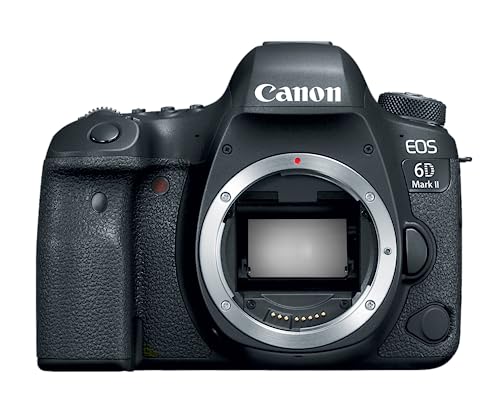
Canon EOS 6D Mark II Digital SLR Camera Body

Canon EOS 90D DSLR Camera Body

KODAK PIXPRO FZ45 16MP Compact Digital Camera

Nikon D7500 DSLR with 18-140mm Lens

KODAK PIXPRO WPZ2 Waterproof Digital Camera (Yellow)

Canon EOS Rebel SL3 DSLR with 18-55mm Lens

Canon EOS Rebel T3i DSLR with 18-55mm Lens

KODAK PIXPRO C1 13MP Compact Digital Camera (Tan)
A Closer Look At Each Pick
The original 6D is the doorway into full-frame photography without the flagship price, and it lands on this list precisely because it asks first-time full-frame shooters to commit to the craft rather than to autofocus wizardry. The body is lighter than later full-frame models, which makes a long hike or a full wedding day less punishing on your neck. Compared to the Rebel T7 in this roundup, the trade-off is fewer megapixels and a slower AF system, but the larger sensor (full-frame means each pixel collects more light than an APS-C sensor the size used in most beginner DSLRs) gives cleaner files at dusk and indoors.
For most people picking up their first full-frame camera, this body pairs naturally with a single 50mm or 24-70mm lens for street and travel work. Owners commonly report that the simpler control layout helps them actually learn exposure rather than relying on auto modes forever. You may find the 11-point AF limiting for fast sports, but for portraits, landscapes, and travel, it’s honest workhorse territory.
Practical Advantages
- Full-frame sensor delivers noticeably cleaner high-ISO images than the APS-C Rebels in this list.
- Compact body for a full-frame DSLR, easier to carry on day-long shoots.
- Built-in GPS for geotagging travel photos without extra accessories.
- Wide native lens compatibility with the Canon EF mount for affordable third-party glass.
Things To Consider
- Body-only purchase means budgeting for at least one lens separately.
- Modest 11-point AF system feels dated for tracking moving subjects.
- Fixed rear LCD with no vari-angle articulation makes overhead or low-angle framing trickier.
Key Specs
Made For
Learners ready to commit to full-frame glass and shoot portraits, landscapes, or travel who don’t need cutting-edge autofocus.
Consider Something Else When
Skip it in favor of the Canon EOS Rebel SL3 if you want a lighter body, a vari-angle screen, and modern connectivity from day one.
The Rebel T7 kit ships with both an EF-S 18-55mm and an EF 75-300mm lens, which is the closest thing to a complete starter package on this list. For someone moving from a phone, that means you can cover wide family gatherings and distant sports from the same box without hunting down a second lens. The 24.1 MP APS-C sensor is generous for the tier and produces files with enough detail for cropping or moderate printing.
Where the T7 earns its beginner reputation is the on-screen guided menu that walks you through what each setting does. For most newcomers, that lowers the learning curve enough to actually leave the auto modes behind. You may find the fixed LCD limiting if you wanted a flip-out screen for vlogging, but for still photography the simpler design keeps the camera’s weight and cost down.
What Earns Its Place
- Two-lens bundle covers wide-angle to telephoto straight out of the box.
- Built-in Wi-Fi and NFC make transferring shots to a phone painless.
- Scene Intelligent Auto mode does a credible job before you learn manual exposure.
- Lightweight body reduces fatigue during long travel days.
Honest Caveats
- Fixed rear LCD isn’t ideal for selfies or overhead shots.
- 1080p Full HD video caps out at 30 fps, so 4K shooters will feel held back.
Best Suited To
First-time DSLR owners who want a wide and telephoto lens included without buying add-ons separately.
Look Elsewhere When
Pick the Canon EOS Rebel SL3 instead if a flip screen and 4K video matter for vlogging or social content.
The 6D Mark II is the natural second step after a Rebel body, and it sits in that sweet spot where a beginner starts to feel like a serious enthusiast. The 26.2 MP full-frame sensor is a clear upgrade over the original 6D for cropping flexibility, and the 45-point all cross-type AF system tracks moving subjects far more reliably. Where it really earns its keep over the Rebel T7 is the Dual Pixel CMOS AF, which keeps moving subjects locked during live view and video.
For most people graduating from a kit lens setup, the vari-angle touchscreen makes a real difference for overhead food shots, low-angle street photography, or simple selfies. Built-in Bluetooth and Wi-Fi streamline sharing and remote shooting from a phone. You may find the body a touch heavier than the original 6D on long hikes, but the grip is deeper, which actually helps when using longer telephoto lenses.
Notable Gains
- 26.2 MP full-frame sensor offers strong cropping headroom without file-size bloat.
- 45-point all cross-type AF delivers confident subject tracking.
- Dual Pixel CMOS AF keeps focus smooth during live view and video.
- Vari-angle 3.2-inch touchscreen supports creative angles and vlogging.
- Built-in Bluetooth and Wi-Fi simplify phone transfers and remote control.
Trade Offs
- Body-only purchase leaves you selecting lenses separately.
- Heavier than entry Rebels, less ideal for all-day carry.
Quick Facts
Who It Suits Best
Enthusiasts ready to move up from a Rebel who want full-frame image quality and a modern autofocus system.
A Better Fit Elsewhere
The Nikon D7500 makes more sense if you prefer Nikon’s color science, deeper burst rate, and a longer included zoom range.
The EOS 90D earns its spot here for one specific kind of beginner: someone who already knows they want to shoot action, wildlife, or sports, and who needs burst speed and resolution in equal measure. The 32.5 MP APS-C sensor is the highest-resolution APS-C on this list, and 10 fps continuous shooting gives you a real chance at catching a kid’s soccer goal or a bird in flight. Compared to the Rebel T7, it’s a meaningful jump in both tracking autofocus and buffer depth.
For most people who record as well as shoot, 4K video at 30p and Dual Pixel CMOS AF (a Canon technology that uses every pixel on the sensor for phase-detection autofocus, giving smooth focus pulls) make hybrid photo-and-video work practical. Owners commonly report the deeper grip and multi-controller joystick feel like a real camera, not a toy. You may find the file sizes demand larger memory cards and faster drives if you shoot long bursts.
Positive Points
- 32.5 MP APS-C sensor captures fine detail for cropping into wildlife or sports.
- 10 fps burst with no viewfinder blackout during OVF shooting.
- 4K 30p video and Dual Pixel CMOS AF support hybrid creators.
- Built-in Wi-Fi and Bluetooth simplify sharing to a phone.
Minor Gripes
- Body-only kit means budgeting for lenses separately.
- Higher-resolution files need larger memory cards and faster storage.
Right Fit For
Beginners who already know their goal is sports, wildlife, or action photography and want burst speed and resolution together.
Swap It Out When
Choose the Canon EOS 6D Mark II instead if full-frame low-light performance matters more than resolution and burst speed.
The PIXPRO FZ45 belongs in a beginner’s camera conversation because it’s the most approachable option on this list, and frankly not a DSLR at all. It’s a small fixed-lens compact that runs on AA batteries, which means you can find replacements anywhere from a gas station to a hotel gift shop. The 27mm wide-angle setting helps with group photos and landscapes, and 4x optical zoom reaches a little closer without digital mush.
For most casual shooters, the FZ45 is a “leave it in the bag” camera: light, cheap to replace, and forgiving. Compared to the Rebel T7 kit, you lose the interchangeable lenses and large sensor, but you also lose the bulk. You may find the image quality limiting in dim restaurants or at indoor events, where a larger sensor still wins.
A Strong Showing
- Pocketable body fits in a jacket or small bag without a dedicated camera pouch.
- AA battery power means no special charger needed for travel.
- 27mm wide-angle is helpful for group shots and landscapes.
- Simple controls lower the bar for first-time users.
Worth Noting
- Small sensor struggles in dim indoor lighting compared to a true DSLR.
- Limited manual control may leave ambitious learners wanting more.
Feature Snapshot
Whose Shelf It Belongs On
Casual shooters and travelers who want a cheap, light camera that fits in a pocket and doesn’t need special batteries.
Reach For A Different Pick When
Pick the Canon EOS Rebel T7 kit instead if you want to learn manual controls and grow into interchangeable lenses.
The D7500 is the only Nikon in this roundup, and it earns its slot by being a serious enthusiast camera that still forgives beginner mistakes. The 20.9 MP APS-C sensor paired with the included 18-140mm zoom covers a 7.7x range, which means one lens handles wide travel shots and distant subjects without swapping. Compared to the Rebel T7, the autofocus system is in a different league: 51 points with 15 cross-type sensors for confident subject tracking.
For most Nikon-leaning beginners, the tilting touchscreen, 4K UHD video, and 8 fps continuous shooting create a camera that grows with you. Owners commonly report the deeper buffer and weather-sealed body handle long shooting days outdoors. You may find the body a touch heavier than entry Rebels, but the included lens reach more than compensates.
The Helpful Details
- 51-point AF system with 15 cross-type sensors tracks moving subjects confidently.
- 4K UHD video and 1080p Full HD with stereo sound for hybrid creators.
- Large 3.2-inch tilting LCD with touch functionality for creative angles.
- 8 fps continuous shooting supports sports and wildlife learning.
- VR (Vibration Reduction) in the included 18-140mm lens reduces handheld blur.
A Few Limitations
- Single SD card slot may concern those used to dual-slot redundancy.
- Heavier than entry-level Rebels, more noticeable on long carries.
Who Should Grab It
Beginners who already lean toward Nikon, want a generous zoom range in one lens, and need serious autofocus for action.
Another Choice May Suit
Pick the Canon EOS 90D instead if you prefer Canon’s color science and want higher-resolution 32.5 MP files.
The WPZ2 is the only camera in this roundup you can take snorkeling, drop in snow, or hand to a kid at the beach without anxiety. Rated waterproof to 15 meters, shockproof from 2-meter drops, and dustproof, it thrives where standard cameras simply would not survive. The 16 MP BSI sensor (a back-side illuminated sensor that captures more light than older front-illuminated designs, especially useful in dim conditions) and 4x optical zoom keep it practical beyond just rugged credentials.
For most outdoor-leaning beginners, this is the camera you throw in a backpack before a kayaking trip or a beach vacation, knowing it will come back with photos. Compared to the KODAK PIXPRO FZ45, you sacrifice the AA convenience for a sealed rechargeable battery, but you gain a body that’s actually tough. You may find the image quality modest in low light, which is normal for the small sensor class.
Where It Delivers
- Waterproof to 15 meters for snorkeling and pool use.
- Shockproof from 2-meter drops for rough outdoor handling.
- Fully dustproof for trail and beach days.
- 4x optical zoom covers everyday outdoor framing needs.
Points To Note
- Sealed rechargeable battery means charging before trips, no AA swap option.
- Small sensor limits performance in dim indoor conditions.
Perfect Match For
Beachgoers, snorkelers, hikers, and parents who want a tough camera that survives sand, water, and toddler hands.
Skip It When
Pick the Canon EOS Rebel SL3 instead if low-light image quality and interchangeable lenses matter more than ruggedness.
The Rebel SL3 is the lightest and smallest EOS DSLR Canon has produced, and that fact alone earns it a spot for travel-focused beginners. The included EF-S 18-55mm lens covers everyday framing, while the vari-angle touchscreen makes selfie-style vlogging and overhead shots actually possible. Compared to the Rebel T7, you gain 4K video recording and a fully articulating LCD, which together open up content creation beyond stills.
For most beginners who plan to share their work online, the SL3 hits a comfortable sweet spot: traditional DSLR ergonomics without the bulk, modern connectivity with Wi-Fi, and Canon’s reliable Dual Pixel CMOS AF for smooth video. Owners commonly appreciate the guided menu system that explains each setting as you explore. You may find the smaller grip less comfortable for users with larger hands, but the body weight savings on long walks are real.
Real Benefits
- Smallest and lightest EOS DSLR, ideal for travel and everyday carry.
- 4K video recording supports modern content creation workflows.
- Dual Pixel CMOS AF keeps focus smooth during live view and video.
- Vari-angle 3.0-inch touchscreen enables creative framing angles.
- Built-in Wi-Fi for quick phone transfers and remote shooting.
Worth Bearing In Mind
- Kit lens is basic; ambitious users will want to budget for an upgrade.
- Plastic-heavy construction feels less rugged than higher-tier bodies.
Feature Rundown
Built With In Mind
Traveling beginners and casual vloggers who want DSLR quality with a flip screen in the smallest possible body.
Where A Sibling Pick Shines
The Canon EOS Rebel T7 kit makes more sense if you want a second telephoto lens included for sports or distant subjects.
The T3i is a generation older than the other Canon Rebels on this list, and that’s actually the point. For learners on a tight budget, an older-generation Rebel with the EF-S 18-55mm kit lens still delivers a genuine DSLR experience at a fraction of the cost. The 18 MP sensor produces files good enough for sharing, modest prints, and learning exposure without modern extras bloating the price.
For most first-time buyers who don’t care about 4K or Wi-Fi, the T3i’s simplicity is a feature rather than a limitation. The vari-angle screen is a pleasant surprise on a camera of this generation and price tier, and Canon EF/EF-S lens compatibility means the upgrade path stays open. You may find the autofocus slower than newer Rebels and the video capped at 1080p, but those are honest trade-offs for the savings.
A Few Strong Suits
- Proven older-generation Rebel body at a noticeably lower entry cost.
- Vari-angle LCD adds creative flexibility rare for this tier.
- Full Canon EF/EF-S lens compatibility for long upgrade paths.
- Simple control layout helps beginners learn manual exposure.
Potential Drawbacks
- Older autofocus system feels slow by modern standards.
- Video is limited to 1080p with no 4K option.
- No built-in Wi-Fi means slower file transfer workflows.
Right Fit For
Budget-first beginners who want a real DSLR with a flip screen and don’t need modern video or wireless sharing.
Not Your Match When
Pick the Canon EOS Rebel SL3 instead if 4K video, modern autofocus, and Wi-Fi sharing matter for your workflow.
The PIXPRO C1 closes this roundup as the simplest option, and it’s worth knowing about even if you ultimately choose a DSLR. The 13 MP BSI sensor paired with a fixed f/2.0 lens at 26mm wide (a “fast” lens with a wide maximum aperture that gathers lots of light, great for low-light and shallow-depth-of-field shots) handles selfies and casual vlogging with a brighter, sharper result than typical phone front cameras. The 2-inch rear screen keeps the body genuinely pocketable.
For most casual users who want better selfies without learning DSLR menus, the C1 is honest and easy. Owners commonly appreciate that it charges over a standard cable and doesn’t ask for any setup ritual. You may find the fixed focal length limiting for distant subjects, but the 4x digital zoom handles a closer crop when needed.
Where It Excels
- Bright f/2.0 fixed lens gathers more light than typical phone cameras.
- Pocketable body fits in a small bag or large pocket.
- Simple operation with no learning curve for casual users.
- Distinctive tan finish stands out from standard black cameras.
Less Ideal Details
- Fixed lens means no optical zoom for distant subjects.
- Modest resolution by modern standards, fine for social sharing.
Who Will Love This
Casual users and selfie-first shooters who want a dedicated compact for social sharing without the complexity of interchangeable lenses.
Skip It When
Choose the Canon EOS Rebel SL3 instead if you want to grow into manual controls and a serious creative toolkit.
What Matters Most When Choosing Your First DSLR
Picking your first DSLR comes down to matching the body to your real shooting habits rather than chasing the highest spec sheet. Sensor size is the foundation: full-frame (the same physical size as a 35mm film frame) gathers more light and delivers cleaner low-noise images at high ISO, while APS-C (a smaller sensor standard for most entry and mid-range DSLRs) gives you more zoom reach for the same focal length and lighter bodies.
Autofocus performance separates casual snapshots from keepers. More AF points with cross-type coverage (sensors sensitive to both horizontal and vertical lines for better subject detection) means the camera can lock onto off-center subjects and track movement. For still portraits and travel, modest AF is fine. For kids, pets, and sports, prioritize systems with 45+ points and dedicated tracking.
Lenses matter more than bodies in the long run. A mid-tier body with excellent glass will outperform a premium body with a cheap kit lens. Mount compatibility is critical: Canon EF/EF-S and Nikon F-mount systems have decades of affordable third-party lens options. The kit lenses included with most beginner bodies are starting points, not permanent partners.
Connectivity and screen features shape everyday experience. Built-in Wi-Fi and Bluetooth streamline phone transfers. A vari-angle touchscreen makes selfie, vlog, and overhead compositions far easier. Video resolution matters if you want hybrid shooting: 1080p handles casual clips, while 4K gives cropping flexibility in post.
Smart Buying Advice For First-Time DSLR Shoppers
Pitfalls Shoppers Hit
The most common mistake is buying a body-only kit without budgeting for lenses, which leaves you with a beautiful camera you can’t actually shoot with. Another trap is chasing megapixel counts: 24 MP and 32 MP sensors produce virtually identical prints and screen views, so don’t pay a premium for resolution you can’t see. Many beginners also skip checking their existing lens collection for mount compatibility, which forces expensive adapters or full system swaps later.
Why Top Tier Costs More
Premium-tier DSLRs command higher prices because of full-frame sensors, more robust autofocus systems, deeper buffers for continuous shooting, weather sealing, and dual memory card slots. For beginners, the upgrade is worth it when you shoot in dim lighting regularly, need reliable subject tracking for action, or plan to print large. For daylight travel and family photos, an entry-level Rebel or Nikon delivers the same joy at a fraction of the cost.
Frequently Asked Questions
What Is A DSLR And Why Should A Beginner Choose One?
A DSLR (Digital Single-Lens Reflex) uses a mirror inside the body to send light from the lens to an optical viewfinder, giving you a true-through-the-lens preview. Beginners benefit from real manual dials, strong battery life, and access to decades of affordable lenses.
Do I Need A Full-Frame Sensor As A Beginner?
Not necessarily. APS-C sensors in entry-level Rebels and Nikons produce excellent results for everyday shooting and are lighter on the wallet and the neck. Full-frame pays off when you regularly shoot in low light or want the shallowest depth of field for portraits.
Is A Kit Lens Enough To Start Learning?
Yes. The 18-55mm lens included with most beginner kits covers wide and short telephoto framing, which is the majority of everyday photography. You can always add a 50mm prime or telephoto zoom once you know what focal lengths you actually use most.
Should I Worry About 4K Video In My First Camera?
Only if you plan to share video content regularly. For still photography, video resolution is secondary. If you want to vlog, 4K gives you cleaner footage and cropping flexibility in editing software.
How Long Will A Beginner DSLR Stay Relevant?
Modern entry DSLRs remain useful for many years; the limiting factor is usually autofocus and burst speed as your skills grow. Bodies last, and lenses last even longer, so a kit you buy today can serve you well into intermediate territory before needing an upgrade.
The Takeaway
The best starter camera is the one you’ll actually carry and shoot with, not the one with the flashiest spec sheet. Match the body to your habits: full-frame for low-light portraits, an APS-C Rebel or Nikon for general learning, a rugged compact for adventure, or a lightweight SL3 for travel and video. Start with the kit lens, learn what focal lengths you reach for, and let your next purchase follow from real experience rather than spec anxiety.