Stepping up to a full-frame sensor used to mean signing up for a four-figure body, a bag of expensive glass, and a learning curve that never quite flattened out. Today the entry point is friendlier. A wider spread of mirrorless and DSLR bodies now offer the larger sensor at prices that don’t demand a side hustle, which is good news for first-time upgraders, content creators, and anyone whose phone has finally hit its creative ceiling.
This list gathers ten cameras that genuinely land in the affordable end of the full-frame or full-frame-adjacent market. Each one gets a frank look at strengths, trade-offs, and the kind of photographer it suits best, so you can match gear to your goals instead of the other way around.
An Overview Of The Picks

Canon EOS R50 Mirrorless Camera with RF-S 18-45mm Lens Kit

Canon EOS 5D Mark IV Full-Frame DSLR (Body Only)

Canon EOS Rebel T7 DSLR Double Lens Kit

Canon EOS R6 Mark II Mirrorless Full-Frame (Body Only)
Canon EOS R50 V Mirrorless Vlogging Kit
Canon EOS 6D Mark II DSLR Body

Canon EOS 90D DSLR Body

Nikon D850 FX-Format DSLR Body

Nikon D7500 DSLR with 18-140mm VR Lens

Canon EOS Rebel T3i DSLR with 18-55mm Lens
What Each Pick Brings To The Table
The EOS R50 lands in the hands of someone leaving their phone behind for the first time, and it doesn’t ask much in return. A 24.2-megapixel APS-C sensor pairs with a DIGIC X processor, the same engine that powers Canon’s higher-end bodies, which means responsive autofocus (the system that locks focus on your subject) and dependable subject tracking for a starter kit. The included RF-S 18-45mm covers everyday wide-to-portrait framing, so most scenes work straight out of the box.
4K video recording makes it a credible hybrid tool for vloggers who also want stills, and the lightweight body is comfortable on long outings. For newcomers, the gentle learning curve is a real selling point, and unlike the bulkier DSLR designs below, this one slips into a small daypack without complaint.
Noteworthy Benefits
- Compact and noticeably light, easy to carry on day trips
- 24.2MP APS-C sensor delivers sharp stills with room to crop
- 4K video adds genuine hybrid flexibility
- Intuitive menus and auto modes shorten the learning curve
- Subject-detection autofocus tracks people reliably in real scenes
Worth Noting
- Bundled lens is fine for basics but limited in low light
- APS-C, not full-frame, so it doesn’t deliver the largest sensor in this list
Who It Suits Best
First-time camera owners and casual creators who want simple operation, strong autofocus, and a body they can take anywhere without fatigue.
Consider Something Else When
If a true full-frame sensor is the priority, the Canon EOS 6D Mark II DSLR Body offers that larger format at a similar entry-level feel.
The 5D Mark IV sits at the heavier, more deliberate end of this roundup, and that’s actually the point. A 30.4-megapixel full-frame CMOS sensor paired with the DIGIC 6+ processor pulls in real detail at weddings, in studios, and on long outdoor assignments where reliability matters more than weight savings. Continuous shooting reaches up to 7 fps, enough for portraits and moderate action work.
4K Motion JPEG video recording at 30 fps makes this Canon full-frame DSLR a credible hybrid, and the magnesium-alloy body is built for the kind of handling stress that mirrorless bodies in this list don’t always survive. Compared to the entry-level EOS Rebel T7 that appears later, this is a clear step up in sensor size, build, and long-term working durability.
Useful Highlights
- 30.4MP full-frame sensor delivers pro-grade detail
- DIGIC 6+ processor supports responsive operation
- 4K video plus Full HD up to 60 fps
- ISO range expandable to 102400 for low-light flexibility
- EF lens mount opens a deep library of affordable used glass
Trade Offs
- Body-only, so budget for a lens on top
- Heavier than mirrorless options in this guide
- Older autofocus system relative to current mirrorless flagships
Made For
Working photographers and serious enthusiasts who need a proven full-frame DSLR body that holds up under heavy professional use.
Look Elsewhere When
Faster burst rates for wildlife matter more than resolution, in which case the Canon EOS 90D DSLR Body makes more sense at a lower outlay.
What the Rebel T7 lacks in sensor size, it makes up for in completeness. The kit ships with both an 18-55mm standard zoom and a 75-300mm telephoto, so you walk out the door covering wide environmental shots through distant wildlife and family gatherings. The 24.1-megapixel APS-C sensor records solid stills and Full HD video, and built-in Wi-Fi makes phone transfers painless.
This is the kind of bundle that lets a beginner skip the second purchase a few months later. Compared to the EOS R50 above, this camera is bulkier and uses an older mirror design, but the dual-lens reach and lower cost of entry win for hands-on learners.
Real-World Strengths
- Two-lens bundle covers wide and telephoto from day one
- 24.1MP APS-C sensor produces crisp everyday images
- Wi-Fi enables quick phone transfers for sharing
- Lightweight enough to hand off to a curious family member
Honest Caveats
- APS-C sensor, not full-frame, so low-light performance is modest
- No 4K video, which limits future-proofing for hybrid creators
- Plastic-mount lens may feel less rugged in long-term use
Best Suited To
First-time DSLR owners and casual family photographers who want maximum lens reach for the lowest upfront spend.
Swap It Out When
Full-frame image quality matters more than lens variety, in which case the Canon EOS 6D Mark II DSLR Body is the more meaningful upgrade.
The R6 Mark II steps into serious territory without abandoning the user-friendly ethos Canon has built over the last decade. A 24.2-megapixel full-frame CMOS sensor paired with the DIGIC X processor handles demanding low-light scenes, fast subjects, and hybrid video work without breaking a sweat. It pulls noticeably ahead of the EOS R50 in autofocus sophistication and burst capability.
This body speaks directly to event photographers, content creators, and anyone splitting time between stills and 4K video. Unlike the older 5D Mark IV above, the R6 Mark II uses Canon’s modern RF lens mount, and it does so without the DSLR’s mirror box weight.
Positive Takeaways
- 24.2MP full-frame sensor with strong low-light capability
- DIGIC X processor enables fast burst and responsive tracking
- Modern subject-detection autofocus for people and animals
- RF lens mount supports cutting-edge Canon optics
- Compact for a full-frame body, easier on long shoots
Small Caveats
- Body-only, so a lens adds to the total outlay
- Battery life runs shorter than traditional DSLR bodies
Perfect Match For
Hybrid shooters and event photographers who need both fast stills and serious video in one full-frame body.
Another Choice May Suit
You mainly shoot landscapes and large prints where resolution matters more than speed, in which case the Nikon D850 FX-Format DSLR Body offers much higher megapixel count.
The R50 V exists because Canon recognized that video creators want different things than still photographers, and built a body around that gap. The included RF-S 14-30mm power zoom lens covers an ultra-wide field of view, useful for handheld vlogging, and the autofocus is tuned for the kind of fast face-and-eye tracking that keeps subjects sharp on the move. APS-C keeps the body compact, which matters for travel streamers.
Live streaming support is built into the workflow, so creators can move between shooting and broadcasting with less gear juggling. This is a niche tool, but it pays for itself quickly if video is your main lane, unlike the EOS R6 Mark II above, which leans more toward traditional hybrid work.
Good Reasons To Consider
- Ultra-wide 14-30mm zoom ideal for handheld vlogging
- 24.2MP APS-C sensor with Canon’s latest autofocus
- Built-in support for live streaming workflows
- Lightweight body suits travel and run-and-gun creators
Less Ideal Details
- APS-C sensor limits low-light edge over full-frame peers
- Specialized for video, so still photographers may feel constrained
Who Should Grab It
Active vloggers and live streamers who want a single kit tuned specifically for video-first content creation.
A Better Fit Elsewhere
You split time evenly between stills and video, in which case the Canon EOS R6 Mark II Mirrorless Full-Frame Body delivers more rounded performance.
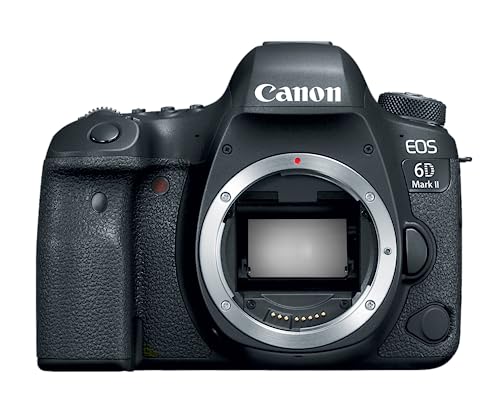
The 6D Mark II has earned its reputation as the friendly gateway into Canon’s full-frame system. A 26.2-megapixel full-frame CMOS sensor paired with the DIGIC 7 processor delivers image quality that punches above its tier, and the 45-point all cross-type viewfinder autofocus system (where every focus point uses two intersecting lines for better accuracy) keeps tracking reliable in mixed light. A 3.2-inch vari-angle touchscreen adds flexibility for unusual angles.
Built-in Wi-Fi and Bluetooth make sharing painless from the road, which is why this body tends to appeal to travel and landscape photographers. Compared to the EOS 90D below, the 6D Mark II trades some resolution and burst speed for the larger sensor format, a worthwhile swap for many.
A Favorable Mix
- 26.2MP full-frame sensor with strong dynamic range (the range of brightness a sensor can capture in one shot)
- 45-point all cross-type viewfinder autofocus
- Vari-angle touchscreen for creative compositions
- Built-in Wi-Fi and Bluetooth for easy transfers
- Lightweight for a full-frame DSLR
Points To Note
- Burst rate slower than the EOS 90D alternative
- Body-only listing means factoring in a lens purchase
Whose Shelf It Belongs On
Travel and landscape photographers who value full-frame image quality and weight savings over peak burst performance.
Reach For A Different Pick When
You shoot action and wildlife at high frame rates, in which case the Canon EOS 90D DSLR Body is a better fit at similar outlay.
The EOS 90D is what happens when Canon takes a familiar mid-range design and pushes it hard. A 32.5-megapixel APS-C sensor pairs with the DIGIC 8 processor, and continuous shooting reaches up to 10 fps through the optical viewfinder, which is unusually fast for a DSLR body at this price. Dual Pixel CMOS AF (Canon’s on-sensor phase-detection autofocus system, which provides smooth, accurate focus during live view and video) keeps things sharp during live view and video capture.
4K video at 30 fps opens hybrid use, and built-in Wi-Fi and Bluetooth round out the connectivity. This body rewards active photographers, especially those tracking birds, kids, or fast field sports. The honest trade-off is sensor size: it’s APS-C, so it doesn’t deliver the same low-light depth as the 6D Mark II above.
Practical Advantages
- 32.5MP APS-C sensor with strong detail
- 10 fps burst for sports and wildlife
- 4K video plus Dual Pixel CMOS AF
- Vari-angle touchscreen for flexible shooting
- Built-in Wi-Fi and Bluetooth
Factors To Consider
- APS-C sensor falls short of full-frame low-light performance
- Body-only, so plan for a lens in your budget
Right Fit For
Wildlife and sports enthusiasts who want high resolution and serious burst speed from a dependable DSLR body.
A Better Fit Elsewhere
Low-light full-frame depth matters more than burst rate, in which case the Canon EOS 6D Mark II DSLR Body is the more sensible upgrade.
The D850 sits near the top of Nikon’s DSLR lineup, and the spec sheet shows it. A 45.7-megapixel FX-format (Nikon-speak for full-frame) sensor resolves detail that holds up to large prints, heavy cropping, and demanding commercial work. Compared to the Canon 5D Mark IV earlier in this list, the D850 trades some video refinement for raw resolving power that landscape and studio photographers prize.
This is a heavier, more deliberate body, and it rewards that weight with build quality that holds up in tough conditions. For shoppers choosing between Canon and Nikon systems, the D850 is the clearest argument for going Nikon when stills lead and resolution matters most.
The Good Stuff
- 45.7MP FX-format sensor delivers flagship-level detail
- Robust weather-sealed body for outdoor assignments
- Strong dynamic range for landscape and post-production work
- Nikon’s F-mount lens ecosystem offers deep used-glass value
Possible Compromises
- Heavier than most mirrorless alternatives in this guide
- Body-only, so budget for premium lenses
Built With In Mind
Landscape, studio, and fine-art photographers who print large or crop aggressively and want the highest resolving full-frame DSLR body available.
Skip It When
You mainly shoot handheld video, in which case the Canon EOS R6 Mark II Mirrorless Body offers a smoother hybrid experience.
The D7500 leans into the kind of one-lens travel setup that lets you leave extra glass at home. The 18-140mm VR (vibration reduction, Nikon’s term for in-lens image stabilization) zoom covers wide landscapes through moderate telephoto, so a single lens handles most vacation, street, and family scenarios. A 20.9-megapixel APS-C sensor with the EXPEED 5 processor keeps noise well-controlled, and 4K UHD video with stereo sound makes it a credible hybrid.
For shoppers committed to Nikon who don’t want to jump to FX just yet, this is a polished, ergonomic body that delivers consistent results. It’s APS-C rather than full-frame, so the low-light ceiling isn’t the highest, but for travel specifically, the all-in-one lens makes it genuinely practical.
Real Benefits
- All-in-one 18-140mm zoom simplifies travel kits
- 20.9MP APS-C sensor with strong ISO performance
- 4K UHD video for hybrid shooting
- Tilting touchscreen for creative angles
- Lightweight for an enthusiast-tier DSLR
A Few Limitations
- APS-C sensor, so not the largest in this guide
- Bundled zoom is versatile but not fast in low light
The Right Fit
Travelers and everyday shooters who want one versatile lens and a comfortable Nikon body to handle varied scenes.
Not Your Match When
You specifically need a full-frame sensor for low-light depth, in which case the Canon EOS 6D Mark II DSLR Body or the Nikon D850 will serve you better.
The Rebel T3i is the oldest camera in this roundup, and that’s also what makes it interesting. An 18-megapixel APS-C sensor paired with the included 18-55mm II lens produces solid everyday images for learning the basics of exposure and composition. At its price point, it undercuts almost every other option here, which matters for students and casual hobbyists who want to invest more in lenses than bodies.
It records Full HD video rather than 4K, and the autofocus is older than what the Canon EOS Rebel T7 above delivers. For shoppers on a tight budget or anyone buying a first camera for a teenager, though, the T3i remains a sensible, low-risk starting point.
What Earns Its Place
- Lowest entry cost in this roundup
- 18MP APS-C sensor handles learning fundamentals well
- Lightweight body suits younger or first-time users
- EF-S mount opens access to affordable Canon lenses
Where It May Fall Short
- Older processor limits video resolution and burst speed
- No Wi-Fi, so transfers require cable or card reader
- Autofocus slower than newer Canon Rebels and R-series bodies
Who Will Love This
Students, hobbyists, and budget-conscious newcomers who want a usable first DSLR without overspending on features they won’t yet use.
A Better Fit Elsewhere
You want modern connectivity and video at the same price band, in which case the Canon EOS Rebel T7 DSLR Double Lens Kit is the smarter pick.
What To Weigh Before Choosing Your Camera
Sensor size and format shape everything about how a camera handles light, depth, and resolution. Full-frame sensors, found in bodies like the EOS 5D Mark IV and EOS 6D Mark II, gather more light per pixel and produce cleaner results in dim scenes, but they tend to live in heavier, more expensive bodies. APS-C sensors, like those in the EOS R50 and Rebel T7, deliver smaller and lighter systems at the cost of some low-light performance. Lens ecosystems matter just as much. Canon’s EF, EF-S, and RF mounts each open different doors to glass, and Nikon’s F-mount remains a deep well of affordable used lenses.
Autofocus systems vary widely. Entry-level kits offer fewer focus points and slower tracking, while mid-range and professional bodies add subject detection for people, animals, and vehicles. Burst speed matters for action and wildlife work, with cameras like the EOS 90D pushing past 10 fps, while stills-focused landscape bodies can prioritize resolution instead. Video capability is its own axis: 4K recording, microphone inputs, and continuous autofocus during filming shape the value for hybrid creators.
Sensor Format Choices
Full-frame bodies cost more and weigh more, but they reward you in low-light depth and dynamic range. APS-C cameras are lighter, cheaper, and partner with smaller, more affordable lenses. The practical question is whether you shoot mostly in good light or often find yourself chasing indoor or evening scenes.
Lens System Considerations
A camera body is only as useful as the lenses you pair with it. EF and EF-S mounts offer massive used-lens markets, RF and Z mounts offer modern optical designs, and F-mount (Nikon) has decades of glass behind it. If you already own lenses, factor in whether a body accepts them natively or with an adapter.
Autofocus And Burst Speed
Action and family event photographers should prioritize burst frames per second and subject-tracking autofocus. Landscape and studio shooters can ignore these and focus on resolution and dynamic range. The EOS 90D and D7500 lean toward speed, while the D850 and 5D Mark IV lean toward detail.
Key Considerations Across These Picks
Common Shopping Slip Ups
Many first-time full-frame shoppers fixate on body price and forget to budget for lenses, which often cost more than the camera itself. A second common mistake is chasing megapixel counts without considering autofocus or burst speed. A 45MP body is wasted on someone who mostly shoots quick family snapshots, just as a fast-burst body is wasted on someone who only shoots still landscapes. Finally, shoppers sometimes skip the lens mount question and end up trapped in a system that doesn’t grow with them.
Where The Extra Money Goes
Stepping up to higher-tier models typically delivers better autofocus systems, stronger build quality with weather sealing, faster burst rates, and improved low-light performance. Bodies like the EOS R6 Mark II and Nikon D850 represent meaningful jumps over entry-level options. The honest read is that these upgrades only matter when your shooting actually demands them. Buying a flagship body as a first camera often means paying for capabilities you won’t use until years of practice later.
Frequently Asked Questions
What does full-frame mean in a DSLR camera?
Full-frame means the sensor matches the dimensions of traditional 35mm film, which is larger than the APS-C sensors found in many entry-level DSLRs. The larger surface gathers more light and produces shallower depth of field (the zone of sharp focus in front of and behind your subject).
Can I use older lenses on a new full-frame body?
It depends on the mount. Canon EF lenses work natively on most current full-frame Canon DSLRs, and Nikon F-mount lenses work on Nikon’s full-frame bodies. Mirrorless bodies typically need adapters to accept older DSLR lenses.
Do I need 4K video on my camera?
Not always. Still photographers who never record video can skip 4K entirely, and Full HD remains perfectly adequate for casual clips and online sharing. Hybrid creators who publish to video platforms should prioritize 4K for future-proofing.
How important is in-body image stabilization?
Image stabilization (IBIS, which shifts the sensor to counteract camera shake) helps with handheld low-light shots and video stability. Some affordable DSLRs rely on lens-based stabilization instead, which is effective but only activates when using stabilized lenses.
What’s a reasonable budget for a first full-frame setup?
A used or older full-frame body paired with a single versatile lens typically lands at a comfortable mid-tier price. Lenses often represent the better long-term investment, since bodies age faster but quality glass holds its value and performance for years.
The Takeaway
The affordable end of the full-frame and full-frame-adjacent market is deeper than it used to be, which means the right camera is the one that matches how you actually shoot. Match your priorities to the strengths above, give the trade-offs their real weight, and pick the body that fits your scenes, not someone else’s portfolio.