An E mount anamorphic lens changes the feel of your footage before you touch a color grade. That horizontal squeeze pulls in cinematic flares, oval bokeh, and a wide 2.4:1 frame that plain spherical glass just can’t fake. The hard part is picking one that suits your sensor, your focal-length preferences, and your tolerance for manual focus pulls. This roundup walks through nine solid options across focal lengths, sensor sizes, and budgets, so you can find the right glass for your Sony body without overthinking it.
The Main Contenders

SIRUI Astra 50mm 1.33X Anamorphic Cine Lens E Mount

SIRUI 35mm T2.9 1.6X Full-Frame Anamorphic (RF Mount)
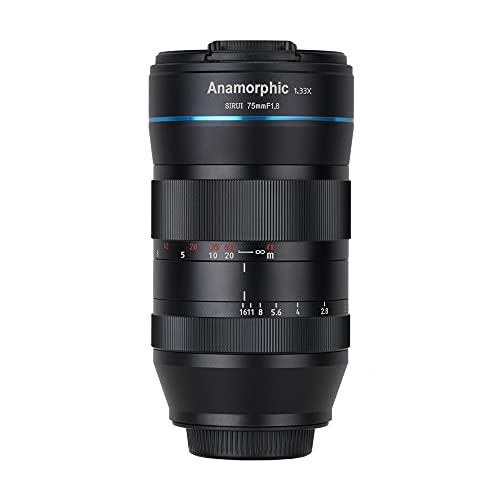
SIRUI 75mm F1.8 1.33X APS-C Anamorphic E Mount
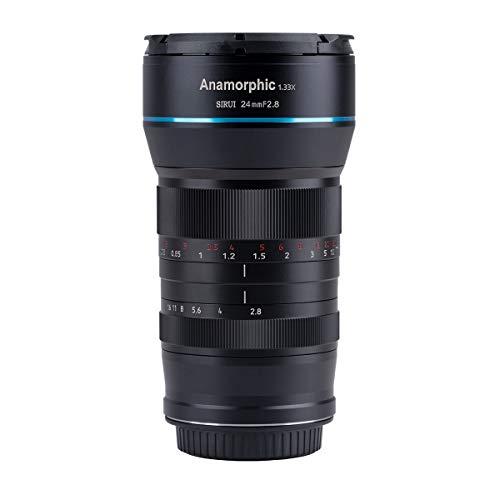
SIRUI 24mm F2.8 1.33X APS-C Anamorphic E Mount

SIRUI 50mm F1.8 1.33X APS-C Anamorphic E Mount

SIRUI 20mm T1.8 1.33X S35 Autofocus Anamorphic E Mount

SIRUI 35mm F1.8 1.33X APS-C Anamorphic E Mount

SIRUI 40mm T1.8 1.33X S35 AF Anamorphic E Mount

SIRUI Astra 75mm 1.33X Anamorphic Cine Lens E Mount
More On The Choices That Made The List
The Astra 50mm sits at the top of SIRUI’s full-frame autofocus lineup, and the difference shows. A 44mm image circle covers standard full-frame sensors corner to corner, so your squeeze stays clean even on demanding bodies. Autofocus is the standout addition compared to the manual-focus anamorphics that came before it.
For run-and-gun filmmakers, autofocus on an anamorphic is a quiet luxury. Pulling focus on a widescreen frame with a shallow depth of field used to mean focus marks and a buddy on a follow wheel. Now you can trust the camera to lock while you move through a scene. The constant 1.33X squeeze keeps your 2.4:1 aspect ratio consistent across focal lengths in the Astra lineup.
Where It Helps
- Full-frame coverage with a 44mm image circle, so corners stay sharp on demanding sensors
- Autofocus on an anamorphic saves time on solo shoots and documentary-style projects
- Cine-style build quality that holds up to follow-focus rigs and matte boxes
- The 1.33X squeeze is a good balance: dramatic enough for character, forgiving enough for everyday work
- Pairs naturally with the Astra 75mm if you want matched glass across focal lengths
Practical Considerations
- Autofocus on cine glass is still slower than native stills lenses, so manual override comes in handy for tricky pulls
- Full-frame coverage means you’ll see any breathing more clearly, so aperture stops during focus pulls stay important
- Cleaning anamorphic front elements takes a bit more care than standard glass, given the curved front profile
Key Product Details
Right Fit For
Full-frame filmmakers shooting narrative or commercial work who want autofocus convenience paired with a true cine build.
A Better Fit Elsewhere
Budget-focused creators on APS-C bodies should consider the SIRUI 50mm F1.8 1.33X APS-C, which costs less and targets smaller sensors.
This 35mm gives you a serious cinematic squeeze without requiring a full cinema budget. The 1.6X factor renders a 2.4:1 frame from a 3:2 sensor and a wider 2.8:1 when you shoot 16:9. That extra squeeze makes oval bokeh more pronounced and flares more dramatic than the 1.33X options in this roundup.
The lens is listed here in RF mount, so it suits Canon’s mirrorless cinema cameras. If you shoot Sony, the same focal length is available in E mount. T2.9 is the maximum aperture, which keeps things workable in mixed light. For documentary shooters and indie narrative directors, the horizontal field of view equivalent to a 22mm full-frame lens gives you a wide that still feels intimate.
Reasons It Performs
- 1.6X squeeze is heavier than 1.33X, producing more dramatic anamorphic character per focal length
- Full-frame coverage on Canon RF bodies keeps the squeeze consistent across the frame
- 35mm focal length with a 22mm horizontal equivalent gives a wide field that still frames dialogue
- Cine-grade T-stop marking aids exposure consistency when changing setups
Trade-Offs To Consider
- Higher squeeze factor means heavier anamorphic character, which some viewers find distracting in naturalistic scenes
- Wider equivalent focal length can feel cramped in tight interiors, so wider shots need planning
- The larger front element of a 1.6X lens may not match standard matte boxes across the lineup
Best Suited To
Filmmakers on Canon RF mount who want pronounced anamorphic flares and oval bokeh without committing to vintage cinema glass.
Consider Something Else When
Sony shooters should look at the SIRUI Astra 50mm instead, since its autofocus and E-mount fit align better with Alpha workflows.
The 75mm F1.8 is the longest focal in the original APS-C anamorphic family, and it pulls double duty as both a portrait lens and a dialogue lens. The 1.33X squeeze gives you the classic 2.4:1 frame while keeping that anamorphic glow in highlights and bokeh. Aviation-grade aluminum housing keeps weight manageable on smaller bodies.
On a Sony APS-C body, this lens feels like a 50mm equivalent with extra reach and character. That makes it well suited to interview setups, music videos, and tight narrative scenes where you want subject separation. Owners commonly cite the bright F1.8 aperture as a key advantage for low-light interiors, where many anamorphics struggle.
What Earns Its Place
- F1.8 aperture is brighter than most anamorphics in this price range, helping in low-light venues
- 75mm focal length on APS-C creates strong subject isolation for interviews and portraits
- Aviation aluminum body balances rigidity with reasonable weight on smaller rigs
- Blue flare option delivers the classic horizontal anamorphic streak in point lights
Points To Keep In Mind
- Longer focal length means a longer minimum focus distance, so wide environmental shots require more space
- APS-C coverage means this is not a fit for full-frame bodies, where you’ll see heavy vignetting
- Manual focus pulls on a 75mm at F1.8 demand steady hands or a quality follow focus
Who Should Grab It
APS-C Sony owners who shoot interviews, music videos, or dialogue scenes and want creamy subject separation with anamorphic character.
Look Elsewhere When
Full-frame shooters should consider the SIRUI Astra 75mm, which is built for larger sensors and adds autofocus.
The 24mm is the widest option in the original APS-C line, and the angle of view feels expansive without becoming a fish-eye. The minimum focus distance drops to 0.6 meters, so you can get close to a subject even in tight spaces. That makes it a natural fit for handheld vlogs, run-and-gun docs, and small-room narrative work.
Compare that to the 35mm and 50mm APS-C siblings, which need more breathing room. The precision aluminum alloy housing and copper focus rings feel solid in the hand, with anti-slip teeth that hold up under gloves or quick pulls. The blue flare option continues the classic horizontal streak look that made anamorphic glass famous.
Useful Touches
- Short 0.6m minimum focus distance helps in cramped interiors and tight indoor scenes
- Wide horizontal field of view suits environmental storytelling and travel footage
- Aluminum alloy body with copper focus rings gives a tactile, durable feel
- Works for stills as well as video, with that 2.4:1 cropped look unique to anamorphic captures
Honest Caveats
- F2.8 maximum aperture is dimmer than the 75mm F1.8, so low-light venues push ISO higher
- Wide angle with 1.33X squeeze can introduce noticeable barrel distortion on some sensor sizes
- Lens hood options for anamorphic front elements are less common than standard filter threads
Built With In Mind
Vloggers and travel filmmakers on APS-C Sony bodies who want a wide anamorphic for environmental storytelling.
Skip It When
Low-light event shooters will find the F2.9 limit constraining, where the SIRUI 40mm T1.8 offers more speed.
The 50mm F1.8 is the original anamorphic that brought this category to independent filmmakers. The horizontal field of view works out to roughly a 37.5mm equivalent on full frame, giving you a versatile focal length that handles dialogue and detail shots. Schott glass elements keep the optical character clean.
For narrative shooters building their first anamorphic kit, this 50mm is often the starting point. The 1.33X squeeze is gentle enough to use in naturalistic scenes while still giving you the signature oval bokeh and blue flare. Aviation aluminum housing keeps weight in check on smaller Sony bodies.
The Upside
- 50mm focal length is versatile for both dialogue scenes and detail inserts
- Schott glass elements contribute to cleaner optical performance than generic alternatives
- 1.33X squeeze offers anamorphic character without overwhelming naturalistic footage
- Lightweight build suits gimbal work and handheld rigs
Things To Consider
- APS-C image circle means this won’t cover full-frame sensors without vignetting
- Manual focus only, so solo shooters need accurate focus marks or a monitor with peaking
- Blue flare option may show up in unexpected places, so planning for light sources helps
Quick Facts
Who It Suits Best
Independent filmmakers on APS-C Sony bodies who want a versatile narrative focal length with cinematic character.
Reach For A Different Pick When
Full-frame shooters should consider the SIRUI Astra 50mm, which targets larger sensors with autofocus.
The 20mm T1.8 brings autofocus to a wide-angle anamorphic, which has historically been a manual-focus-only territory. An STM stepping motor drives smooth, quiet focus pulls that work for video as well as hybrid stills. The T1.8 aperture is unusually bright for this focal length and squeeze combination.
The Super 35 sensor coverage broadens compatibility across cinema bodies like the FX3 and FX30, plus APS-C lines such as the A6500 and A6700. Eye-detection autofocus adds tracking that handhelds and gimbal operators appreciate. The neutral flare option keeps highlights clean rather than colored, which suits documentary work.
Everyday Wins
- T1.8 aperture gives strong low-light performance for events and interiors
- Autofocus with eye detection is rare on wide anamorphics, helping solo shooters
- S35 image circle covers a range of Sony bodies from APS-C to FX-line cinema cameras
- Neutral flare option delivers anamorphic character without colored streaks
Where It Is Less Suited
- Super 35 coverage means full-frame shooters see vignetting, so sensor match matters
- 20mm focal length is wide for interview setups, so additional glass may be needed for tight coverage
- Autofocus on cine glass is still slower than native stills lenses, so pre-planned focus marks help
Feature Snapshot
Made For
Hybrid shooters on Super 35 Sony bodies who want wide autofocus anamorphic coverage for both video and stills.
Not Your Match When
Full-frame filmmakers should consider the SIRUI 35mm T2.9 1.6X, which covers larger sensors with a stronger squeeze.
This 35mm ships with an adapter, which adds flexibility for shooters working across multiple mount systems. The horizontal field of view works out to roughly 26.3mm equivalent on full frame, giving you a wide that’s still useful for handheld documentary work. Aircraft aluminum housing keeps the lens light enough for gimbal use.
The F1.8 aperture is bright for an anamorphic in this class, helping in dim interiors. Precision copper focus components add a tactile quality to manual pulls. Owners often note the blue flare option as a creative asset for nighttime street scenes and concert lighting.
Why It Works Well
- Included adapter broadens mount compatibility across camera systems
- 35mm focal length with 26.3mm equivalent horizontal FOV is wide but versatile
- F1.8 maximum aperture supports low-light scenes without pushing ISO too high
- Lightweight aluminum housing suits handheld and gimbal setups
Factors To Consider
- APS-C image circle means this isn’t suited to full-frame bodies without vignetting
- Adapter adds length to the rig, which may affect gimbal balance
- Manual focus only on this model, so accuracy tools help in shallow-depth setups
Whose Shelf It Belongs On
Multi-camera shooters who want a 35mm anamorphic with adapter support for cross-system rentals or shared kits.
Where Another Pick Suits Better
Sony shooters committed to a single system can save money by choosing the SIRUI 35mm F1.8 in native E mount, skipping the adapter.
The 40mm T1.8 targets dim venues where most anamorphics struggle. A T1.8 aperture pulls in enough light for night streets, concerts, and indoor events without forcing ISO into grain territory. Autofocus is part of the package, which is rare at this speed.
Compared to the original manual-focus APS-C line, this S35 lens trades a bit of reach for autofocus and a brighter aperture. The 1.33X squeeze delivers the 2.35:1 widescreen look for music videos, weddings, and travel content. Owners report that the autofocus speed is best suited for slow to medium-paced subjects, with very quick movement still favoring manual.
What Stands Out
- T1.8 aperture handles dim venues better than most anamorphics in this roundup
- Autofocus on a fast anamorphic is uncommon, helping event and wedding videographers
- 40mm focal length covers common interview distances with room to spare
- 2.35:1 frame suits music videos and cinematic narrative projects
Things To Weigh
- Autofocus speed is fine for slow subjects but may lag on fast action, so manual override stays useful
- Super 35 coverage won’t suit full-frame shooters, who should look at the Astra line
- Fast T1.8 aperture with anamorphic character means careful focusing on critical subjects
Feature Overview
Perfect Match For
Wedding and event videographers on Super 35 Sony bodies who shoot dim venues and want autofocus with anamorphic character.
Swap It Out When
Filmmakers needing wider framing should look at the SIRUI 20mm T1.8, which trades focal length for the same low-light speed.
The Astra 75mm extends the autofocus full-frame line into longer focal lengths, and the result fills a real gap for portrait-style anamorphic work. The 44mm image circle covers standard full-frame sensors corner to corner, so the squeeze stays consistent across the frame. Pair it with the Astra 50mm and you have a matched two-lens kit for narrative shoots.
For dialogue scenes and tight two-shots, the 75mm offers subject separation that wider anamorphics can’t match. The constant 1.33X squeeze means the aspect ratio won’t shift between focal lengths in your edit. Owners moving up from manual-focus anamorphics often cite the autofocus as the biggest workflow improvement.
The Practical Payoff
- 75mm focal length on full frame gives flattering subject separation for dialogue
- Autofocus on a long anamorphic simplifies two-shot framing and interview setups
- Matched image circle with the Astra 50mm keeps your kit consistent across focal lengths
- Full-frame coverage avoids vignetting on demanding sensor sizes
Potential Sticking Points
- Longer focal length means a longer minimum focus distance, so wide shots need space
- Autofocus on cine glass still trails native stills lenses, so focus pulls benefit from manual marks
- Premium build adds weight over the APS-C anamorphics, so gimbal balance matters
Feature Card
Who Will Love This
Full-frame filmmakers shooting dialogue scenes and portraits who want a matched autofocus anamorphic kit at two focal lengths.
Another Choice May Suit
APS-C shooters on a budget will get more value from the SIRUI 75mm F1.8 APS-C, which costs less and targets smaller sensors.
Picking An Anamorphic Lens E Mount That Fits Your Work
Choosing an anamorphic for your Sony E mount camera comes down to sensor match, focal length needs, and how much autofocus matters to your workflow. Here’s a practical guide to the attributes that actually change the way you shoot.
Sensor Size And Image Circle
Anamorphic lenses project a wider horizontal field than spherical glass, and that projection must cover your sensor cleanly. Full-frame bodies need an image circle of at least 44mm to avoid vignetting in the corners. APS-C and Super 35 bodies can use lenses designed for smaller sensors, which often cost less and weigh less.
If you upgrade your camera body later, a full-frame anamorphic travels with you. An APS-C-only lens may not work as well on a larger body. Match the lens to your current and near-future sensor before anything else.
Squeeze Factor And Aspect Ratio
The squeeze factor determines the aspect ratio you end up with after desqueezing in post. A 1.33X squeeze gives you roughly 2.4:1 from a 16:9 sensor. A 1.6X squeeze gives you a wider 2.8:1 frame, with more pronounced anamorphic character in flares and bokeh. Higher squeeze factors look more cinematic but also amplify any optical quirks.
For naturalistic documentary work, 1.33X tends to feel balanced. For music videos and stylized narrative, 1.6X adds drama. Pick the squeeze that matches the visual tone you’re going for.
Autofocus Versus Manual Focus
Autofocus on anamorphic glass used to be rare, but newer S35 and full-frame options now include stepping motors. Autofocus speeds up solo shoots, gimbal work, and event videography where pulling focus manually is impractical. Manual focus still gives you precise control for cinematic narrative, where every focus mark matters.
If you often shoot alone or move quickly, autofocus is worth prioritizing. If you work with a focus puller or shoot scripted narrative with planned marks, manual focus keeps the option open.
Maximum Aperture And Low Light
Most anamorphics max out at T2.8 or T2.9, which is slower than typical stills glass. Faster options like T1.8 open up low-light venues but usually cost more and weigh more. If you shoot concerts, weddings, or night exteriors often, a T1.8 lens pays off in cleaner footage.
If you shoot mostly daylight exteriors or well-lit interiors, a slower aperture is workable and saves money. Match the aperture to your typical lighting conditions rather than chasing the fastest stop you can find.
Key Considerations Across These Picks
Common Slip Ups When Buying Anamorphic Glass
The biggest mistake is matching a full-frame lens to an APS-C body and expecting the same field of view, or vice versa. Sensor coverage shifts the squeeze behavior and can introduce vignetting you didn’t plan for. Another trap is buying a 1.6X squeeze expecting subtle character, only to find the flares overpower your naturalistic footage. Test the lens if you can, or watch real-world desqueezed footage before committing to a squeeze factor that doesn’t match your style.
Why Top-Tier Anamorphic Glass Costs More
Higher-end anamorphics use Schott glass elements, robust cine housings, and increasingly autofocus systems that take years to engineer. The Astra line’s 44mm image circle alone requires precise optical design to keep the squeeze consistent across the frame. Faster apertures like T1.8 demand larger front elements and heavier construction. You pay for optical quality, build durability, and the workflow gains of autofocus, all of which matter for professional work where reliability and image quality are non-negotiable.
Frequently Asked Questions
What Is An Anamorphic Lens And Why Use One?
An anamorphic lens squeezes the horizontal field of view during capture, then desqueezes in post to produce a widescreen image with characteristic oval bokeh and horizontal flares. The wider aspect ratio and optical quirks give footage a cinematic look that’s hard to replicate with spherical glass and cropping alone.
Will An Anamorphic Lens Work On Full-Frame Sony Cameras?
Yes, when the lens’s image circle covers a full-frame sensor. Look for lenses with at least a 44mm image circle for clean corner-to-corner coverage. Smaller-sensor lenses may vignette or lose sharpness at the edges on full-frame bodies.
Do Anamorphic Lenses Affect Manual Focus Technique?
Manual focus on an anamorphic at wide apertures demands careful technique, since depth of field is shallow and the focus scale can be sensitive. Focus peaking on your monitor, marked focus rings, and a follow-focus wheel all help. Autofocus anamorphics reduce this burden considerably for solo shooters.
Can Anamorphic Lenses Be Used For Photography Too?
Yes, though the 2.4:1 or wider aspect ratio changes your framing choices. Some photographers shoot stills with the squeeze intact for a unique cinematic look, then desqueeze in post. The flares and bokeh carry over to stills just as they do in video.
What’s The Difference Between 1.33X And 1.6X Squeeze?
A 1.33X squeeze gives you roughly a 2.4:1 aspect ratio from 16:9 footage, with mild anamorphic character. A 1.6X squeeze produces a wider 2.8:1 frame with stronger flares and more pronounced oval bokeh. Higher squeeze factors feel more dramatic but can be too stylized for naturalistic work.
Closing Remarks
Anamorphic glass adds character that no spherical lens can replicate, and the E mount options here cover most focal lengths and sensor sizes you might shoot on. Match the lens to your sensor first, then decide how much autofocus and low-light speed you need. The right anamorphic becomes a creative tool you’ll reach for on every project that calls for that cinematic feel.