Your phone already takes solid photos, but a small add-on can push it further than the stock lens ever could. Maybe you’re chasing crisper close-ups of plants on your windowsill, or you want dramatic fisheye shots without buying a dedicated camera. Some shoppers just want to protect a fragile lens array from scratches and pocket grit. This list covers all three lanes: creative attachments, filter kits for serious mobile shooters, and tempered glass protectors for the Galaxy S26 Ultra crowd.
An Overview Of The Picks

APEXEL 10X Tele-Macro Pro Dual Lens 2-in-1

Moment 14mm Fisheye Lens (M-Series)

Hoerrye S26 Ultra Lens Protector (Black)

Hoerrye S26 Ultra Lens Protector (Colorful)

Hoerrye S26 Ultra Lens Protector (Blue)

NEEWER 67mm Phone ND Filter Kit

NovelGoal 52mm Phone Camera Clip
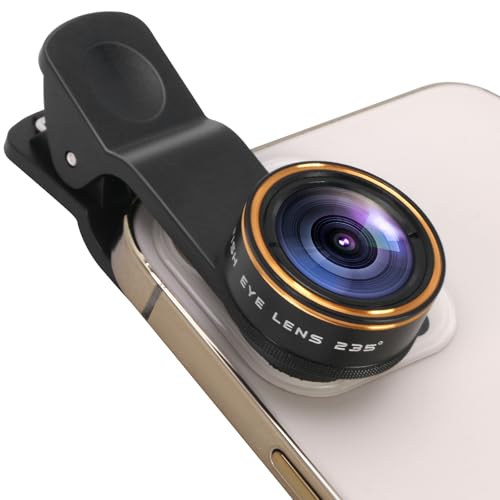
Beysfilter 235° Fisheye Clip-On Lens

ALILUSSO 180° Fisheye Lens with Clip
A Closer Look At Each Pick
Two lenses in one clip-on body is the kind of math that actually works. The APEXEL pair folds a 10X telephoto for pulling distant stage moments closer alongside a 10X macro that focuses around 8 inches away, which keeps your shadow off the flower or bug you’re studying. In real-world shooting, that working distance matters more than the magnification number, because you can frame insects and leaves without getting close enough to disturb them.
Travelers and concertgoers tend to get the most from this hybrid, since one pocket-sized attachment replaces two dedicated optics. Compared to the fisheye picks later in this list, APEXEL is about pulling detail forward rather than stretching the scene wide, so it suits a different creative lane entirely.
The Case For It
- Two lenses in one attachment cuts down on what you need to carry.
- Macro working distance around 8 inches reduces shadows on close-up subjects.
- Telephoto reach helps concert seats feel like front-row seats.
- Clip-on design works across many recent iPhones without a special case.
Things To Consider
- Telephoto and macro share one housing, so optical quality splits between both roles.
- Owners commonly report alignment drift when the clip loosens over time.
Feature Snapshot
Who Will Love This
Concertgoers, hikers, and casual nature shooters who want one pocket attachment instead of a small bag of glass.
A Better Fit Elsewhere
Reach for the Moment 14mm Fisheye Lens when sweeping wide-angle cinematic shots matter more than reach.
Mobile fisheye lenses usually fall into two camps: cheap plastic that smears the corners, or serious glass from a known brand. Moment’s 14mm sits firmly in the second camp. The hand-assembled body uses cinema-grade glass with 4-element bi-aspheric optics, and a 200° field of view gives you the exaggerated curve that defines the fisheye look.
It uses Moment’s M-Series twist-and-lock mount, which means you’ll also need a Moment Drop-In or Universal mount for your specific phone. The lock feels precise once seated, and on iPhones it mounts over the wide lens, though some Pixel and Galaxy setups route through the telephoto instead. For creators shooting short films or skate edits, the optical clarity is the difference between a fun effect and a usable shot.
Positive Points
- Hand-assembled cinema-grade glass with 4-element bi-aspheric design.
- 200° field of view pushes well past standard wide-angle clips.
- M-Series twist-and-lock mount holds alignment firmly during handheld shots.
- Compatible with iPhone, Pixel, and Galaxy when paired with a Moment mount.
Points To Note
- Requires a separate Moment Drop-In or Universal mount to function.
- Lens position varies by phone, so some setups need app tweaks to align framing.
Right Fit For
Cinematic shooters and mobile filmmakers who want a pro-grade fisheye without dragging a separate camera along.
Look Elsewhere When
Skip this if a tight budget matters more than glass quality, the Beysfilter 235° fisheye offers a wilder effect for casual clips.
Samsung’s flagship camera bumps look beautiful and sit right where your fingertip lands when you set the phone down. One face-down slide onto concrete can crack that array, and a repair runs into serious money. Hoerrye’s black lens protector wraps each glass element in a tempered cover ringed by an aluminum frame, which spreads impact across the housing rather than the lens itself.
The 9H+ rating (a hardness scale where 9H sits just below diamond) speaks to scratch resistance against keys and grit, while the 12-foot drop rating keeps things credible for clumsy hands. Compared to the colorful and blue siblings later in this list, this version is the conservative pick for shoppers who want a clean black frame that disappears against the camera island.
The Practical Payoff
- Aluminum-alloy frame adds rigidity around the tempered glass.
- 9H+ surface helps shrug off pocket grit and table scratches.
- Case-friendly cutout avoids push from thicker protective shells.
- Individual lens rings let you replace one if a corner takes the hit.
Trade Offs
- Installation requires careful dust removal; any speck under the glass shows up in shots.
Quick Facts
Built With In Mind
Samsung Galaxy S26 Ultra owners who treat their phone as a daily driver and want a forget-it’s-there black protector.
Consider Something Else When
Pick the Hoerrye blue version if you want the camera cluster to pick up a hint of color against a neutral back panel.
Same protector recipe as the black version above, just dressed up with a multi-tone frame. Hoerrye’s colorful edition uses the same 9H+ tempered glass over each lens and the same aluminum-alloy ring, so the protection math doesn’t change. What does change is the visual fingerprint: the rim picks up light and reads as a small design accent rather than disappearing into the camera bump.
For shoppers who picked a colorful S26 Ultra finish or want their phone case to coordinate, this option offers a friendlier look without giving up the 12-foot drop rating. The frame finish is the only real point of difference, which makes the choice largely about taste.
The Good Stuff
- Color-accented frame dresses up the otherwise plain camera island.
- Same 9H+ tempered glass and aluminum construction as the black sibling.
- Individual rings mean one cracked protector doesn’t force a full replacement.
- Plays well with most cases thanks to the cutout profile.
Less Ideal Details
- Color shift between batches has been reported, so the swatch you imagined may not match exactly.
Perfect Match For
Style-conscious S26 Ultra owners who treat their camera bump as part of the phone’s design rather than something to hide.
Swap It Out When
Pick the plain black Hoerrye protector if you want the camera cluster to read as one uniform shape against any case color.
The blue edition of Hoerrye’s S26 Ultra protector is the same armor in a different outfit. You still get the 9H+ tempered glass, the aerospace aluminum-alloy ring, and the 12-foot drop rating that the rest of the line shares. The blue anodized tone is the standout feature, giving the camera bump a single confident color rather than the multi-color playful finish of the colorful option above.
For builds where the phone case leans navy, slate, or even a soft sky tone, this protector reads as a thoughtful accent instead of a clashing rim. Installation is the same careful alignment dance, and the case-friendly cutout should clear most shells without forcing a lid.
Practical Pluses
- Single-color blue frame pairs with monochrome or cool-tone cases.
- 9H+ tempered glass surface resists scratches from everyday pocket debris.
- Aluminum-alloy frame holds up to drop impacts better than glass alone.
- Case-friendly profile avoids the lift-up pressure of thicker shells.
Practical Considerations
- Blue finish may scratch at the edges over months of carry, exposing raw aluminum beneath.
Whose Shelf It Belongs On
S26 Ultra owners building a blue or slate-themed setup who want the camera array to coordinate with their case color.
Skip It When
Pick the colorful Hoerrye variant if you want a multi-tone frame instead of a single accent color.
ND (neutral density) filters cut light without shifting color, letting you shoot longer exposures or wider apertures in daylight. A CPL (circular polarizer) knocks down reflections on water and glass. NEEWER’s 67mm kit packages both, plus a 6-point star and graduated color filters, into one clip that mounts to your phone via a cold shoe (a standard accessory mount on top of the clip).
The cold shoe is the quiet hero. You can stack an LED light or wireless mic on top of the same clip, so a vlogger walking around a market can run with a single rigged handle instead of three loose attachments. Side rubber pads keep the phone body safe, and the locking knob sits clear of the touchscreen, so swipe gestures still work while the rig is mounted.
Why It Works Well
- Four-in-one filter stack covers most creative lighting and reflection needs.
- Cold shoe mount accepts LED lights or mics without a second rig.
- 67mm thread accepts standard photography filters beyond the included set.
- Side rubber pads protect the phone body during clamping.
Soft Spots
- Filter swaps while mounted can shift framing, so a quick recheck is part of the workflow.
- Locking knob placement takes practice on wider phones.
Feature Rundown
Best Suited To
Video creators and vloggers running a single mobile rig for both audio and lighting accessories.
Reach For A Different Pick When
The NovelGoal 52mm clip is a simpler match for photographers who just need a threaded mount without a cold shoe.
Most phone-camera filter kits assume you’re starting from scratch. NovelGoal’s 52mm clip assumes you already own a stack of 52mm threaded filters from a real camera and just need a way to mount them to your phone. The aluminum-alloy body has a 45mm inner diameter and a 60mm clamping depth, which clears most modern smartphones, even in a slim case.
The square-hole cutout is the design clue. It keeps the filter centered over the main wide lens while leaving the ultrawide and flash free, so you can swap filters without covering the other cameras. For shoppers who treat their phone as a backup body or shoot hybrid sets, this clip turns existing glass into a mobile rig without buying duplicates.
Strengths Worth Knowing
- Standard 52mm thread accepts photography filters you may already own.
- Aluminum-alloy body holds shape under repeated clamping.
- Square cutout keeps ultrawide and flash cameras uncovered.
- 60mm clamping depth fits most phones with a slim case attached.
Factors To Consider
- Square opening requires precise centering over the wide lens; off-axis filters cause vignetting.
- Filters are sold separately, so total cost climbs depending on the kit you build.
Made For
Hybrid shooters who already own 52mm filters and want to reuse them on a phone without buying a mobile-specific set.
Not Your Match When
Skip this if you’d rather have filters included out of the box; the NEEWER 67mm kit ships ready to shoot.
Fisheye lenses compress everything into a bubble, and 235° takes that bubble further than most rivals. Beysfilter’s clip-on multi-layer optical glass pulls sky, ground, and foreground into the same frame, so a single landscape shot becomes three scenes stacked into one. The dramatic barrel curve reads as cartoon or surreal rather than documentary, which suits short-form video and travel edits well.
The soft rubber clamp is the practical detail. It grips the phone without scratching the body, and the lens mounts over most recent iPhone and Galaxy main cameras without needing a case removal. For vloggers walking through markets or skaters filming run-ups, the 235° field means less camera movement is needed to capture the whole scene.
What Makes Sense
- 235° field of view captures sky, ground, and subject in one frame.
- Multi-layer optical glass keeps the center reasonably sharp.
- Soft rubber clamp protects phone finish during mounting.
- Universal fit across recent iPhone, Samsung, and Pixel main cameras.
Things To Weigh
- Strong barrel distortion stretches faces at the edges, so subjects should stay centered.
- Clamp pressure on phones with thick cases may need a case-off mounting.
Who Should Grab It
Vloggers, skaters, and travel content creators who want a single lens that turns everyday scenes into surreal reels.
Where A Sibling Pick Shines
Pick the Moment 14mm Fisheye Lens when optical clarity matters more than the widest possible field of view.
The 180° fisheye is the classic entry point into mobile lens experiments, and ALILUSSO’s clip-on keeps the recipe simple. Mount over the main camera, snap a photo, and you get that circular, slightly mystical bubble that defined early social media filters. The included clip is wide enough to clear most phones without a case, and the glass is serviceable for casual sharing.
Vignetting (dark corners around the edges of the frame) is the honest caveat here, and it’s visible on every shot. For shoppers who want to play with the effect before committing to a higher-end fisheye, the trade feels fair. Photographers chasing an edge-to-edge clean image should step up to the Moment 14mm instead.
Key Advantages
- Entry-level price makes it easy to experiment with fisheye effects.
- Universal clip fits most modern smartphones without a special case.
- 180° field creates the recognizable circular bubble look.
Honest Caveats
- Visible vignetting darkens the corners of every shot.
- Optical clarity drops off toward the edges compared to premium fisheye glass.
Who It Suits Best
Casual experimenters and social media tinkerers who want a fun effect without committing to a higher-end lens.
Another Choice May Suit
Pick the Beysfilter 235° clip when you want a wider field and accept a similarly playful look with more reach.
Picking The Right Android Camera Lens for Your Style
Mobile photography add-ons split into three lanes, and knowing which lane you live in saves a lot of trial and error. Creative shooters chase a specific look (fisheye, telephoto, macro) and want glass that delivers that look cleanly. Filter-focused photographers care about thread size, mount stability, and how filters stack on the rig. Phone owners who never take the case off mostly want protection, since cracked lens arrays cost more than any accessory on this list.
Match the lens to your phone first. Many clip-on designs assume a specific camera position, and recent flagships often shift the ultrawide and telephoto around between generations. If your phone has a multi-camera bump, check that the attachment covers the lens you actually use. The APEXEL tele-macro hybrid works best over the main lens, while the Hoerrye protectors need precise alignment across the entire array.
Working distance matters more than magnification numbers. A 10X macro that focuses at 8 inches lets you shoot insects and flowers without casting a shadow. A 10X macro that needs 2 inches forces you close enough to scare the subject. The same rule applies to telephoto: longer reach only helps when the optical quality holds up across the full zoom range.
If filters are your priority, think about thread size and accessories before buying a clip. A 67mm mount opens access to a larger photography filter ecosystem, while 52mm threads are common among entry-level filter kits. Cold shoe mounts add room for a light or mic, which matters more for video than for stills.
Smart Shopping Notes for Mobile Lens Buyers
Pitfalls Shoppers Hit
The most common mistake is buying a lens before checking which camera it mounts over. Many recent phones place the strongest sensor on the ultrawide or telephoto, not the wide main lens, and a fisheye clipped over the wrong sensor produces a soft, cropped result. Reading the listing’s mounting notes saves a return.
Another trap is ignoring vignetting. Cheaper fisheye lenses show dark corners that no app filter fully fixes. If clean edges matter for your work, a premium fisheye earns its cost. Cheap telephoto lenses suffer a similar problem with edge softness that becomes obvious in daylight shots.
When Paying More Pays Off
Premium glass earns its keep in three places: corner sharpness, build consistency, and mount precision. Moment’s hand-assembled optics and twist-and-lock mount cost more because the alignment stays consistent shot after shot, which matters for video where every frame is reviewed. Aerospace aluminum frames on protectors hold up better over months of pocket carry than plastic frames that loosen over time. Higher-tier filter kits include cold shoe mounts and rubber-padded clamps that protect the phone body, two details that budget clips skip and that become obvious after a few sessions of real use.
Frequently Asked Questions
Do clip-on lenses work with phone cases on?
Most clip designs clear slim cases under 2mm thick, but rugged cases usually require mounting with the case removed. Check the clamp depth in the listing, and expect to test fit on your specific phone before a shoot.
Will a fisheye lens cause dark corners in photos?
Budget fisheye lenses commonly produce vignetting, which is the darkening at the edges of the frame. Premium fisheye glass and ultra-wide native phone lenses reduce this effect, but it rarely disappears entirely on a clip-on attachment.
How does an ND filter help phone photography?
ND filters reduce light entering the lens without changing color, letting you shoot wider apertures or longer exposures in bright daylight. They’re useful for video shooters who want cinematic motion blur and for photographers who shoot waterfalls or moving water.
Are tempered glass lens protectors worth it?
For flagship phones with large camera bumps, protectors reduce the risk of cracked lens glass from face-down drops or pocket grit. The cost is far lower than a single lens replacement, so for daily drivers the math works out in favor of protection.
Can I use photography filters on my phone?
Yes, with a clip adapter that has a standard filter thread. A 52mm or 67mm threaded clip accepts the same CPL, ND, and star filters used on mirrorless cameras, which is helpful for hybrid shooters who already own a filter kit.
Closing Thoughts
Start with the lane that matches your actual shooting habit: creative lens, filter stack, or protector. Within that lane, match the thread size and mount type to your phone before anything else. The right add-on disappears into your workflow, and the wrong one ends up in a drawer after a week.