Shopping for an APS-C lens in 2026 means navigating a market that finally feels mature. Mirrorless bodies keep getting lighter, autofocus keeps getting smarter, and the gap between budget glass and premium optics has narrowed in ways that matter for daily shooting. The problem: too many choices, too many specs, and not enough honest context about what each lens actually does once it’s on your camera. This roundup walks through nine options across prime and zoom categories, wide and telephoto, manual and autofocus, so you can match a lens to the way you actually shoot.
A Quick View Of The Lineup
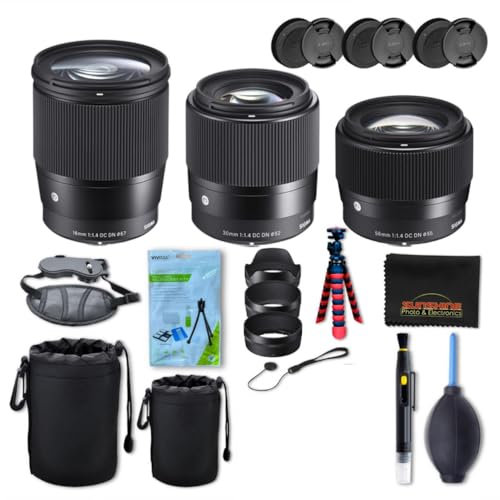
Sigma 16mm + 30mm + 56mm f1.4 DC DN Contemporary Lens for Sony E

Canon EF 75-300mm f/4-5.6 III Telephoto Zoom Lens

VILTROX AF 75mm F1.8 EVO APS-C Prime Lens for Sony E-Mount

Canon EF 100mm f/2.8L IS USM Macro Lens
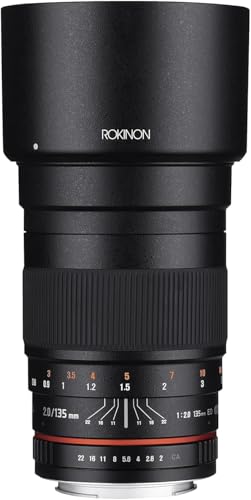
Rokinon 135mm F2.0 ED UMC Telephoto Lens for Canon EF

Sigma 10-18mm F2.8 DC DN for Canon RF Mount
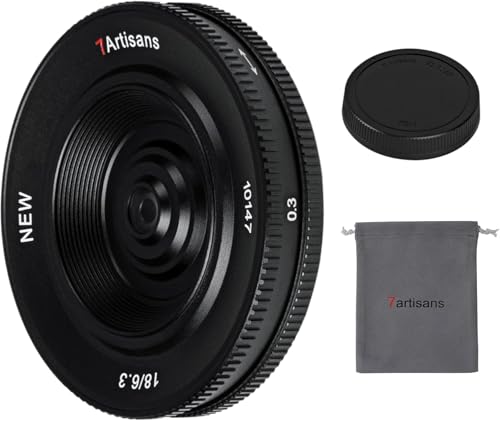
7artisans 18mm F6.3 Mark II APS-C Lens for Fujifilm X

7artisans 25mm F0.95 APS-C Lens for Canon EOS-M

VILTROX 27mm F/1.2 Pro XF APS-C Lens for Fuji X
Inside Each Recommended Option
Three fast primes in one bundle solve the most common APS-C problem: which lens to buy first. The Sigma trio (16mm, 30mm, and 56mm, all f/1.4) covers wide environmental work, everyday normal, and short telephoto without forcing you to pick one focal length blind. Sony E shooters building a kit from scratch get all three glass elements at once, plus a four-year warranty and accessories through the bundle listing.
Compared to the Canon EF 75-300mm covered below, this set is the opposite philosophy: fixed focal lengths, much faster apertures, no zoom range. The trade-off shows up when you want to recompose without moving your feet. For most Sony E owners moving from a kit lens, though, the jump to f/1.4 changes everything about indoor and twilight shooting.
A Few Strong Suits
- f/1.4 across all three lenses means indoor shots stop needing a flash
- Three focal lengths cover landscapes, everyday scenes, and headshots in one go
- DC DN Contemporary line is built to stay light on smaller APS-C bodies
- Four-year manufacturer warranty adds confidence for long-term ownership
- Bundle pricing typically undercuts buying each lens individually
Points To Keep In Mind
- Three primes mean carrying more weight than one zoom lens
- You’ll need to swap glass to change framing, unlike the Canon EF 75-300mm’s flexibility
Made For
Sony E shooters building a versatile prime kit who want fast apertures for low-light and shallow depth of field without buying lenses one at a time.
Where Another Pick Suits Better
The Sigma 10-18mm F2.8 DC DN for Canon RF Mount makes more sense for RF-mount shooters who mainly want a wide-angle zoom for interiors and landscapes.
The Canon EF 75-300mm f/4-5.6 III has been a starter telephoto for Canon SLR owners for years, and the basic formula still works: long zoom range, light enough to handhold, simple controls. At 2.8 inches in diameter and around 16.8 ounces, it’s manageable on entry-level DSLRs without becoming a workout. The 4.9-foot closest focusing distance keeps you far enough from subjects that you’ll be reaching for longer glass for true close-up work.
Where the Sigma trio leans toward aperture and creative control, this Canon leans toward reach and accessibility. Beginners learning how a telephoto zoom behaves will find the focal range generous for sports, school events, and casual wildlife. The smoother zoom mechanism (an upgrade on this Mark III version) helps tracking moving subjects.
Reasons It Performs
- 75-300mm range covers most casual telephoto needs in one lens
- Light enough at around 16.8 ounces for handheld shooting
- Simple control layout suits beginners learning focal-length behavior
- EF mount compatibility spans a wide range of Canon DSLRs
Trade-Offs To Consider
- Variable f/4-5.6 aperture limits low-light performance compared to f/1.4 primes
- No image stabilization, so shutter speeds need to stay reasonable at long focal lengths
- Build quality is functional rather than weather-sealed for rough conditions
Best Suited To
First-time Canon SLR owners who want long reach for outdoor sports, family events, or travel without stepping into premium L-series pricing.
A Better Fit Elsewhere
The Canon EF 100mm f/2.8L IS USM Macro is a stronger pick for Canon shooters prioritizing close-up detail and sharper optics over zoom range.
VILTROX has been quietly building a strong third-party reputation for Sony E, and the AF 75mm F1.8 EVO sits squarely in mid-telephoto portrait territory. The 75mm focal length gives natural spatial compression for half-body and environmental portraits, and the f/1.8 aperture delivers smooth background separation without the bulk of an f/1.2 design. Autofocus is the EVO line’s main pitch: usable for moving subjects, not just static setups.
Compare this to the Sigma 16mm + 30mm + 56mm bundle: that set gives you flexibility across focal lengths, but none of those primes reach the 75mm perspective this VILTROX offers. For portrait-focused Sony E shooters who already have wide and standard coverage, the 75mm slot is often the missing piece.
Well-Handled Touches
- 75mm focal length suits headshots and environmental portraits naturally
- f/1.8 aperture produces smooth out-of-focus backgrounds for subject separation
- Autofocus performance handles casual moving subjects better than older manual options
- Compact APS-C design keeps body balance reasonable on smaller Sony bodies
Things To Consider
- Fixed 75mm means footwork replaces zooming, unlike the Canon EF 75-300mm’s flexibility
- f/1.8 isn’t as extreme for bokeh as the 7artisans 25mm F0.95’s headline aperture
Perfect Match For
Sony E shooters focused on portraits, street candids, and tighter environmental work who want autofocus in a mid-telephoto prime.
Skip It When
The Canon EF 75-300mm is a smarter buy for Canon users needing long zoom reach rather than a fixed portrait focal length.
The Canon EF 100mm f/2.8L IS USM was the first mid-telephoto macro lens to include Canon’s image stabilization, and that combination still defines its appeal. Life-size 1:1 reproduction, hybrid stabilization for handheld close-ups, and L-series build quality make it a working tool for product, jewelry, and nature shooters. The Ultrasonic motor (USM) focuses quickly and quietly for a macro lens, which matters when shooting skittish subjects.
While the Rokinon 135mm F2.0 offers a slightly longer reach and a faster aperture, it lacks autofocus and stabilization. This Canon is the better pick for working photographers who need reliable focusing and steady handheld shooting more than extreme aperture depth.
The Value In It
- 1:1 life-size macro reproduction for serious close-up work
- Hybrid image stabilization helps handheld shooting at close distances
- USM autofocus is faster and quieter than typical macro lens motors
- L-series construction handles regular professional use
Honest Caveats
- EF mount means EF-to-RF adapter required for Canon’s mirrorless bodies
- Heavier than non-macro primes, so tripod use is common for long sessions
Who It Suits Best
Canon shooters handling product photography, jewelry, food, or detailed nature subjects who need stabilized 1:1 close-ups in a professional-grade build.
Another Choice May Suit
The VILTROX AF 75mm F1.8 EVO is a lighter autofocus option for Sony E shooters prioritizing portraits over true macro reproduction.
The Rokinon 135mm f/2.0 ED UMC is a manual focus telephoto that punches above its price bracket for portraits, astrophotography, and any shooting where intentional focus control matters. The fast f/2.0 aperture gathers enough light for handheld night shooting and produces creamy out-of-focus backgrounds. ED (extra-low dispersion) glass targets the chromatic aberration that often haunts budget telephotos at wide apertures.
Pair this against the VILTROX AF 75mm: both target portrait shooters, but Rokinon skips autofocus entirely. That trade-off rewards patient shooters comfortable with manual focus but frustrates those tracking moving subjects. For controlled studio work or slow-paced street portraits, the optical payoff is real.
Useful Strengths
- f/2.0 aperture delivers strong subject isolation and low-light capability
- Manual focus design avoids autofocus hunting in low-contrast scenes
- 135mm focal length produces flattering perspective compression for portraits
- ED element helps control color fringing wide open
Worth Bearing In Mind
- Manual focus only, unlike the autofocus convenience of the VILTROX 75mm F1.8
- No image stabilization, so handheld long exposures need care
- EF mount only, so mirrorless Canon users need an adapter
Whose Shelf It Belongs On
Canon EF shooters who enjoy manual focus work, want a fast portrait telephoto, or shoot astrophotography on a controlled budget.
Consider Something Else When
The Canon EF 100mm f/2.8L IS USM Macro suits Canon shooters needing autofocus and stabilization for close-up and product work.
The Sigma 10-18mm F2.8 DC DN is positioned as one of the smallest and lightest constant f/2.8 wide-angle zooms made specifically for APS-C mirrorless, and the RF mount version brings that capability to Canon’s mirrorless ecosystem. Constant f/2.8 across the zoom range means exposure stays consistent when reframing wide shots, and the wide end opens up tight interiors, architecture, and landscape vistas. The compact build keeps it from unbalancing smaller RF bodies.
Unlike the 7artisans 18mm F6.3 pancake covered below, this Sigma zooms. That flexibility matters when shooting real estate walkthroughs or event spaces where you can’t always move backward. The trade-off is size and weight: it’s compact for what it offers, but still chunkier than a fixed-focal wide prime.
Benefits That Matter
- 10-18mm zoom range covers ultra-wide to standard-wide framing
- Constant f/2.8 aperture holds exposure when reframing
- Compact and light relative to other constant-aperture wide zooms
- Native RF mount means no adapter bulk
Softer Spots
- Wider zoom range and constant aperture make it larger than fixed-focal alternatives
- Ultra-wide focal lengths take practice to avoid distortion in portraits
Built With In Mind
Canon RF-mount APS-C shooters working in tight interiors, real estate, architecture, or wide landscape photography who want constant aperture flexibility.
Look Elsewhere When
The 7artisans 18mm F6.3 Mark II is a simpler fixed-focal choice for Fuji X shooters prioritizing a thin, always-on wide lens.
The 7artisans 18mm F6.3 Mark II earns its “pancake” nickname honestly. It’s a fixed-focus ultra-thin prime designed to sit on Fuji X bodies almost like a body cap, adding minimal weight while staying available. The f/6.3 aperture isn’t fast by any standard, but the fixed-focus design means there’s nothing to adjust: it’s a snapshot lens for street, travel, and casual documentary work. Dust-resistant construction helps when this lens lives on the camera most of the time.
Versus the Sigma 10-18mm F2.8 DC DN covered above, this 7artisans trades aperture and zoom for portability and simplicity. For Fuji shooters who want a lens they can leave mounted all day without thinking about it, that’s a worthwhile exchange.
What Earns Its Place
- Ultra-thin pancake profile barely changes camera balance
- Fixed-focus design means no focusing lag or hunting
- Dust-resistant build suits always-on carry
- Lightweight enough for travel and street setups
Some Limits To Know
- f/6.3 aperture limits use in dim indoor lighting compared to faster primes
- Fixed focus means you can’t fine-tune distance for close subjects
Who Should Grab It
Fuji X shooters who prioritize a thin, lightweight wide lens for travel and street photography over aperture speed or focusing control.
Reach For A Different Pick When
The VILTROX 27mm F/1.2 Pro XF is a stronger choice for Fuji users needing a fast normal prime with autofocus.
The 7artisans 25mm F0.95 is built around one idea: extreme shallow depth of field. An f/0.95 aperture is far wider than typical f/1.4 or f/1.8 primes, producing paper-thin focus planes and dreamy out-of-focus backgrounds. The trade-off is manual focus only and careful technique, since depth of field at f/0.95 can be measured in millimeters. For EOS-M shooters interested in artistic portraiture, low-light work, or video with cinematic focus pulls, this lens is a specialty tool worth considering. The 25mm focal length acts as a wide-normal on APS-C, suitable for environmental portraits and street scenes.
Where It Delivers
- f/0.95 aperture produces extreme background blur and subject isolation
- 25mm focal length serves as a versatile wide-normal on APS-C
- Manual focus design suits deliberate video focus pulls
- Strong low-light capability for night and indoor shooting
Things To Weigh
- Manual focus only and very shallow depth of field demand steady technique
- f/0.95 shooting requires careful focusing, as the tolerance is razor-thin
The Right Fit
Canon EOS-M shooters interested in artistic shallow-focus photography or cinematic video who are comfortable working with manual focus.
Swap It Out When
The Sigma 10-18mm F2.8 DC DN for Canon RF Mount fits Canon users needing an autofocus wide zoom for everyday shooting.
The VILTROX 27mm F/1.2 Pro XF brings professional-tier aperture to Fuji X shooters with reliable autofocus in a normal-prime focal length. STM (stepping motor) autofocus is faster and quieter than older VILTROX designs, making this lens practical for events, hybrid photo/video work, and street shooting. The f/1.2 aperture is wider than most normal primes, producing strong subject separation while still letting you shoot in dim indoor environments. Compatibility spans a wide range of Fuji X bodies including X-T30, X-T4, X-E4, X-Pro3, X-T200, and X-S10.
Compared to the 7artisans 18mm F6.3 Mark II covered earlier, this is a different category of lens: faster, autofocusing, larger. Fuji shooters choosing between them are really choosing between a casual always-on wide lens and a fast normal prime for serious shooting.
Positive Points
- f/1.2 aperture delivers strong subject isolation and low-light capability
- STM autofocus is faster than typical manual-focus alternatives
- 27mm focal length suits everyday normal framing on APS-C
- Wide Fuji X-mount compatibility covers many current Fuji bodies
Possible Compromises
- f/1.2 aperture demands careful focusing technique
- Larger and heavier than compact pancake-style primes
Right Fit For
Fuji X shooters seeking a fast normal prime with autofocus for events, hybrid photo/video, and everyday low-light shooting.
Where A Sibling Pick Shines
The 7artisans 18mm F6.3 Mark II is a smarter buy for Fuji users wanting a thin, always-on wide lens over a fast normal prime.
How To Match An APS-C Lens To The Way You Shoot
Mount Compatibility Comes First
APS-C lenses come in mounts tied to specific camera systems: Sony E, Canon RF, Canon EF, Fuji X, and Canon EOS-M among them. A Sony E lens won’t mount on a Fuji X body without an adapter, and adapters usually slow autofocus and add bulk. Check your camera body’s mount before browsing focal length or aperture. This single step eliminates most wasted shopping time.
Aperture Versus Focal Length Trade-Offs
A fast aperture (f/1.2, f/1.4, f/1.8) opens up low-light shooting and shallow depth of field, but usually means a fixed focal length and a larger, heavier lens. A zoom with constant f/2.8 (like the Sigma 10-18mm) gives framing flexibility without losing much aperture, but costs more and weighs more than variable-aperture zooms. Walk-around portrait shooters often prioritize aperture; travel and event shooters often prioritize zoom flexibility.
Autofocus Versus Manual Focus
Autofocus saves time on moving subjects, casual snapshots, and video where pulling focus manually is impractical. Manual focus lenses (Rokinon 135mm, 7artisans 25mm F0.95) reward deliberate work and often deliver sharper wide-open results at lower cost. Beginners and casual shooters usually want autofocus; artistic and video shooters sometimes prefer manual.
Stabilization And Build Quality
Image stabilization helps handheld low-light shooting and long focal lengths, especially noticeable on macro and telephoto lenses like the Canon EF 100mm f/2.8L IS USM. Build quality varies from lightweight plastic bodies (7artisans pancake) to metal L-series construction. Match build to usage: rough travel and outdoor work benefits from sturdier bodies, casual everyday shooting doesn’t need them.
Key Considerations Across These Picks
Mistakes Worth Dodging
Choosing a lens based purely on focal length range ignores aperture and autofocus, which shape real-world usability. Buying a manual focus prime for video work without a focusing setup creates frustration fast. Skipping mount verification leads to adapters that slow everything down. Treat focal length as one factor among several, not the deciding one.
When Paying More Pays Off
Premium pricing in this category usually buys wider apertures (f/1.2 versus f/1.8), faster autofocus motors, image stabilization, and tougher build quality. For working photographers shooting events or in changing light, those upgrades earn their keep. Casual shooters who rarely leave daylight or push technical limits often find mid-tier options like the Sigma 10-18mm F2.8 or 7artisans 18mm F6.3 deliver everything needed without the premium.
Frequently Asked Questions
What Does APS-C Mean For A Lens?
APS-C refers to a sensor size smaller than full-frame, found in many mirrorless and DSLR cameras. Lenses designed for APS-C are typically smaller, lighter, and more affordable than full-frame equivalents, though they project an image circle sized for the smaller sensor.
Can I Use Full-Frame Lenses On An APS-C Camera?
Yes, but full-frame lenses are larger, heavier, and usually more expensive than APS-C equivalents. They work in most cases, though some wide-angle behavior changes. For most APS-C shooters, native APS-C glass delivers better size-to-performance balance.
Is Image Stabilization Necessary?
Image stabilization helps handheld shooting in low light or at long focal lengths. For wide primes used in daylight, it’s less critical. For telephoto, macro, and video work, stabilization makes a real difference in usable results.
Should I Buy A Prime Or A Zoom Lens First?
Primes typically offer wider apertures and sharper images at lower cost, but require footwork to recompose. Zooms offer framing flexibility at the expense of aperture and bulk. Many shooters start with one fast prime and add zooms later as their style develops.
How Important Is Brand Loyalty In Lenses?
Less important than mount and feature match. Third-party makers like Sigma, VILTROX, Rokinon, and 7artisans produce excellent APS-C lenses across Sony E, Canon RF, Fuji X, and Canon EF mounts. Focus on specifications and reviews over brand labels.
Bottom Line
APS-C glass in 2026 offers more quality per dollar than at any point in the format’s history, whether you’re drawn to fast primes, compact pancakes, or stabilized zooms. The right pick depends on your camera mount, your shooting style, and how much weight you’re willing to carry. Trust the way you actually shoot, and the lens that fits will become obvious.