Auto infrared cameras fall into two practical lanes: handheld thermal imagers that read heat signatures for home, HVAC, and automotive diagnostics, and rear-view night-vision cameras that use infrared LEDs to reveal what your mirrors miss at night. Both rely on infrared sensing, and both save you from guessing whether that wall stud hides a leak or whether a kid just stepped behind your trailer in the dark. The picks below cover both lanes so you can find the right one for your needs.
The Picks In Brief

TOPDON TC004 Mini Thermal Imaging Camera

TOPDON TC004 3.5″ Thermal Imaging Camera

TOPDON TC002C Duo Thermal Imaging Camera

FOXWELL HT280 Thermal Imaging Camera
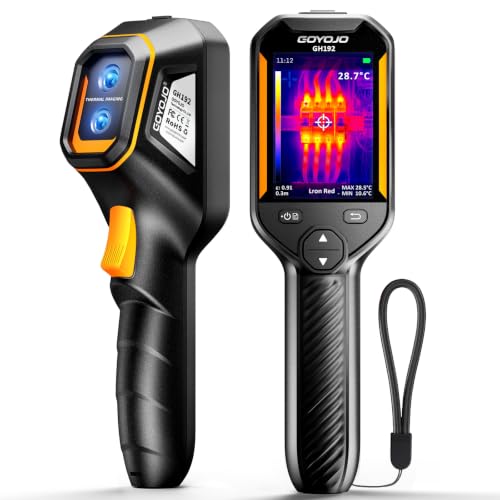
GOYOJO GH192 Thermal Imaging Camera

Scerymo Honda Accord Backup Camera

Thybro Magnetic Wireless RV Backup Camera

GOYOJO GW192A USB-C Thermal Camera

REAR VIEW SAFETY RVS-770-03 Backup Camera

GOYOJO GW340 Thermal Camera
The Strengths Of Each Pick
The TOPDON TC004 Mini Thermal Imaging Camera is the kind of tool that quietly earns a permanent spot in a utility drawer. It boosts a base 128×128 native resolution to 240×240 through TISR processing (TISR stands for TOPDON Image Super Resolution, an in-camera upscaling that sharpens edges and detail). For homeowners chasing ghost drafts around windows or auto hobbyists checking engine bay heat patterns, that level of detail usually clears up the guesswork.
Its 25Hz refresh rate keeps the thermal view from feeling laggy when you pan across a wall or sweep under a sink. The 40°×30° field of view is wide enough to frame an entire circuit panel without creeping closer. Compared to the larger TC004 unit covered below, this one trades screen real estate for pocket-friendliness, which suits a lot of casual users just fine.
Standout Benefits
- TISR upscaling turns a modest native sensor into a sharper 240×240 image for spotting small temperature gaps behind drywall.
- 25Hz refresh rate keeps moving scans smooth, especially useful when tracing pipe runs or wiring paths in tight spaces.
- Wide 40°×30° field of view captures a whole breaker panel or a single engine bay in one frame.
- Compact body fits in a jacket pocket or glove box for jobs away from the workbench.
Things To Consider
- The smaller display can feel cramped during long diagnostic sessions where you need to read multiple hot spots at once.
- Lens protection matters: owners commonly report that dust on the sensor noticeably degrades readings, so a soft pouch helps.
Key Specs
Who It Suits Best
DIYers running weekend home energy audits and light automotive checks who want a pocketable tool that handles most leak and heat-gain hunts without a learning curve.
Where Another Pick Suits Better
Pros who spend hours reading thermal maps each day should look at the larger TOPDON TC004 3.5″ Thermal Imaging Camera, whose bigger screen and higher resolution make long sessions far easier on the eyes.
The full-size TOPDON TC004 takes everything the mini version offers and stretches it across a 3.5-inch display. That extra screen real estate means you spend less time squinting and more time comparing temperature zones side by side, which matters when a job site diagnosis runs an hour or longer.
Its 256×192 native sensor pushes to 512×384 through the same TISR enhancement as the mini, and the temperature range stretches from -4°F all the way to 1022°F. For HVAC contractors or electricians chasing hot spots in fuse panels, that upper end is genuinely useful. The mini covered above beats it on portability, but this unit trades that for precision work.
Benefits That Matter
- 3.5-inch display makes reading heat maps far less fatiguing during multi-hour inspections.
- TISR enhancement to 512×384 reveals fine detail like overheated wire nuts inside crowded junction boxes.
- 1022°F upper limit handles industrial checks, oven diagnostics, and automotive exhaust runs alike.
- -4°F low-end capability covers cold-storage walk-ins and refrigeration troubleshooting.
Honest Caveats
- Bigger body means it doesn’t ride comfortably in a shirt pocket, so plan on a tool bag.
- At higher resolutions, the on-board storage fills up quickly when recording thermal video clips.
Right Fit For
Trade professionals and serious home inspectors who measure heat professionally and need both wider temperature ranges and a screen they can read without leaning in.
Consider Something Else When
Casual homeowners doing one-off energy audits will get more value from the TOPDON TC004 Mini Thermal Imaging Camera, since the smaller unit costs less and fits in tighter crawl spaces.
The TOPDON TC002C Duo turns a phone into a thermal workstation by plugging straight into a USB-C port. For tech-first users who already carry a flagship handset, this means one less dedicated device to charge and store. Setup is genuinely plug-and-play, with no batteries to swap and no Bluetooth pairing rituals to repeat.
It supports iOS, Android, and Windows devices with USB-C, and the TISR processing pushes a 256×192 sensor up to a sharper equivalent resolution. The image lives on the phone screen you already know how to navigate, so file sharing and reporting happen the same way as any other photo. The two earlier TOPDON units cover dedicated handheld users; this one targets people who live on their phone.
Good Reasons To Consider
- USB-C direct connection means no batteries, no charging cables, and no Bluetooth dropouts mid-scan.
- TISR enhancement sharpens the 256×192 sensor into more legible thermal stills and clips.
- Image files save to your phone gallery, making email and report attachments friction-free.
- Universal USB-C support covers the latest iPhone, iPad, and Android tablets in one accessory.
Points To Note
- Your phone becomes the screen and the battery drain is noticeable during extended inspections.
- The connector depends on your case situation: bulky protective cases may need to come off for a clean plug-in.
Best Suited To
Field service techs and mobile-first hobbyists who already carry a USB-C phone and want thermal imaging without hauling a second device.
Skip It When
Drivers needing heat imaging around engines or exhausts should reach for the FOXWELL HT280, whose dedicated body holds up better in hot, grimy garage environments.
The FOXWELL HT280 is a serious diagnostic tool dressed in a workshop-friendly shell. Its 2.8-inch screen runs at 320×240, and TISR processing sharpens the thermal view to 260×260, which lands right in the sweet spot for reading small heat anomalies across engine bays and electrical panels. Thermal sensitivity sits at 50mK, meaning it can pick up temperature differences as small as 0.05°C.
That sensitivity figure matters more than raw pixel counts when chasing a failing alternator diode or a marginal circuit breaker. Compared to the TOPDON TC002C Duo covered above, this is a self-sufficient handheld built for grease, glove use, and intermittent drops. The trade-off is that it can’t ride in your pocket the way a phone-plugged unit can.
Where It Excels
- 50mK thermal sensitivity reveals subtle gradients that cheaper sensors blur into a single tone.
- Dedicated handheld body handles oily shop environments where a phone screen would streak up.
- TISR enhancement lifts native detail into a more readable 260×260 image for diagnostic photos.
- 25Hz frame rate keeps moving thermal views smooth when sweeping across an engine bay.
Worth Noting
- Battery life varies with display brightness and ambient temperature, so plan charging between longer jobs.
- Not the lightest unit in the list: extended overhead scanning, like checking ceiling ductwork, can fatigue the wrist.
Feature Snapshot
Who Should Grab It
Garage tinkerers, HVAC troubleshooters, and home inspectors chasing fine thermal gradients in oily or dusty workspaces.
Look Elsewhere When
Anyone needing shared-screen reporting on the fly should look at the TOPDON TC002C Duo, which streams straight to a phone for quick client walkthroughs.
The GOYOJO GH192 brings something the other handhelds in this list don’t: a true fusion mode that overlays thermal data on top of a 2MP visible-light image. When you’re pointing at a complex scene like a fuse panel with labeled circuits, having the visible outline underneath makes identifying the suspect component far easier than a pure thermal palette.
The 2.8-inch IPS display runs at 240×320, and the 25Hz refresh keeps thermal sweeps responsive. It also includes auto temperature tracking and an alarm, which calls attention to hot spots before you might notice them yourself. Against the FOXWELL HT280 covered above, this trades pure thermal sensitivity for a smarter visual presentation.
A Strong Showing
- Fusion imaging pairs the IR feed with a visible-light camera for clearer scene identification.
- Auto temperature tracking flags the hottest or coldest point on screen without manual scanning.
- IPS display holds accurate color and contrast even when viewed at an angle under a cabinet.
- 25Hz refresh rate keeps the live feed smooth enough for moving inspections.
Minor Gripes
- Fusion overlay can clutter the view for users who prefer a clean thermal-only image.
- Image export requires a settings toggle to enable file transfer, which catches first-time users off guard.
Made For
Mixed-trade inspectors and serious DIYers who want both visible context and thermal data in the same shot.
Not Your Match When
Shop owners wanting the cleanest possible thermal feed with no visual overlay should reach for the TOPDON TC004 3.5″ Thermal Imaging Camera instead.
Shifting gears into the rear-view lane: the Scerymo Backup Camera is a direct-fit replacement designed for 2014 to 2017 Honda Accord EX-L and Touring sedan trims. It matches OE numbers 39530-T2A-A21, 39530-T2A-A31, 39530-T2A-U110-M2, 590-440, and 39530-T2A-U21, which means the wiring pigtail and mounting holes line up without modification. That direct compatibility saves the awkward afternoon of adapting harnesses.
Far-infrared night vision helps the camera paint a usable picture in low-light driveways and parking garages. Compare this to the REAR VIEW SAFETY RVS-770-03 covered later, which targets commercial trailers; the Scerymo is built specifically for one vehicle family and does that job with less fuss.
Why It Works Well
- Direct-fit design for Accord EX-L and Touring sedans means stock wiring plugs in without adapters.
- Far-infrared night vision reveals curbs, posts, and small obstacles that headlights miss.
- OE number cross-reference helps confirm compatibility before you ever unbox the unit.
Room For Improvement
- Fitment is narrow: drivers outside the listed Accord model years need a different unit entirely.
- Seal longevity depends on careful reinstallation of the trunk lid trim; rushed installs invite water intrusion over time.
Perfect Match For
Honda Accord EX-L and Touring sedan owners from 2014 through 2017 who want a factory-style swap rather than a universal-fit workaround.
Swap It Out When
Anyone driving a different vehicle, or hauling an RV or trailer, should reach for the Thybro Magnetic Wireless RV Backup Camera, which uses a universal magnetic mount.
The Thybro HD 1080P camera takes the “no drilling, no wiring” approach to its logical conclusion. A strong magnetic base snaps it onto any metal surface on an RV, truck, or trailer body. For renters and travelers who can’t modify their rig, that removes a real headache.
Because the mount is tool-free, you can also move the camera between vehicles, which is useful when alternating between a daily driver and a tow vehicle. The Scerymo camera covered earlier targets a single car; this one trades that direct-fit precision for sheer flexibility.
Strengths Worth Knowing
- Magnetic mount installs in roughly a minute without tools or wire routing.
- Wireless design avoids the cable run through the trunk lid that permanent installs require.
- 1080P resolution delivers sharp enough detail to read a license plate at close range.
- Portable between vehicles, useful for households that switch the camera between tow vehicles.
Practical Considerations
- Magnetic mount relies on a clean metal surface, so aluminum or fiberglass RVs need an alternate mounting plate.
- Wireless range can degrade through thick walls or metal framing in larger motorhomes.
Whose Shelf It Belongs On
Rental RV owners, road-trippers, and multi-vehicle households who want a backup camera without committing to a permanent install.
Reach For A Different Pick When
Honda Accord owners from the 2014 to 2017 range will get a cleaner factory-style result with the Scerymo Backup Camera.
The GOYOJO GW192A takes the smartphone-as-thermal-imager idea and aims it at first-time users. Plug the USB-C end into a supported iPhone 15/16/17 or compatible Android device, launch the companion app, and you’re scanning within seconds. No batteries to charge, no firmware dance, and no carrying case to lose.
The 192×192 IR sensor handles the routine jobs: water leak detection under sinks, HVAC vent temperature checks, and basic electrical panel inspections. Compare this to the GOYOJO GH192 covered earlier, which is a dedicated handheld with fusion imaging. The GW192A trades the standalone body and overlay features for true pocketability.
Advantages To Know
- Plug-and-play setup means no charging or pairing routine for casual users.
- 192×192 resolution is enough detail for most leak, draft, and outlet checks around the house.
- USB-C connection supports the latest iPhone and Android handsets in one accessory.
- Phone-based screen makes screenshots and report sharing feel natural for non-technical users.
Small Caveats
- Some phone cases interfere with the USB-C seating, requiring removal before each use.
- Long sessions tax the phone battery faster than a dedicated handheld would.
Built With In Mind
First-time thermal users and homeowners handling one-off leak, draft, or electrical checks who want the lowest learning curve possible.
Where A Sibling Pick Shines
Multi-device households needing broader USB-C and tablet support, with more thermal detail, should consider the GOYOJO GW340 Thermal Camera covered below.
The REAR VIEW SAFETY RVS-770-03 is a commercial-grade camera built for the kind of punishment a delivery truck, school bus, or long-haul trailer dishes out daily. Its IP69K waterproof rating is the highest tier of ingress protection (meaning the unit can withstand high-pressure, high-temperature water jets without failing), and 18 infrared illuminators handle pitch-dark loading docks.
A built-in microphone is a small but appreciated touch that lets a driver hear directions from someone guiding them in. Compare this to the Thybro RV camera covered above, which prioritizes tool-free mounting; the RVS-770-03 trades that convenience for sealed durability and a more permanent install.
Points In Its Favor
- IP69K waterproof rating holds up to road spray, pressure washing, and storm conditions.
- 18 infrared illuminators reveal obstacles in complete darkness at typical reversing distances.
- Built-in microphone lets guides communicate with the driver during tricky reversing maneuvers.
- Shock resistance rated at 20G handles the constant vibration of long highway miles.
Trade Offs
- Permanent wiring install takes longer than the magnetic RV cameras in this list.
- The 410,000-pixel sensor produces a noticeably softer image than the 1080P units covered above.
The Right Fit
Fleet operators, school bus drivers, and commercial truck owners who need a sealed, vibration-resistant camera for daily commercial routes.
A Better Fit Elsewhere
Weekend RV renters wanting a faster install will find the Thybro Magnetic Wireless RV Backup Camera far easier to set up.
The GOYOJO GW340 sits at the top of the phone-based thermal imager stack covered here. It takes the 256×192 native sensor of earlier plug-in units and boosts it to 512×384 through Super IR processing, which is a noticeable jump in fine detail. The temperature range stretches from -4°F to 752°F, covering everything from frozen pipes to hot engine components.
It works with iOS 15/16/17 series iPhones and iPads, plus Android tablets through USB-C. The GW192A covered earlier is the friendlier starter pick; this one delivers sharper images and a wider thermal range for users ready to invest a bit more in their diagnostic kit.
Reasons It Performs
- Super IR enhancement pushes a 256×192 sensor to 512×384 equivalent detail.
- 752°F upper limit covers automotive exhaust and HVAC heat-exchanger checks.
- USB-C compatibility spans iPhone, iPad, and Android tablets in one accessory.
- Plug-and-play design keeps the workflow simple for users new to thermal diagnostics.
Things That May Matter
- Achieving the full 512×384 image takes a steady hand: small shakes are more visible at higher detail levels.
- Power draw from the phone battery is heavier than at lower resolutions, especially when recording video.
Feature Card
Who Will Love This
Multi-device users and serious phone-based thermal imagers who want sharper detail and broader temperature range without buying a dedicated handheld.
Not Your Match When
First-time users who want the gentlest learning curve should start with the GOYOJO GW192A USB-C Thermal Camera.
Choosing the Right Tool for Heat Detection and Night Driving
Picking an auto infrared camera starts with a clear question: do you need to measure heat, or do you need to see in the dark behind your vehicle? The answer splits this category in two. Thermal imagers read temperature differences and reveal hidden moisture, missing insulation, and overheating electrical components. Night-vision backup cameras use infrared LEDs to project a usable picture when headlights alone aren’t enough.
Match the Imager to the Job Site
Handheld units like the TOPDON TC004 series and FOXWELL HT280 work best when you walk a property, scan a panel, or crawl under a sink. They run on internal batteries and offer self-contained screens. Phone-based units like the GOYOJO GW192A and GW340 trade dedicated hardware for true pocketability, which suits quick check-ups and mobile techs. In a busy HVAC truck or garage, a dedicated handheld generally wins on durability.
Sensor Resolution and Sensitivity
Native resolution (the actual pixel count of the IR sensor) tells you how much detail the camera captures before any processing. Higher is sharper, but thermal sensitivity (measured in millikelvins) often matters more for diagnostic work. A sensor with 50mK sensitivity can spot temperature differences a casual unit would miss entirely. For most homeowners, 192×192 to 256×192 native resolution is plenty for routine checks.
Field of View and Refresh Rate
A wider field of view captures more area per scan, which speeds up big jobs like surveying a roof or a long duct run. Refresh rate (frames per second) controls how smooth the live image looks during movement. 25Hz is a comfortable baseline that keeps panning from feeling jittery.
Backup Camera Specifics
For rear-view cameras, mounting style leads the decision. Direct-fit replacements like the Scerymo camera for the Honda Accord integrate cleanly with factory wiring. Magnetic mounts like the Thybro unit suit renters and multi-vehicle owners. Commercial-grade sealed units like the REAR VIEW SAFETY RVS-770-03 handle weather, vibration, and constant daily use.
What To Watch Before You Buy
Pitfalls Shoppers Hit
A common trap is buying on raw pixel count alone, since higher numbers don’t always mean more useful detail. Sensor sensitivity and lens quality matter just as much, especially for thermal imagers. Another mistake is skipping compatibility checks: backup cameras designed for one trim level often won’t fit a sibling trim without modification. Always confirm OE numbers, model years, and connector types before ordering.
When Paying More Pays Off
Higher-tier thermal cameras earn their price through sharper upscaling, broader temperature ranges, and better thermal sensitivity. For trade professionals using these tools daily, the time saved and the smaller problems caught pay back the upgrade quickly. For occasional homeowners, an entry-level phone-based unit usually delivers more value than a premium handheld they rarely pick up.
Frequently Asked Questions
What does an infrared camera actually detect?
An infrared camera detects heat辐射 emitted by objects and converts those temperature differences into a visible image, letting you see temperature patterns the naked eye can’t pick up.
Can a phone thermal camera replace a handheld unit?
For casual home use, a phone-based imager covers most leak, draft, and electrical checks. Dedicated handhelds still win on battery life, screen readability, and durability in harsh environments.
How far can a wireless backup camera transmit?
Most wireless RV and trailer cameras transmit reliably within 50 to 100 feet in open air, though metal framing and thick walls can shorten that range noticeably.
Do I need TISR or Super IR processing?
TISR and Super IR are in-camera upscaling tools that sharpen the thermal image beyond native resolution. You don’t strictly need them, but they make small temperature differences much easier to read at a glance.
Will a magnetic backup camera stay on at highway speed?
Strong neodymium magnets hold well on clean metal surfaces at typical highway speeds. Still, a safety tether is worth adding for long trips or rough roads.
Closing Remarks
The right auto infrared camera comes down to whether you measure heat or drive in the dark. Handheld thermal imagers handle diagnostic work, while infrared backup cameras make reversing safer after sunset. Both categories reward matching the tool to your specific vehicle, workflow, and tolerance for setup time, and either one earns its keep the first time it catches something you would have otherwise missed.