Every photographer eventually hits that frustrating wall where the battery dies at the worst possible moment. The right cell, whether it’s a tiny CR2 in a point-and-shoot, an LP-E17 in a Canon mirrorless body, or a rechargeable pack for a video doorbell, makes the difference between a finished shoot and a missed opportunity.
This roundup pulls together nine solid options across three big use cases: specialty lithium coin cells for compact cameras and rangefinders, name-brand rechargeable packs for interchangeable-lens cameras, and high-capacity replacement batteries for Ring-style doorbells and outdoor cams. Read on to match your gear to the right cell.
A Quick View Of The Lineup

Duracell CR2 3V High Power Lithium Battery 2-Pack

Canon Battery Pack LP-E17

DURNERGY CR123A Lithium Batteries 12-Pack

Fujifilm NP-W126S Li-Ion Rechargeable Battery
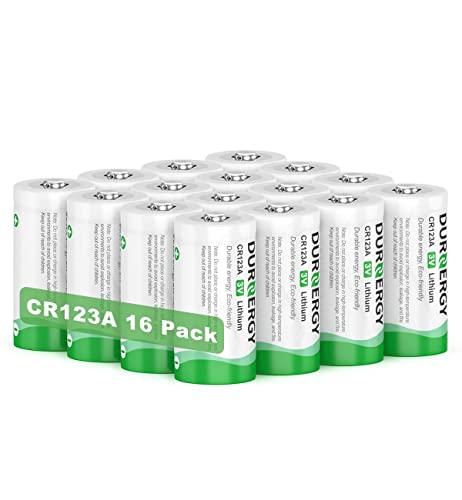
DURNERGY CR123A 3V Lithium Batteries 16-Pack

OHZHAO 4-Pack 7200mAh Battery with Charger Station

OHZHAO 2-Pack 7200mAh Long-Lasting Battery

OHZHAO 2-Pack 7200mAh Battery with Charger Station

OHZHAO 4-Pack 7200mAh High Endurance Battery
The Picks, Examined More Closely
The CR2 is one of those oddball cells that photographers either swear by or forget they own until a beloved compact camera suddenly refuses to fire. Duracell’s two-pack covers the basic case: drop a fresh one in, keep the second as a backup in your camera bag, and you’re covered for most casual shooting days.
These cells also power specialty flashlights, laser rangefinders, and certain optical instruments, so the same pack often handles gear beyond the camera bag. They are designed for high-drain specialty devices and hold usable voltage across a wide temperature range, which matters for outdoor photographers shooting at dawn or in cold weather.
What Earns Its Place
- Lithium chemistry tuned for high-drain specialty gear, not just low-power remotes
- Wide operating temperature range suits outdoor and field photography
- Two-pack format gives an instant spare for trip-based shoots
- Also fits rangefinders and select flashlights beyond cameras
Trade Offs
- Non-rechargeable, so heavy users will burn through packs faster than they refill them
- Compact cameras that take CR2 are slowly disappearing from the market
Right Fit For
Anyone still running a CR2-powered compact camera, rangefinder, or specialty optic and wants a known-brand cell they can trust on a long trip.
Consider Something Else When
You shoot a modern Canon mirrorless body, in which case the Canon LP-E17 is the correct fit for your model.
First-party batteries earn their reputation by being the cell your camera was designed around. The LP-E17 is Canon’s lithium-ion pack for its mid-range EOS bodies and M-series mirrorless cameras, including the Rebel T7i, SL2, SL3, 77D, M3, M5, and M6.
Capacity sits at 1040 mAh, which in real-world terms covers a few hundred still frames or a solid stretch of Full HD video per charge. Canon also offers an optional dedicated charger, so you can keep two cells in rotation, one in the camera and one topped off at your desk.
A Favorable Mix
- Genuine Canon fit for Rebel, EOS, and M-series bodies
- 1040 mAh capacity balances weight against shooting endurance
- Compatible with Canon’s standalone charger for two-battery workflows
- Stable firmware communication, no battery-recognition quirks on supported bodies
Room For Improvement
- Pricier per cell than most third-party LP-E17 packs on the market
- Only useful if you shoot one of the listed Canon models
At A Glance
Best Suited To
Canon shooters with an EOS Rebel, mid-range EOS DSLR, or M-series mirrorless camera who value OEM firmware compatibility over chasing the lowest price.
Skip It When
You run a Fujifilm X-series body, in which case the Fujifilm NP-W126S is the natural fit for your camera.
CR123A cells power a long list of trail cameras, older flash units, certain action cameras, and many home security devices. DURNERGY’s 12-pack is built around the idea that you want enough stock on the shelf to handle a full season without reordering.
These are 3V lithium disposables, designed to operate across a wide temperature range and rated for long storage, which is why hunters and trail-camera owners often buy in bulk. They cross-reference with CR123, CR17345, DL123A, and several other common labels, so they slot into most CR123A-compatible gear without fuss.
The Upside
- Twelve cells cover a long stretch of fieldwork between reorders
- Cross-compatible with most CR123A, CR17345, and DL123A labels
- Long shelf life for stashing as backup power
- Works in cameras, flash units, and security sensors alike
Things To Consider
- Disposable format, so heavy users generate more waste than rechargeable setups
- Twelve-pack may be overkill if you only run one or two devices
Made For
Trail-camera operators and outdoor photographers who burn through CR123A cells and prefer to buy once per season rather than restock monthly.
Not Your Match When
Your main power need is a rechargeable Canon or Fujifilm camera pack, in which case the Canon LP-E17 or Fujifilm NP-W126S is the right category entirely.
The NP-W126S is the upgraded version of Fujifilm’s older NP-W126, with better heat management for shooters who push their X-series bodies into video. Capacity is rated at 1260 mAh (minimum 1200 mAh) at 7.2V, and the cell drops into any X-series camera that already accepts the original NP-W126.
For casual stills, the difference between this and the older cell is hard to notice. For 4K shooters with an X-T2 paired with the vertical battery grip, the upgraded heat performance extends continuous 4K recording time to roughly half an hour before the camera needs to throttle. That kind of detail matters more than raw mAh for hybrid shooters.
Bright Spots
- 1260 mAh rating gives solid still-life endurance
- Improved heat management for 4K video recording
- Drop-in compatible with NP-W126 cameras, no firmware hassles
- Recommended pairing for X-T2 users with the vertical power booster grip
Honest Caveats
- Priced above many third-party NP-W126 clones
- Heat benefit only matters if you regularly shoot long 4K takes
Quick Facts
Who Will Love This
Fujifilm X-series hybrid shooters, especially X-T2 owners using the vertical booster grip, who record extended 4K clips and need a cell that won’t throttle the camera.
A Better Fit Elsewhere
You shoot a Canon body instead of Fujifilm, in which case the Canon LP-E17 serves the same role in a Canon kit.
Stepping up from the 12-pack, this 16-count version of the same DURNERGY CR123A line targets households and small studios running multiple CR123A-powered devices at once. Think a trail cam in the yard, a flash unit in the studio, a few sensors in the garage.
The cells are 3V lithium, designed to operate across a wide temperature range and rated for long storage. If you’ve ever had a single-device emergency kill a project because you ran out of cells mid-shoot, the 16-pack solves that in one purchase.
Where It Excels
- Sixteen cells in one box, enough to power multiple devices at once
- Long storage life for shelf-ready spares
- Cross-compatible with the usual CR123A label variants
- Saves reorder trips for households running several specialty devices
Factors To Consider
- Bigger upfront buy than smaller packs, even with the per-cell savings
- Disposable cells, so disposal planning matters over the long run
Who Should Grab It
Multi-device households and small studios where CR123A cells go into several cameras, sensors, or flash units simultaneously.
Reach For A Different Pick When
You only need power for one device, in which case the 12-pack sibling above is the right size without the extra clutter.
The first of our doorbell-focused picks, this OHZHAO kit ships four 7200 mAh rechargeable cells plus a charging station. Compatibility covers Ring Video Doorbell 2, 3, 4, and 3 Plus, plus Stick Up Cam and Peephole Cam models.
The 7200 mAh rating is on the higher end for doorbell batteries, and the bundled dock means you can charge multiple cells at once and swap them into the doorbell without taking the unit off the wall. For busy households with frequent deliveries, that rotation pattern is the real value here.
Useful Touches
- Four cells and a dock let you keep a charged spare ready at all times
- 7200 mAh rating extends time between swaps compared to lower-capacity packs
- Cross-compatible with several Ring doorbell and Stick Up Cam generations
Less Ideal Details
- Best fit for one Ring generation, so check the supported list before buying
- Four cells may be more than a casual user wants to manage
Feature Snapshot
Perfect Match For
Doorbell households that get frequent deliveries and want a charged spare on the desk so the camera never goes offline waiting for a recharge.
Swap It Out When
You only need one or two cells for a low-traffic entryway, in which case the OHZHAO 2-pack sibling below is the simpler choice.
If the 4-pack feels like more inventory than you want to manage, this 2-cell OHZHAO kit trims it down to a clean two-spare setup. The cells share the 7200 mAh rating and the same broad Ring compatibility list as the 4-pack.
There is no charging dock in the box, so you top these up inside the camera using the standard Ring charging cable. For apartments, side doors, or low-traffic entries, two rotating cells are usually plenty.
Everyday Wins
- Two high-capacity cells without a dock, simpler storage
- Same 7200 mAh capacity as the larger multi-pack sibling
- Works with Ring doorbells, Stick Up Cam, Spotlight Cam, and Peephole Cam
Trade-Offs To Consider
- No charging dock means you charge in-camera, slower turnaround
- Two cells is tight if your doorbell sees heavy motion traffic daily
Built With In Mind
Small households or single-entry homes that want a couple of high-capacity spares without investing in a dedicated charging dock.
Look Elsewhere When
You prefer to charge off the camera, in which case the OHZHAO 2-pack with charger station (Item 8) gives you the dock plus a spare cell.
This OHZHAO bundle sits right between the bare 2-pack and the 4-pack. You get two 7200 mAh cells plus a single-bay charging dock, which lets you refill one cell while the other is in the doorbell.
Compatibility covers the same Ring Video Doorbell 2, 3, 4, and 3 Plus models, plus Stick Up Cam and Spotlight Cam. For people who swap doorbell batteries every few weeks, the dock turns a 30-minute wait into a set-and-forget routine.
The Practical Payoff
- Dock lets you charge a cell without unmounting the doorbell again
- 7200 mAh capacity matches the higher-rated multi-packs
- Two-cell size is manageable for most suburban homes
- Broad Ring compatibility across recent doorbell generations
Things To Weigh Up
- Single-bay dock means you charge one cell at a time
- Two cells is the bare minimum for true rotation, no room to lose one
Whose Shelf It Belongs On
Suburban doorbell owners who swap cells monthly and appreciate charging a spare on the desk rather than tying up the camera.
Where A Sibling Pick Shines
You want maximum rotation flexibility, in which case the OHZHAO 4-pack with charger station (Item 6) keeps more cells in play at once.
Closing out the list is another four-cell OHZHAO option, this time aimed at heavy-traffic homes where the doorbell rarely sits idle. Each cell carries the same 7200 mAh rating, and the kit supports the same doorbell and Stick Up Cam lineup as its 4-pack sibling.
The difference is the framing: this version is positioned as an endurance upgrade, and like the other 4-pack, it ships without a dedicated dock. The trade-off is that you can rotate a much larger pool of cells, useful for homes running a doorbell plus a Stick Up Cam plus a Peephole Cam all at once.
Positive Takeaways
- Four high-capacity batteries for homes with multiple Ring devices
- Cross-compatible across doorbell and Stick Up Cam generations
- Long-lasting Li-ion chemistry for steady daily use
Practical Considerations
- No charging dock included, in-camera charging only
- Four cells is more inventory than single-device users need
Key Product Details
Right Fit For
Multi-camera households with a busy doorbell who want a deep stock of spares ready and don’t mind charging in-camera between swaps.
Not Your Match When
You’d rather not deal with four loose cells, in which case the OHZHAO 2-pack with charger station (Item 8) is a tidier first step.
What To Weigh Before Choosing Batteries For Cameras
Start with the chemistry. Specialty lithium cells (CR2, CR123A) are disposable and built for long shelf life, which makes them ideal for compact cameras, trail cams, and devices you don’t recharge often. Rechargeable lithium-ion packs (LP-E17, NP-W126S) make more sense for interchangeable-lens cameras you shoot with weekly, since the per-cycle cost stays low once you own the cell and charger.
Capacity matters, but only relative to your shooting pattern. A 1040 mAh LP-E17 in a Canon Rebel handles a casual weekend shoot easily. A 1260 mAh NP-W126S in a Fujifilm X-T2 running 4K drains faster, which is why that cell is also tuned for better heat management. For doorbells, 7200 mAh translates to noticeably longer intervals between swaps in a high-traffic entryway.
Compatibility is the most common pitfall. A CR123A pack will not work in a camera bay designed for a CR2, and a third-party LP-E17 clone can occasionally confuse firmware on newer Canon bodies. Match the exact model number on your camera’s battery door or in the manual before buying. Temperature tolerance also matters if you shoot outdoors in cold or heat. Specialty lithium cells tend to handle extreme temperatures better than standard rechargeable packs.
Finally, decide between first-party and third-party. OEM packs (Canon, Fujifilm) offer the best firmware communication and consistent quality control. Third-party packs (DURNERGY, OHZHAO) usually cost less per cell and come in larger multipacks, useful for households running multiple devices.
Practical Notes Across These Picks
Wrong Turns To Avoid
Buying the right chemistry in the wrong size is the most common mix-up. CR2 and CR123A look similar at a glance, but a CR2 is taller and a hair narrower, and the voltages match while the dimensions do not. Always cross-check the exact label printed on your existing battery or in your camera’s manual.
Equally common is assuming any rechargeable will work in a doorbell. The OHZHAO 7200 mAh cells are tuned for the Ring battery ecosystem, and while some aftermarket packs fit, others sit loose or fail to report charge state correctly to the app. Stick with packs that explicitly list your doorbell model.
Where The Extra Money Goes
The price gap between first-party and third-party packs often comes down to firmware communication and cell grading, not raw capacity. Canon and Fujifilm cells go through tighter QC and ship with firmware that lets the camera report exact percentage remaining, an underrated feature for working pros.
For doorbells, the dock included in some OHZHAO kits adds real convenience, faster off-camera charging and a dedicated home for spare cells. That’s worth the small premium over bare-cell multipacks for anyone swapping batteries more than once a month.