Matching the right binoculars to the right rangefinder used to mean buying two tools and hoping they played nicely in the field. Combo setups now bundle optics and laser ranging into one grab-and-go kit, cutting weight and guesswork for hunters, golfers, and stargazers who want a single bag that covers a long day outside. The picks below pair familiar glass and rangefinder designs so you can scan, range, and confirm without juggling gear or losing the target between devices.
Your Options, Compared
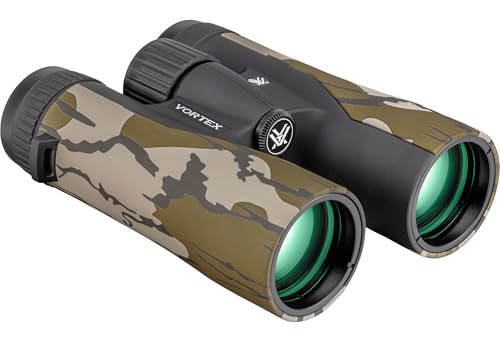
Vortex Crossfire HD 10×42 Binoculars (Mossy Oak Bottomland)

Bushnell Trophy XLT 10×42 Waterproof Binoculars

Gogogo Sport Vpro GS06 Hunting Rangefinder 1200 Yards
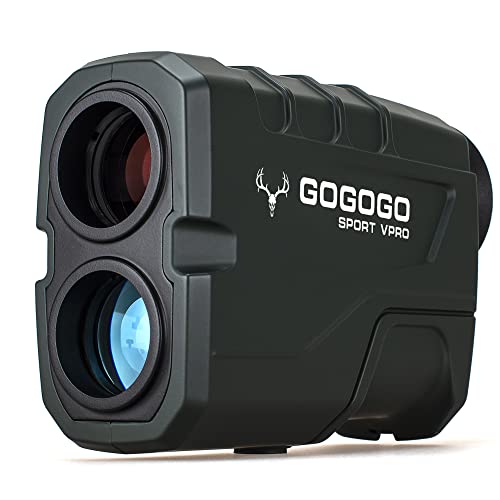
Gogogo Sport Vpro Green Hunting Rangefinder 1200 Yards

Gogogo Sport Vpro Golf Range Finder 900 Yards

Gogogo Sport Vpro Range Finder 1500/2500 Yards

Gogogo Sport Vpro GS24 Golf & Hunting Rangefinder 1200 Yards

Celestron SkyMaster 12×60 Astronomy Binoculars

Celestron SkyMaster 15×70 Astronomy Binoculars

Celestron SkyMaster 20×80 Deep-Sky Binoculars
More Details On Our Top Picks
Stepping into a marsh at first light means squinting through mist until your eyes adjust, which is where the Crossfire HD earns its keep. The 10x magnification pulls distant treelines into focus, while the 42mm objective lenses gather enough early-morning light to keep colors believable. Compared to the Bushnell Trophy XLT reviewed below, this Vortex leans toward sharper edge-to-edge clarity for glassing larger open country.
Adjustable twist-up eyecups make long sits easier on glasses wearers, and the right-eyepiece diopter locks in once you dial your individual focus. The nitrogen-purged, o-ring sealed body shrugs off fog and drizzle, so a damp dawn doesn’t end the session. Owners commonly report the rubber armor holds up to backpack bumps season after season.
A Favorable Mix
- Fully multi-coated optics keep colors accurate during long glassing sessions at dawn and dusk
- Roof prism design keeps the chassis compact enough for a daypack’s side pocket
- Tripod-adaptable base opens up stable viewing for stationary observation posts
- Twist-up eyecups and diopter adjustment dial in comfort for glasses and bare-eyed viewers alike
Points To Note
- 10x magnification amplifies handshake wobble during standing glassing
- External lens cleaning requires a soft cloth, as the coatings scratch if dragged across grit
At A Glance
Who Should Grab It
Wildlife watchers and deer hunters who glass open country at dawn and want sharp color fidelity without a heavy pack.
Skip It When
The Celestron SkyMaster 15×70 serves you better if astronomy, not wildlife, drives most of your outings.
A balcony suite on a coastal cruise is no place for fragile glass, and the Trophy XLT’s waterproof build takes spray in stride. The 6.2-degree angle of view feels generous when scanning shorelines or flocking seabirds, letting you track movement without constant readjustment. Where the Vortex Crossfire HD above is built around edge sharpness, this Bushnell leans into broader situational awareness.
The center focus wheel moves smoothly across its range, which makes panning between near and far subjects quick on a moving deck. Rubber armor over a metal frame keeps drops from ending the trip, and the textured grip stays secure with damp hands. For most travelers, that balance of weight and reach hits the sweet spot.
Noteworthy Benefits
- Wide 6.2-degree field of view helps track birds in flight along coastlines and forests
- Waterproof construction handles spray on boat decks and unexpected rain
- 10×42 configuration fits carry-on luggage without feeling bulky around the neck
Worth Noting
- Edge sharpness softens slightly compared to HD-class optics during stationary glassing
- Lens caps and the included strap are functional but feel basic after heavy use
Best Suited To
Vacationers, cruise passengers, and casual birders who want one binocular that handles weather and travel.
Consider Something Else When
The Vortex Crossfire HD 10×42 is the smarter grab if edge clarity matters more than field width.
First-time hunters learning to read terrain need reliable distance without overspending, and the GS06 lands as a friendly entry point. The 1200-yard range covers most whitetail setups and open country tree-line shots with comfortable margin. Where the Vortex Crossfire HD above focuses on optical performance, this rangefinder focuses on putting numbers in front of you, fast.
Three operating modes let you switch between standard ranging, scan, and pin-lock behavior for flag-style targets on a course or feeder pins in the woods. The 6x monocular stays bright enough for dawn and last-light sessions, and the LCD returns clear readouts without forcing you to squint. For most newcomers, that’s enough to build real range confidence.
Where It Delivers
- 1200-yard reach covers typical deer-stand distances with margin to spare
- Three modes handle hunting, scan, and pin-lock scenarios without menu diving
- Compact frame slips into a jacket pocket for spot-and-stalk movement
- Simple two-button operation helps beginners range quickly under pressure
Trade Offs
- Display refresh can lag slightly during rapid scans across moving terrain
- Battery life drops noticeably in cold weather, so spares belong in the pack
Right Fit For
New hunters building range-reading skills who don’t need advanced slope compensation yet.
Not Your Match When
The Gogogo Sport Vpro GS24 fits better if you want slope-adjusted distances and ARC modes.
Western hunters know that line-of-sight range lies when a buck stands on a hillside, and Mode 1 here hands you the actual horizontal distance plus angle. The 905nm class 1 laser reads out to 1200 yards with accuracy that holds across the working range. Compared to the GS06 above, this model adds hill-aware math without overwhelming casual users.
Six-times magnification through the objective keeps targets legible in mixed timber, and the LCD stays readable at awkward angles when you’re prone on a bipod. The body feels light enough for a lanyard or chest harness, and the buttons are large enough to find with gloves. For most hill-country shooters, the slope readout alone justifies the step up.
What It Does Well
- Horizontal-distance mode helps bowhunters and riflemen judge uphill and downhill shots
- 1200-yard maximum range covers western draw distances with workable accuracy
- Class 1 905nm laser stays safe for routine field use
- Light body stays comfortable on long stalks with a chest harness
Possible Compromises
- Angle compensation readout requires a steady hold on steep terrain for clean numbers
- Eye relief is short for glasses wearers during extended sessions
Whose Shelf It Belongs On
Hunters who regularly pursue steep-country game and need angle-corrected ranging in a portable package.
A Better Fit Elsewhere
The Gogogo Sport Vpro Range Finder 1500/2500 Yards suits you more when longer open-country shots dominate your season.
Riding a cart between shots makes fumbling for a rangefinder a real pace killer, and the magnetic strip here sticks the unit right to the cart frame. The 900-yard range covers most course layouts, while the 0.5-second measurement keeps pace quick on busy tee boxes. Where the GS06 above focuses on hunting woods, this one is dialed for fairways and greens.
Pin-lock technology vibrates when the laser confirms the flag rather than the trees behind it, which speeds up approach shots. The slope switch toggles tournament-legal mode on and off without diving into menus, and the USB-C rechargeable battery delivers around 20,000 measurements per full charge. For cart riders, the magnetic mount alone makes it feel purpose-built.
What Helps Most
- Magnetic mount keeps the rangefinder handy on the cart frame between shots
- Pin-lock vibration confirms flag acquisition without second-guessing the readout
- Rechargeable USB-C battery removes the cost of constant replacements
- Slope switch offers quick tournament-legal compliance when needed
Less Ideal Details
- Magnetic mount is less useful on walking rounds with no cart frame to attach to
- Slope toggle requires a deliberate switch flip and a moment to recalibrate
Made For
Cart-riding golfers who want quick yardage, slope on demand, and a rangefinder that stays put on the frame.
Reach For A Different Pick When
The Gogogo Sport Vpro GS24 Golf & Hunting Rangefinder fits better if you split time between fairways and treestands.
Open-country riflemen chasing steel past 800 yards need more reach than a standard hunting rangefinder, and the 1500-yard stated range opens up practical long-range work. The 7x magnification is sharper than the 6x in the GS06 reviewed above, which makes spotter-style identification easier on distant targets. Flag-lock acquisition extends out to roughly 300 yards, which covers most courses too.
Adjustable diopter and slope switch keep the unit flexible across hunting and golfing seasons, and 0.38-second readouts feel nearly instant on the firing line. You may find the menu navigation takes a session to learn, but the payoff is a tool that handles prairie dog towns and back-nine approaches without swapping devices.
Useful Touches
- Extended 1500-yard range covers long-range rifle and open-field hunting distances
- 7x magnification helps confirm distant targets beyond typical 6x units
- Slope compensation with adjustable diopter suits varied light and terrain
- Fast 0.38-second readouts keep pace during range sessions
Where It Is Less Suited
- Larger body is bulkier in a jacket pocket than the smaller GS06 or GS24 units
- Premium feature set may be more rangefinder than casual weekend shooters need
Who Will Love This
Long-range rifle shooters and open-country hunters who want measurable distance past 1000 yards.
Swap It Out When
The Gogogo Sport Vpro GS06 makes more sense if you mostly shoot whitetail woods and want lighter carry weight.
Shoppers who split weekends between the back nine and a deer lease want one rangefinder that does both jobs without compromise. The GS24 pairs angle range compensation (ARC, which adjusts for slope) with continuous range readings, so uphill pin shots and hill-country hunting both feel handled. Where the GS06 above is a clean entry tool, this one stretches into hybrid duty.
Slope function applies to both golf and hunting modes, and the 1200-yard ceiling fits most practical distances either pursuit throws at you. The LCD readout stays legible in low-angle light, and the chassis feels solid without tipping into bulky. For most dual-discipline outdoors folks, this lands as the everyday carry.
A Few Strong Suits
- ARC slope compensation works in both golf and hunting modes for true dual use
- Continuous range readings help scan terrain when ranging multiple targets
- 1200-yard reach handles fairway and field distances without compromise
- Balanced weight stays comfortable on lanyards or rangefinder clips
Things To Consider
- Slope function must be turned off for tournament-legal golf play, which adds a step
- Button layout takes practice to navigate by feel in cold or gloved hands
Feature Snapshot
Perfect Match For
Outdoors enthusiasts who play weekend golf and hunt the same hills, and want one tool that covers both.
Look Elsewhere When
The Gogogo Sport Vpro Golf Range Finder 900 Yards is a better grab if the cart-mounted magnetic convenience outweighs slope modes.
First-time stargazers often underestimate how much weight a binocular carries after twenty minutes of looking up, and the 12×60 SkyMaster is sized to stay comfortable without skimping on aperture. The 60mm objectives (the front lenses that gather light) gather enough light for lunar craters and bright star clusters from a suburban backyard. Compared to the 10×42 Vortex above, this swaps wildlife reach for celestial light grasp.
The 12x magnification keeps the moon’s terminator line (the boundary between lit and dark areas) readable without shaking the image apart, and a tripod mount smooths out long sessions of scanning the Milky Way. Owners commonly report that a monopod or tripod transforms the experience for extended viewing.
Everyday Wins
- 60mm aperture gathers more light than standard 42mm daytime binoculars
- Tripod-adaptable base opens up steady long-duration viewing sessions
- Wide field of view helps newcomers navigate star fields without frustration
Honest Caveats
- 12x magnification amplifies handshake wobble without a tripod or monopod
- Heavier body can tire arms during hand-held stargazing past twenty minutes
Right Fit For
Curious stargazers starting out who want real aperture without committing to a telescope rig.
Where A Sibling Pick Shines
The Celestron SkyMaster 15×70 is a smarter step up once you regularly mount the binoculars and want brighter deep-sky views.
Backyard astronomers chasing deep-sky objects want enough aperture to pull in nebulae and Andromeda without hauling a telescope out of the closet. The 70mm objectives gather noticeably more light than the 60mm SkyMaster reviewed above, and the 15x magnification makes globular clusters actually look like clusters. The built-in tripod adapter accepts standard photo tripods for steady high-power viewing.
You may find the weight pushes hand-held sessions toward a monopod, but once mounted, the views settle into something close to a small rich-field telescope. The wide-field nature keeps large targets like the Pleiades framed without star-hopping across a small eyepiece. For most backyard astronomers, this is the level where astronomy becomes a regular habit.
Where It Excels
- 70mm aperture gathers enough light for Andromeda, the Pleiades, and brighter nebulae
- 15x magnification reveals globular clusters as actual clusters, not single stars
- Tripod-friendly design keeps long sessions steady and strain-free
- Wide field of view frames large deep-sky targets in one look
Small Caveats
- Body weight makes a tripod or monopod essentially required for comfortable viewing
- Coatings are basic compared to premium astro binoculars, so contrast in faint targets suffers slightly
Who It Suits Best
Backyard astronomers who want a real deep-sky instrument without the setup cost of a telescope.
Consider Something Else When
The Celestron SkyMaster 20×80 is worth the jump if you want maximum aperture and higher power for serious stargazing.
Dedicated skywatchers chasing faint galaxies and dim nebulae want every extra millimeter of aperture, and the 80mm objectives here push deep-sky performance into serious territory. The 20x magnification brings individual stars in clusters apart, and faint targets that fade into the background on smaller binoculars start showing structure. Where the 15×70 above is the casual deep-sky sweet spot, this is the dedicated stargazer’s tool.
The unit’s size and weight make a sturdy tripod essentially mandatory, and the included adapter threads into standard photo heads. Once mounted, the views of the Orion Nebula begin to show cloud-like texture rather than a fuzzy patch. You may find the bulk rules out grab-and-go observing, but for planned sessions at dark sites, this is the level the SkyMaster line was built around.
Strengths Worth Knowing
- 80mm aperture pulls in faint galaxies and nebular detail beyond smaller binoculars
- 20x magnification separates close double stars and tight cluster members
- Built-in tripod adapter fits standard photo heads for stable high-power viewing
- Generous light grasp turns suburban backyards into workable observing sites
Practical Considerations
- Size and weight rule out casual hand-held use, so plan trips with a tripod
- Field of view narrows at 20x, which makes star-hopping across large objects slower
Feature Rundown
Made For
Dedicated skywatchers with a tripod and dark-sky plans who want maximum light grasp from a binocular.
Not Your Match When
The Celestron SkyMaster 12×60 serves you better if grab-and-go portability matters more than raw aperture.
Choosing Binocular Rangefinder Comboes That Actually Fit
Picking a binocular rangefinder combo starts with honest questions about how you spend time outside. A deer hunter chasing whitetail at 200 yards needs different tools than a golfer reading downhill pins or a backyard astronomer sweeping the Milky Way, and the combo that wins for one can feel wrong for another.
Match the magnification to your hold. Handheld stability drops sharply past 10x, so anything at 12x or higher should be paired with a tripod, monopod, or braced position. If you refuse to mount the glass, sticking with 8x or 10x keeps shake from ruining the view.
Read aperture honestly. Objective lens diameter drives low-light performance more than magnification. A 42mm binocular works for daytime wildlife, while 60mm to 80mm opens up astronomy, and 25mm objective rangefinders stay pocket-friendly for hiking hunts.
Decide if slope matters. Slope-adjusted distances help bowhunters and uphill golfers, but tournament play requires switchable modes. Casual hikers can usually skip slope entirely and save weight.
Key Considerations Across These Picks
Where Shoppers Slip Up
A common mistake is choosing a rangefinder based on maximum stated range without checking how it performs at realistic distances. Manufacturers often quote ranges measured against high-contrast targets in perfect light, so a 1500-yard unit may struggle to lock onto a shaded tree at 400. Reading user feedback about real-world performance at hunting or golfing distances tells you more than the headline number.
Where The Extra Money Goes
Premium models earn their keep with better coatings, faster processors, and slope-adjusted ranging that entry-level units skip. The jump shows up in dim conditions, where premium glass pulls detail from shadows that budget optics leave murky. For weekend casual use, the lower tier does the job, but regular outdoor time rewards the upgrade.