Birding cameras split into two clear camps: dedicated bridge-style superzooms you carry to the trail, and smart feeders that bring the birds to you. Backyard hobbyists, casual naturalists, and serious list-checkers all ask the same question: which setup actually delivers clean, recognizable footage of the birds you care about? The list below mixes both styles, weighing real-world trade-offs so you can match a camera to the kind of birding you actually do.
The Choices Worth Comparing

Sony Cyber-Shot RX10 IV (DSC-RX10M4, Black)

Liscuty 2K Solar Smart Bird Feeder (Blue)

Kiwibit Solar Bird Feeder Camera 2 Mini

Kiwibit Bird Feeder 2 Pro 4K

Kiwibit Smart Bird Feeder 4K AI 8MP
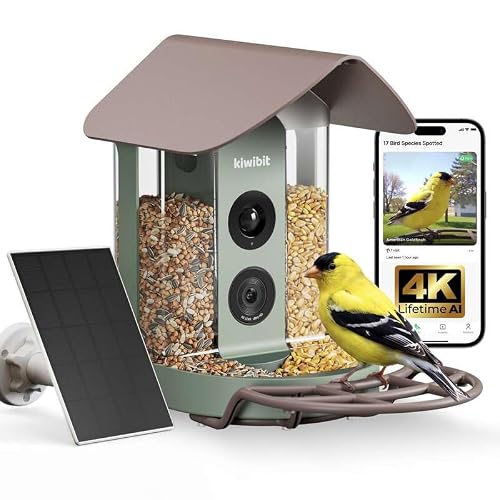
Kiwibit Smart Bird Feeder 4K No Subscription

Kiwibit Solar Bird Feeder 4K HDR AI

PeckCam 2K Solar Bird Feeder Camera

Birdfy 2 Pro Solar Dual-Lens Feeder

KODAK PIXPRO AZ528 16MP 52x Zoom
More On The Choices That Made The List
If your birding happens on hiking trails and marsh boardwalks rather than at the kitchen window, the RX10 IV earns its keep. It’s a fixed-lens bridge camera built around a ZEISS Vario-Sonnar T optic with a 24-600mm equivalent reach, which means one body covers everything from a perched robin to a distant raptor without swapping glass. The fast hybrid phase-detection autofocus (the system that uses on-sensor focusing points to lock onto subjects quickly) is tuned for quick subject acquisition, so a warbler that won’t sit still still tends to come home sharp.
Continuous shooting at 24 fps with full tracking makes flight sequences achievable without a steep skill curve. Optical image stabilization helps tame camera shake at the long end, which matters when a heron takes off just as you press the shutter. Compared to the smart feeders that follow, this one rewards people who already walk out to find the birds.
Where It Helps
- 600mm equivalent reach eliminates the need to carry extra lenses in the field
- Rapid autofocus acquisition makes perched songbirds and quick flyers easier to capture
- Optical stabilization keeps handheld shots steady at telephoto distances
- 24 fps burst mode handles short flight sequences without complex setup
- Single-body design is weather-sealed enough for trail use and damp mornings
Things To Weigh Up
- Fixed lens design means no swapping to a longer prime for tiny songbirds
- Larger and heavier than the smart feeders that follow, so it won’t sit in a coat pocket
Feature Snapshot
Who It Suits Best
Trail-going birders who want one serious camera to cover everything from warblers to raptors without changing lenses.
Where Another Pick Suits Better
Casual backyard birders wanting a passive setup should look at the Birdfy 2 Pro, which feeds and films without needing you to be present.
Birding cameras don’t always need to come from the camera aisle, and the Liscuty feeder is a clean example. It’s a solar-powered birdhouse with a 2K camera built in, designed to hang in the yard and stream whatever lands on the perch. For someone dipping a toe into backyard birding, the appeal is the low ongoing effort: no separate power cable, no memory card juggling, and a companion app that handles the rest.
The housing is built around easy-clean access, which matters more than spec sheets suggest when seed husks and weather grime start building up. Compared to the Sony RX10 IV that started this list, this is a different kind of birding entirely. You wait for the birds instead of chasing them.
The Upside
- Built-in solar panel reduces the need for manual recharging in sunny setups
- Easy-clean housing design simplifies seasonal maintenance
- App-based sharing makes it a family-friendly introduction to birdwatching
Points To Keep In Mind
- 2K resolution is sharper than 1080p but trails the 4K models later in this list
- Feeder cameras rely on Wi-Fi range, so placement near the house matters
Made For
First-time birders who want a low-effort setup that doubles as a small giftable project.
Skip It When
You want maximum resolution and AI species ID, in which case the Kiwibit Bird Feeder 2 Pro is a smarter jump up.
The Mini version of Kiwibit’s smart feeder delivers 4K UHD with HDR into a smaller housing, which is a meaningful shift for tiny gardens or apartment balconies where the full-size feeder would dominate. The 132-degree wide-angle lens captures the perch plus the surrounding air, so you see wingbeats and approach angles instead of just a head-on portrait. For tight spaces, that framing often matters more than pure zoom.
It’s solar-powered and uses motion-triggered notifications through the Kiwibit app. AI bird identification is bundled with a subscription model that includes a starter trial, which keeps the door open without forcing a commitment on day one.
Notable Gains
- 4K UHD sensor with HDR for better contrast in mixed light
- 132-degree field of view captures wingbeats, not just portraits
- Infrared night vision (invisible IR LEDs that illuminate in the dark) covers low-light hours after sundown
- Smaller footprint suits balconies and narrow garden mounts
Small Caveats
- AI species ID requires a paid subscription after the trial ends
- Wide-angle framing means individual birds look smaller than on a tighter lens
Key Specs
Right Fit For
Urban birders working with balconies or small patios who still want 4K clarity.
Reach For A Different Pick When
You want richer audio and slow-motion playback, where the Kiwibit Bird Feeder 2 Pro pulls ahead.
The 2 Pro steps beyond the Mini by adding auto-focus that tracks fast motion, which makes a real difference when a hummingbird hovers for two seconds and darts off. Slow-motion playback at up to 8x turns that darting exit into something you can actually watch, especially with a microSD card installed for local recording. For people who enjoy the technical craft of bird footage rather than just confirming a visit, this is where the category starts to feel cinematic.
The hardware is built for all-weather use with an IP65 rating (a standard that certifies resistance to dust and water jets), backed by a 5W solar panel and a detachable 5200mAh battery for cloudy stretches. Dual-band Wi-Fi support on 2.4GHz and 5GHz frequencies helps the live stream stay smooth at useful range.
Positive Takeaways
- Auto-focus tracking keeps hummingbirds and other fast visitors sharp in flight
- Up to 8x slow-motion playback adds cinematic detail to quick movements
- IP65 weatherproofing handles extended outdoor exposure
- Dual-band Wi-Fi reduces lag on the live stream
- 48kHz dual mics capture usable bird audio alongside video
Honest Caveats
- Slow-motion playback requires a separately purchased microSD card
- Larger housing than the Mini may not fit smaller mounts
Quick Facts
Best Suited To
Birders who want richer footage and don’t mind owning a microSD card to unlock slow-motion.
A Better Fit Elsewhere
Budget-focused shoppers should consider the Kiwibit No Subscription model, which trims features but cuts recurring costs.
This Kiwibit feeder leans into the social side of birding. Up to 20 family members can receive alerts and watch the live stream together, which turns the camera into a shared hobby rather than a solo gadget. The 4K livestream with HDR, combined with 8MP photo capture, gives the household something crisp to scroll through the next morning.
AI species identification runs on a subscription basis, but the camera itself streams without any monthly fee. That separation matters for households testing whether bird-watching will stick before committing to add-ons. The 132-degree wide-angle lens keeps the framing generous, so kids and grandparents both get a recognizable view.
Features That Help
- 4K HDR livestream shared with up to 20 users without extra subscription fees
- 8MP photo capture for clean stills suitable for albums or sharing
- Night vision extends viewing into early morning and dusk hours
Worth Noting
- AI bird ID sits behind a paid plan after the included period
- Wide-angle framing trades close-up detail for a broader scene
Who Will Love This
Multi-generational households that want a shared activity instead of a single-user gadget.
Look Elsewhere When
Lifetime AI matters most to you, in which case the Kiwibit No Subscription feeder is the cleaner long-term pick.
Most smart feeders gate the good stuff behind monthly fees, and this Kiwibit model is the answer for people who refuse that arrangement. It ships with lifetime AI bird recognition built in, so the species ID and intelligent activity alerts keep working without a subscription renewal. Over a few years, that difference adds up quietly.
The 4K sensor feeds into the same Kiwibit app ecosystem, including multi-user sharing and night vision, so you don’t lose much by avoiding the subscription tier elsewhere. It helps filter out wind and leaf motion so notifications trigger on actual birds rather than every breeze.
Useful Touches
- Lifetime AI recognition avoids recurring subscription costs
- Smart filters reduce false alerts from wind and foliage movement
- Bird Keyshots auto-organize visit highlights for easy sharing
- 4K Ultra HD video and 8MP photo capture in a single unit
Trade-Offs
- Up-front cost is higher than basic 2K feeders
- Lacks slow-motion playback found on the 2 Pro
Feature Snapshot
Perfect Match For
Long-term hobbyists who prefer paying once over managing a subscription for years.
Consider Something Else When
Cinematic slow-motion matters, since the Kiwibit Bird Feeder 2 Pro covers that territory better.
For birders who check the feeder multiple times a day, the experience has to feel polished, and this Kiwibit model aims there. It pairs an 8MP sensor with 4K video and HDR, so each clip keeps detail in both shadows and bright perch backgrounds. The 132-degree wide lens, paired with an included perch extender, welcomes larger birds like jays and doves that smaller setups sometimes miss.
AI species ID helps when the daily activity log gets long. Infrared night vision keeps the camera working after sunset, which matters for spotting nocturnal visitors without lighting up the yard.
Well-Handled Touches
- 8MP photo capture paired with 4K HDR video delivers strong image quality
- Perch extender invites larger birds that smaller feeders miss
- Infrared night vision records clean black-and-white footage after dark
Some Limits To Know
- Wide lens compresses close-up detail relative to telephoto designs
- AI features may require a connected subscription tier
Who Should Grab It
Daily backyard viewers who want a polished experience and consistent image quality morning to night.
Swap It Out When
You prioritize dual-lens portraits, which is where the Birdfy 2 Pro stands apart.
Sometimes you want the bird feeder to do its job without a learning curve, and the PeckCam is built around that. The 2K live stream with full-color night vision handles day and dusk viewing without manual adjustments, and the solar panel keeps the camera topped up between charges.
Bird species recognition covers over 10,000 species with a paid subscription. For shoppers who want a simpler entry point than the 4K Kiwibit models, the PeckCam trims back on resolution but keeps the core livestream experience intact.
Real-World Strengths
- 2K resolution paired with full-color night vision for around-the-clock viewing
- Solar panel reduces manual charging in typical outdoor placements
- Straightforward companion app without extra hardware to manage
Possible Compromises
- 2K resolution trails the 4K models elsewhere on this list
- Smart species ID requires a paid plan on top of the camera
Built With In Mind
Casual birders who want a low-fuss setup without paying for 4K capture.
Another Choice May Suit
If 4K livestreaming is non-negotiable, the Liscuty feeder offers a step up while staying beginner-friendly.
The Birdfy 2 Pro uses two lenses rather than one, which is the rarest move in this category. A wide-angle lens captures video clips with slow-motion capability, while a separate portrait lens with a 3MP sensor delivers clean, feather-detailed still photos without cropping. That split changes how the camera handles a single visitor: you get both the context clip and the close-up without choosing one or the other.
Night vision is built in for darker hours, and a 7-day AI trial lets you test the species identification before committing. For birders who primarily want printable stills, the portrait lens alone justifies a closer look.
Reasons It Performs
- Dual-lens design pairs a 2K wide-angle video with a 3MP portrait still
- Portrait lens auto-zooms and delivers feather-detailed photos
- Slow-motion capability on the wide-angle lens adds playback flexibility
- Night vision covers overnight recording
A Few Limitations
- Portrait stills top out at 3MP, lower than single-lens 8MP feeders
- Subscription model applies after the 7-day AI trial
The Right Fit
Photo-first birders who want shareable stills alongside video without manual cropping.
Wrong Turns To Avoid
Skip the Birdfy if maximum photo resolution matters more than dual-lens flexibility, and grab the Kiwibit HDR model instead.
The PIXPRO AZ528 is the second of the two dedicated cameras on this list, and it earns its spot by trading the Sony’s premium feel for a friendlier price and an even longer zoom. A 52x optical reach covers everything from a backyard feeder to a distant osprey, and the 16MP BSI sensor (a back-illuminated design that captures more light per pixel) handles outdoor lighting better than older compact designs.
Wi-Fi support makes it easy to move shots to a phone for sharing, and burst shooting helps with unpredictable wildlife moments. The honest read is that image quality at full zoom leans on steady hands, but for casual travel birding, the reach alone covers trips the smart feeders never could.
Notable Upsides
- 52x optical zoom covers far-field birding without extra lenses
- 16MP BSI sensor handles mixed outdoor lighting reasonably well
- Wi-Fi transfer makes file sharing quick without cables
Things To Consider
- Full-zoom shots demand steady hands or a small tripod for clean results
- Autofocus is slower than the RX10 IV at the very long end
Whose Shelf It Belongs On
Casual travel birders who want long reach without the premium price of a flagship bridge camera.
Not Your Match When
Speed is the priority, since the Sony RX10 IV leads on autofocus and burst performance.
What Matters Most Before Choosing Birding Cameras
Pick A Style That Matches Your Birding
The single biggest choice is handheld camera versus smart feeder. Handheld bridge cameras like the Sony RX10 IV and the KODAK PIXPRO AZ528 put you in control, which works well for trail birding, road trips, and trips where the birds aren’t coming to you. Smart feeders, by contrast, do the watching while you go about your day, which fits apartment patios, suburban backyards, and anyone who’d rather watch notifications than hike with a lens.
Resolution And Optics In Plain Terms
Resolution numbers (2K, 4K) tell you how many pixels make up the image, while optical zoom tells you how much closer the lens can make a distant bird appear without losing detail. For feeders, 2K is plenty for confirming a species; 4K earns its place when you want printable stills or post-capture cropping. For handheld cameras, optical zoom range matters more than raw pixel count.
Power, Weather, And Maintenance Realities
Solar panels and detachable batteries decide whether the feeder keeps running through a cloudy week. Look for IP-rated weatherproofing (a two-digit code where higher numbers mean better dust and water resistance) if the feeder lives through rain and wind. Cleaning is a quiet but real chore: feed debris, dust, and pollen build up on lenses and housings, so easy-access housings save time each season.
Subscription Plans And Lifetime AI
Several feeders gate species ID behind monthly plans. The Kiwibit No Subscription model is the clearest exception in this list, offering lifetime AI without renewal. For shoppers keeping the camera for years, that distinction matters more than resolution differences.
Key Considerations Across These Picks
Pitfalls Shoppers Hit
The most common slip-up is choosing the highest-resolution feeder without checking Wi-Fi range. A 4K stream with constant buffering defeats the purpose, so placement near a strong router matters. Another trap is ignoring subscription tiers. A camera that streams fine but charges for species ID can still feel limited when you want help identifying a quick visitor. Finally, treating “solar powered” as “no maintenance” leads to disappointment. Panels need occasional cleaning and shade can quietly drain the battery, especially on shorter winter days.
What The Higher Tier Buys
Premium birding cameras tend to spend the extra money on three things: better autofocus, longer optical reach, and weatherproofing that holds up over years. The Sony RX10 IV leads this list on tracking speed and reach. Among feeders, the Kiwibit Bird Feeder 2 Pro adds auto-focus tracking and slow-motion playback that budget models skip. For most backyard birders, the middle tier covers everything important. The upgrades mostly benefit photographers who care about cinematic playback or trail users who need flagship reach.
Frequently Asked Questions
Do Smart Bird Feeders Replace Binoculars?
Not really. Feeders are excellent for visitors at the feeding station, but they cannot track a hawk circling overhead or scan a tree line for movement. Birders often end up with both: a feeder camera for the daily view and binoculars or a handheld camera for fieldwork.
Is 4K Worth It On A Bird Feeder?
For most households, 2K is sharp enough to identify common visitors. 4K earns its price when you want still images you can crop and print, or when bird photography is becoming a side hobby rather than just casual observation.
How Reliable Is Solar Power For Feeders?
Solar panels keep cameras charged through sunny seasons, but cloudy stretches can drain the battery faster than it recharges. Look for feeders with detachable batteries so a quick swap covers long stretches without sun.
Will These Cameras Work In Winter?
Most feeders listed here are rated for outdoor weather, though extreme cold can shorten battery life. A sheltered mounting location under an eave helps both in heavy snow and summer storms.
Are Subscription Plans Necessary?
Some feeders require a subscription for AI species ID, while others include lifetime AI. The Kiwibit No Subscription model is a strong choice for shoppers who’d rather avoid recurring fees entirely.
Closing Remarks
Birding cameras range from serious trail gear to relaxed backyard gadgets, and the right pick depends on where the birds show up for you. Trail birders get the most from a long-zoom bridge camera, while homebodies tend to prefer a smart feeder that does the watching. Whichever path fits your routine, matching the camera’s strengths to your usual birding scenario keeps the hobby enjoyable rather than fiddly.