You want crisp 4K video without dropping thousands on a cinema rig, and you’re far from alone. Creators launching YouTube channels, parents chasing family memories, and hobbyists tired of smartphone limits are all hunting for cameras that deliver real resolution at sensible prices. The trick is knowing where entry-level glass and sensors actually hold up, and where the spec sheets oversell. These nine picks cover the most common scenarios you’ll face, from pocket-friendly vlog tools to a pro-leaning cinema body that still earns the “budget” label.
Your Options, Compared
Sony ZV-1F Compact Digital Camera (Black)
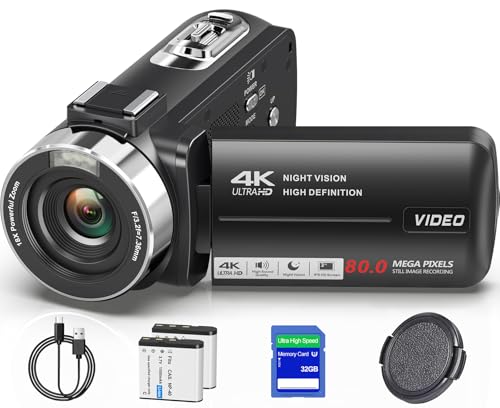
THPACIP 4K 80MP Camcorder 18X Digital Zoom

Blackmagic Pocket Cinema Camera 4K

lemecrazy 4K Digital Camera 64MP Vlogging
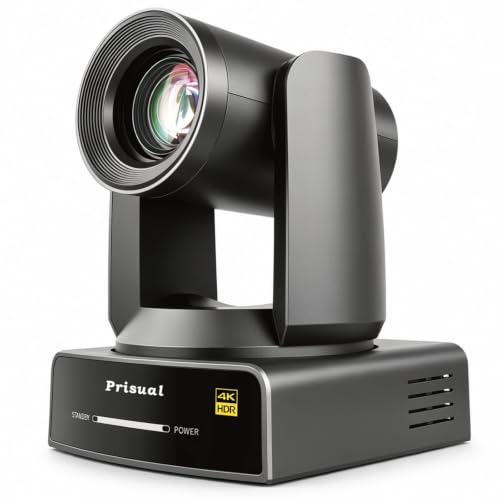
Prisual 4K NDI PTZ Camera 20X Optical Zoom

FIREFOTO 4K Camcorder 42MP Dual Battery

STUOGYUM 4K 64MP Travel Camera (White)

QUIOF Kids 4K 48MP Camera Black

Panasonic LUMIX FZ300 4K Bridge Camera
Meet The Standout Selections
For solo creators who film mostly at arm’s length, the ZV-1F solves a problem most pocket cameras ignore: fitting your face and the background into the frame without backing up against a wall. It pairs a wide 20mm-equivalent lens (the kind of focal length that simply swallows more scenery) with a 1-inch sensor that gathers real light, so indoor vlogs stop looking grainy under ceiling fixtures. The autofocus, in Sony’s usual lane, locks onto eyes quickly, which matters when you’re walking and talking.
You give up an optical zoom, an EVF (the small eye-level viewfinder found on traditional cameras), and a hot shoe for accessories, but those are sensible omissions for a body this small. Most vloggers, in our view, will simply plug in a lav mic and roll.
Notable Upsides
- Wide 20mm-equivalent lens keeps you framed at arm’s length without distortion tricks.
- 1-inch sensor delivers cleaner low-light footage than typical phone sensors.
- Eye-tracking autofocus keeps your face sharp while moving.
- Flip-out screen for self-recording makes framing obvious.
Worth Noting
- No optical zoom, so distant subjects require your feet or digital cropping.
- Body runs warm during long takes, so storage cards fill faster than expected.
Who It Suits Best
Solo YouTubers and TikTok creators who value a true pocketable vlog tool with reliable autofocus.
Consider Something Else When
The Panasonic LUMIX FZ300 is a stronger fit if you need a long zoom range and weather sealing for outdoor wildlife work.
Where the Sony above focuses on premium pocket design, this THPACIP camcorder goes the opposite route: camcorder ergonomics, an 18x digital zoom, and a 270-degree rotating screen aimed squarely at first-time vloggers. The 80MP image claim is a touch optimistic for a sensor at this tier, but real-world 4K video holds up well in good light, and the rotating LCD means you can film yourself at any angle without guessing where the lens points.
It’s a friendly starter, not a creative tool, and that’s fine. Parents documenting school plays or new creators building a first YouTube channel get a low-fuss package with simple menus.
Bright Spots
- 270-degree rotating screen frames you from unusual angles.
- 18x digital zoom pulls distant subjects closer for sports and school events.
- Simple menu layout keeps the learning curve short.
Trade Offs
- Digital zoom reduces sharpness noticeably past mid-range, unlike an optical zoom.
- Low-light footage gets noisy quickly under indoor ceiling lights.
Built With In Mind
First-time vloggers, teens, and gift-givers who want a forgiving camcorder shape with simple controls.
Look Elsewhere When
The FIREFOTO 4K Camcorder offers a better fit if dual batteries and recording-while-charging matter for long shoots.
The Blackmagic Pocket 4K is the outlier on a list like this. It’s the only entry that records in true cinema codecs (ProRes and BRAW), giving you flat color profiles you can grade in post, and its Micro Four Thirds mount accepts a wide range of affordable glass. That sensor size is the real story: roughly four times larger than the 1/2.3-inch chips in most budget cameras, and that translates directly into cleaner shadows and more pleasing background blur.
You give up the point-and-shoot convenience of the picks above. There’s no autofocus worth mentioning, no stabilization, and battery life is short without an external power source. For documentary or narrative work, none of that matters; you plan for it.
What Earns Its Place
- Cinema-grade codecs preserve color depth for serious editing.
- Large Micro Four Thirds sensor creates natural background separation.
- Native lens mount unlocks access to used and vintage glass.
Less Ideal Details
- No usable continuous autofocus means manual pulling is part of the workflow.
- Battery life is short; plan around spare LP-E6 cells or USB-PD power.
- Body has no in-body stabilization, so tripod or gimbal use is typical.
Technical Sheet
Best Suited To
Indie filmmakers and video students who plan to color grade and shoot with manual lenses.
Swap It Out When
The Sony ZV-1F makes more sense if you want point-and-shoot simplicity with reliable eye autofocus.
This is the camera you hand to a teenager at a birthday party and don’t worry about. The 64MP sensor is generous for stills, 4K video handles the casual YouTube upload, and the removable lithium-ion battery pushes past two hours of continuous recording, which covers most soccer games and recitals without a swap. The body is light enough for younger hands, and the menus don’t bury basic settings.
Compared to the THPACIP camcorder, this leans more toward still photography than video, but the lines blur in real family use. You can shoot both without swapping devices.
Notable Gains
- Over two hours of continuous recording per battery charge.
- 64MP stills crop down well for framed prints.
- Lightweight body suits younger or smaller-handed users.
Room For Improvement
- No optical viewfinder means framing outdoors in bright sun requires the rear screen.
- Autofocus hunts more than premium models, especially in dim rooms.
Whose Shelf It Belongs On
Parents and grandparents who want one camera for school events, vacations, and the occasional vlog.
A Better Fit Elsewhere
The QUIOF Kids 4K Camera suits younger users better if simpler controls and a bundled SD card matter more than battery life.
Most picks on this list are handheld cameras. The Prisual is something else entirely: a remote-controlled PTZ (pan-tilt-zoom) unit designed to live on a tripod or wall mount in a sanctuary, lecture hall, or studio. The 1/1.55-inch sensor is large for the category, the 20x optical zoom reaches a sanctuary balcony from the back wall, and HDR10 (High Dynamic Range, the standard that delivers brighter highlights and deeper shadows) plus 10-bit color gives video switchers and streaming pipelines room to grade. AI auto-tracking follows a speaker without an operator nudging the joystick.
It’s overkill for personal vlogging. It’s the right tool for production teams who want a single fixed camera that does the work of a camera operator.
Reasons It Performs
- 20x optical zoom keeps image quality intact across the full range.
- AI auto-tracking follows a moving subject without manual panning.
- PoE+ (Power over Ethernet Plus) runs power and data over a single cable for clean installs.
- 1080p at 120fps gives smooth slow-motion playback for sermon B-roll.
Points To Note
- Setup requires network knowledge for NDI (network video streaming protocol) or SDI workflows.
- Fixed installation means zero flexibility for handheld run-and-gun shoots.
Made For
Church production crews, university AV teams, and small studios running multi-camera live streams.
Skip It When
The Sony ZV-1F or FIREFOTO camcorder fits a portable creator workflow far better if you shoot by hand.
Two batteries in the box and a screen that rotates a full 270 degrees are the practical wins here. Beginner YouTubers regularly film themselves for an hour or more, and the included 1500mAh cells can be swapped mid-shoot without missing a take. The 3-inch LCD lets you frame from above or below the camera, which matters more than spec sheets admit for tutorials and unboxing content. There’s also a built-in LED fill light that lifts indoor scenes without buying extra gear.
You don’t get autofocus or optical zoom, and the 18x reach is digital. For static talking-head setups at typical desk distances, that’s a fair trade.
What Pays Off
- Two batteries extend filming without mid-shoot power hunts.
- Recording while charging via USB supports long event coverage.
- Built-in LED brightens dim indoor scenes for tutorials.
Some Limits To Know
- No autofocus requires manual focus pulls or careful subject placement.
- Digital zoom loses sharpness past the middle of the range.
The Right Fit
Beginning YouTubers filming tutorials and vlogs from a fixed spot who need long battery life.
Reach For A Different Pick When
The Sony ZV-1F suits handheld vlogging better if reliable eye autofocus matters more than battery count.
Travel creators tend to want one camera that handles both sweeping landscapes and tight street details. The STUOGYUM bundles a detachable wide-angle lens to capture the former, then uses the built-in lens for the latter, with autofocus and image stabilization smoothing out handheld walking shots. At 64MP for stills and 4K for video, the numbers match the lemecrazy above, but the included wide-angle adds a creative option that body alone can’t match.
The white finish stands out in a camera bag and looks distinctly different from the black options dominating this list. Aesthetic choice matters when you’re using a camera in tourist settings.
What It Does Well
- Detachable wide-angle lens expands scene framing on demand.
- Autofocus and stabilization help walking-tour footage stay usable.
- White finish is easy to spot in a packed bag.
Where It May Fall Short
- Wide-angle attachment adds bulk and risks being lost in transit.
- Stabilization isn’t on par with lens-based optical stabilization in pricier travel compacts.
Who Will Love This
Travel vloggers and vacation photographers who want wide landscape pulls in a compact body.
Consider Something Else When
The Panasonic LUMIX FZ300 suits wildlife and outdoor shooters better if you need a 24x optical zoom and weather sealing.
Some cameras try to be everything. This one tries to be one thing well: a forgiving starter for kids and teens who want to vlog or shoot stills without learning menus first. The bundled 32GB card means it’s ready to shoot out of the box, and the anti-shake plus 16x digital zoom cover the casual school-project use case. Autofocus on a body this small is a real convenience for younger hands.
The honest read is that adults will outgrow the feature set quickly, but for the target user, that’s the point. It’s a low-risk gift that won’t collect dust.
The Value In It
- 32GB SD card included so the camera shoots on day one.
- Anti-shake helps handheld clips stay watchable.
- Simple control layout suits younger users new to photography.
What To Weigh
- 16x reach is digital, so image quality drops at full zoom.
- Adult creators will likely outgrow the feature set within a season.
Perfect Match For
Kids, tweens, and teens starting a YouTube channel or documenting school life.
Where Another Pick Suits Better
The lemecrazy 4K Digital Camera is a smarter match for adult family members who want longer battery life and larger stills.
The FZ300 is the senior camera in this roundup, and it shows in ways that still matter. The Leica DC lens zooms 24x with a constant f/2.8 aperture, meaning the lens stays fast at full telephoto for wildlife and stage shots. The body is splash- and dust-proof, which is unusual at this tier and ideal for hiking or beach conditions. A 12.1MP sensor is modest by modern standards, but the bright glass and in-body stabilization produce usable 4K footage in conditions where smaller-sensor cameras struggle.
For backyard birders, sports parents on the bleachers, and anyone tired of swapping lenses in the rain, this is the most practical pick on the list, even if it isn’t the newest.
Everyday Wins
- 24x optical zoom with constant f/2.8 aperture stays bright at full reach.
- Splash- and dust-proof body handles outdoor conditions.
- Built-in WiFi speeds photo transfers to phones for quick sharing.
- 5-axis hybrid stabilization smooths handheld telephoto shots.
Possible Compromises
- 12.1MP sensor is conservative against newer 20MP-plus bridge models.
- Body is heavier than pocketable vlog cameras, so fatigue builds on long handheld days.
Who Should Grab It
Outdoor enthusiasts, wildlife watchers, and parents on sports sidelines who need a sealed body with real zoom.
Not Your Match When
The Sony ZV-1F is a better fit if pocket-friendly vlogging and modern autofocus matter more than zoom range.
Factors To Consider When Choosing Budget 4k Cameras
Sensor size matters more than megapixels for image quality. A larger sensor gathers more light, producing cleaner footage in dim conditions and more pleasing background blur. The Blackmagic Pocket 4K and the Prisual PTZ unit both use larger sensors than typical budget cameras, and you can see the difference in low-light scenes.
Autofignition behavior separates run-and-gun vloggers from staged shooters. The Sony ZV-1F’s eye tracking lets you walk and talk without focusing, while the Blackmagic Pocket 4K assumes you’ll pull focus manually. If your workflow is handheld and reactive, prioritize cameras with continuous autofocus.
Codecs and recording formats determine your editing flexibility. Cinema-grade codecs (like ProRes and Blackmagic RAW) preserve color depth for grading, while compressed MP4 files are easier to share straight from the camera. Most hobbyists will be fine with the latter; aspiring filmmakers benefit from the former.
Battery life and power options matter more than spec sheets admit. A camera that lasts 90 minutes per charge shapes which events you can cover without spares. USB charging and dual-battery kits, like the FIREFOTO’s, extend real-world shooting windows significantly.
Key Considerations Across These Picks
Where Shoppers Go Wrong
Chasing megapixels is the most common trap. A 64MP still image from a tiny sensor doesn’t equal a 20MP image from a larger one. Resolution numbers look impressive on spec sheets, but sensor size, lens quality, and processing matter more for the final result. Buyers comparing cameras should look past the headline number and check sensor dimensions, lens aperture, and codec support instead.
Forgetting about audio is the second mistake. None of these cameras records studio-quality sound out of the box, and good vlogs live or die on clear voice capture. Plan for an external microphone or a lavalier, and check whether the camera has a mic input before committing.
Where The Extra Money Goes
Stepping up to a higher tier typically buys three things: a larger sensor, better autofocus, and more flexible codecs. The Blackmagic Pocket 4K demonstrates the codec advantage clearly, and the Sony ZV-1F shows what better autofocus feels like in daily vlogging. Whether those upgrades are worth the spend depends on whether you grade footage in post or shoot mostly for quick social uploads.
Frequently Asked Questions
What resolution counts as real 4K on a budget camera?
True 4K records at roughly 3840 x 2160 pixels. Some entry-level cameras advertise “4K” while recording at lower resolutions with upscaling, which produces softer detail. Check the actual recording resolution in the specifications rather than trusting marketing language.
Do budget 4K cameras need an external microphone?
Most built-in microphones pick up handling noise and ambient sound, which weakens voice clarity. A small external mic or lavalier improves results noticeably, especially for indoor vlogging and interviews. Cameras with a dedicated mic input make this easier.
Can a budget 4K camera replace a smartphone for vlogging?
A dedicated camera offers larger sensors, optical zoom, and better manual controls than most phones. A smartphone still wins for casual social clips and live streaming convenience. For planned content with cleaner footage, a budget 4K camera is a meaningful upgrade.
How much storage do 4K videos actually use?
A single hour of 4K footage at standard compression can fill 20GB to 40GB, depending on the bitrate (data written per second of video). Plan to carry multiple SD cards or an external drive for longer shoots, and check whether the camera supports U3-rated cards for stable 4K recording.
Is a bridge camera like the FZ300 outdated compared to mirrorless options?
Not necessarily. The FZ300’s sealed body, constant-aperture zoom, and integrated lens design suit outdoor and travel use cases where changing lenses is impractical. Mirrorless cameras offer larger sensors and better low-light performance, but they require carrying extra lenses and dealing with dust on the sensor.
The Takeaway
The best budget 4K camera depends entirely on what you’re shooting and how. Vloggers who film themselves will find the most joy in the Sony ZV-1F or FIREFOTO, while aspiring filmmakers should look seriously at the Blackmagic Pocket 4K. Families and kids will be well served by the lemecrazy or QUIOF options, and outdoor shooters get the most value from the Panasonic FZ300. Match the camera to your real workflow rather than the highest spec sheet, and you’ll be happier with the result.