A shaky phone clip or a blurry low-light shot is usually a tripod problem, not a camera problem. Affordable supports have grown up fast, and today’s budget-friendly models handle mirrorless rigs, DSLRs, and gimbals far better than their predecessors. The picks below cover everything from pocket-sized tabletop stands to tall video rigs, so you can match a tripod to the way you actually shoot.
An Overview Of The Picks
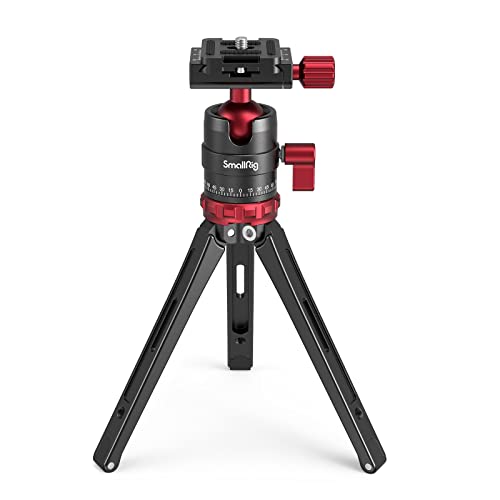
SmallRig Desktop Mini Tripod (Aluminum)

Cayer BV25LH Carbon Fiber Video Tripod

SIRUI AM-TT50 Aluminum Mini Tabletop Tripod

Treeroot Mini Camera Tripod (F38 Quick Release)

GEEKOTO 77″ Aluminum Travel Tripod

RAUBAY 70.8″ DV-1 PRO Fluid Head Tripod

Manfrotto PIXI Mini Tripod (Black)
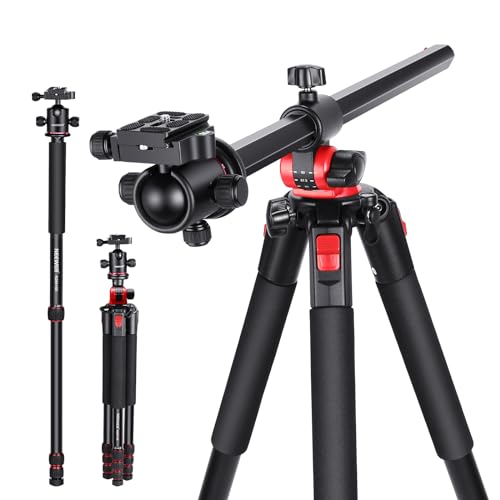
NEEWER 72″ Aluminum Tripod-Monopod Combo

NEEWER TP74 Video Tripod with Fluid Head

Movo TR-1 Mini Tabletop Tripod and Hand Grip
Inside Each Recommended Option
SmallRig’s desktop mini tripod punches well above its weight class for desk-bound creators and casual vloggers. The CNC-machined aluminum body feels closer to a tool than a toy, and the Arca-Swiss compatible clamp (a widely used quick-release plate standard favored by mirrorless shooters) means most small cameras and phone holders slide on in seconds. The dual-action ball head offers an independent pan lock for 360° rotation, which is surprisingly useful for product-turntable clips.
Where it earns a permanent spot in a kit is at shoulder height on a bookshelf, or strapped to a clamp for an overhead recipe shot. It supports up to 11 lbs in the spec sheet, so anything from a phone rig to a small DSLR with a 24-70mm lens sits comfortably. Compared with the Manfrotto PIXI below, you get a real Arca-Swiss plate instead of a simple 1/4″ screw, which speeds up swaps mid-shoot.
Useful Touches
- Arca-Swiss clamp means faster plate swaps between mirrorless bodies and phone cages.
- Independent pan lock supports true 360° panoramic stitching for landscape shooters.
- 11 lb load handles small cinema setups, not just phones.
- Anodized aluminum finish resists scuffs in a busy camera bag.
Things To Consider
- Tabletop height only, so it rarely works as a primary tripod for standing subjects.
- Owners commonly report the ball lock stiffening slightly after months of heavy use, so a quick wipe-down helps.
Right Fit For
Content creators shooting seated interviews, product demos, or phone-first reels who need a desktop anchor they can trust.
Skip It When
The Sirui AM-TT50 is a better match for anyone who needs a small tripod that also folds down for hikes and coffee-table travel.
The Cayer BV25LH is the only carbon fiber option on this list, and that detail alone shifts how it feels in the hand. Carbon fiber (a woven composite material that is lighter than aluminum while staying rigid) keeps the tripod light enough to carry all day yet rigid enough to support a 17.6 lb rig without flexing at full extension. It tops out around 73 inches, which is a comfortable eyeline for standing interviews and tall video work.
The twin-tube leg design and dedicated fluid head (a head with internal chambers of viscous fluid that smooths out pans and tilts) matter most for anyone tracking a moving subject, whether that’s a wedding aisle or a kid on a soccer field. The detachable pan bar and 1/4″ easy link connector let you mount a small monitor or LED panel on the rig itself. Compared with the RAUBAY DV-1 PRO later in this list, the Cayer trims weight noticeably while keeping the same general load class.
Notable Gains
- Carbon fiber legs lower fatigue on long shoots and travel days.
- 17.6 lb load handles compact cinema cameras and matte boxes comfortably.
- Fluid head with independent pan and tilt locks produces broadcast-style motion.
Trade Offs
- The 1/4″ easy link means larger 3/8″ accessories need an adapter you have to buy separately.
- Carbon fiber is lighter but more brittle on hard drops, so careful handling pays off.
- Setup takes longer than aluminum travel tripods because of the twin-tube locks.
Built With In Mind
Hybrid shooters and event videographers who chase smooth pans and care about carrying one less pound over a long day.
Consider Something Else When
The RAUBAY 70.8″ DV-1 PRO is the better value if aluminum durability matters more than shaving weight from your bag.
The SIRUI AM-TT50 was built for one job: disappearing into a carry-on and showing up ready to shoot. Folded, it measures around 7 inches and weighs under 1.7 lbs, which means it slips into a jacket pocket when you don’t want to commit to a full backpack. Open the legs and you get a sturdy tabletop platform with a 360° ball head for quick angle changes.
It suits small DSLRs, mirrorless bodies, phones in cages, and even compact action cameras thanks to the universal 1/4″-20 mount (the standard thread size used across most cameras and accessories). On a café table, it handles vlog framing and overhead reels with no fuss. The SmallRig desktop model earlier in this list is the sturdier cousin, but the SIRUI wins on portability.
Reasons It Performs
- Sub-1.7 lb weight keeps travel kits honest.
- 7-inch folded length fits in coat pockets and sling bags.
- 360° ball head supports quick reframing on solo shoots.
Small Caveats
- Tabletop height caps creative framing above seated subjects.
- The aluminum finish tends to pick up fine scratches if tossed loose in a camera bag.
Quick Facts
Made For
Mirrorless travelers and city vloggers who want a real tripod in their day bag, not a compromise stand.
Look Elsewhere When
The GEEKOTO 77″ makes more sense for full-height landscape work that demands an adult eyeline.
The Treeroot mini tripod, branded under FALCAM’s quick-release ecosystem, is the rare budget stand that thinks about how creators actually work. The F38 quick-release plate system (a small, flat plate that clicks into a matching base for fast mounting) lets you snap a Smooth 4 gimbal, an Osmo Mobile handle, or a phone cage on and off in one motion, no screw-twisting required. Once locked, the legs spread wide enough to act as a low-angle tabletop support.
It feels purpose-built for phone-first creators who jump between handheld gimbals and locked-off tripod shots during the same session. The quick-open linkage avoids the pinching that plagues some folding designs. That said, it’s a tabletop-class stand, so you won’t replace a full-size tripod with it.
Key Advantages
- F38 quick release accepts gimbals and phone cages without rethreading.
- One-step open linkage saves time between handheld and locked shots.
- Solid base for low-angle tabletop framing in tight spaces.
Worth Noting
- Best paired with F38-compatible gear, so mixed kits may need an adapter plate.
- Compact footprint limits it to tabletop heights.
Whose Shelf It Belongs On
Mobile creators who already use FALCAM-compatible gimbals and want a tripod that matches that quick-release workflow.
Reach For A Different Pick When
The Manfrotto PIXI suits photographers who shoot compact mirrorless bodies and want a simpler 1/4″ screw setup.
The GEEKOTO 77″ earned its place because it covers the awkward middle ground between tabletop stands and full video rigs. It folds to roughly 19 inches for travel, but extends to 77 inches for standing-height portraits, group shots, or vlogs. The 360° ball head handles panoramic stitching, and the four-section flip-lock legs deploy in seconds with no twist-and-pray tightening.
An 8 kg load capacity swallows a full DSLR with a 70-200mm lens and a small flash bracket. For travelers stepping up from a phone-only setup, this is the natural first “real” tripod, and it stays useful as kits grow. The NEEWER 72″ combo later in this list goes heavier, but adds bulk and a separate monopod function.
What Earns Its Place
- 19″ folded length fits in carry-on luggage and large backpacks.
- 77″ max height covers adult standing eyelines without a center column extension.
- 8 kg load handles DSLR plus telephoto plus flash rig combos.
- Quick-release flip-locks speed up setup and teardown.
Trade-Offs To Consider
- Aluminum legs are heavier than carbon fiber alternatives for long hikes.
- No fluid head, so cinematic pans require an upgrade later.
Feature Snapshot
Best Suited To
Traveling photographers stepping up from phone-only setups who need one tripod for both landscape and portrait days.
Where Another Pick Suits Better
The NEEWER TP74 is the better match when smooth video pans matter as much as photo stability.
The RAUBAY DV-1 PRO reads like a video-first rig, and it is. Twin-tube aluminum legs and a metal mid-level spreader (a horizontal brace halfway down the legs that adds lateral rigidity) lock the tripod down so it doesn’t drift during long pans. At full extension it reaches 70.8 inches, which suits standing interviews and event coverage where the operator isn’t on a stool.
The fluid head supports a 17.6 lb load and includes a quick-release plate for fast body swaps, a real time-saver on wedding shoots. Compared with the Cayer earlier, the RAUBAY trades some portability for a sturdier spreader system that holds up under heavier camcorder bodies. Owners commonly report the rubber feet grip well on smooth floors, which is a quiet plus for indoor venues.
Real-World Strengths
- Twin-tube legs and mid-level spreader resist wobble during long pans.
- 17.6 lb load takes full-frame cinema cameras and follow-focus rigs.
- Quick-release plate speeds up body swaps on event day.
- Rubber feet grip polished floors without scratching them.
Room For Improvement
- Heavier than carbon fiber video tripods for travel-heavy shooters.
- Spreader adds setup steps compared with monopod-style photo legs.
Who Should Grab It
Event videographers and solo content creators running heavier camcorders who need dependable fluid motion on a budget.
A Better Fit Elsewhere
The NEEWER TP74 is a smarter pick if you want a built-in bubble level and prefer a slightly lighter fluid head setup.
The Manfrotto PIXI has earned a permanent spot in compact camera kits because it solves one specific problem: stable handheld video without a full tripod. Closed, the legs form a comfortable grip; opened, they lock into a sturdy tabletop stance. Made in Italy with a technopolymer and aluminum blend, it feels more solid than its weight suggests.
It shines for vloggers, compact mirrorless shooters, and anyone grabbing a quick overhead clip for social content. The push-button leg lock is fast, and the rubber feet grip desks and shelves without sliding. Compared with the Movo TR-1 later in this list, the PIXI has a more refined feel, though it lacks the folding-feet design some creators prefer for grip work.
Practical Advantages
- Doubles as a handgrip for low-angle handheld video.
- Technopolymer-aluminum build is light yet stable for compact cameras.
- Push-button leg lock deploys in a single motion.
Points To Note
- Tabletop height only, so full standing shots require a separate tripod.
- Fixed 1/4″ mount, so Arca-Swiss plate users will swap plates frequently.
Perfect Match For
Compact mirrorless and phone shooters who want a grab-and-go grip that turns into a stable tabletop stand in seconds.
Swap It Out When
The SmallRig desktop tripod makes more sense if you regularly shoot overhead product footage and want Arca-Swiss compatibility.
The NEEWER 72″ combo works double duty, and that’s the whole pitch. Unscrew the center column and one leg detaches to become a monopod for crowded events where tripods aren’t welcome. The horizontal center column (a feature that lets the main vertical shaft swing out to the side) also unlocks overhead shooting without a separate boom arm.
The Arca-Type quick-release plate fits most mirrorless and DSLR plates on the market, and the 33 lb load capacity dwarfs the photo-tripod norm, so heavy zooms and full-frame cinema bodies sit comfortably. For shooters who split time between sports, events, and product clips, this is a practical two-in-one. The GEEKOTO 77″ earlier in this list stays simpler and lighter, but doesn’t double as a monopod.
Benefits That Matter
- Detachable leg converts to a full-height monopod in seconds.
- Horizontal center column enables overhead shooting without extra gear.
- 33 lb load capacity handles cinema-style rigs and long telephotos.
- Arca-Type plate is widely compatible with modern mirrorless kits.
Minor Gripes
- Bulkier than single-purpose tripods when stored.
- Conversion between tripod and monopod takes practice to master quickly.
Who Will Love This
Run-and-gun photographers and videographers who shoot at events, sports, and product sessions and want one support that adapts.
Not Your Match When
The GEEKOTO 77″ is the simpler pick if you never need monopod mode and prefer lighter luggage on travel days.
The NEEWER TP74 earns the workshop label because it does the unglamorous jobs well. Double tandem aluminum legs (a stacked leg design that increases rigidity) and a mid-level spreader keep the rig planted on smooth studio floors, and the included bubble level saves time when you’re chasing a true horizon line for product or interview work. The fluid head supports 360° panning plus a -75° to +90° tilt range, which covers most cinematic moves.
The 75mm bowl base (a curved mounting surface that lets the head click into a fixed alignment with the legs) is a thoughtful touch borrowed from higher-end video rigs, and the telescopic pan handle stows neatly for travel. Compared with the RAUBAY DV-1 PRO, the TP74 weighs a touch less and adds the bubble level, which makes it friendlier for studio-bound creators.
What It Does Well
- Fluid drag head produces smooth pans and tilts for cinematic motion.
- Bubble level simplifies tripod leveling on uneven studio floors.
- 75mm bowl base offers professional-style head swaps if you upgrade later.
- Telescopic pan handle stores compactly between shoots.
A Few Limitations
- 17.6 lb load is solid but not generous for the heaviest cinema rigs.
- Aluminum legs are heavier than carbon fiber for mobile shoots.
Best Suited To
Studio creators and live-event videographers who shoot in controlled spaces and value smooth panning above all else.
Consider Something Else When
The Cayer BV25LH is the smarter pick for shooters who travel often and want lighter carbon fiber legs.
The Movo TR-1 is the cheapest way to get a real tripod experience on this list, and it punches well above its price point. Folding feet collapse flat for pocket carry, and the universal 1/4″ screw accepts anything from a GoPro to a compact DSLR. It also doubles as a hand grip, similar in spirit to the Manfrotto PIXI earlier.
It’s the obvious pick for entry-level creators, students, and anyone outfitting a kids’ camera kit without worrying about rough handling. The build leans light, so treat it as a starter rather than a forever tool, but for the price it covers vlogging, social clips, and casual YouTube work without complaint.
The Case For It
- Low price makes it easy to outfit starter kits and travel backups.
- Folding feet flatten for pocket or bag stashing.
- Universal 1/4″ screw fits cameras, phones, and action cams.
- Doubles as a hand grip for quick handheld video.
Honest Caveats
- Plastic-heavy build feels less rigid under heavier camera bodies.
- Limited height caps its role to tabletop framing.
- Owners commonly report the hinge loosening after months of frequent folding, so a periodic check keeps wobble in check.
Right Fit For
First-time creators, students, and casual vloggers who want a true tabletop tripod without spending much.
A Better Fit Elsewhere
The Manfrotto PIXI is worth the upgrade once you shoot regularly and want a sturdier grip-to-tripod hybrid.
Choosing The Right Budget Camera Tripod For Your Setup
The right tripod depends less on brand and more on how you actually shoot. Height, head type, and load capacity shape almost every buying decision, and matching them to your typical camera prevents overspending on features you won’t use.
Height and Portability
Full-height tripods like the GEEKOTO 77″ and NEEWER 72″ deliver standing eyelines for portraits and interviews, but they weigh more in a bag. Tabletop and mini tripods like the SmallRig, SIRUI AM-TT50, and Movo TR-1 trade reach for pocket portability. Most creators end up wanting both: a tabletop stand for desk work and a full-height stand for outdoor shooting.
Head Type and Motion
Ball heads (a single pivoting joint that tilts in any direction, locked by one knob) are versatile for photo work, while fluid heads (heads filled with viscous fluid that smooths out pans and tilts) are built for video. The Cayer BV25LH, RAUBAY DV-1 PRO, and NEEWER TP74 all use fluid heads for cinematic motion. Panoramic stitching benefits from a head with an independent panning base, which the SmallRig desktop offers.
Load Capacity and Build Material
Match the tripod’s rated load to your heaviest camera plus lens combo, with a safety margin. Carbon fiber saves weight for travel, while aluminum costs less and handles knocks more gracefully. Arca-Swiss compatibility matters if you already own modern mirrorless plates and want faster swaps.
Smart Shopping Notes For Budget Tripods
Mistakes Worth Dodging
Buying a tripod that’s too short for your typical shooting height leads to constant center-column use, which weakens stability. Another common slip is ignoring head type: a ball head works for photos, but smooth video pans demand a fluid head. Finally, overlooking leg-lock style matters more than people think. Flip-locks deploy faster than twist-locks, but twist-locks tend to hold up longer in cold weather.
Where The Extra Money Goes
Stepping up to a higher-tier tripod usually buys carbon fiber construction, a real fluid head, and a mid-level spreader. Carbon fiber shaves pounds for travel, fluid heads deliver broadcast-quality motion, and spreaders prevent drift during long pans. For studio-bound videographers, those upgrades pay off fast, while casual photographers often stay happy with a solid aluminum ball-head model.