Starting a YouTube channel or stepping up from your phone shouldn’t drain your wallet. The sub-$200 camera market has quietly gotten competitive, with models now offering 4K recording, flip screens for self-framing, and WiFi transfer that skips the cable shuffle entirely. The hard part isn’t finding options; it’s sorting the genuinely useful from the spec-sheet flex.
These nine picks cover the realistic ground: pocket-sized point-and-shoots for casual creators, kids’ cameras tough enough for sticky fingers, and one enthusiast-grade long-zoom body that punches above its class. Every option here prioritizes what actually matters when you’re learning to vlog, because a sharp image and clear audio beat a giant megapixel number nobody can see.
The Main Contenders

Fxmug 2.7K QHD Vlogging Camera 56MP
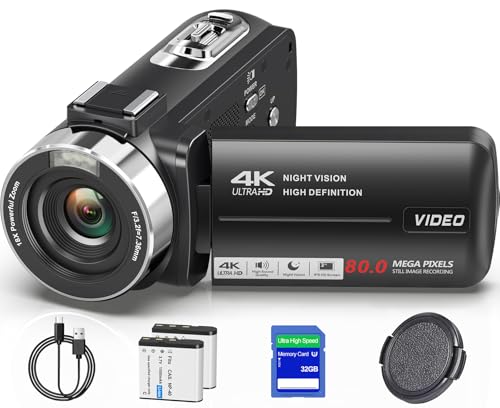

lemecrazy 4K Digital Camera 64MP

Yatao 6K WiFi Flip Screen Camera

Peryoua 4K 80MP Camcorder 18X Zoom

SEREE 2.7K 64MP Camcorder IR Night Vision

ocxu Kids & Beginners Digital Camera 64GB


Panasonic LUMIX FZ300 4K 24X Zoom
Meet The Standout Selections
The Fxmug QHD 2.7K camcorder sits in that sweet beginner zone where you get real recording capability without a learning cliff. The 2.8-inch rotating screen flips 270 degrees, so framing yourself while talking to camera becomes a one-step action rather than guesswork. A bundled 32GB high-speed SD card ships in the box, which removes one of the small frustrations that derail first projects.
For someone filming a travel diary, a classroom walkthrough, or a family update video, the 16x digital zoom and 56MP photo capture cover the everyday asks. It won’t replace a mirrorless setup, but it offers a friendly entry point for creators still deciding whether vlogging is a hobby or a long-term pursuit.
Everyday Perks
- 270-degree flip screen makes solo framing accurate without a monitor
- 32GB SD card included so you can shoot immediately out of the box
- 56MP photos give thumbnails and stills enough detail for social posts
- Storage expands to 128GB, enough for a full day of event recording
Points To Note
- Digital zoom degrades at the long end, so the 16x setting stays best for stationary subjects
- Low-light indoor footage tends toward noise without supplemental lighting
- Plastic body feels light in hand, a plus for portability but worth a wrist strap for active shoots
Key Specs
Right Fit For
First-time vloggers who want a single bundle that records, frames, and stores without a parts list.
Consider Something Else When
Low-light creators should weigh the SEREE 2.7K 64MP Camcorder, since its infrared night vision handles dim settings the Fxmug can’t reach.
Stepping up from 2.7K to genuine 4K changes how your footage feels on a 4K monitor, and the THPACIP camcorder delivers that resolution along with 80MP stills for hybrid shooting. The 18x digital zoom outpaces the Fxmug’s reach, useful when you’re filming across a room or street and don’t want to move the camera. A 270-degree flip-out screen solves the same solo-framing problem in a slightly larger form factor.
You’ll get the most from this body on outdoor vlogs, product reviews where detail matters, and any scenario where the final upload sits on a 4K-capable platform. It’s a strong middle-ground choice for creators who want resolution headroom without stepping into interchangeable-lens territory.
Positive Takeaways
- Native 4K video captures fine texture in skin, fabric, and food close-ups
- 80MP photo resolution leaves room for cropping without losing social-share sharpness
- 18x digital zoom reaches farther than the Fxmug for distant subjects
- Flip screen enables webcam-style desk setups and selfie framing
Trade Offs
- 4K files fill storage quickly, so a high-capacity card becomes a near-mandatory add-on
- Zoom holds detail better than the Fxmug but still softens past midrange
- Menu navigation runs deeper than simpler camcorders, costing a learning afternoon
Feature Snapshot
Best Suited To
Teens, students, and new creators who want 4K detail for YouTube uploads without mirrorless complexity.
Skip It When
Travel content creators should weigh the Saneen 8K Digital Camera, since it pairs similar resolution with built-in WiFi for instant phone transfer.
The lemecrazy 4K camera leans into the photography side without abandoning video, which is exactly what hybrid creators want. It captures 64MP stills for family albums, school events, and birthday parties while shooting UHD 4K video for the same memory in motion. The removable lithium-ion battery is a quiet but significant upgrade, giving you a swap option when the day runs long.
Claimed continuous recording over 120 minutes per charge gives this camera a leg up on camcorders that shut down early. For parents documenting a school play or hobbyists running a craft channel, that runtime means fewer interruptions and more usable footage per session.
Advantages To Know
- Removable battery lets you carry a spare for extended shoots
- Continuous recording past two hours per charge handles most events
- 64MP stills work double-duty for both vlog thumbnails and print keepsakes
- Compact body fits in a jacket pocket for travel and everyday carry
Things To Consider
- 4K video generates heat, so long outdoor sessions in warm weather may trigger thermal limits
- No flip screen mentioned in source specs, so self-framing requires a phone preview workaround
Whose Shelf It Belongs On
Hybrid shooters who alternate between still photography and video for family, school, and hobby channels.
Not Your Match When
Talking-head creators should weigh the Yatao 6K WiFi Flip Screen Camera, since its flip screen and built-in mic simplify self-shot videos considerably.
The Yatao 6K camera brings accessories to the table that most budget options leave you chasing separately: a flip screen for self-framing, a built-in microphone for clearer dialogue, and a fill light to rescue dim indoor scenes. The 6K capture specification is genuinely more than your 4K monitors can display today, but it gives you breathing room for cropping and reframing in post without losing detail. Dual-lens support adds wide-angle landscapes and macro close-ups to your shot list.
For YouTubers running talking-head segments from a home office, this camera removes three accessory purchases at once. WiFi transfer skips the cable shuffle entirely when you’re moving footage to a phone or laptop for editing.
A Favorable Mix
- Flip screen enables accurate self-framing for solo creators
- Built-in microphone captures clearer dialogue than camera-mounted defaults
- Fill light improves indoor and evening shots without external gear
- WiFi transfer speeds up the phone-edit workflow
- Wide-angle and macro lenses cover landscape and close-up work
Points To Keep In Mind
- Extra accessories in the box add weight, so the kit feels less pocket-friendly than simpler bodies
- 6K files demand a capable computer for smooth editing and export
- Fill light helps, but bright daylight still wins, so plan around lighting conditions
Made For
Beginner and intermediate YouTubers running talking-head and lifestyle content from a home setup.
A Better Fit Elsewhere
Outdoor vloggers will find the Panasonic LUMIX FZ300 more capable, since its splash-proof body and long Leica zoom handle weather and distance better.
The Peryoua camcorder leans into the family-memory market with 4K capture at 30 FPS and 80MP stills for the highlight reel. The 18x digital zoom reaches across living rooms and school auditoriums without moving the camera, useful for ceremonies where you can’t walk closer. Its beginner-friendly design keeps menus shallow enough that even first-time users get rolling quickly.
For documenting children’s milestones, family reunions, or vacation footage that doubles as a vlog, this body balances resolution with approachable controls. It’s the kind of camcorder you hand to a relative and trust they’ll get usable footage back.
The Upside
- 30 FPS 4K capture keeps motion smooth for sports and active kids
- 80MP stills handle framed prints and detailed albums
- 18x zoom supports back-row filming at performances and ceremonies
- Beginner-oriented menus reduce setup confusion
Honest Caveats
- 30 FPS limits slow-motion replay options for action-heavy content
- Digital zoom quality drops past midrange, so plan around the sweet spot
Perfect Match For
Parents and family videographers who want higher resolution for keepsake footage without a steep learning curve.
Reach For A Different Pick When
Young creators and kids will find the ocxu Kids & Beginners Digital Camera more approachable, since its menu is designed for very new users.
The SEREE camcorder adds one feature almost no budget body offers: infrared night vision. For vloggers covering evening events, wildlife after dark, or atmospheric B-roll, that IR capability opens creative options the Fxmug and lemecrazy simply can’t touch. The 0.5-second autofocus helps photo capture, while 4x video zoom and 16x photo zoom split duties by mode rather than overpromising across both.
A 16GB SD card ships in the box, enough to start shooting immediately. The 270-degree rotation screen handles solo framing in any lighting condition where the IR kicks in. For creators who film beyond golden hour, this body earns its slot.
A Few Strong Suits
- Infrared night vision captures footage regular sensors miss entirely
- 0.5-second autofocus speeds up still shooting during quick scenes
- 16GB SD card included so the camera is shoot-ready on day one
- 270-degree screen rotation supports creative angles and selfie framing
Small Caveats
- 2.7K resolution trails the THPACIP and Peryoua in pure pixel count
- IR footage is monochrome, so color storytelling falls to daytime shoots
- 16x zoom applies to photos only, while video zooms to 4x
Built With In Mind
Creators who regularly film at night, in dim venues, or want atmospheric B-roll beyond standard lighting.
Look Elsewhere When
Daylight-first vloggers who don’t need night vision will find the THPACIP 4K 80MP Camcorder a sharper, more resolution-focused match.
The ocxu camera is built for the youngest hands in the house, with a power-on-and-shoot menu that removes the settings intimidation factor. 64MP photos and 4K video give kids real creative output, while the bundled 64GB SD card means there’s no extra shopping before the first shoot. For parents hoping to pull kids away from passive screen time toward active content-making, the tool matters as much as the result.
Teens starting their first YouTube channel get a similar benefit: low stakes, low complexity, and enough quality to learn framing and storytelling without fighting the gear. This camera is less about specs and more about removing every friction point between a kid and the record button.
What It Does Well
- Power-on-and-shoot menu lets beginners capture without setup delays
- 64GB SD card bundled in the box
- Compact body fits smaller hands comfortably
- Educational tool that pulls focus toward creating rather than scrolling
Where It May Fall Short
- Specs prioritize simplicity over manual creative control
- Build quality targets light recreational use, not rough outdoor handling
The Right Fit
Children, preteens, and absolute beginners who need an approachable camera that encourages experimentation.
Swap It Out When
Teens ready for YouTube-grade content should step up to the lemecrazy 4K Digital Camera, which adds the resolution and battery runtime a growing channel demands.
The Saneen camera pushes the resolution ceiling to 8K with 88MP stills, more pixel data than most creators need today but useful for aggressive cropping and future-proofed archives. WiFi connectivity handles file transfer to phones and laptops, a real workflow win when you’re moving between airports, hotels, and editing sessions. Webcam functionality also lets the camera double as a streaming tool for live sessions.
For travel content creators and anyone who values the ability to reframe in post, that pixel headroom is a creative asset. Just be aware that 8K footage demands a current-generation computer for smooth editing, since older laptops will struggle with the bitrate.
What Pays Off
- 8K video gives significant cropping and reframing flexibility in post
- 88MP stills hold detail through heavy editing
- WiFi transfer simplifies phone-based editing and social uploads
- Webcam mode supports live streams and video calls
Potential Compromises
- 8K files fill storage rapidly, so multiple high-capacity cards become essential
- Older laptops will choke on 8K timelines during editing
- 8K playback requires a compatible monitor or downscaling for review
Quick Facts
Made For
Travel creators and social-first YouTubers who want maximum pixel headroom and WiFi convenience.
Consider Something Else When
Creators with older computers should consider the THPACIP 4K 80MP Camcorder, since 4K files are easier on most editing setups.
The Panasonic LUMIX FZ300 breaks from the budget-camcorder mold with a Leica DC 24X zoom lens, a constant f/2.8 aperture (meaning the lens opening stays wide across the full zoom range for better light gathering), and a splash- and dustproof body that shrugs off weather other cameras fear. The 12.1MP sensor sounds modest next to the 80MP and 88MP numbers, but pixel size and lens quality matter more for image clarity than raw count, and the FZ300 delivers sharp results with that advantage. 4K video recording and 4K photo modes capture both motion and precise stills.
For travel vloggers, outdoor adventurers, and creators who shoot in unpredictable conditions, this is the body that survives the trip. The constant f/2.8 aperture also helps indoor and low-light scenes where slower lenses force higher ISO settings that introduce grain.
Where It Delivers
- 24x optical zoom reaches far without digital quality loss
- Constant f/2.8 aperture gathers light across the full zoom range
- Splash- and dustproof body handles outdoor shoots and travel
- 4K video and 4K photo modes capture both motion and high-speed stills
- WiFi support for wireless file transfer
Where It Is Less Suited
- Larger and heavier than pocket-friendly camcorders on this list
- 12.1MP sensor trails the megapixel numbers elsewhere in the roundup
- Premium price relative to the budget category framing
Quick Technical Notes
Who Will Love This
Outdoor vloggers, travel creators, and enthusiasts who shoot in unpredictable conditions and value lens quality over pixel count.
Where Another Pick Suits Better
Absolute beginners will find the Fxmug 2.7K QHD Vlogging Camera easier to start with, since its simpler controls match a shorter learning curve.
Shopping Smarts For New Vloggers
Picking a budget vlogging camera gets easier once you match the tool to the shoot. Resolution numbers look impressive on the box, but the features that actually decide your daily experience are flip screens for self-framing, microphone quality for dialogue clarity, and battery life that survives a full shoot. Image stabilization matters most if you walk and talk; static talking-head creators can skip it without regret.
Zoom type is worth a beat of attention. Optical zoom (which uses lens movement to magnify the image) preserves quality across the full range, while digital zoom (which crops and enlarges the image electronically) degrades past the midrange. The Panasonic LUMIX FZ300’s 24X optical zoom outclasses every other pick here for reach, but the Saneen 8K’s 8K capture lets you crop in post and simulate zoom in editing software. Both approaches have merit; they just serve different editing workflows.
Storage and battery shape how long you can shoot. A bundled SD card gets you rolling immediately, but 4K and 8K files fill cards fast, so plan for additional high-capacity media. Removable batteries, like the one in the lemecrazy, extend shoot days without waiting for a charge cycle.
Worth Knowing Before You Buy
Common Slip Ups Worth Dodging
Chasing megapixels alone leads shoppers toward inflated numbers. A 12MP camera with a quality lens and larger pixels (the tiny light-sensitive dots on the sensor) often beats an 80MP camera with a small sensor and cheap optics. Match the camera to your actual use case: talking-head creators need flip screens and microphones more than zoom; travel creators need weather sealing and battery life more than raw resolution.
Skipping the accessory check is another routine trap. A camera without a flip screen forces workarounds for self-framing. A camera without an external microphone input caps your audio upgrade path. Bundled accessories like the Yatao’s fill light and mic solve problems before you start paying for add-ons separately.
When Spending More Actually Pays Off
Stepping up to a body like the Panasonic LUMIX FZ300 costs more, but the constant f/2.8 aperture, optical zoom range, and weather sealing solve problems cheaper cameras can’t touch. For creators who already know they’ll shoot in low light, outdoors, or at long distances, the upgrade pays back in footage you simply couldn’t capture otherwise. For creators still testing the vlogging waters, a budget body that gets you recording matters more than a feature set you won’t touch for months.
Frequently Asked Questions
What Resolution Is Enough For YouTube Vlogging?
4K captures noticeably more detail than 1080p and gives you cropping room in editing. Most viewers still watch on 1080p screens, so 4K is more about future-proofing and post-production flexibility than immediate visual gain.
Do I Need A Flip Screen For Vlogging?
For talking-head videos where you face the camera, a flip screen removes guesswork in framing. For cinema-style content shot from a tripod or by someone else, a fixed screen works fine and saves you money.
Is Optical Zoom Better Than Digital Zoom?
Yes, optical zoom preserves full image quality through lens movement, while digital zoom crops into the image and degrades past midrange. If reach matters for your content, prioritize optical zoom over digital.
Can Budget Cameras Handle Low-Light Recording?
Budget sensors struggle in dim conditions, often producing noisy footage. The SEREE’s infrared night vision helps in true darkness, while the Panasonic’s constant f/2.8 aperture gathers more light than slower lenses on other budget bodies.
Should I Buy A Camera Or Use My Smartphone?
Modern phones shoot excellent video, but a dedicated camera offers better ergonomics for handheld shooting, longer battery life, expandable storage, and zoom range without cropping. For creators publishing regularly, a separate camera also separates shooting from distractions.
The Takeaway
The right budget vlogging camera is the one that matches how you actually shoot, not the one with the longest spec sheet. Beginners benefit most from the Fxmug’s flip screen and bundled storage, while creators running talking-head segments will appreciate the Yatao’s microphone and fill light. Outdoor vloggers and travel creators gain the most from the Panasonic’s weather sealing and Leica zoom.
Start with what fits your current skill and shooting style, learn what the camera does and doesn’t give you, and upgrade when the limits become real rather than imagined. That’s the path that keeps vlogging fun, productive, and surprisingly affordable.