Cinema-style video no longer demands a Hollywood budget. Mirrorless bodies with serious codec support, compact cinema workhorses, and surprisingly capable action cameras now deliver filmic results for under what a single cinema-grade lens used to cost. If you are starting a YouTube channel, shooting a short film, or stepping up from a phone, this roundup walks through the cameras, lenses, cages, and action units that punch above their weight in 2026, plus the trade-offs worth knowing before you commit.
The Lineup, Simplified

Blackmagic Pocket Cinema Camera 4K (CINECAMPOCHDMFT4K)

SONY Cinema Line FX30 Super 35 Camera (Gray)

Panasonic LUMIX S5 Full Frame Mirrorless (Black)

Rokinon Xeen 50mm T1.5 Cine Lens (Canon EF)
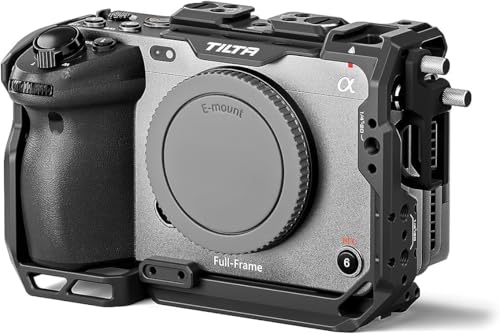
Tilta Full Camera Cage for FX3/FX30 V2

Canon EOS Rebel T7 DSLR Kit with 18-55mm

Meike 16mm T2.2 Mini Cine Lens (M43)

SIRUI Sniper 75mm F1.2 Cine Lens (E Mount)

Meike 85mm T2.2 Cine Lens (M43 Mount)

GoPro HERO13 Black Accessory Bundle
More Details On Our Top Picks
The Pocket Cinema Camera 4K earned its cult following for good reason: it brings Blackmagic RAW and ProRes codecs, the kind of footage that holds up in color grading, to a body small enough to throw in a backpack. For indie filmmakers, the Micro Four Thirds mount opens up a sprawling library of adapted glass, which matters once you start chasing a specific look.
Expect a steeper learning curve than a typical mirrorless, though. The menus lean pro, and battery life is shorter than most rivals. For creators who want filmic results and are willing to learn the workflow, the value here is hard to beat.
Real Benefits
- Blackmagic RAW recording gives you serious latitude in post-production grading.
- Micro Four Thirds mount supports countless adapted and native lenses for varied looks.
- Built-in 5-inch screen helps when framing shots without external monitors.
- Dual native ISO (a sensor design that uses two base sensitivities for cleaner low-light footage) up to 25,600 keeps grain manageable in dim scenes.
- Compact body suits documentary, run-and-gun, and travel shoots.
Things To Consider
- Battery life is modest; carrying spares is standard practice.
- No in-body stabilization means relying on lenses or gimbals for smooth handheld footage.
- Autofocus is basic compared to Sony’s hybrid systems, so manual focus discipline pays off.
Built With In Mind
Indie filmmakers and short-film creators who prioritize codec quality and grading flexibility above plug-and-play autofocus.
Swap It Out When
The SONY Cinema Line FX30 suits shooters who want reliable autofocus and refined color science for solo creator work.
The FX30 borrows the DNA of Sony’s higher-end Cinema Line and packs it into an APS-C body priced for working creators. Its 20.1 MP Exmor R sensor uses a Super 35mm format (a sensor size common in cinema cameras, slightly smaller than full-frame but larger than most stills cameras) that oversamples 6K to deliver sharp 4K with S-Cinetone and S-Log3 profiles ready-made for cinematic color grading.
What you give up compared to full-frame bodies is low-light reach and ultra-shallow depth of field. What you gain is autofocus that actually holds on faces, plus stabilization that smooths walking shots. For hybrid creators and run-and-gun solo shooters, the FX30 is one of the most dependable choices in the category.
What Stands Out
- Autofocus tracking holds reliably on faces and moving subjects during solo shoots.
- S-Cinetone and S-Log3 profiles deliver filmic color without heavy grading work.
- Compact, lightweight body travels well for documentary and travel projects.
- Active stabilization smooths handheld footage noticeably on walking shots.
Honest Caveats
- APS-C sensor is smaller than the LUMIX S5’s full-frame chip, limiting extreme low-light performance.
- Lens ecosystem leans on Sony E-mount, which can get pricey for cine primes.
- Menu system is dense; new users face a learning curve before the camera feels intuitive.
The Right Fit
Solo creators, YouTubers, and indie filmmakers who want cinema-style color and dependable autofocus without managing a full cinema rig.
A Better Fit Elsewhere
The Blackmagic Pocket Cinema Camera 4K is the stronger choice for filmmakers who prioritize RAW codec flexibility over autofocus.
The LUMIX S5 is the hybrid body for shooters who refuse to compromise between stills and video. Its 24.2 MP full-frame sensor (a sensor matching the size of traditional 35mm film, offering shallower depth of field and better low-light performance than smaller formats) records 4K at 60p, while 5-axis dual image stabilization steadies handheld shots without a gimbal.
The flip screen is a quiet hero for vloggers and solo interview work. Autofocus is competent but trails Sony’s class-leading tracking, so stills shooters chasing fast action may notice the gap. For creators who split time between photography and cinematic video, the S5’s full-frame sensor delivers the shallow depth of field that defines the look.
Everyday Perks
- Full-frame sensor produces shallow depth of field that APS-C bodies cannot match.
- 5-axis dual stabilization keeps handheld video smooth in walking and travel setups.
- Flip-out screen simplifies vlogging, self-recording, and unusual angles.
- L-Mount alliance opens access to Panasonic, Leica, and Sigma lenses.
Points To Note
- Autofocus for video lags behind Sony’s hybrid systems in tracking moving subjects.
- Body is compact but L-Mount cine primes tend to run larger and heavier than M43 glass.
- Continuous 4K 60p recording can trigger thermal limits during long takes.
Feature Snapshot
Whose Shelf It Belongs On
Hybrid creators who shoot serious stills alongside cinema-style video and want full-frame depth of field without flagship pricing.
Skip It When
The SONY Cinema Line FX30 is a smarter pick for filmmakers who prioritize tracking autofocus over full-frame image quality.
The Xeen 50mm T1.5 is what happens when a lens maker designs for filmmakers, not photographers. Geared focus and aperture rings (manual rings with toothed gears that match standard cinema follow-focus systems) match across the Xeen lineup, so swapping lenses mid-shoot means consistent pulling. Aluminum housing feels substantial and survives the rig abuse production work demands.
It is fully manual, which slows down fast-moving documentary work but rewards narrative shooters who want precise focus pulls. The T1.5 aperture (T-stop measures actual light transmission, slightly different from f-stop but used to indicate true exposure) gives that creamy cinematic bokeh (the aesthetic quality of out-of-focus areas) for portraits and dialogue scenes.
Benefits That Matter
- Cine-standard geared rings integrate with follow-focus systems out of the box.
- T1.5 aperture produces shallow depth of field with smooth circular bokeh.
- Aluminum housing handles the bumps and rig-mounting of production work.
- Full-frame coverage suits modern hybrid cinema bodies.
Things To Weigh
- Fully manual focus and aperture require practice and slow down fast-paced shoots.
- No electronic communication with the camera body, so metadata and autofocus are off the table.
Who Will Love This
Narrative filmmakers, music video shooters, and interview producers who want true cine ergonomics on indie budgets.
Not Your Match When
The SIRUI Sniper 75mm is a better match for creators who need autofocus along with cine-friendly aesthetics.
The Tilta V2 cage is less about the camera and more about everything you bolt to it. Designed specifically for the Sony FX3, FX3A, and FX30, it wraps the body in a protective frame and adds NATO rail, cold shoe mounts, 1/4″-20 and 3/8″-16 threaded mounts (the two standard thread sizes used across camera rigs to attach accessories), plus a thumb-screw cable clamp for clean rigging.
Modular design supports various configurations, including the XLR top handle for audio expansion. The Arca-Swiss compatible base also slots into DJI’s quick-release standard (a widely used tripod plate system that lets gear snap onto compatible heads and clamps), which speeds up tripod swaps. For Sony FX3/FX30 owners planning to build out a rig, this cage is the foundation most setups start from.
The Good Stuff
- Multiple mounting points let you add monitors, mics, and lights without ad-hoc solutions.
- Protective frame minimizes wear on the camera body during rigged shoots.
- Thumb-screw cable clamp keeps HDMI and power cables secure during handheld work.
- Arca-ready base integrates with DJI tripods and gimbals out of the box.
Softer Spots
- Useful only if you own a compatible Sony FX-series body.
- Adding accessories increases overall rig weight noticeably.
Best Suited To
Sony FX3 and FX30 owners who plan to build out a multi-accessory cinema rig.
Consider Something Else When
Creators shooting with the LUMIX S5 should look at dedicated L-Mount cage systems instead.
The Rebel T7 is the friendliest on-ramp into filmmaking for first-timers. Its 24.1 MP APS-C sensor (a sensor sized between compact cameras and full-frame, common in entry-level and mid-range bodies) and bundled 18-55mm kit lens cover the basics of stills and Full HD video without overwhelming menus. Built-in Wi-Fi simplifies quick transfers to a phone for sharing.
Video tops out at Full HD rather than 4K, which is the trade-off for the accessible price. For creators whose first goal is learning composition, exposure, and the craft of shooting rather than chasing resolution numbers, the T7 is a sensible starting point.
Noteworthy Benefits
- Intuitive controls help newcomers learn exposure and focus without a steep menu dive.
- 24.1 MP APS-C sensor produces solid stills for portfolios and social content.
- Built-in Wi-Fi speeds up quick sharing to phones and tablets.
Small Caveats
- Video is capped at Full HD; 4K shooters will outgrow the body quickly.
- Kit lens aperture range limits low-light and shallow-depth work.
- Plastic body construction feels light in hand compared to higher-tier DSLRs.
Core Details
Perfect Match For
First-time filmmakers and students who want a forgiving camera to learn core techniques on.
Look Elsewhere When
Creators planning to shoot serious 4K video should step up to the LUMIX S5 or FX30.
Wide-angle cine glass for Micro Four Thirds bodies rarely comes cheap, so the Meike 16mm T2.2 fills an obvious gap. The 32mm equivalent focal length on M43 bodies makes it a strong storytelling wide for environmental scenes, interiors, and establishing shots. Manual focus is the trade-off you accept, but focus breathing (the slight zoom shift that occurs when focusing a lens) stays controlled.
You will need to enable the camera’s “Release without lens” or M mode setting since this is a fully manual optic. For BMPCC 4K owners especially, the lens delivers cine aesthetics without breaking the budget.
The Practical Payoff
- T2.2 aperture allows low-light shooting and shallow focus on M43 bodies.
- Wide 16mm focal length suits interiors, vlogging, and establishing shots.
- Minimal focus breathing keeps framing stable during focus pulls.
- Compact build matches the small M43 camera bodies it pairs with.
Trade-Offs
- Manual focus only; no autofocus support for run-and-gun solo work.
- Camera must be set to “Release without lens” or manual mode before mounting.
Feature Rundown
Made For
BMPCC 4K and M43 hybrid shooters who want a wide cine prime without overspending.
Another Choice May Suit
Full-frame LUMIX S5 owners will get a wider equivalent focal length from the Rokinon Xeen 50mm plus adapter combinations.
The Sniper 75mm is unusual: a cine-style telephoto (a long focal length lens that compresses perspective and magnifies distant subjects) with actual autofocus, aimed at Sony APS-C shooters. On APS-C, the 75mm behaves like a roughly 113mm full-frame equivalent, which lands squarely in portrait and detail-shot territory. The F1.2 aperture is impressively bright for the price.
Autofocus performance holds up well for a cine lens in this category, though it cannot match Sony’s native G-Master primes. For filmmakers chasing that compressed, cinematic portrait look without going fully manual, the Sniper is a refreshing middle ground.
Useful Highlights
- Autofocus support makes solo portrait work more practical than manual cine alternatives.
- F1.2 aperture produces strong subject separation and creamy backgrounds.
- 75mm focal length suits headshots, fashion, and detail-focused storytelling.
- E-mount compatibility covers Sony FX30, FX3, and APS-C bodies natively.
A Few Limitations
- Autofocus is good but trails Sony’s premium stills primes in tracking speed.
- Telephoto reach requires more working distance, which may not suit tight interiors.
Quick Facts
Who Should Grab It
Sony APS-C portrait filmmakers who want cine aesthetics without giving up autofocus convenience.
Reach For A Different Pick When
Wide-angle environmental shooters should consider the Meike 16mm T2.2 instead.
On Micro Four Thirds bodies, an 85mm behaves like a 170mm full-frame equivalent, which puts this lens deep into telephoto territory. That makes it a niche but powerful pick for narrative close-ups, dialogue scenes, and interview work where compressed backgrounds flatter the subject. The 270-degree focus throw (the total rotation distance of the focus ring, with longer throws allowing finer manual focus adjustments) is a genuine cine feature for precise focus pulls.
Wide compatibility across Panasonic Lumix GH-series bodies and the BMPCC 4K makes it a versatile manual lens for M43 owners. The minimum focusing distance of 90cm keeps subjects distinct even in tighter framing.
What It Does Well
- Long 270-degree focus throw allows precise, repeatable focus pulls.
- T2.2 aperture delivers clean low-light performance for indoor scenes.
- 9-element optical construction (the internal arrangement of glass elements that shapes image quality) produces sharp, cinematic results.
- Broad compatibility across Panasonic and Olympus M43 bodies plus BMPCC 4K.
Where It May Fall Short
- Fully manual operation limits fast documentary-style shooting.
- 170mm equivalent field of view demands more working space than wider lenses.
Right Fit For
M43 filmmakers shooting narrative dialogue scenes and interview setups where compressed backgrounds flatter the subject.
Where A Sibling Pick Shines
For wider environmental storytelling, the Meike 16mm T2.2 covers establishing shots better.
The HERO13 Black bundle solves a real problem: buying an action camera and realizing halfway through your first trip that you need extra batteries, mounts, and a case. This kit ships The Handler grip, two Enduro batteries (high-performance cells designed for better cold-weather performance and longer runtimes), two adhesive mounts, a 64GB SanDisk card, and a carrying case right out of the box.
The HERO13 also accepts HB-Series lens mods, including an Ultra Wide option that pushes the field of view further for true POV work. It cannot match the codec depth or shallow depth of field of larger cinema cameras, but for travel b-roll and adventure sequences, nothing beats its size-to-versatility ratio.
Positive Takeaways
- Bundled accessories eliminate the usual first-week accessory scramble after purchase.
- Modular HB-Series lens support expands creative options beyond the stock lens.
- Rugged, waterproof body handles environments where larger cameras would not survive.
- Two Enduro batteries extend runtime for full-day shoots.
Minor Gripes
- Small sensor limits cinematic depth of field and low-light performance.
- Best used as a B-roll companion rather than a primary cinema camera.
Key Product Details
Made For
Travel filmmakers and adventure creators who need rugged, mount-anywhere coverage as part of a larger kit.
Look Elsewhere When
Shooters focused on narrative cinema work should start with the Blackmagic Pocket Cinema Camera 4K.
## Key Factors Worth Weighing Before Buying### Matching Sensor Size To Your StorySensor choice drives the look more than any other spec. Full-frame sensors like the LUMIX S5’s deliver shallower depth of field and stronger low-light performance, which is why narrative and portrait filmmakers gravitate toward them. APS-C bodies like the FX30 strike a balance: smaller and lighter, with autofocus systems that often outperform larger formats. Micro Four Thirds bodies keep rigs compact and pair naturally with affordable cine glass from Meike and others.### Codec, Bitrate, And Workflow RealitiesA camera that records RAW or high-bitrate video (the amount of data captured per second of footage, where higher rates preserve more detail for color grading) gives you more latitude in post-production, but it also demands faster storage, larger drives, and editing horsepower. Creators who plan to color-grade seriously will value the Blackmagic’s RAW codecs. Those who want filmic looks straight out of camera may prefer the FX30’s S-Cinetone profiles.### Autofystem Reliability And StabilizationRun-and-gun solo shooters need dependable autofocus and stabilization to keep footage usable without a crew. The FX30’s tracking system leads in this category, while bodies like the Pocket 4K rely more on manual discipline. Built-in stabilization matters too: the LUMIX S5’s 5-axis dual I.S. keeps handheld footage smooth without a gimbal.### Lenses, Mounts, And The Long GameCinema glass is where budgets grow. Choosing a body with a mount supported by affordable cine primes, like Canon EF, Sony E, or Micro Four Thirds, keeps future lens purchases realistic. Manual cine lenses (Rokinon Xeen, Meike) trade autofocus for geared rings and T-stop ratings that filmmakers value.## Where Shoppers Slip Up Most### Pitfalls Shoppers HitBuying a body without considering the lens ecosystem is the most common budget trap. A bargain camera body that needs a $1,200 lens to look its way is no bargain at all. Another frequent miss is underestimating storage needs: high-bitrate 4K footage fills cards fast, so factoring in media costs upfront prevents frustration mid-shoot.### Where The Extra Money GoesHigher-tier cinema cameras typically add better autofocus, in-body stabilization, and improved low-light performance through larger sensors. They also tend to include professional codecs (RAW or 10-bit recording that captures more color information than standard 8-bit) and sturdier weather-sealed bodies. For creators delivering broadcast or client work, those upgrades pay off in fewer reshoots and faster turnaround. For learning and personal projects, mid-tier bodies deliver plenty of headroom.Frequently Asked Questions
What is a budget cinema camera?
A budget cinema camera is a body priced for indie creators and learning filmmakers that records cinema-style video, typically with manual controls, larger sensors than typical camcorders, and support for interchangeable lenses.
Do I need a cinema camera to make films?
No. Modern smartphones shoot stunning video, and many YouTube creators use mirrorless cameras that double as stills bodies. Cinema cameras shine when you want manual focus control, specific codec options for grading, and accessories like follow-focus systems.
What is the difference between T-stop and f-stop?
T-stop measures the actual light transmitted through a lens, while f-stop is a theoretical ratio. Cinema lenses use T-stops because consistent exposure across lenses matters when matching shots.
Can I use photography lenses for cinema video?
Yes. Many stills lenses work well for video, but they often lack geared focus rings, T-stop markings, and clickless aperture rings (aperture rings that rotate smoothly without detents, allowing silent exposure adjustments during recording) that make filmmaking smoother.
Should I buy a cage and accessories with the camera?
For compact bodies like the FX30 or Pocket 4K, a cage adds rigging points that simplify building out a production-ready setup. For larger hybrid bodies like the LUMIX S5, accessories are less urgent at the start.
The Takeaway
The right budget cinema setup depends on what kind of stories you want to tell. Solo creators who shoot a lot of footage alone benefit most from autofocus and stabilization, while narrative filmmakers chasing a specific look lean into manual glass and cinema ergonomics. Match the body and lens combo to your actual shooting style, and the rest of the workflow tends to follow.