Stargazing rewards patience, and the right camera turns hours under dark skies into something worth sharing. Whether you’re chasing the Milky Way from a mountaintop or wiring up a backyard telescope for deep-sky imaging, this roundup walks through gear that fits real workflows. Each pick here was chosen for a specific reason: sensor size, mount compatibility, cooling performance, or pure ease of use. You’ll find full-frame mirrorless bodies that double as daytime cameras, dedicated cooled astro cams built for long exposures, and a few accessories that quietly make imaging sessions far less frustrating.
A Quick View Of The Lineup

Panasonic LUMIX G9 Mirrorless Camera (DC-G9, Black)

Canon EOS R6 Full-Frame Mirrorless Camera Body
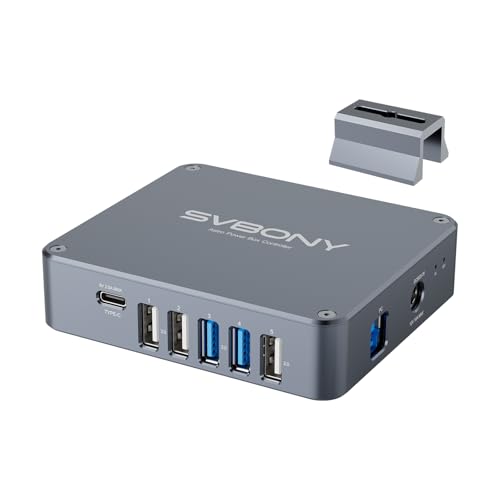
SVBONY SV241 Pro Telescope Power Management Hub
Sony Alpha a7 III Full-Frame Mirrorless Camera Body
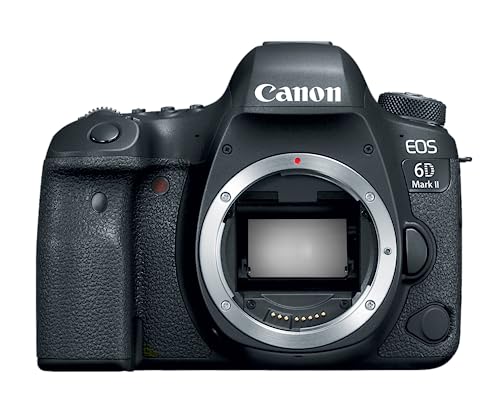
Canon EOS 6D Mark II DSLR Camera Body (Wi-Fi)

Canon EOS 90D DSLR Camera Body

Nikon D7500 DSLR Camera with 18-140mm VR Lens

SVBONY SC571CC Cooled Color Astronomy Camera
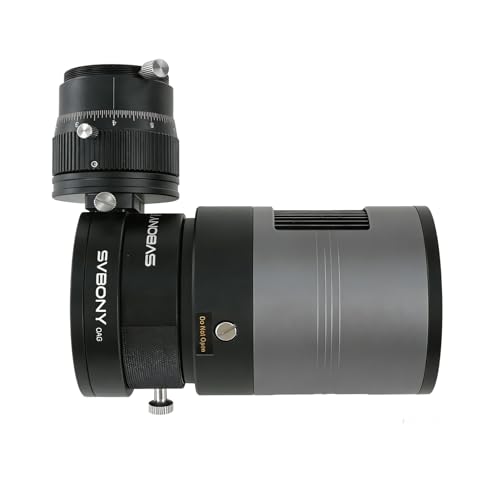
SVBONY Deep-Sky Master SC571CC Camera with OAG

Canon EOS Rebel T3i DSLR with 18-55mm Lens
More Details On Our Top Picks
The Panasonic LUMIX G9 leans hard into the strengths that astrophotographers actually care about: a magnesium alloy body, weather sealing against splashes and dust, and a sensor that skips the low-pass filter (the optical component that slightly softens detail in many cameras) for sharper star points and crisper nebula edges. Compared to the full-frame Canon EOS R6 below, the G9 uses a smaller Micro Four Thirds sensor, but it earns its keep by being lighter and far more compact on a star tracker.
Night-sky shooters who hike into dark sites appreciate the in-body stabilization working with stabilized lenses for handheld twilight shots. The 3-inch rear LCD tilts for awkward low-angle framing on the ground. Mount it on a tripod or tracker and the G9 turns into a wide-field rig that won’t weigh down your pack.
Everyday Perks
- Magnesium alloy chassis with splash, dust, and freeze-proof sealing for unpredictable nights outdoors.
- No low-pass filter design preserves sharp detail in pinpoint stars and fine nebula textures.
- 5-axis dual image stabilization (a system that shifts the sensor to counter camera shake on multiple axes) helps hand-held twilight compositions and reduces tripod micro-vibrations.
- 3-inch tilting LCD simplifies composing low-to-the-ground foreground shots.
- Micro Four Thirds lens mount opens access to a deep catalog of compact wide-aperture lenses ideal for nightscapes.
Things To Consider
- The Micro Four Thirds sensor gathers less light per pixel than full-frame options like the Canon 6D Mark II below, so longer exposures or wider apertures help compensate.
- High-resolution mode (80MP) demands a steady tripod and stationary subject to deliver its best results.
Feature Snapshot
Who It Suits Best
Backcountry astrophotographers who hike to dark sites and want a rugged, lightweight body that pairs with compact wide-angle glass.
Consider Something Else When
Those chasing the absolute lowest noise per pixel should consider the Sony Alpha a7 III below, whose larger full-frame sensor gathers more light per shot.
The Canon EOS R6 doubles as a serious daytime hybrid and a capable night-sky body, which is why it shows up on so many astrophotography shopping lists. Where the smaller-sensor LUMIX G9 above trades absolute light-gathering for portability, the R6 leans into its full-frame sensor for cleaner high-ISO (sensitivity to light) performance on deep-sky targets and Milky Way panoramas.
Two UHS-II SD card slots (high-speed card formats that handle fast RAW bursts without buffering) let you back up every exposure in the field, a real comfort on long sessions where card failure isn’t an option. Astrophotographers working from remote sites get fast mechanical burst rates and a sensor paired with the DIGIC X processor (Canon’s image engine that handles noise reduction and autofocus).
Points In Its Favor
- Full-frame CMOS sensor paired with DIGIC X processing delivers strong noise control for long exposures.
- Dual UHS-II SD slots safeguard RAW files during multi-hour imaging sessions.
- Up to 12 fps mechanical burst (and faster silent electronic shutter) makes terrestrial wildlife or aurora chasers happy too.
- Native ISO range suitable for dark-sky shooting without aggressive amplification.
- 4K video capability adds time-lapse and night-video versatility to the same body.
Honest Caveats
- Full-frame glass tends to be heavier and pricier than Micro Four Thirds options used on the LUMIX G9.
- Battery drain climbs quickly during cold-night sessions, so carrying spares is wise.
Best Suited To
Hybrid shooters who split their time between astrophotography, wildlife, and video and want one body that handles all three without compromise.
Look Elsewhere When
Pure deep-sky imagers running long guided exposures will find the dedicated SVBONY SC571CC cooler camera below a better match for the job.
The SVBONY SV241 Pro isn’t a camera, but anyone running a multi-device imaging rig knows that power management quietly becomes the make-or-break piece of gear. The SV241 Pro bundles dew heater control, USB hub functions, and centralized power into one box, replacing the spaghetti of cables that tends to accumulate behind a telescope.
Where the mirrorless bodies above focus on capturing photons, this hub keeps everything running smoothly through long unattended sessions. Set dew heater levels, route USB to your cooled camera and mount, and the SV241 Pro handles the orchestration without a tangle of separate controllers.
Features That Help
- Integrated dew heater channels protect optics and sensors from condensation on humid nights.
- USB hub functionality simplifies connecting multiple accessories to a single control laptop.
- Remote plug-and-play control reduces trips back to the telescope in cold conditions.
- Intelligent power routing helps prevent the kind of voltage dips that interrupt guided imaging runs.
Points To Keep In Mind
- Hot-swapping (unplugging devices while the unit is powered) is not supported, so devices must be connected only after the hub is fully powered down.
- This is a complementary accessory rather than a standalone imaging tool.
Right Fit For
Rig builders running a cooled astro camera, mount, and dew heaters together who want fewer cables and centralized control.
Skip It When
Casual nightscape shooters using a single mirrorless body like the Sony a7 III below probably don’t need this level of power management.
The Sony Alpha a7 III has become a quiet legend in astrophotography circles, and for good reason. A back-illuminated full-frame sensor (a design that places wiring behind the light-sensitive pixels for better low-light performance) reads out quickly, which means cleaner long exposures with less amp glow (uneven brightness that can appear in the corners of long-exposure shots from some sensors). Compared to the APS-C Canon EOS 90D below, the a7 III gathers significantly more light per frame, which shortens required exposure times for the Milky Way.
Astrophotographers who travel appreciate the relatively compact body that pairs comfortably with Sony’s wide-aperture E-mount lenses. Bluetooth connectivity supports quick file transfers and remote control workflows from a phone or tablet in remote areas.
The Value In It
- 24.2MP back-illuminated 35mm sensor with fast readout reduces artifacts in stacked night exposures.
- Full-frame format collects more light than APS-C rivals, lowering required exposure times.
- Bluetooth Standard Ver. 4.1 support simplifies remote shooting and image sharing from remote sites.
- Sony E-mount compatibility opens access to premium wide-angle fast-aperture lenses.
- Multi Interface Shoe accepts a wide range of flashes and microphone accessories for hybrid use.
Where It May Fall Short
- Availability may be restricted to U.S. shoppers in some regions, depending on stock.
- Long-exposure shooters still need separate intervalometers or apps for advanced sequencing.
Whose Shelf It Belongs On
Traveling astrophotographers who want full-frame image quality in a body that won’t dominate a carry-on or hiking pack.
Swap It Out When
Imagers planning heavy guided deep-sky sessions should look at the dedicated SVBONY Deep-Sky Master SC571CC bundle below for better long-exposure thermal control.
The Canon EOS 6D Mark II is the gateway drug many astrophotographers start with: a true full-frame sensor in a familiar DSLR body, with Wi-Fi and Bluetooth built in. Where the mirrorless Sony a7 III above trims size by dropping the mirror box, the 6D Mark II keeps that optical viewfinder experience alive for shooters transitioning from older cameras.
A vari-angle touchscreen LCD helps frame compositions at awkward angles, which matters when a tripod is planted in dirt and you need to shoot near ground level. The DIGIC 7 processor keeps noise under control at the higher ISO values often required for night-sky work, depending on your local sky quality.
Practical Pluses
- 26.2MP full-frame Canon CMOS sensor offers strong low-light performance for nightscapes.
- DIGIC 7 image processing balances noise reduction against detail retention at high ISO.
- Built-in Wi-Fi and Bluetooth simplify remote shooting and file transfers in the field.
- 3.2-inch vari-angle touchscreen makes ground-level and overhead compositions easier.
- Wide compatibility with Canon EF mount lenses opens deep catalog choices for different focal lengths.
Where It Is Less Suited
- DSLR form factor is bulkier than mirrorless rivals like the Canon EOS R6 above.
- Live-view focusing for stars is slower than dedicated mirrorless autofocus systems.
Made For
First-time full-frame upgraders coming from entry-level DSLRs who want an approachable path into nightscape photography.
A Better Fit Elsewhere
Travelers who prioritize compact gear should consider the Panasonic LUMIX G9 above for similar image quality at a fraction of the weight.
The Canon EOS 90D is a 32.5MP APS-C workhorse that punches above its weight for wide-field astrophotography. Higher pixel density (more pixels packed into a smaller sensor) means more resolution per target, useful for cropping into specific deep-sky objects from a single framed shot. Compared to the older Canon Rebel T3i reviewed last, the 90D modernizes the experience with a tilting touchscreen, 4K video, and Canon’s DIGIC 8 processor.
Astrophotographers shooting Milky Way panoramas benefit from the high continuous shooting rate and accurate Dual Pixel CMOS AF (Canon’s on-sensor phase-detection autofocus system, which uses dedicated pixels across the sensor for smooth focusing) for terrestrial reference shots. Built-in Wi-Fi and Bluetooth make it easy to push test frames to a phone for composition review.
Benefits That Matter
- 32.5MP APS-C CMOS sensor delivers high-resolution nightscape files with room for cropping.
- Up to 10 fps continuous shooting through the optical viewfinder, no waiting for live-view blackout.
- DIGIC 8 processing manages noise at the ISO ranges typical for night-sky shooting.
- Dual Pixel CMOS AF offers smooth, reliable focusing for daytime reference and video work.
- Vari-angle 3.0-inch touchscreen supports creative low-angle compositions and self-recording.
Some Limits To Know
- Smaller APS-C sensor gathers less total light than the full-frame Sony a7 III above, so longer exposures may be necessary for faint nebulae.
- DSLR form factor and weight are less convenient than mirrorless options for backpackers.
Perfect Match For
Astrophotographers shooting wide-field Milky Way panoramas who also need a capable daytime wildlife or sports camera in the same body.
Reach For A Different Pick When
Those who frequently hike into dark sites may prefer the lighter Panasonic LUMIX G9 above for trail-friendly travel.
The Nikon D7500 arrives as a kit with an 18-140mm VR (Vibration Reduction, Nikon’s in-lens optical stabilization) lens, which covers everything from wide Milky Way vistas to moderate close-ups of lunar craters. Where the Canon EOS 90D above pushes pixel count higher, the D7500 leans on image quality borrowed from Nikon’s D500 lineage for cleaner shadows and stronger dynamic range (the range between the darkest and brightest tones a sensor can record in one shot).
A tilting 3.2-inch touchscreen with 922K-dot resolution makes reviewing star shots comfortable in the field. The 51-point AF system with 15 cross-type sensors (focus points that detect detail in both horizontal and vertical orientations for better accuracy) keeps terrestrial subjects sharp when you’re using the same camera for daytime hobbies.
The Good Stuff
- 20.9MP DX-format sensor inherits image processing lineage from Nikon’s flagship D500.
- 4K UHD video plus 1080p Full HD adds time-lapse and night-video versatility.
- 8 fps continuous shooting handles action and aurora sequences comfortably.
- 51-point AF system with 15 cross-type sensors tracks terrestrial subjects accurately.
- Included 18-140mm VR lens covers wide-angle nightscapes to short telephoto work without extra purchases.
Worth Bearing In Mind
- DX-format APS-C sensor doesn’t match the light-gathering of full-frame options like the Canon 6D Mark II above.
- VR (Vibration Reduction) is helpful but not a substitute for a sturdy tripod during long night exposures.
Built With In Mind
Astro newcomers who want a single box-and-lens solution for both daytime hobbies and nightscape photography without extra purchases.
Where A Sibling Pick Shines
Imagers prioritizing full-frame low-light performance will be happier with the Sony a7 III above for dedicated night-sky work.
The SVBONY SC571CC marks a sharp turn away from general-purpose cameras and toward a tool built specifically for deep-sky imaging. Unlike the mirrorless and DSLR bodies above, this dedicated astro cam features an IMX571 APS-C BSI (back-side illuminated) sensor paired with active cooling that drops sensor temperature well below ambient. Lower sensor temperature means dramatically less thermal noise (random speckling caused by heat within the sensor itself) during the long exposures deep-sky targets demand.
A front-window heater prevents dew from fogging the optical window, a small but vital detail on humid nights. Pair it with a sturdy equatorial mount (a motorized mount that tracks the sky’s rotation to keep stars pinpoint) and you have a system built for narrowband and broadband deep-sky captures.
Advantages To Know
- APS-C format IMX571 sensor with 26MP resolution captures fine detail in extended nebula structures.
- Active cooling reduces thermal noise across multi-minute exposures, depending on ambient conditions.
- 3.76µm pixel size balances resolution and sensitivity for typical deep-sky focal lengths.
- Front-window heater prevents condensation that would otherwise ruin hours of data.
- Dedicated astronomy design integrates cleanly with common astro software for plate-solving and stacking.
Practical Considerations
- Requires a computer and astro software for operation; not a grab-and-go body.
- Cooled sensors draw meaningful power, so pairing with the SVBONY SV241 Pro power hub above simplifies cable management.
Who Should Grab It
Deep-sky imagers focused on galaxies and nebulae who want a purpose-built cooled camera rather than adapting a mirrorless body.
Another Choice May Suit
Astro newcomers should start with the simpler Nikon D7500 kit above before graduating to a dedicated cooled astro camera.
The Deep-Sky Master bundle combines the SC571CC cooled camera with an SV238 off-axis guider (OAG) and M48 filter drawer, creating a complete guided imaging chain in one purchase. Where the standalone SC571CC above assumes you already own guiding equipment, this bundle removes that gap. The integrated OAG picks up a guide star through the same light path as the main camera, eliminating the guide scope flex and differential flexure (small misalignments between guide and imaging optics caused by the rig shifting slightly during tracking) that plagues separate guide scope setups.
Standard 55mm back focal length (the distance from a lens’s mounting flange to its image sensor) keeps the optical train predictable, with room for additional filters without adapters. For someone stepping up from the mirrorless bodies above into serious deep-sky imaging, this bundle delivers what usually requires three separate purchases.
Everyday Advantages
- Integrated OAG (off-axis guider, a device that diverts a small portion of incoming starlight to a separate guide camera) removes flexure issues that plague separate guide scopes.
- M48 filter drawer accepts standard 2-inch mounted filters for light-pollution or narrowband work.
- 55mm standard back focal length simplifies adding flatteners or reducers later.
- Cooled SC571CC sensor carries over the noise performance discussed above.
- One bundled purchase eliminates compatibility guesswork for first-time deep-sky imagers.
Factors To Consider
- Total bundle cost runs higher than the standalone cooled camera above.
- Setup complexity still requires familiarity with equatorial mounts and guiding software.
The Right Fit
Intermediate imagers upgrading from a basic mirrorless or DSLR setup into guided deep-sky imaging who want a matched, ready-to-mount bundle.
Not Your Match When
Astro newcomers still learning the basics should start with the entry-level Canon Rebel T3i below before tackling this level of gear.
The Canon EOS Rebel T3i is the classic entry point for hobbyists discovering astrophotography, and it remains a useful learning platform. The 18.1MP APS-C sensor pairs with the included 18-55mm IS (Image Stabilization) II lens, giving newcomers everything needed for tripod-based Milky Way and lunar photography in one purchase. Compared to the modern EOS 90D above, the T3i shows its age in resolution and live-view performance, but it remains a serviceable for beginners.
Used on a basic star tracker or fixed tripod, the T3i can produce satisfying wide-field night shots while you learn the fundamentals of composition, exposure stacking, and focus techniques. It also doubles as a daytime DSLR for general photography, which extends its usefulness beyond astro.
Useful Touches
- 18.1MP APS-C sensor delivers usable image quality for learning nightscape fundamentals.
- Included EF-S 18-55mm IS II lens covers wide-angle nightscape compositions out of the box.
- Compact DSLR body remains approachable for first-time users stepping up from smartphone photography.
- Wide third-party lens compatibility supports growth as skills develop.
Where It Is Less Suited
- Older sensor technology produces more noise at high ISO than modern rivals like the Canon EOS 90D above.
- Live-view focusing on dim stars is slower than current-generation mirrorless options.
Who Will Love This
First-time astro shooters on a tight budget who want a simple, proven DSLR to learn the craft before upgrading to dedicated gear.
Skip It When
Anyone already comfortable with intermediate exposure settings may outgrow the T3i quickly and benefit more from the Sony a7 III above.
What Matters Most Before Choosing Astrophotography Cameras
Picking an astrophotography camera comes down to matching the tool to your target and your tolerance for complexity. Wide-field nightscape shooters chasing the Milky Way over landscapes usually do well with full-frame mirrorless bodies like the Sony a7 III or the Canon EOS R6. The large sensors gather more light per frame, which shortens exposure times and reduces star trailing on a fixed tripod, depending on focal length.
Telescope-mounted deep-sky imaging is a different beast. Dedicated cooled cameras like the SVBONY SC571CC pair active sensor cooling with high quantum efficiency (the percentage of incoming photons the sensor successfully converts into usable signal), cutting thermal noise across long guided exposures. They also handle narrowband filters more cleanly than color-filtered mirrorless sensors.
Sensor format shapes both field of view and per-pixel noise. Full-frame bodies deliver wider skies per frame, while APS-C options like the Canon EOS 90D or Nikon D7500 trade absolute light-gathering for more reach with existing lenses, helpful for smaller targets. Consider also that any modern camera benefits from careful dark-frame and flat-frame calibration (extra exposures used to subtract sensor noise and correct for vignetting in post-processing).
Key Considerations Across These Picks
Pitfalls Shoppers Hit
The most common misstep is buying a body without considering the rest of the optical train. A premium camera paired with a slow kit lens will underperform a modest body matched with fast wide-aperture glass. Equally common: overlooking mount and tracking needs, since even the best sensor produces star trails without a stable equatorial platform during long exposures. Finally, don’t forget storage. RAW night files add up fast, and dual card slots like those on the Canon EOS R6 exist for a reason.
What Separates Premium From Basic
Higher-tier bodies typically add features that matter specifically to night shooters: back-illuminated sensors, better heat dissipation, faster readout speeds that reduce amp glow, and robust weather sealing for damp conditions. Dedicated cooled astro cameras add active thermal management and on-sensor features tailored to long exposures. The trade-off is cost, weight, and complexity, which is why many imagers start with a general-purpose body and add cooled gear later.
Frequently Asked Questions
Can a regular DSLR or mirrorless camera handle astrophotography?
Yes. Bodies like the Canon EOS 90D, Nikon D7500, and Sony a7 III all capture strong nightscape images when paired with a sturdy tripod and, ideally, a star tracker for longer exposures. They also serve as everyday cameras, which makes them appealing for hobbyists.
What makes a dedicated astronomy camera different?
Dedicated astro cams like the SVBONY SC571CC use cooled sensors and on-camera features designed for stacking hundreds of long exposures. They typically lack mechanical shutters and standard viewfinders, trading convenience for raw imaging efficiency during deep-sky sessions.
Do I need a star tracker for astrophotography?
For wide-field Milky Way shots without star trails on a fixed tripod, short exposures of around 15 to 25 seconds work, depending on focal length. For deep-sky targets or longer focal lengths, a tracking mount becomes essentially required to keep stars pinpoint.
Is full-frame really necessary for night photography?
Full-frame sensors gather more light per frame, which shortens required exposures and lowers noise. That said, modern APS-C bodies like the Canon EOS 90D still produce excellent results, and many skilled imagers work happily with smaller formats.
How important is weather sealing for astro cameras?
Dew, frost, and unexpected weather arrive often during night sessions. Weather-sealed bodies like the Panasonic LUMIX G9 offer extra peace of mind, though careful use of dew heaters and lens hoods protects most cameras under typical conditions.
The Takeaway
Astrophotography rewards gear that matches your target and your tolerance for late nights and cold coffee. General-purpose mirrorless and DSLR bodies cover most nightscape adventures well, while dedicated cooled cameras open the door to deeper targets once the basics feel familiar. Start where your interest lives, learn the fundamentals on what you have, and let the equipment grow alongside your curiosity about the sky.