Capturing the night sky takes more than a willing shutter finger. You need a camera body that tolerates long exposures without cooking its own sensor, glass that gathers light from faint stars, and a tripod that holds dead-still for the full 20-second stretch. Most photographers chasing deep-sky targets also end up adding a filter or a dovetail bar to mount a tracker. This roundup pairs a couple of strong DSLR bodies with the lenses, accessories, and support gear that round out a working astrophotography kit.
A Quick View Of The Lineup

Nikon NIKKOR Z 135mm f/1.8 S Plena Lens

Canon EF 16-35mm f/4L is USM Lens

Canon EF 50mm f/1.8 STM Lens

Canon EF-S 24mm f/2.8 STM Lens

Sony 14mm f/1.8 G Master E-Mount Lens

HOYA 52mm Starscape Light Pollution Filter
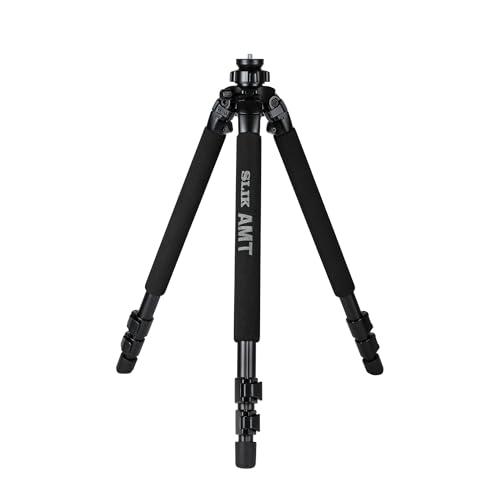
SLIK Pro 700 DX Tripod Legs
Canon EOS Rebel T7 DSLR Kit

160mm Vixen-Style Dovetail Mounting Plate

Nikon D7500 DSLR with 18-140mm Lens
Why These Options Stand Out
Long, fast glass is a deep-sky photographer’s best friend, and the NIKKOR Z 135mm f/1.8 S Plena earns that reputation quickly. Its 135mm focal length punches past wide-angle Milky Way shots and reaches into tighter regions like the Andromeda Galaxy or the Pleiades, while the wide f/1.8 aperture collects serious light during each exposure. Designed for Nikon’s Z-mount mirrorless bodies, it stays sharp wide open and produces that round, creamy bokeh that turns pinpoint stars into soft halos around bright subjects.
Where it pulls weight is during shorter total integration times. A 30-second exposure at f/1.8 pulls in a surprising amount of nebulosity compared to a slower zoom, and the optical corrections keep star points tight toward the corners. Photographers running tracking mounts for stacked subs will appreciate that the sharpness holds across the frame.
Useful Strengths
- f/1.8 aperture gathers light fast, which trims individual sub-exposure times.
- 135mm reach frames galaxies and nebulae without needing extreme focal lengths.
- Edge-to-edge sharpness keeps stars tight in the corners of full-frame sensors.
- Round, dreamy bokeh gives bright stars and subjects pleasing out-of-focus halos.
- Solid S-line build feels balanced on heavier Z bodies during long sessions.
Things To Consider
- The Z mount restricts this lens to Nikon’s mirrorless lineup, so DSLR shooters will need an adapter or a different choice.
- Its size and weight can push smaller star trackers close to their payload limit, depending on your camera body.
Who It Suits Best
Intermediate and advanced astrophotographers shooting on Nikon Z bodies who want one fast telephoto for galaxies and rich-field nebulae.
Consider Something Else When
Photographers on Canon EOS DSLRs who want similar reach should look at the Canon EF 16-35mm f/4L is USM Lens for wide-field work or step up to a longer native Canon prime.
Wide-field Milky Way shots usually start with a wide zoom, and the Canon EF 16-35mm f/4L is USM is one of the most trusted options for Canon EOS DSLR shooters. Its 16mm wide end captures sweeping arcs of the galactic core, and the constant f/4 aperture keeps exposures manageable. The optical image stabilization helps for handheld travel shots, though astrophotographers typically switch it off for tripod work.
L-series construction also means weather sealing and a solid focus ring that holds position during focus-stacking sessions. Compared to the lighter Canon EF 50mm f/1.8 STM covered earlier, this lens trades aperture speed for sheer field of view, making it the right pick when you want landscape context around the sky.
Bright Spots
- 16mm wide end fits sweeping Milky Way panoramas in a single frame.
- Constant f/4 aperture simplifies exposure planning across the zoom range.
- Optical image stabilization helps framing handheld and aids short twilight shots.
- L-series build includes weather sealing for damp night conditions.
- EF mount works natively on Canon EOS DSLRs without adapters.
Trade Offs
- f/4 is slower than f/1.8 or f/2.8 primes, so individual subs need longer times.
- Front element size filters at 77mm or 82mm depending on revision, which raises filter costs.
Made For
Canon DSLR shooters who want a rugged wide-angle zoom for landscape astrophotography in unpredictable weather.
Where Another Pick Suits Better
Those chasing maximum light gathering for the darkest skies may prefer the Sony 14mm f/1.8 G Master E-Mount Lens if they shoot full-frame mirrorless.
The Canon EF 50mm f/1.8 STM is the budget gateway to wide-aperture astrophotography. Often called the “nifty fifty,” it weighs barely anything and slips into any camera bag, yet its f/1.8 aperture pulls in enough starlight for surprisingly clean nightscape work. The stepping motor (STM) keeps autofocus near-silent for the rare moments you switch between sky and foreground subjects.
On full-frame Canon bodies, 50mm gives a natural field for framing bright nebulae like Orion or the North America Nebula when paired with a tracker. On crop-sensor bodies, the effective 80mm reach tightens the framing further, which can read as a strength or a limitation depending on your target.
Where It Helps
- f/1.8 aperture gathers light fast for shorter, sharper individual subs.
- Lightweight body keeps payload low on entry-level trackers.
- Affordable price point makes it easy to add to a starter kit.
- STM motor runs quietly during any video or live-view framing.
Worth Noting
- Plastic mount construction feels less robust than the metal mounts on L-series lenses.
- Chromatic aberration increases wide-open, which may require stopping down slightly for cleaner stars.
- No weather sealing means condensation can form on cold nights without precautions.
Key Specs
Best Suited To
Beginner astrophotographers on Canon EOS DSLRs who want the lightest, most affordable fast prime for their first tracking rig.
Skip It When
You need a true wide field for the Milky Way arc; the Canon EF 16-35mm f/4L is USM Lens covers that brief better.
Backpackers and travel photographers often prioritize size over aperture, which is where the Canon EF-S 24mm f/2.8 STM shines. Its pancake-style body barely adds bulk to a crop-sensor DSLR, yet the 24mm focal length (roughly 38mm equivalent on a full-frame body) gives enough width to frame a Milky Way segment while keeping distant landscape features in view.
The f/2.8 aperture is a step slower than the 50mm f/1.8 covered above, but its wider reach makes it more flexible for full-sky compositions on crop bodies. STM autofocus and full-time manual override support fine focus adjustments during live view shooting.
Where It Excels
- Ultra-thin pancake profile keeps kits light for hiking and travel.
- 24mm focal length on crop bodies fits both sky and foreground context.
- Seven-blade circular aperture produces smooth, soft out-of-focus areas.
- Full-time manual focus allows focus tweaks without leaving autofocus mode.
Room For Improvement
- EF-S mount restricts use to Canon crop-sensor bodies, not full-frame DSLRs.
- f/2.8 is slower than f/1.8 primes, so longer exposures or higher ISO are needed.
Perfect Match For
Travel and night hikers shooting on Canon APS-C DSLRs who want a wide field without extra pack weight.
Not Your Match When
You shoot full-frame Canon bodies or want a faster aperture; the Canon EF 50mm f/1.8 STM fits that scenario better.
For Sony full-frame mirrorless shooters chasing the Milky Way, the Sony 14mm f/1.8 G Master is a near-perfect match. Its 14mm reach pulls in vast stretches of sky in one frame, and the f/1.8 aperture collects light aggressively, cutting sub-exposure times even at very dark sites. Sony pairs this glass with two XA (extreme aspherical) elements to keep stars sharp from corner to corner.
Compared to the Canon EF 16-35mm f/4L IS USM covered earlier, this lens trades a slightly narrower field of view and weather-sealed zoom range for a much faster aperture and an optical design built around wide-open sharpness. Photographers stepping out of a car at a dark-sky park will appreciate how quickly the wider aperture pulls in the galactic core.
Why It Works Well
- f/1.8 aperture pulls in faint nebulosity during single short exposures.
- 14mm focal length captures the full galactic core arc on full-frame bodies.
- Two XA elements maintain sharpness across the frame, even wide open.
- XD linear motors deliver quick, quiet autofocus for hybrid stills and video.
- Compact size for a 14mm f/1.8 keeps it balanced on smaller mirrorless bodies.
Less Ideal Details
- E-mount limits this lens to Sony mirrorless cameras.
- 14mm may feel too wide for tight compositions like single nebulae.
- Bulbous front element blocks most standard screw-on filters.
Feature Snapshot
Whose Shelf It Belongs On
Sony full-frame mirrorless shooters who prioritize maximum light gathering over zoom flexibility on dark-sky trips.
Look Elsewhere When
You shoot Canon DSLR bodies and want a wide zoom; the Canon EF 16-35mm f/4L is USM Lens fits that profile.
Filters are not just for daytime color work. The HOYA 52mm Starscape filter is purpose-built for astrophotography in light-polluted skies, using didymium glass to block the yellow-orange wavelengths emitted by sodium and mercury vapor street lamps. The result is darker backgrounds and stronger star-to-sky contrast, even from a backyard in the suburbs.
For anyone shooting under city or suburban skies, this filter is one of the simplest upgrades to make. It threads onto any 52mm lens front, including the Canon EF 50mm f/1.8 STM covered earlier, and starts working immediately on long exposures.
What Earns Its Place
- Didymium glass blocks common sodium and mercury wavelengths from street lamps.
- 52mm threading matches many popular fast primes in this category.
- Enhances celestial contrast without needing post-production tricks.
- Improved HMC multicoating helps reduce flare during twilight shooting.
Points To Keep In Mind
- 52mm thread limits compatibility to lenses with matching filter sizes; step-up rings are needed otherwise.
- Effects diminish at truly dark sites where light pollution is already low.
- Glass filters add slight weight to compact lenses, which can affect tracker balance.
The Right Fit
Suburban shooters using 52mm-threaded fast primes who want to cut skyglow without moving to a dark-sky site every weekend.
Reach For A Different Pick When
You shoot exclusively under Bortle 3 or darker skies; the filter’s effect becomes marginal and the added glass isn’t necessary.
A tripod that drifts during a 20-second exposure ruins the frame, which is why serious astrophotographers reach for substantial legs like the SLIK Pro 700 DX. Its AMT alloy construction supports up to 44 lbs, easily holding a full-frame DSLR with a fast prime or a tracker-mounted telephoto rig. The 71-inch working height also lets you shoot standing when chasing the galactic core low on the horizon.
Three leg deployment angles and a two-part rapid-type center column give flexibility for low-angle landscape compositions or tight setups near obstacles. Compared to compact travel tripods, this one trades portability for rock-solid stability, which is exactly what long exposures demand.
Everyday Advantages
- 44 lb load rating handles heavier tracker setups and telephoto lenses.
- 71-inch max working height suits standing compositions at most sites.
- Three leg angles let you drop low for dramatic foreground-and-sky framing.
- Foam-padded upper segments protect hands in cold night conditions.
- Two-part center column enables lower shooting heights when needed.
Practical Considerations
- Bulk and weight make it less ideal for backpacking long distances.
- Heavier tripod head sold separately is usually required.
Best Suited To
Car-camp and driveway astrophotographers running heavier payloads, including tracker-mounted DSLR rigs.
Swap It Out When
You hike miles into remote sites; a lighter carbon-fiber tripod would carry easier, even with less payload capacity.

The Canon EOS Rebel T7 DSLR paired with the EF-S 18-55mm and EF 75-300mm lenses is the classic entry point for first-time DSLR owners stepping into astrophotography. Its 24.1-megapixel APS-C sensor captures detailed stills and Full HD video, and the included Wi-Fi makes it easy to transfer night-sky shots to a phone for quick sharing.
While the kit lenses are not ideal for serious night work, the Rebel T7 body itself accepts the faster EF and EF-S primes covered in this roundup, including the EF 50mm f/1.8 STM and EF-S 24mm f/2.8 STM. That flexibility makes this camera a sensible starting platform before investing in dedicated astro glass.
What Pays Off
- 24.1 MP APS-C sensor gives plenty of resolution for crop-frame night work.
- Built-in Wi-Fi simplifies transferring images to a phone for editing.
- EF mount accepts the wide range of Canon lenses covered in this list.
- Beginner-friendly menus and scene modes reduce the learning curve.
Things That May Matter
- Kit lenses (18-55mm, 75-300mm) have slow variable apertures unsuitable for low-light astro work.
- APS-C sensor size limits wide-field framing compared to full-frame bodies.
Who Will Love This
First-time DSLR owners who want a forgiving body to learn on, with room to grow into faster astro glass later.
Where A Sibling Pick Shines
Photographers ready for more resolution and a tilting touchscreen should consider the Nikon D7500 DSLR covered next.
Once you add a star tracker to your kit, you need a reliable way to attach your DSLR and lens to it. The 160mm Vixen-style dovetail mounting plate accepts the standard saddle found on most small trackers and equatorial mounts. Its two long slots run the full 52.6 mm, letting you slide a camera forward or backward until balance is right, then lock it in place.
Multiple threaded holes along the slots (M6 and 1/4 inch) accept the standard tripod screws found on most DSLR bodies, plus two 3/8 inch (M8) holes for larger mounting hardware. The compatibility with Vixen-style saddles, an industry-standard, makes this plate a flexible addition to any growing rig.
Positive Points
- 160 mm length fits most DSLR bodies with room to balance long lenses.
- Long 52.6 mm slots allow precise fore-aft balance adjustment.
- Vixen-style dovetail fits the majority of small star trackers.
- Multiple thread sizes accept standard camera screws and larger hardware.
Soft Spots
- Metal adds noticeable weight to a minimal travel rig.
- Requires a separate Vixen-style saddle clamp, not included with most trackers.
The Right Fit
Astrophotographers who already own a small star tracker and need a sturdy mounting bar to balance their DSLR plus telephoto lens.
Another Choice May Suit
Photographers without a tracker will not benefit from this plate; a sturdy tripod like the SLIK Pro 700 DX is the more pressing upgrade.
The Nikon D7500 sits in that sweet spot between entry-level DSLRs and full-frame flagships, and it borrows the image quality and metering of Nikon’s D500. The 20.9 MP APS-C sensor handles high ISO noise well for night work, and the 51-point AF system with 15 cross-type sensors helps when capturing foregrounds or wide-angle sky compositions in mixed lighting.
The tilting 3.2-inch touchscreen makes low-angle tripod compositions easier to frame, and 4K UHD video support adds hybrid flexibility. The included 18-140mm lens handles daylight versatility, though serious astro shooters will still want to add a fast prime for night exposures.
Key Advantages
- 20.9 MP APS-C sensor inherited from the D500 line for strong low-light performance.
- 51-point AF system with 15 cross-type sensors handles mixed lighting scenes.
- Tilting touchscreen aids awkward tripod angles in the field.
- 4K UHD video adds hybrid shooting options beyond stills.
- Up to 8 fps continuous shooting captures meteors and transient sky events.
Honest Caveats
- APS-C sensor limits ultra-wide framing compared to full-frame bodies.
- 18-140mm kit lens is too slow for serious deep-sky capture without a faster prime.
Feature Card
Built With In Mind
Enthusiast Nikon DSLR shooters stepping up from entry-level bodies who want better high-ISO performance without jumping to full frame.
Skip It When
You shoot Canon DSLR bodies; the Canon EOS Rebel T7 covered earlier makes more sense in that ecosystem.
Choosing Astrophotography Dslr Cameras That Fit Your Sky
Matching Glass to Target Type
Wide-field Milky Way arcs call for lenses in the 14mm to 24mm range, while tight nebulae and galaxies benefit from 50mm to 200mm focal lengths. Aperture matters more than focal length for gathering light; f/1.8 to f/2.8 lenses collect photons much faster than f/4 zooms. For wide compositions, a fast wide prime often outperforms a slow zoom, especially under suburban skies where every second of exposure adds noise.
Camera Bodies and Long-Exposure Behavior
DSLR bodies vary in how well they handle long exposures and high ISO values. Look for sensors with strong signal-to-noise ratios at ISO 1600 to 6400, since most night sky work happens in that range. Tilting screens and Wi-Fi make field setup easier, but the core decision is whether the sensor can capture clean data before you ever reach for editing software.
Tracking, Mounting, and Stability
A tripod that holds steady for the full exposure length is non-negotiable. For exposures beyond 20 seconds, a star tracker mounted on a dovetail bar lets you sidestep star trailing entirely. Match the tripod payload rating to your camera, lens, and tracker combined, not just the camera alone.
Filters for Suburban Conditions
Light pollution filters work by blocking specific wavelengths emitted by street lamps. They help most under suburban and urban skies, and offer diminishing returns at dark sites. Confirm the filter thread matches your lens before adding it to your kit.
Key Considerations Across These Picks
Pitfalls Shoppers Hit
First-time astro kit builders often prioritize camera bodies over lenses, then wonder why their wide-angle shots lack detail. The lens gathers light; the sensor records it. Skipping a sturdy tripod is another common mistake, since even tiny vibrations ruin long exposures. Finally, buying a tracker before confirming payload ratings leads to motors that strain under heavier rigs.
What The Higher Tier Buys
Premium glass like the NIKKOR Z 135mm f/1.8 S Plena delivers wider apertures, sharper corners, and tougher build quality compared to budget primes. Higher-end DSLR bodies like the Nikon D7500 add better autofocus, tilting touchscreens, and improved high-ISO performance. The upgrade payoff shows up most clearly when you regularly shoot under less-than-ideal skies, where every stop of aperture or ISO matters.
Frequently Asked Questions
Can any DSLR shoot astrophotography?
Most modern DSLRs handle long exposures and high ISO values well enough for night sky work. Bodies with strong signal-to-noise ratios at high ISO and APS-C or full-frame sensors give the best results. Lens choice typically matters more than camera body choice for beginners.
What is the best lens for Milky Way photography?
Wide-angle lenses in the 14mm to 24mm range with f/1.8 to f/2.8 apertures work best for Milky Way arcs. Fast apertures let you keep exposures short enough to avoid star trailing on a static tripod. Prime lenses generally outperform zooms in this category.
Do I need a star tracker?
A tracker becomes useful once you want exposures beyond about 20 seconds without star trailing. Wide-field Milky Way shots can succeed on a sturdy tripod, but deep-sky targets like nebulae and galaxies almost always benefit from tracking. Make sure your tripod and mount handle the combined weight of camera, lens, and tracker.
Are light pollution filters worth it?
Light pollution filters help most under suburban and urban skies where sodium and mercury vapor lights dominate. They have less impact at dark-sky sites with minimal skyglow. Thread size must match your lens, or you need a step-up ring.
How important is tripod stability?
Tripod stability is critical. Even small vibrations ruin long exposures, so a tripod rated for your combined camera, lens, and tracker weight matters more than people expect. Foam-padded legs and a robust center column help in cold, damp night conditions.
Closing Remarks
Astrophotography rewards patience more than gear, but the right kit makes those long nights more productive. Start with a fast prime matched to your DSLR mount, add a sturdy tripod, and consider a tracker when your targets demand longer integrations. Filters and dovetail bars fine-tune the setup once the core foundation is solid, and the picks above cover each piece of that foundation with options for beginners through enthusiasts.