You want eyes on your property without running a single cable, and the past few years have changed what “wire-free” actually means. Today’s models range from cellular cams that thrive in rural lots to solar-powered pan-tilt units that mount anywhere WiFi reaches. The shortlist below covers the realistic scenarios, from a backyard shed to a multi-acre homestead, so you can pick the one that matches your coverage goals.
How The Shortlist Stacks Up

LIWAN 4G LTE Cellular Security Camera

Nikoglly 2-Pack 4MP Wireless Outdoor Cameras

REOLINK RLC-520A 5MP PoE Outdoor Dome Camera

Gyozol 2K Wireless Outdoor WiFi Cameras
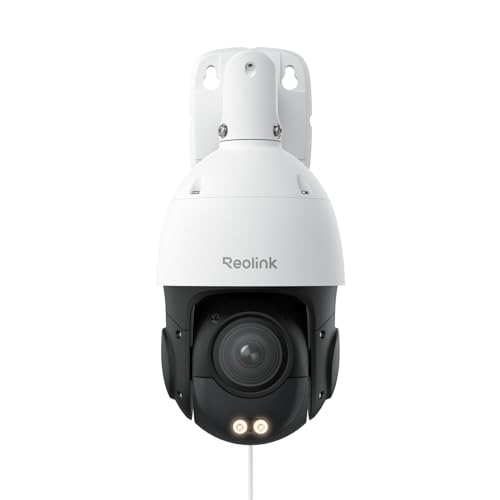
REOLINK RLC-823S2 4K 16X PTZ PoE Camera

REOLINK Duo 3 PoE Dual-Lens 180° Camera

REOLINK 5MP 8CH Camera System with 2TB HDD

REOLINK Solar Wireless Argus PT Camera
The Picks, Examined More Closely
Where WiFi simply does not reach, the LIWAN 4G LTE camera fills a gap that most outdoor cams cannot. A pre-installed SIM connects to major US carriers, so a barn, a rural gate, or a construction site becomes a live-monitored spot on your phone without dragging a router out to it. The 2K resolution is sharper than standard 1080p, which matters when you are identifying a vehicle plate at the end of a long driveway.
Setup looks refreshingly simple for an off-grid unit. Skip the router, skip the pairing dance, and the camera just appears in the companion app once powered on. For anyone managing a remote property, the honest appeal is removing one more piece of infrastructure.
Advantages To Know
- Cellular connectivity frees you from WiFi range limits, ideal for rural lots, farms, and outbuildings.
- 2K video gives sharper detail than 1080p, useful for license plates and face recognition at distance.
- Bullet-style housing suits permanent outdoor mounting on a post or eave.
- Pre-installed SIM card removes the fiddliest setup step, so first-time cellular installs feel approachable.
Things To Weigh Up
- Cellular data plans are an ongoing cost that hardwired cams do not carry.
- Coverage depends on the chosen carrier’s signal strength at the exact mount point.
Right Fit For
Rural property owners and hobby farmers who need eyes on a gate, barn, or equipment shed far from any router.
Look Elsewhere When
The REOLINK Solar Wireless Argus PT suits you more when you want a pan-tilt unit with zero cabling in a sunlit backyard.
Most homeowners want coverage at two points, so a paired set is often the smarter entry. The Nikoglly 4MP pair ships with two bullet cameras aimed at the same use case: front door and driveway, or garage and back patio. The 4MP resolution (roughly 2560×1440) gives noticeably more detail than 1080p units, which helps when zooming into clip footage later.
At night, built-in LED lighting and infrared combine to keep the picture usable after the sun goes down. For someone covering a small property on a single wireless network, the two-pack approach removes the need to mix brands later.
The Practical Payoff
- Two-camera bundle covers typical home entry points without buying separate kits.
- 4MP resolution outperforms 1080p, useful for zooming into recorded footage.
- Color night vision via integrated LEDs adds context beyond standard black-and-white IR.
Honest Caveats
- Both cameras share the same wireless network, so router range still matters at the farthest mount point.
- Wide field of view may need careful placement to avoid capturing the neighbor’s yard.
- Outdoor-rated housings still benefit from under-eave mounting to extend service life.
Key Specs
Built With In Mind
First-time installers covering a typical suburban lot who want two matching cameras without juggling separate brands.
Swap It Out When
The REOLINK RLC-520A is a smarter pick when you prefer a hardwired PoE dome and a single, always-on feed.
Not every outdoor camera needs to be battery powered. The REOLINK RLC-520A is a PoE camera, meaning it draws power and data through a single Ethernet cable, which makes it a different category of solution. A PoE setup trades wireless convenience for rock-solid uptime, since you never worry about a dying battery or a flaky WiFi connection.
The 5MP sensor captures enough detail to make recorded clips useful for identification, and the dome shape suits ceiling or soffit mounting. For owners committed to running cable once and forgetting about it, this camera is a sensible anchor.
Strengths Worth Knowing
- PoE (Power over Ethernet) simplifies wiring by combining power and data on one cable.
- 5MP resolution gives detailed clips for license plates and visitor identification.
- Smart person, vehicle, and animal detection (with up-to-date firmware) trims false alerts.
- Dome housing resists weather and tampering better than exposed bullet styles.
Softer Spots
- Requires a PoE switch, injector, or compatible NVR, which adds to total cost.
- Routing Ethernet cable through walls or attics may not suit casual renters.
Whose Shelf It Belongs On
Owners planning a permanent install who already own or are willing to add a PoE switch or NVR.
A Better Fit Elsewhere
The Nikoglly 2-Pack suits you better when you want wireless flexibility and coverage at two points without running any cable.
The Gyozol 2K camera sits in the sweet spot for casual buyers who want sharper footage than 1080p without paying for premium features they will not use. The 2K resolution pairs with a wide-angle lens, so a single camera can cover a wide slice of a backyard or driveway. Spotlight-assisted color night vision means clips after dark still carry useful color information.
For shoppers adding a second or third camera to a property, the appeal is straightforward: install it with the existing wireless router, mount it under an overhang, and pair it through the app. Most buyers set these up in under an hour.
Points In Its Favor
- 2K resolution delivers noticeably sharper clips than standard 1080p at similar cost.
- Wide-angle lens covers a broad area from a single mount point.
- Switchable IR or spotlight night vision lets you pick between discreet and full-color footage.
- Wireless install keeps the setup drill-light for casual homeowners.
Trade Offs To Consider
- WiFi-only, so signal strength at the mount point directly affects reliability.
- Spotlight color night vision draws extra power and may need a closer outlet if not hardwired.
- Wide lens can introduce edge distortion at very close range.
Made For
Casual homeowners on a budget who want sharper-than-1080p footage without stepping up to a multi-cam NVR system.
Skip It When
The REOLINK Duo 3 PoE is a stronger match when you need a wide, panoramic view of an open yard and can run Ethernet cable.
Long driveways, big lots, and commercial perimeters all hit the same wall: a wide-angle lens cannot resolve distant detail. The REOLINK RLC-823S2 answers that problem with a 16X optical zoom and a PTZ (pan-tilt-zoom) body. You can sweep across a yard and then punch into a faraway corner without losing clarity, because optical zoom preserves resolution where digital zoom does not.
4K UHD video and dual night modes (color spotlight and infrared) round out a camera built for owners who treat surveillance as a real tool. PTZ cameras trade some simplicity for the ability to actively follow a scene rather than just record one fixed view.
A Few Highlights
- 16X optical zoom retains detail at distance, where most outdoor cams fall apart.
- PTZ body lets you pan across the property instead of staring at one fixed angle.
- 4K resolution makes digital cropping on recorded clips still useful.
- Color and IR night modes give you flexibility based on the location.
Factors To Consider
- PoE-powered, so it still needs a wired network drop at the mount point.
- PTZ bodies are larger and more conspicuous than fixed-lens domes.
- Higher learning curve for users new to PTZ controls and presets.
Key Specs
Best Suited To
Owners of long driveways, large lots, or small commercial spaces who need to read detail at distance.
Where Another Pick Suits Better
The Gyozol 2K camera is a smarter pick for shoppers covering a small suburban yard without the cabling appetite.
Wide yards and open driveways suffer from cameras that only see a slice of the action. The REOLINK Duo 3 stitches two lens images into a single 180-degree panoramic view, which can replace two separate fixed cameras in many layouts. The dual 4K sensors combine into 16MP total, so the panoramic image stays detailed rather than smeared.
Six infrared LEDs support night vision out to about 100 feet, and the wide aperture helps color footage after dusk. For owners who want one camera to cover a broad open space without PTZ complexity, the Duo 3 takes a different route than a zoom lens.
Where It Excels
- 180-degree panoramic view covers an open yard from a single mount point.
- Combined 16MP resolution keeps the wide image detailed enough to crop later.
- IR night vision reaches roughly 100 feet, adequate for most driveways.
- Motion tracking follows movement across the wide field automatically.
Practical Considerations
- PoE-powered, so it needs a wired network drop at the installation point.
- Dual-lens stitching can introduce subtle seams in some lighting conditions.
- Larger housing may not blend in on smaller architectural features.
Who Should Grab It
Homeowners with open yards, side yards, or long driveways who want panoramic coverage without buying multiple cameras.
Consider Something Else When
The REOLINK RLC-823S2 is a stronger fit when you need to actively zoom into specific points at long distances.
Once coverage needs cross four or five cameras, ad-hoc wireless setups start to feel scattered. The REOLINK 8-channel kit flips the model: a dedicated NVR (network video recorder) with a 2TB hard drive sits at the center and pulls from each PoE camera. Local storage means footage lives on your hardware, not just in a cloud subscription.
Smart detection (person, vehicle, animal) helps filter motion alerts so you do not get pinged every time a moth crosses the lens. For someone starting fresh and planning a multi-camera rollout, an integrated kit is a smoother foundation than mixing brands.
Features That Help
- 8-channel NVR supports multi-camera coverage as needs grow.
- 2TB hard drive provides local recording storage out of the box.
- Smart person, animal, and vehicle detection reduces irrelevant motion alerts.
- 5MP cameras deliver detailed footage suitable for evidence clips.
Where It May Fall Short
- Requires running Ethernet cable to each camera location.
- NVR adds hardware to install, power, and keep on a stable network.
Who It Suits Best
Owners planning whole-property coverage who want one integrated system instead of piecing together individual cams.
Reach For A Different Pick When
The LIWAN 4G LTE camera suits you better when the goal is a single remote location with no router or cabling access.
The REOLINK Argus PT strips outdoor surveillance down to its most flexible form: no cables, no outlets, just a battery, a solar panel, and a WiFi signal. The PT body pans 355 degrees and tilts 140 degrees, so a single mount point covers a much larger area than a fixed-lens bullet. A bundled solar panel keeps the internal battery topped off in most climates with reasonable sun.
Dual-band WiFi support (2.4 and 5 GHz) gives installers flexibility when one band is crowded. For anyone wanting true wire-free install, the Argus PT remains a useful benchmark in the category.
Real-World Strengths
- Truly wire-free install with solar charging, no outlet or cabling needed.
- Pan-tilt body sweeps a wider area than fixed-lens alternatives.
- Dual-band WiFi support reduces interference issues in dense neighborhoods.
- Color night vision adds usable footage after dark.
Small Caveats
- Solar charging depends on adequate daily sunlight at the mount point.
- Heavy cloud cover or winter sun angles can shorten battery life between charges.
- Pan-tilt motors add a mechanical wear point over years of use.
Key Specs
Perfect Match For
Homeowners wanting a truly wire-free install on a shed, garage, or yard where running cable is not realistic.
Not Your Match When
The LIWAN 4G LTE camera suits you better when there is no WiFi signal at all and you need cellular coverage instead.
What Matters Most Before Choosing Battery Powered Outdoor Cameras
Power Source and Uptime
The first fork in the road is how the camera stays alive. Battery-only models need scheduled recharges or panel top-ups, while PoE cameras draw steady power through a cable. Match the power source to the install site, not the spec sheet.
Connectivity at the Mount Point
WiFi range, cellular signal, or a wired Ethernet drop, each limits which camera will actually work where you want it. Spotty signal at the eaves is the most common reason outdoor cams disappoint.
Resolution and Night Vision
Higher resolution helps when you need to read details on recorded clips. Color night vision needs a spotlight or ambient light, while infrared works in total darkness but produces monochrome footage.
Form Factor and Storage
Bullet, dome, and PTZ bodies suit different mounting surfaces and coverage goals. Local storage on an NVR or SD card avoids ongoing cloud subscription fees, while cloud plans add off-site redundancy.
Key Considerations Across These Picks
Pitfalls Shoppers Hit
The most common mistake is choosing a camera based on resolution alone, then discovering the WiFi signal at the mount point is weak. Signal strength and power source matter more than pixel count for everyday reliability. Mounting height and angle also shape what you actually capture, so test the field of view before drilling holes.
When Paying More Pays Off
Higher-tier models tend to add optical zoom, dual-lens stitching, or motorized pan-tilt, which expand coverage from a single mount point. For owners with large or irregularly shaped properties, those features replace the cost of buying and powering additional cameras. Smaller lots rarely need that headroom.
Frequently Asked Questions
Do battery powered outdoor cameras work in winter?
Cold weather reduces battery capacity, and solar panels produce less energy in shorter daylight hours. Expect more frequent charging or shorter intervals between solar top-ups in winter months.
Can battery powered outdoor cameras record without WiFi?
WiFi-free options include cellular models like the LIWAN 4G LTE and local-recording setups with SD cards. Cloud features, app alerts, and remote live view typically require a network connection of some kind.
How long do outdoor camera batteries last?
Battery life varies widely based on activity level, temperature, and resolution settings. A camera that records dozens of motion events daily in cold weather drains faster than one capturing occasional clips in mild conditions.
Are solar panels enough to keep a camera running year-round?
In most climates with reasonable sun exposure, yes, though heavy cloud cover or shaded mount points can shorten effective charging. Owners in low-light regions often supplement with periodic manual charging.
What is the difference between PoE and wireless outdoor cameras?
PoE (Power over Ethernet) cameras receive both power and data through a single Ethernet cable, giving reliable uptime at the cost of installation effort. Wireless cameras connect over WiFi and run on battery, solar, or outlet power, trading some reliability for easier setup.
Wrap Up
The right pick depends less on specs than on where you plan to mount it and what your network can support. Rural and remote locations benefit from cellular or solar options, while suburban homes often pair best with PoE or standard WiFi cams. Match the camera’s strengths to your install environment, and the rest tends to fall into place.